In today’s fast-moving world, where screens and digital entertainment often dominate playtime, there’s a quiet revolution happening in children’s play: STEM toys. These aren’t simply “fun things to occupy kids”; they’re purpose-designed play materials that blend fun, exploration, learning, and hands-on discovery. When chosen well, toys can help children develop critical thinking, creativity, problem-solving, spatial awareness, and perseverance, skills that serve them now and far into the future.
In this blog, we’ll explore what makes STEM toys valuable, how they contribute to learning and creativity, and what to look for when selecting them, and we’ll highlight a few standout toys from GRAFLO’s online shop to illustrate.
Why Toys Matter
At their core, toys engage children in the four pillars of STEM: Science, Technology, Engineering, and Mathematics. But good toys do more than impart content; they invite the child to ask questions, design, build, experiment, and iterate.
Here are some of the key benefits:
- Hands‐on, active learning: Instead of passive consumption (watching videos, watching lights flash), toys encourage the child to get their hands moving, explore materials, and test ideas. That process of doing is where learning sticks.
- Creativity & open-ended play: Many toys are built not as a single “follow these instructions” task but as an invitation to build, test, and redesign. That open-endedness is fertile ground for creativity.
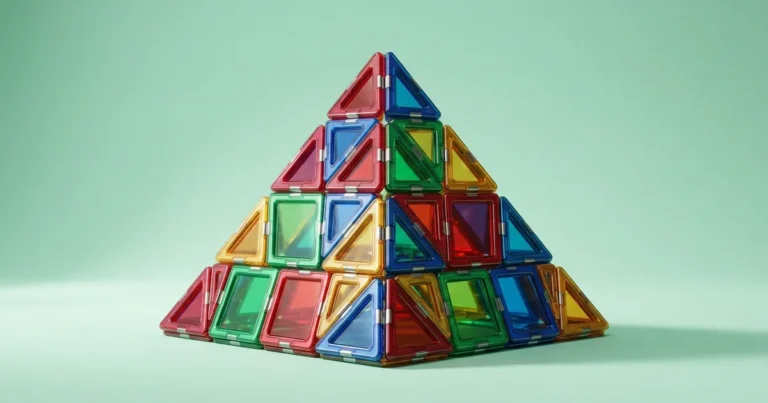
- Bridging play and skills: When kids use a toy, they’re naturally practicing spatial reasoning, pattern awareness, logic, and planning. For example, building a tower with magnetic tiles touches geometry and balance.
- Screen-free time with impact: With so many digital distractions, toys become a meaningful alternative, play that entertains and educates.
- Growth mindset & resilience: Many toys involve “try, fail, try again.” if the structure falls down, you rebuild, you redesign. That builds resilience and perseverance.
Because of all of this, offering children high-quality toys can be one of the most impactful investments a parent, educator, or caregiver can make.
What to Look for When Choosing Toys
Not all toys billed as “STEM” are equal. When you’re evaluating options, here are the key criteria:
- Open-ended vs purely prescriptive
A toy that gives one way to play is less powerful than one that invites multiple uses. The best toys have many possibilities. - Durability & safety
Since exploration often involves building, knocking down, and rebuilding, the pieces should be well-made. Safe materials, robust construction, and age-appropriate design matter. - Skill-growth potential
Ask: Does this toy push learning in areas like spatial reasoning, design, problem-solving, and engineering thinking? Or is it just decorative? - Age-appropriateness & scalability
Choose something that matches the child’s current stage but can grow with them. Ideally, you want a toy where complexity can increase. - Screen-free engagement
One of the big advantages of physical toys is that they don’t rely on a screen and thus can provide a break from digital fatigue. - Encourages creativity & iteration
The child should feel invited to say “what if I change this?” and “what if I build that differently?” That iterative mindset is central to STEM learning.
Spotlight: GRAFLO Toys That Inspire
Let’s look at some excellent examples of toys available from the GRAFLO shop. These illustrate many of the qualities we’ve been discussing.
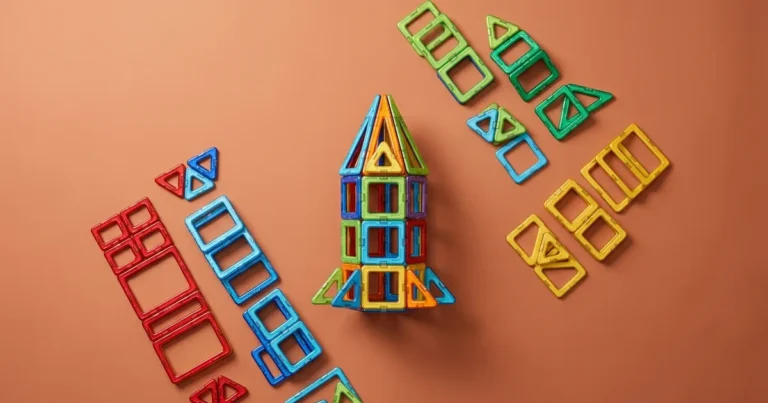
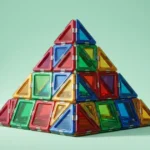
GRAFLO 70-Piece Magnetic Tiles Set – STEM Building Toy for Kids 3+
This set is explicitly described as a “STEM building toy” on the GRAFLO site, designed for ages 3+ and emphasizing safe, creative fun.
The pieces allow open-ended construction, combining vibrant colors and various shapes, enabling children to build castles, rockets, geometric solids, or whatever they imagine.
Because it’s aimed at young builders, the emphasis is both on safety (BPA-free plastic, strong internal magnets) and on introducing early STEM thinking: balance, structure, and geometry.
This is a great example of a toy that invites creativity, early engineering thinking, and hands-on spatial work.
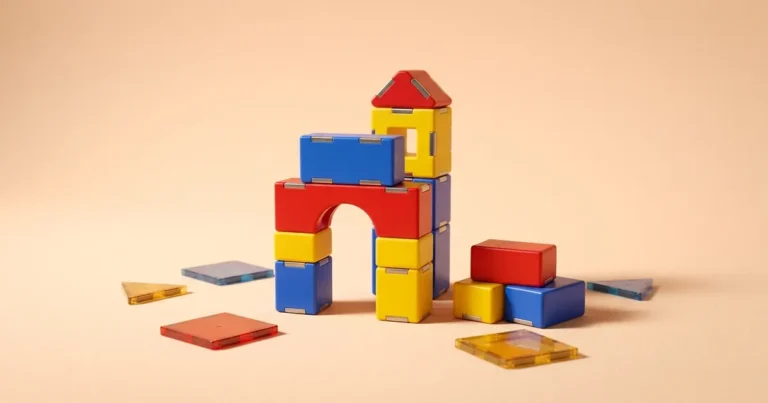
GRAFLO 60-Piece Magnetic Blocks – STEM Toy for Kids Ages 3+
Another variant from the same brand: the 60-piece magnetic block set. Highlighted in the “Educational Toys” category as a STEM toy.
Smaller piece count means perhaps a slightly simpler entry level, which is perfect for younger children or for families starting out.
This one shows you don’t always need a huge set; the key is the open-ended magnetic construction component, which invites children to explore and build.
GRAFLO Ultimate Magnetic Tiles Set – 110 PCS – STEM Toy for Kids 3+
Stepping it up: the 110-piece set offers more variety, more complexity, and more possibilities to scale up the design challenge.
When you choose this level, children can build more elaborate structures, experiment with combinations, and maybe work collaboratively. So the toy becomes a tool for deeper creativity and complexity.
How to Use Toys in Practice: Tips & Ideas
Here are practical tips to make the most of STEM toys like the ones above, whether you’re a parent, teacher, or caregiver.
1. Set up a dedicated space for building
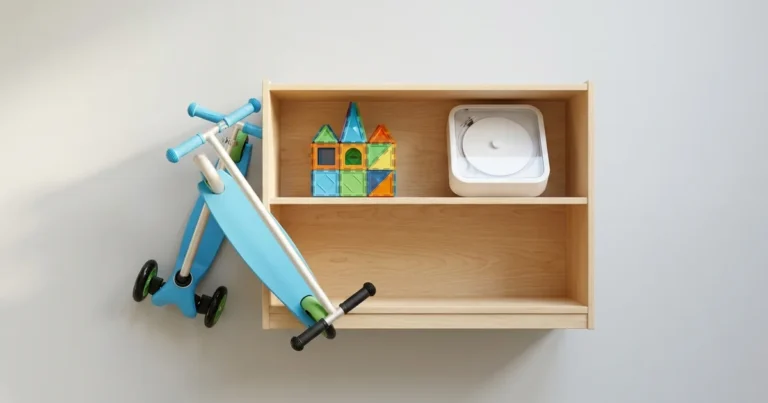
Create a space where your child can leave their building materials out, revisit projects, and tweak and redesign. The best toys offer “come back to it” potential.
2. Encourage open-ended prompts, not instructions
Instead of saying, “Follow the instructions to build exactly this model,” say, “What can you build that flies?” or “Can you build a bridge that holds a small toy?” This invites creativity and experimentation.
3. Mix with real-world context
When children play with a toy, you can connect it to real-life questions: “Why did that tower collapse?” “How does the magnet hold these blocks?” “What shape is strongest here?” These questions boost STEM learning.
4. Encourage iteration
If a structure falls down, don’t simply rebuild exactly the same; ask, “What would you change? How could you make it stronger/more stable?” That’s engineering thinking.
5. Use alongside other learning
Stem toys complement other forms of learning, reading, storytelling, and outdoor play. For example, after building a model, ask your child to write or draw a “story” about it. This blends creativity, literature, and STEM.
6. Collaborate & social play
Having siblings or friends join in increases the social dimension: negotiating how to build, sharing ideas, and working together. Peer collaboration enhances the STEM toy experience.
7. Celebrate failures as learning
When something doesn’t work (and it will), frame it as a valuable discovery: “What did you learn when those blocks fell?” That mindset builds resilience.
Why Investing in Quality STEM Toys Pays Off
You might ask, “Why buy something labeled as a stem toy? Can’t regular building blocks suffice?” Sure, but there are good reasons to invest in quality toys:
- Designed for learning and play: Quality toys combine robust construction with educational intent. The GRAFLO magnetic sets, for example, are explicitly designed for STEM thinking.
- Longevity and reusability: The best toys aren’t one-and-done; they grow with the child. A 110-piece set offers expansion and depth.
- Safety and peace of mind: High-quality materials (non-toxic, rounded edges, strong magnets) mean you can focus on play rather than worry.
- Encouraging a mindset, not just a toy: Toys help cultivate curiosity, innovation, and comfort with experimentation, traits that serve far beyond childhood.
- Tangible return in learning outcomes: If you invest in toys that support skills like spatial reasoning, engineering, and creativity, you are supporting your child’s foundational capabilities in a meaningful way.
Addressing Common Questions & Concerns
“My child doesn’t seem interested in building or engineering. Will STEM toys work?”
Yes. The key is to find the right type of toy and invite rather than force. Some children prefer open-ended artistic builds (e.g., magnetic tiles) versus specific robotics kits. Start small. With something like the 60-piece set from GRAFLO, the barrier is low.
Also, allow the child to bring in their own ideas: “Build something for the family pet” or “design a new roller coaster for your toys.”
“Won’t they just mess around and not learn?”
Possibly, but the beauty of good toys is that the messing around is the learning. Encourage reflection: after building, ask, “What happened?”, “Why did it work?”, and “What would you try differently next time?” That reflection turns play into purposeful thinking.
“Are stem toys too expensive?”
They can be more expensive than simple toys, but you’re paying for quality, versatility, and learning potential. A set like the 70-piece magnetic tiles from GRAFLO gives long-term value (and can be used by multiple children over the years).
You may start with a smaller set and then expand.
“Isn’t digital learning enough nowadays?”
Digital tools have their place, but there’s something unique about hands-on, tangible play. Building with physical pieces gives sensory feedback, encourages spatial thinking, and engages motor skills in ways screens don’t. Using toys provides a well-rounded learning diet.
Final Thoughts
Stem toys are more than just trendy items in the toy aisle; they are powerful tools for nurturing creativity, problem-solving, and lifelong learning. When chosen thoughtfully (open-ended design, safety, growth potential) and used in supportive ways (space for play, prompts, iteration, reflection), they can become a launchpad for children’s imagination and cognitive development.
If you’re looking for excellent options, the GRAFLO magnetic tile and block sets are worth considering. From a starter 60-piece set to a more elaborate 110-piece set, they offer versatility, safety, and open-ended fun, qualities that make them truly effective toys.
So if you’re ready to invest in play that matters, not just for the moment but for years ahead, pick a good toy, set aside time for play, ask questions, encourage iteration, and watch as your child’s creativity blossoms.
Remember: the goal isn’t just for them to build something once, but for them to think, design, redesign, and learn. With the right toy, the journey of exploration becomes part of the fun.