

We often hear about the importance of preparing our children for the future, especially concerning careers in stem fields (Science, Technology, Engineering, and Mathematics). But did you know that the foundation for this kind of thinking is built long before a child enters a classroom?
It doesn’t start with complex equations or coding; it starts on the living room floor with play. At GRAFLO, we believe that introducing stem education concepts early on, through the right kind of supportive play, is one of the best gifts you can give your child. Let’s explore how simple, fun, and educational activities can spark a lifelong love for learning.
What Does STEM Look Like for a Toddler?
For a three-year-old, STEM isn’t a rigid subject; it’s a natural way of interacting with the world. It’s the “what happens if I drop this?” experiment (Science), the “how can I make this tower taller?” challenge (Engineering), and the “let’s count the blue blocks” game (Math).
True educational toys are designed to harness this natural curiosity. They turn abstract concepts into tangible experiences. By providing tools that encourage open-ended exploration, you are helping your child develop critical thinking and problem-solving skills that are essential not just for future stem fields, but for all areas of life. You can browse our full collection of curated educational toys to see how we blend learning and play.
Finding the Best STEM Toys for 3 Year Olds
Choosing the right toys at this age is crucial. You want items that are safe, engaging, and gently challenging. The best stem toys for 3 year olds are ones that don’t have a single “right” way to play. They invite creation and experimentation.
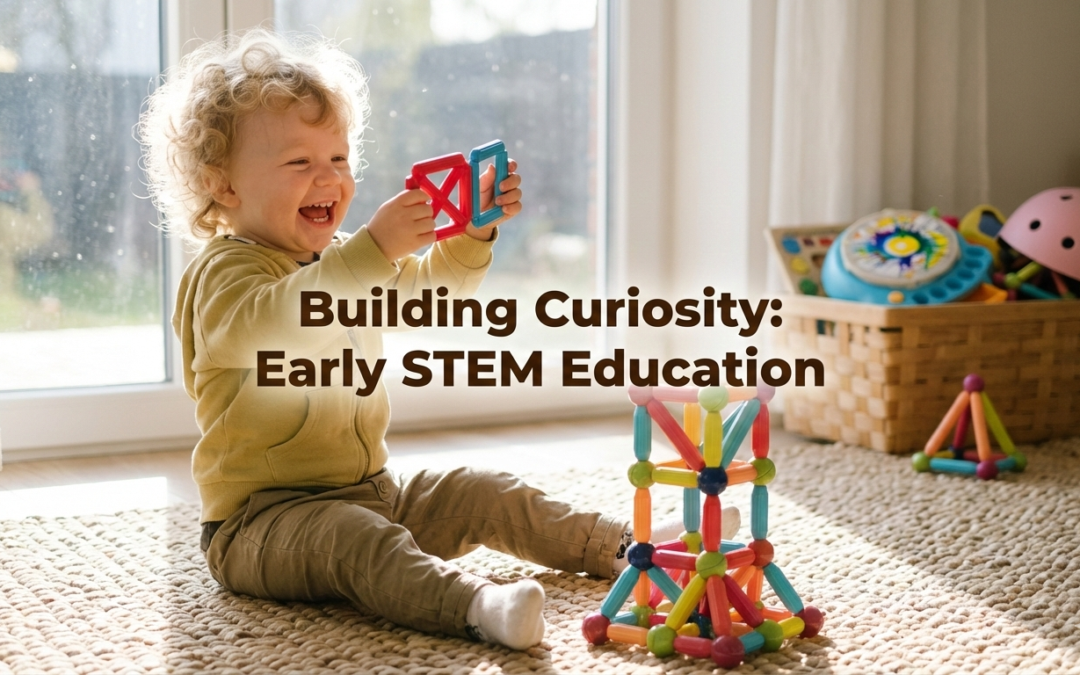
A perfect example is a building set that allows for endless configurations. Our Magnetic Blocks STEM Toy (60pcs) is designed specifically with this in mind. The pieces click together easily, empowering little hands to build structures from their imagination. This simple act of connecting and stacking is a powerful lesson in geometry, magnetism, and structural engineering.
Building More Than Just Towers
When a child engages with a STEM toy, they are building resilience. Their tower will fall, their design might not work the first time, and that’s the point. Learning to try again, to adjust their approach, and to problem-solve is the essence of the scientific method.
Fostering this mindset early on is key. For more insights into the broader benefits of purposeful play, I recommend reading our article on How Educational Learning Toys Support Early Childhood Development. It dives deeper into how these early experiences shape growing minds.
FAQ
At what age should I introduce STEM education? You can start introducing STEM concepts as soon as your child begins to explore their environment. Simple activities like stacking cups, playing with water, or sorting shapes are all foundational STEM experiences appropriate for toddlers.
What makes a toy a “STEM toy”? A good STEM toy encourages active, hands-on learning rather than passive entertainment. It should prompt questions, require problem-solving, and allow children to experiment with cause and effect.
Are these toys only for children interested in stem fields? Not at all! The skills developed through educational STEM play-like critical thinking, creativity, and perseverance-are valuable for every child, regardless of their future career path.
Conclusion
Early childhood is a magical time of discovery. By integrating stem education principles into their daily play with thoughtful, fun toys, you aren’t just teaching them facts; you’re teaching them how to learn. And that is a foundation that will support them forever.