

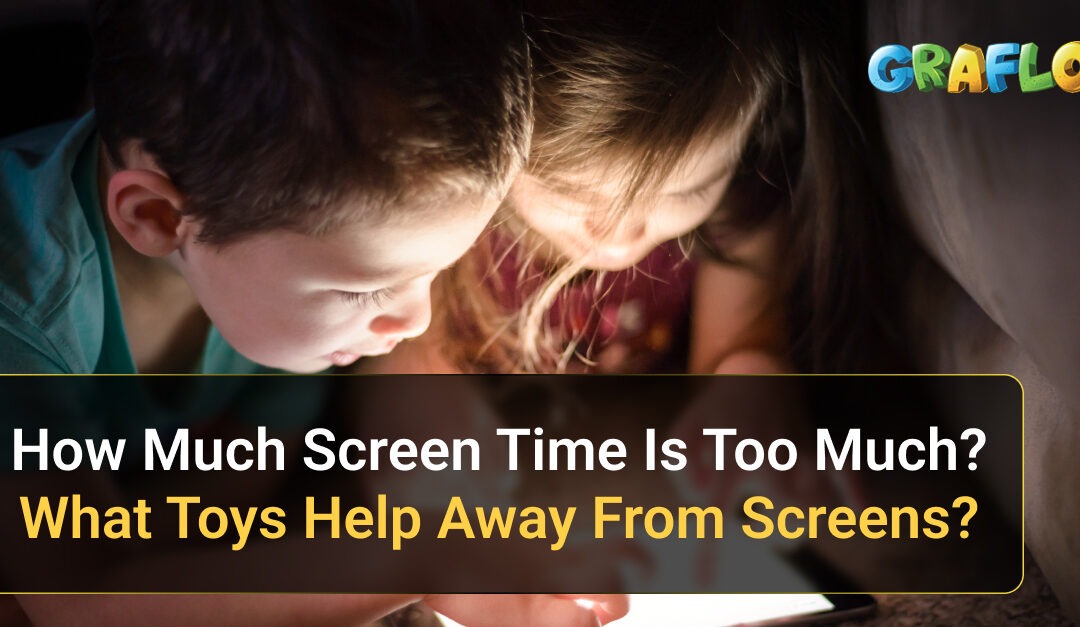
In today’s world, screens are everywhere: tablets, TVs, gaming consoles, and even smartwatches. As parents, we try to balance the benefits of digital learning with the fear of “too much screen time.” But let’s be honest: managing screen time isn’t just a parenting rule. It’s a daily battle. And if you’re noticing shorter attention spans, constant device requests, or tantrums when screens turn off, you’re not alone.
Here’s the good news: kids don’t need screens to learn, explore, or have fun. With the right toys and activities, children can develop creativity, problem-solving, and confidence, all without staring at a glowing display. This guide explains how much screen time is actually healthy and which toys help pull kids back into real-world play. This guide explains how much screen time is healthy and which toys can help reduce screen dependency, especially those available at Graflo Toys.
Why Screen Time Needs Limits
“Screen Time” is not bad by itself. The problem begins when it replaces active play, social interaction, sleep, or hands-on learning. Research shows that excessive screen time can impact:
- Attention span
- Sleep quality
- Emotional regulation
- Language development
- Physical activity
Moderation is key, and structure is your best tool.
How Much Screen Time Is Too Much? (By Age Group)
Babies (0-18 Months)
- Recommended: Avoid screen time completely.
- Exception: Occasional video calls with family.
- Why: Babies learn through touch, sound, and real-world interaction, not screens.
Toddlers (18-24 Months)
- Recommended: 15-20 minutes of high-quality content with parental presence.
- Screens should NEVER replace play, exploring, or talking.
Preschoolers (2-5 Years)
- Recommended: 1 hour per day, preferably split into smaller sessions.
- Tip: Choose educational, slow-paced shows or apps, no fast-cut animations.
Ages 6+
- Recommended: Consistent limits, preferably 1–2 hours per day.
- Important: Prioritize homework, outdoor play, hobbies, and family time before screens.
Warning Signs of Too Much Screen Time for Kids
Emotional Signs
- Irritability when devices are removed
- Increased tantrums
- Impatience or restlessness
Physical Signs
- Headaches
- Poor sleep
- Eye strain (“tired eyes”)
Behavioral Signs
- Less interest in toys
- Reduced creativity
- Poor social engagement
If these feel familiar, it’s time to rebalance screen habits.
Why Screen-Free Toys Matter More Than Ever
Hands-on toys give kids what screens can’t:
- Real problem-solving
- Sensory experience
- Creativity and imagination
- Independence
- Fine and gross motor skills
- Social play with siblings or friends
Kids don’t need complex electronics; they need real-world stimulation.
Best Toys That Help Kids Stay Away From Screens
Below are the top categories of screen-free toys that keep kids fully engaged.
1. Building & Construction Toys
Perfect for boosting creativity, patience, and spatial thinking.
Examples:
- LEGO® sets
- Wooden blocks
- Magnetic tiles
- STEM construction kits
These toys encourage storytelling, problem-solving, and hours of independent play.
2. Arts & Craft Kits
Kids love making something with their own hands. These activities calm the mind and reduce screen cravings.
Examples:
- Coloring books
- Watercolors
- Slime-making kits
- Clay and Play-Doh
- DIY jewelry or craft boxes
3. Puzzles & Brain Games
These toys give kids the mental challenge that screens provide, without the overstimulation.
Examples:
- Jigsaw puzzles
- Rubik’s cubes
- Memory-matching games
- Logic puzzle sets
4. Pretend Play Sets
Role-play builds communication skills, confidence, and storytelling abilities.
Popular Choices:
- Kitchen sets
- Doctor kits
- Dollhouses
- Superhero costumes
- Tool kits
Pretend play = imagination + emotional growth.
5. Outdoor Play Toys
Nothing beats fresh air! Outdoor toys reduce anxiety, boost mood, and build strength.
Best Options for Screen-Free Toys:
- Bicycles
- Scooters
- Balls
- Kites
- Jump ropes
- Gardening tools
6. Sensory Toys
Great for toddlers and children who need calming, hands-on stimulation.
Examples:
- Fidget toys
- Sensory bins
- Water beads
- Textured blocks
- Kinetic sand
7. STEM & Educational Toys
These toys satisfy curiosity and learning, without screens.
Examples:
- Science experiment kits
- Coding toys (screen-free versions)
- Microscope sets
- Solar robot kits
How to Reduce Screen Time Without a Fight
1. Replace, Don’t Remove
Instead of saying “No screens,” offer an engaging alternative like coloring, building blocks, or puzzles.
2. Create Screen-Free Zones
- No screens at the dining table
- No screens in the bedroom
- No screens in the car (unless on a long trip)
3. Build a Routine
Kids behave better with structure. Use a simple rule:
Play → Homework → Family Time → Screen Time → Bed
4. Model the Behavior
Kids copy adults; if you’re scrolling constantly, they will too.
5. Use Toy Rotation
Keep toys fresh by hiding some for a week; they’ll feel new again! You can find a variety of toys to rotate at Graflo Toys.
FAQs
1. What is considered unhealthy screen time?
Anything that replaces sleep, outdoor play, socializing, or learning is considered unhealthy screen time.
2. Is educational screen time okay?
Yes, but it should be slow-paced, interactive, and used in moderation.
3. Can too much screen time affect behavior?
Absolutely. It can cause irritability, hyperactivity, and mood swings.
5. At what age is it safe for mobile phones?
Experts suggest 10–12+ years, depending on maturity and need.
6. What are the best alternatives to screens?
Building toys, puzzles, art kits, outdoor activities, and imaginative play.
7. How do I break my child’s screen addiction?
Gradually reduce usage, introduce engaging toys, build routines, and model healthy habits yourself.
Conclusion
Screen time isn’t the enemy; too much screen time is. Children need real play, movement, imagination, and hands-on learning to grow well. By choosing the right toys and setting healthy limits, you can help your child enjoy a more balanced, active, and joyful childhood.
And whenever you need high-quality, screen-free toys, Graflo toys have plenty of fun options to support your child’s development