Last updated: September 9, 2026
If you have stood in a toy aisle in Dubai Mall or scrolled through an online store at midnight trying to decide between magnetic tiles and magnetic blocks for your toddler, you are not alone. Both toys look similar at first glance, both use magnets, and both promise to build little brains while keeping little hands busy. But they are not interchangeable, and the right choice depends heavily on your child’s age, motor skills and how much supervision you can realistically provide during play. This guide breaks down the real differences so you can choose with confidence, not guesswork.
Why This Decision Matters More Than You Think
Toddlers between 18 months and 4 years are in a critical window for fine motor development, spatial reasoning and early problem solving. The toys you hand them during this stage are not just entertainment, they are tools that shape how confidently a child later handles pencils, buttons, zippers and puzzle pieces. Magnetic tiles and magnetic blocks both support this growth, but they do it in different ways, and they carry different safety profiles that every parent in the UAE should understand before buying.
Magnet safety is not a small detail. Small, powerful magnets that are swallowed can cause serious internal injuries if more than one magnet is ingested, because they attract each other through body tissue. This is why choosing age-appropriate, well-designed magnetic toys, and supervising play closely, matters just as much as choosing a toy that looks fun on the box.
What Are Magnetic Tiles?
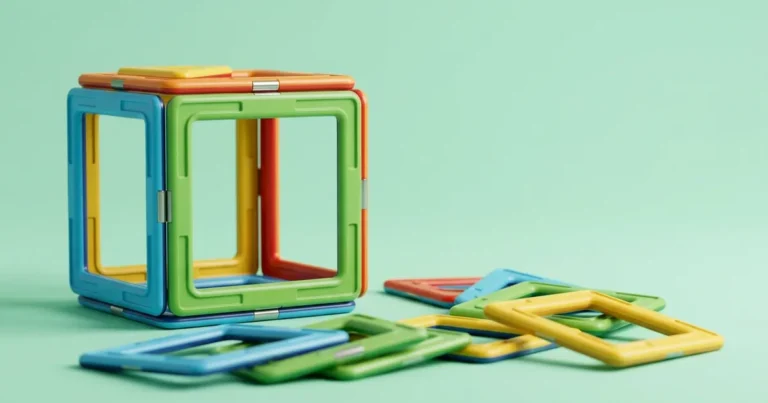
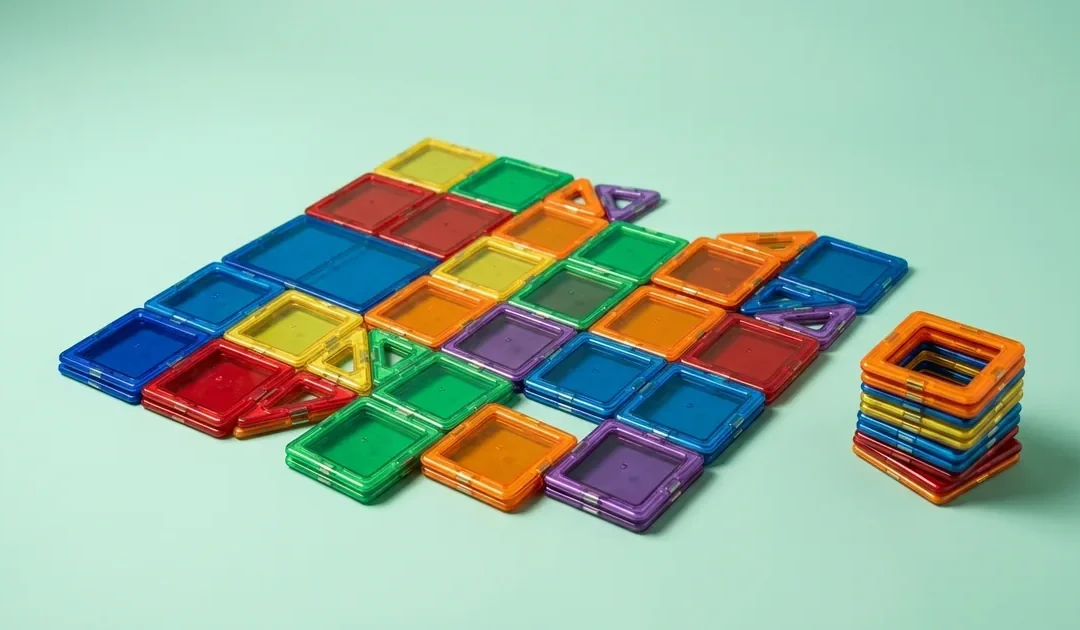
Magnetic tiles are flat, geometric panels, usually squares, triangles, rectangles or hexagons, each edged with small magnets that snap together when the shapes are aligned correctly. Children build outward and upward, connecting tile to tile to form walls, houses, towers, cars, or entire imaginative worlds. Many sets include translucent or colourful tiles that catch the light beautifully, which adds a sensory element that pure blocks do not offer.
How Toddlers Play With Magnetic Tiles
Younger toddlers often start by simply pulling tiles apart and pushing them back together, enjoying the satisfying click and the resistance of the magnetic pull. As fine motor control improves, usually somewhere between 2.5 and 4 years, children begin building flat patterns first, then graduate to 3D structures like cubes, tunnels and small enclosures. Because the tiles are flat and lightweight, toddlers can experiment freely without structures collapsing under their own weight, which keeps frustration low and confidence high.
Strengths of Magnetic Tiles for Toddlers
- Large flat surfaces are easy for small hands to grip and align, even before fine motor skills are fully developed.
- The click-and-hold magnetic connection gives instant positive feedback, which keeps young children engaged longer.
- Translucent colours support early lessons in colour mixing, shapes and light, especially fun on a sunny window in a UAE home.
- Building is largely two-dimensional at first, so toppling structures are rare, reducing meltdowns during play.
Where Magnetic Tiles Fall Short
- Tiles are generally larger and flatter, which is good for safety but can limit the complexity of builds for older toddlers who crave more challenge.
- Some budget sets use thin plastic edges that can crack if a toddler steps on them or bends them too far, exposing the magnet inside.
- Storage can be awkward since flat tiles do not stack as neatly as blocks in a toy bin.
What Are Magnetic Blocks?
Magnetic blocks are three-dimensional shapes, cubes, cylinders, arches and prisms, with magnets embedded inside the block itself rather than only along an edge. Because they are solid and chunky, they behave more like traditional building blocks, except that they snap together magnetically instead of relying purely on stacking and balance.
How Toddlers Play With Magnetic Blocks
Blocks appeal strongly to toddlers who already enjoy classic wooden or plastic building sets. The added magnetic pull means towers are more stable and less likely to collapse from a small bump, which is especially reassuring for children who get upset when their tower falls. Many toddlers use magnetic blocks to build vertical towers, simple vehicles, or sort blocks by colour and shape as an early categorisation activity.
Strengths of Magnetic Blocks for Toddlers
- Chunky, three-dimensional shapes are excellent for teaching spatial awareness and basic engineering concepts like balance and height.
- Magnetic connection adds stability, so towers stand taller before toppling, extending play sessions and reducing frustration.
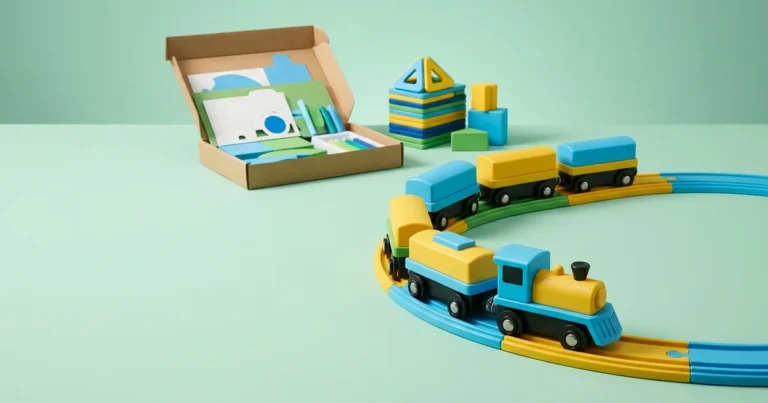
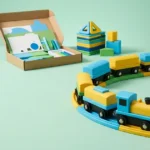
- Blocks often combine well with other toys, we frequently see toddlers connecting magnetic blocks with train sets, such as the Graflo Magnetic Train for Kids, 65 pcs, to build combined block-and-track worlds.
- Solid construction generally holds up well to being dropped, thrown, or chewed during the toddler phase.
Where Magnetic Blocks Fall Short
- Some individual blocks are smaller and heavier than tiles, meaning extra care is needed with children under 3 who still mouth toys.
- Builds tend to be less visually elaborate compared to the wall-like, house-like creations tiles allow.
- Very young toddlers, under 18 months, may find aligning the magnetic faces correctly more difficult than simply clicking flat tile edges together.
Magnetic Tiles vs Magnetic Blocks: Side-by-Side Comparison
To make the choice simpler, here is how the two toy types stack up across the factors that matter most to UAE parents.
| Factor | Magnetic Tiles | Magnetic Blocks |
|---|---|---|
| Best starting age | Around 3 years and up | Around 2.5 to 3 years and up |
| Fine motor demand | Moderate, flat alignment | Moderate to high, 3D alignment |
| Build stability | Very stable when flat, needs skill for 3D | Naturally stable towers |
| Visual and sensory appeal | High, especially translucent sets | Moderate, colour based |
| Storage footprint | Bulkier, flat pieces | Compact, stackable |
| Pairing with other toys | Good with figures and play mats | Excellent with trains and vehicles |
| Typical price range in AED | Mid to premium depending on piece count | Mid range, often sold in larger sets |
Developmental Benefits: What Each Toy Actually Teaches
Fine Motor Skills
Both toys strengthen the small muscles in the hands and fingers, but they do so through slightly different movements. Tiles require a pinch-and-align motion along a flat edge, which is closer to the motion used later for writing and drawing. Blocks require a slightly firmer press-and-rotate motion to align magnetic faces in three dimensions, which builds hand strength and bilateral coordination, using both hands together for a single task.
Spatial Reasoning and Early Geometry
Magnetic tiles are fantastic for teaching toddlers about shape, symmetry and how flat pieces combine to create enclosed spaces, an early introduction to geometry. Magnetic blocks lean more heavily into three-dimensional spatial reasoning, teaching concepts like height, balance, weight distribution and gravity, all through hands-on trial and error.
Creativity and Open-Ended Play
Because neither toy comes with a single “correct” way to build, both encourage open-ended, imaginative play, which child development experts consistently rank as more valuable than toys with only one use. A pile of magnetic tiles can become a castle one afternoon and a spaceship the next. A set of magnetic blocks might become a tower today and a bridge for toy cars tomorrow.
Early STEM Thinking
Both toy types quietly introduce toddlers to engineering concepts, cause and effect, structural stability, and problem solving, long before formal school lessons begin. Watching a wall collapse and figuring out why teaches resilience and experimentation in a low-stakes, playful way.
Social and Language Skills
When toddlers build alongside siblings or parents, both toy types encourage descriptive language, words like “bigger,” “taller,” “triangle,” “corner,” and “underneath” naturally enter conversation. Turn-taking during shared building also supports early social skills like patience and cooperation.
Safety First: What Every UAE Parent Should Check
Magnet safety deserves its own dedicated section because it is the single most important factor separating a great toy from a dangerous one, regardless of whether you choose tiles or blocks.
1. Check the Age Recommendation on the Box
Reputable magnetic toy sets are clearly labelled with a minimum age, often 3 years and up, precisely because younger children are more likely to put small objects in their mouths. Always follow this guidance rather than assuming your particular toddler is “advanced” for their age.
2. Inspect Magnet Housing Regularly
Before every play session, especially in the early weeks after purchase, quickly check that magnets are fully sealed inside their plastic housing with no cracks, chips or loose edges. If a magnet ever becomes visible or loose, remove that piece from play immediately and do not allow the toddler to continue using the set until it is repaired or replaced.
3. Supervise, Don’t Just Observe
Active supervision means being within arm’s reach and paying attention, not simply being in the same room while checking your phone. For toddlers under 3, this level of supervision is non-negotiable during magnetic toy play.
4. Choose Reputable, Well-Made Sets
Cheaper, unbranded magnetic toys sometimes use thinner plastic shells and weaker adhesive to hold magnets in place. Investing a little more in a well-constructed set, and buying from a trusted retailer, significantly reduces the risk of a magnet coming loose over months of enthusiastic toddler play.
5. Know the Warning Signs
If your child ever swallows a magnet, or you suspect they may have, seek medical attention immediately, even if they seem completely fine. Multiple swallowed magnets can attract each other inside the digestive system and cause injuries that are not immediately obvious from the outside.
Which Age Group Suits Which Toy?
18 to 24 Months
At this stage, neither tiles nor blocks are generally recommended without extremely close, constant supervision, and most reputable brands set their minimum age at 3 years for exactly this reason. If you do introduce magnetic toys early, choose the largest, chunkiest pieces available and never leave your toddler unattended, even for a moment.
2.5 to 3 Years
This is often the sweet spot where many toddlers are ready to begin magnetic play, particularly with tiles, because the flat shapes are easier to grip and align than three-dimensional blocks. Simple flat patterns, like building a square or a simple wall, are great first goals.
3 to 4 Years
By now, most toddlers have the fine motor control and patience to enjoy both tiles and blocks fully. This is also the age where combining toy types becomes exciting, for example connecting magnetic blocks to a train layout like the Magnetic Train Set for Kids, 178 pcs to build an entire imaginative town with tracks, tunnels and buildings.
4 Years and Beyond
Older toddlers and young preschoolers begin attempting more ambitious 3D structures, houses with roofs, cars with moving parts, and simple machines. If your child is nearing this stage, browsing a wider range of building and creative toys in our collection for ages 3 to 5 years can help you find the next set to keep them challenged.
Durability and Value for Money in AED
Toddlers are, lovingly, hard on toys. They drop them, sit on them, chew the corners and occasionally throw a tile across the room during a tantrum. When comparing value, look beyond the sticker price and consider cost per hour of engaged play over months or years.
Tile Durability
Well-made magnetic tiles with reinforced plastic frames hold up well to daily toddler use, though the flat surfaces can show scratches over time from being dragged across tiled or marble floors, common in UAE homes. A quality starter set typically costs a moderate mid-range price in AED and can be expanded later with additional piece packs.
Block Durability
Magnetic blocks, being more solid and compact, tend to survive drops and rough handling slightly better than flat tiles, since there is less surface area at risk of cracking. Larger sets with more pieces naturally cost more in AED, but they also allow for more ambitious builds as your child grows, extending the toy’s useful life by a year or two.
Getting the Most Value
Look for sets that are compatible with other magnetic toys you may already own, and consider starting with a smaller set to see how your toddler responds before investing in a larger collection. Many families find that a smaller set of tiles paired with a compact block or train set offers more variety than one large set of either alone.
Combining Tiles, Blocks and Other Creative Play
One of the best-kept secrets among experienced toddler parents is that magnetic tiles and magnetic blocks are not mutually exclusive, they complement each other beautifully. A toddler might use tiles to build the walls of a house and blocks to build the furniture inside it. Others enjoy building a magnetic block tower next to a tile enclosure and running toy trains between the two, especially with sets like our 65-piece or 178-piece magnetic train collections.
Adding a Sensory or Artistic Layer
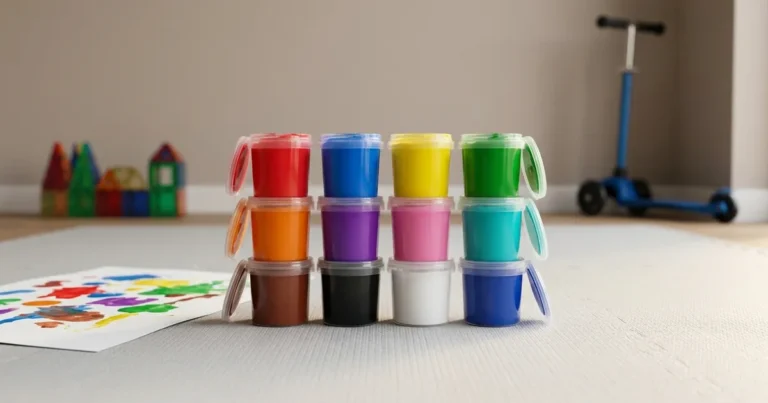
After a big building session, many parents find it helpful to switch gears to a calmer, sensory activity to wind down toddler energy before nap time or bedtime. Something like finger paint for kids in 12 colours offers a completely different kind of creative outlet, one that is soft, colourful and screen-free, rounding out a full day of hands-on play.
Growing Into More Complex Play
As your toddler matures into a preschooler and beyond, their building interests will naturally evolve. Keeping an eye on age-appropriate options, such as our collection for ages 6 to 8 years, helps you plan ahead so you always have the next challenge ready when your child outgrows their current favourites.
Practical Buying Checklist for UAE Parents
Before adding either a tile set or a block set to your cart, run through this quick checklist:
- Confirm the recommended age range matches or exceeds your toddler’s current age.
- Check that magnets are described as fully sealed inside reinforced housing, not simply glued to the surface.
- Read the piece count and compare it to your available floor space, larger sets need more room to build comfortably.
- Consider whether the set is compatible with toys you already own, such as train tracks or other magnetic brands.
- Check price in AED against piece count to judge overall value, more pieces generally means more open-ended play.
- Look for rounded edges and smooth finishes, especially important for toddlers who are still a little unsteady on their feet.
Common Mistakes Parents Make When Choosing
Buying Based on Box Art Alone
Beautiful marketing photos of elaborate castles and cities can set unrealistic expectations. Toddlers under 4 will rarely build anything that complex on their own, and that is completely normal. Choose a set based on your child’s current stage, not the most impressive photo on the packaging.
Ignoring Piece Size
Some parents assume that because a toy is labelled “magnetic building toy” it is automatically toddler-safe. Always check individual piece dimensions, smaller accessory pieces, connectors or figures included in some sets can pose a separate choking hazard even if the main tiles or blocks are large.
Overbuying Too Soon
It is tempting to buy the biggest set available to “get more for the money,” but a toddler just starting out often does better with a smaller, manageable set that does not overwhelm them. You can always expand later once you see how your child engages with the toy.
Skipping the Supervision Habit
Even the safest, best-reviewed magnetic toy still requires supervision for toddlers. Building the habit of sitting down to play together, even for just ten or fifteen minutes, pays off in both safety and bonding.
How to Introduce Magnetic Toys for the First Time
The first play session sets the tone for how your toddler will relate to the toy going forward. Start by sitting on the floor together, opening the set slowly, and letting your child explore a handful of pieces at a time rather than dumping the entire set out at once, which can feel overwhelming.
Step-by-Step First Session
- Show your toddler how two pieces click together, then let them try it themselves, even if it takes several attempts.
- Build a simple shape together, a square with tiles or a short tower with blocks, narrating what you are doing in simple words.
- Let your toddler take the lead on the next build, offering help only when asked or when frustration builds.
- Celebrate the finished structure, even a wobbly one, taking a photo together can make the moment feel special.
- Pack up together at the end, turning cleanup into part of the play rather than a chore.
Signs Your Toddler Is Ready to Progress
Watch for these cues that suggest your child is ready for more advanced sets or a switch from tiles to blocks or vice versa:
- They consistently build the same simple shape and seem bored repeating it.
- They start asking for more pieces or trying to combine the set with unrelated toys.
- Their hand strength and coordination allow them to align pieces on the first or second try, rather than needing many attempts.
- They show interest in building upward, downward, or with more complex shapes than before.
When you notice these signs, it may be time to add a second set, mix tiles with blocks, or introduce a train layout to bring a whole new dimension to their building play.
Final Verdict: Tiles, Blocks, or Both?
There is no single universal winner in the magnetic tiles vs magnetic blocks debate, because the best choice always depends on your toddler’s age, current motor skills and personal preferences. As a general rule, magnetic tiles tend to suit toddlers who enjoy flat, visual, colourful building and are just starting their magnetic toy journey, while magnetic blocks tend to suit toddlers who already enjoy classic block stacking and want more stability and three-dimensional challenge. Many UAE families find that owning a modest set of both, or one set that pairs naturally with a train or vehicle collection, offers the richest and longest-lasting play experience.
Conclusion
Choosing between magnetic tiles and magnetic blocks does not have to be complicated once you understand what each toy offers developmentally and where the safety priorities lie. Focus first on age-appropriate design and sealed, well-built magnets, then let your toddler’s personality guide whether flat, colourful tiles or chunky, stable blocks earn a permanent spot in your toy box. Whichever you choose, supervised, hands-on building time is one of the simplest and most rewarding ways to support your child’s growing mind, one satisfying click at a time.
Frequently Asked Questions
Are magnetic tiles or magnetic blocks safer for toddlers under 3?
Neither is officially recommended for toddlers under 3 without close supervision, since most reputable brands set a minimum age of 3 years due to small parts and magnet risks. If you introduce either type early, choose the largest, most securely sealed pieces available and never leave your toddler unattended during play.
Can magnetic tiles and magnetic blocks be used together?
In most cases yes, many families successfully combine tiles and blocks, and even magnetic train sets, into one larger imaginative play world. Just check piece sizes and connection styles to make sure they physically fit together comfortably before combining sets.
How do I know if a magnetic toy has strong enough magnets sealed properly?
Look for product descriptions that mention reinforced or fully sealed magnet housing, avoid sets where magnets appear glued only to the surface, and always inspect pieces regularly for cracks, especially after months of enthusiastic toddler play.
Which is better for developing fine motor skills, tiles or blocks?
Both support fine motor development well, but in slightly different ways, tiles encourage a pinch-and-align motion similar to early writing skills, while blocks encourage a firmer press-and-rotate motion that builds hand strength and two-handed coordination.
What should I do if my toddler swallows a small magnet?
Seek medical attention immediately, even if your child seems fine, because swallowed magnets can attract each other inside the body and cause serious injury that is not obvious from the outside. Do not wait to see if symptoms appear before contacting a doctor.