Last updated: November 4, 2026
By the time your child turns six, play starts to look different. Scribbles turn into stories, towers turn into working machines, and simple games turn into ones with real rules and real friends. Choosing toys age 6-8 is less about keeping a child occupied and more about matching a toy to the skills they are actively building: reading, logic, coordination, patience, and teamwork. This guide walks UAE parents through what matters most at this stage, what to check for safety, and which categories of play genuinely earn a place in your home.
Why Toys Age 6-8 Matter for Growing Skills
Children between six and eight are in a stretch of development that educators often call the ‘concrete operational’ stage. They can follow multi-step instructions, understand cause and effect, and start to grasp fairness, strategy, and planning. This is why toys age 6-8 look so different from toys for younger children. A child at this stage does not just want to stack blocks, they want to build something specific, follow a plan, and show it off when it is finished.
The right toy at this age does three things at once. It gives your child a genuine challenge that is within reach, not so easy that it bores them and not so hard that it discourages them. It supports a skill they are already working on at school or at home, such as fine motor control, reading, or logical thinking. And it holds their attention long enough to build focus and follow-through, two habits that matter well beyond playtime.
Parents in the UAE also have a few extra things to think about: indoor play during hot months, safe outdoor time during cooler evenings, and toys that travel well between home, school breaks, and family visits. Keeping all of this in mind helps you choose toys age 6-8 that actually get used, not ones that sit in a cupboard after the first week.
Safety First: What to Check Before You Buy
Even though children aged 6 to 8 are far more capable than younger children, safety checks are still the first step every single time you buy a new toy. A toy that is marketed for this age group should still meet a few basic standards before it earns a spot in your home.
Material and Build Quality
Look for toys made from non-toxic, BPA-free materials with a smooth finish and no sharp edges. At this age, children handle toys more roughly during active and group play, so sturdier construction matters. Check for solid stitching on soft toys, tight joints on building sets, and magnets that are securely sealed inside their casing rather than loose or exposed.
Age Labeling and Certification
Always check the age label on the box and match it honestly to your child’s current stage, not just their age in years. A confident reader might be ready for a more advanced STEM kit, while a child who is still working on fine motor control may do better with a simpler building set first. Look for recognized safety certifications on the packaging, which confirm the toy has been tested for things like choking hazards, toxic materials, and structural safety.
Small Parts and Magnet Safety
By age 6 and up, most children no longer put small objects in their mouths, but households with younger siblings still need to be careful. If you have another child under 6 at home, store magnetic sets, small building pieces, and board game tokens in a container your older child can access but your younger one cannot. This single habit prevents most of the common at-home toy accidents.
Outdoor and Active Play Safety
For active toys like scooters, bicycles, and skates, safety gear is not optional. A properly fitted helmet, knee pads, and closed shoes should be part of the purchase, not an afterthought. Always supervise outdoor play on a kick scooter or any wheeled toy near roads, driveways, or communal walkways, and choose smooth, flat surfaces for younger riders who are still building balance and confidence.
Types of Toys Age 6-8 Love
Once safety is covered, the fun part begins: matching the toy to the kind of play your child naturally gravitates toward. Most children at this age fall into one or more of these categories, and a well-rounded toy shelf usually covers at least three of them.
Active and Outdoor Play
Physical play is still one of the most important parts of a six to eight year old’s day. Children at this age have better balance, coordination, and stamina than younger children, which makes them ready for toys that genuinely build strength and motor skills rather than just entertain. A foldable kids kick scooter is a strong choice here. It is light enough for a child to carry themselves, foldable for easy storage in an apartment or car, and it builds balance, leg strength, and spatial awareness every time it is used. Scootering also gives children a sense of independence, since they can control their speed and direction, which builds confidence in a very physical, tangible way.
For UAE families, active toys are best used in the cooler parts of the day, in the early morning or evening, and always on a flat, enclosed surface such as a park path or community walkway, away from vehicle traffic.
Building and Construction Sets
Construction toys are one of the best investments for this age group because they grow with your child’s ability. At six, a child might follow a simple set of instructions to build one model. By eight, the same type of set becomes a base for original designs, extended tracks, or combined builds with other sets at home.
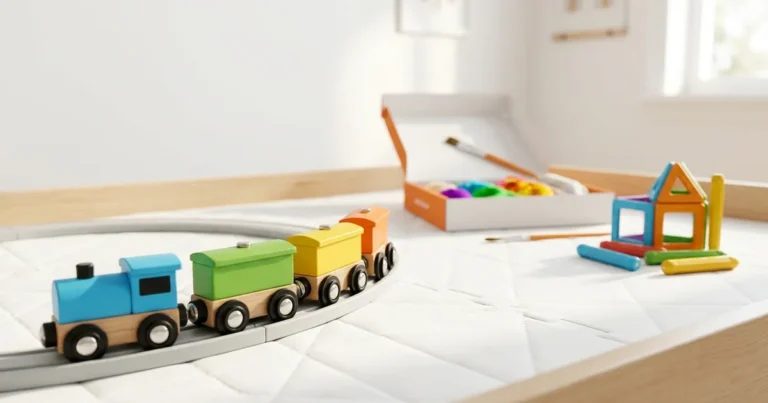
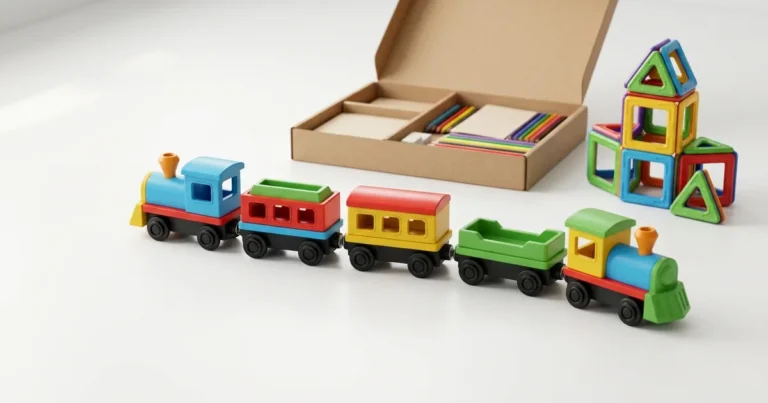
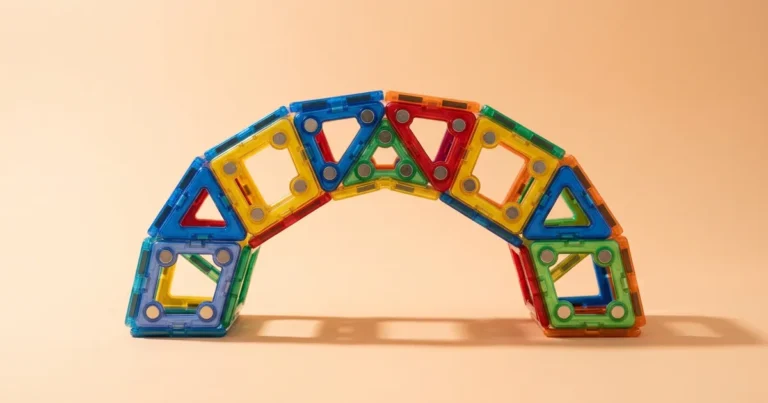
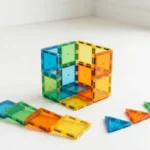
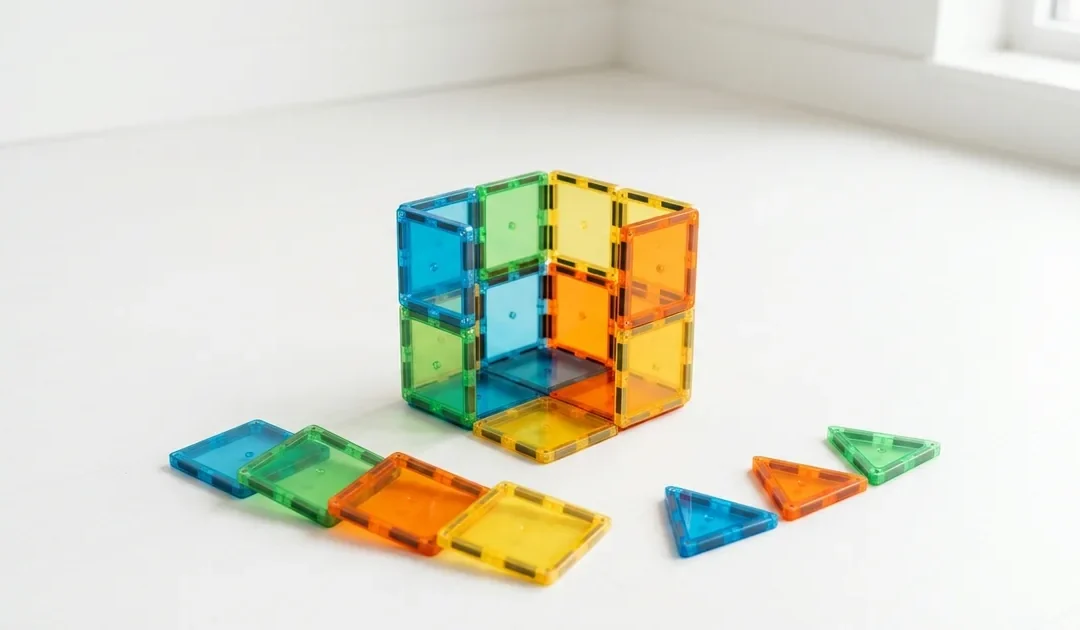
Magnetic building sets are especially popular right now because they combine building with a bit of physics. The pieces click together with a satisfying snap, which teaches children about magnetism, balance, and structural stability without ever feeling like a lesson. A set like the Graflo magnetic train set with 65 pieces is a great starting point for a child moving from simple assembly to more structured building, letting them construct tracks, bridges, and small stations. For children who are already confident builders and want a bigger challenge, the 178-piece magnetic train set offers far more pieces and possibilities, supporting longer, more complex builds that can take an afternoon rather than ten minutes.
These sets also do something less obvious but very valuable: they encourage open-ended play. There is no single correct way to use the pieces, so a child who finishes the suggested design in the instruction booklet is free to keep inventing, which keeps the toy relevant for months or even years rather than days.
STEM and Problem-Solving Toys
Between six and eight, children start to genuinely enjoy puzzles, logic games, and simple engineering challenges. This is the age where a toy that makes them think for a few extra seconds before solving it becomes genuinely satisfying rather than frustrating. Look for building kits that involve simple mechanisms like gears, pulleys, or basic circuits, as well as pattern-based puzzles and strategy games that reward planning ahead.
STEM toys at this age do not need to be complicated or expensive to be effective. A good magnetic building set already covers several STEM fundamentals: spatial reasoning, basic physics, and sequential planning, all wrapped inside a toy that feels like pure fun rather than schoolwork.
Creative and Imaginative Play
Even as logical thinking develops, imaginative play remains important through age 8. Art supplies, craft kits, role-play sets, and open-ended building toys all support creativity, storytelling, and self-expression. At this age, children often start combining creative play with their other interests, using a building set to construct a scene for a story they are telling, or drawing a map to go along with a game they invented.
Encouraging this kind of layered play, where one toy feeds into another activity, is one of the simplest ways to get more long-term value out of a single purchase.
Social Games and Group Play
Board games, card games, and cooperative building challenges become much more enjoyable once a child can read instructions, follow turn-taking rules, and understand basic strategy, all of which are typically in place by age 6 or 7. Group games teach patience, sportsmanship, and communication in a way that solo play cannot. They are also an easy way to bring siblings, cousins, or classmates together during weekends or family gatherings, which is especially useful for UAE households that often host extended family.
How to Choose the Right Toy for Your Child’s Stage
Age labels on a box are a helpful starting point, but every child develops at their own pace. Here is a simple way to think through a purchase before you commit to it.
Match the Challenge to Current Ability
Think about what your child can already do confidently and choose a toy that asks for just a little more. If they can already complete a 65-piece magnetic build without help, a bigger set with more pieces and more complex structures, such as the 178-piece option, keeps them engaged rather than bored.
Consider Attention Span and Interests
A child who loves moving around all day will get more lasting value from an active toy like a kick scooter than from a sit-down puzzle, even if the puzzle is labeled for their age. Pay attention to what naturally holds their focus during the day and buy in that direction first.
Think About Where It Will Be Used
In the UAE, indoor play dominates for much of the year because of the heat, so indoor-friendly toys like building sets, board games, and craft kits deserve a bigger share of the toy shelf. Reserve active, outdoor-only toys for cooler mornings, evenings, and weekend outings, and make sure you have a realistic plan for when and where they will actually be used.
Check for Room to Grow
The best toys age 6-8 can grow with a little creativity. Open-ended building sets, in particular, can be combined, expanded, or rebuilt in new ways as a child’s skill and imagination develop, which means a single purchase can stay relevant from age 6 well into age 8 and beyond.
Graflo Toys Picks for Ages 6-8
At Graflo Toys, every product in our ages 6-8 collection is chosen with these development stages in mind, with safety checks built into every listing. A few starting points worth knowing about:
- Foldable kick scooter: Supports balance, leg strength, and independent outdoor play, with a lightweight folding design that is easy to store and transport.
- 65-piece magnetic train set: A strong entry point for building and STEM skills, ideal for a child who is building confidence with construction toys.
- 178-piece magnetic train set: A bigger, more advanced version for children who are ready for longer, more complex builds and want more room to design their own tracks and structures.
If your child is closer to six and still developing some of these foundational skills, it is worth browsing our ages 3-5 collection as well, since some sets in that range offer a gentler starting point before stepping up to the full 6-8 range.
Setting Up a Safe Play Space at Home
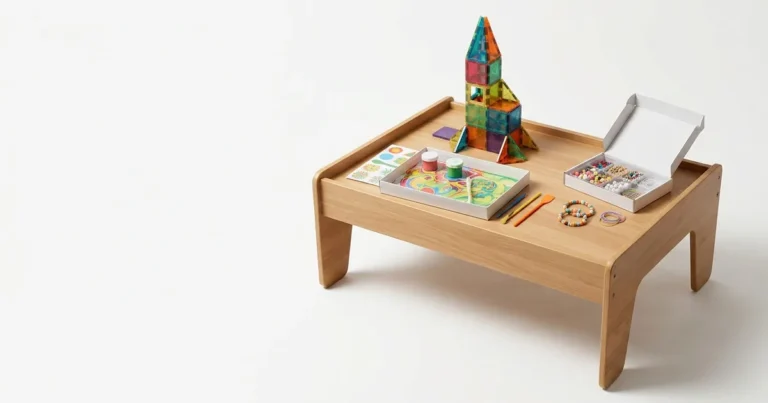
A great toy still needs a safe environment to be used in. For active toys like scooters, clear a dedicated path indoors or choose a flat, obstacle-free outdoor area, and keep it away from stairs, glass doors, and busy walkways. For building sets and games with many small pieces, a low table or a designated play mat helps contain pieces and makes cleanup part of the routine rather than a daily argument.
Storage matters more at this age than people often expect. Children aged 6 to 8 are capable of organizing their own toys if given simple, clearly labeled bins or shelves. This not only keeps the room tidy, it also teaches responsibility and makes it easier to track which pieces belong to which set, especially important for building toys with many small components.
Budgeting for Toys in AED
Toy budgets vary widely by household, but a useful approach for UAE parents is to think in terms of value per hour of play rather than price alone. A simpler magnetic building set priced lower in AED might get a few weeks of steady use before interest fades, while a larger, more advanced set at a higher AED price point can deliver months of open-ended building across different projects and even multiple children in the family.
A practical strategy is to invest a bit more in one or two core toys that clearly support your child’s main interests, such as a quality scooter for an active child or a larger magnetic set for a child who loves building, and balance that with smaller, lower-cost additions like puzzles or card games for variety. This keeps your overall spend reasonable while still giving your child real, lasting value from their favorite categories.
Common Mistakes Parents Make When Buying Toys for This Age
Buying Based on Trend Alone
A toy that is popular with classmates is not automatically right for your child. Before buying something simply because everyone else has it, check whether it actually matches your child’s interests and current skill level.
Ignoring Storage Needs
Large building sets and active toys need a place to live when they are not in use. If storage is not planned in advance, toys end up scattered, pieces go missing, and the toy gets used less over time, not because the child lost interest but because it became harder to access and enjoy.
Overlooking Supervision Needs for Active Play
Even confident six to eight year olds benefit from supervision during outdoor and wheeled play, particularly near roads or shared community spaces. A quick check of the play area and proper safety gear takes a minute and prevents the vast majority of minor accidents.
Choosing Only One Category of Toy
A toy shelf that is all building sets, or all active toys, misses the chance to support different kinds of growth. A balanced mix of active, constructive, social, and creative toys gives a child a more well-rounded set of skills and keeps playtime interesting across different moods and energy levels.
Conclusion
Choosing toys age 6-8 comes down to a simple formula: safe materials and age-appropriate design, matched to a skill your child is actively building, in a format that holds their attention long enough to matter. Whether that means a foldable kick scooter for active afternoons, a magnetic building set for quiet focused hours, or a mix of both, the goal is always the same, supporting your child’s growing independence, coordination, and confidence, one well-chosen toy at a time. Explore the full ages 6-8 collection at Graflo Toys to find pieces that fit your child’s stage and interests today.
Frequently Asked Questions
What skills do toys age 6-8 typically support?
At this stage, children are building fine motor control, logical thinking, reading comprehension, balance, and social skills like turn-taking and teamwork. Good toys age 6-8 target one or more of these areas directly, such as magnetic building sets for logic and motor skills, or kick scooters for balance and coordination.
How many pieces should a building set have for a 6 to 8 year old?
It depends on experience. A child new to construction toys often does well starting with a smaller set, such as a 65-piece magnetic train set, while a confident builder benefits from a larger set like a 178-piece option, which allows for longer, more complex builds.
Is a kick scooter safe for a 6 year old?
Yes, with the right precautions. Choose a foldable, lightweight scooter sized for the child, always use a properly fitted helmet and pads, and supervise play on flat, enclosed surfaces away from roads and vehicle traffic.
How do I know if a toy is still appropriate as my child approaches age 8?
Look at whether the toy still offers a challenge. If your child completes the suggested design or level quickly and without effort, it may be time to move up to a more advanced version, such as a larger building set, or add new games and activities that match their growing skills.
Should toys for 6 to 8 year olds always have a safety certification?
Yes. Regardless of how advanced or simple a toy looks, always check for recognized safety certification on the packaging and confirm the materials are non-toxic, especially for sets with small parts, magnets, or wheels.