Last updated: September 23, 2026
Choosing educational toys for preschoolers is one of the most impactful decisions a parent can make in the early years, because between the ages of three and five, a child’s brain is forming more neural connections per second than at almost any other point in life. The right toy, chosen with safety and development in mind, does not just entertain your little one for an afternoon. It quietly builds the fine motor control, problem-solving ability, language, and confidence your child will lean on for the rest of their school years. This guide walks UAE parents through everything they need to know, from what makes a toy genuinely educational, to safety standards, to age-specific recommendations, so you can shop with clarity instead of guesswork.
Why the Preschool Years Matter So Much for Learning Through Play
The years between three and five are often called a “window of opportunity” by child development specialists. During this stage, children are building the foundations of language, logic, empathy, and physical coordination, and they do almost all of this learning through play rather than formal instruction. A preschooler does not learn to count by memorising a worksheet, they learn it by stacking blocks, sorting shapes, or lining up toy trains and naming each carriage.
This is why the toys you place in your child’s hands matter so much. A toy that only makes noise or lights up when a button is pressed offers a brief moment of delight but very little for the brain to actively work on. A toy that invites a child to build, sort, imagine, or problem-solve gives the brain something to grow around. Choosing educational toys for preschoolers is really about choosing tools for growth that happen to look like fun.
What Happens in a Preschooler’s Brain During Play
When a three or four-year-old is engrossed in play, whether it is connecting magnetic pieces into a train track or dabbing finger paint onto paper, several things are happening simultaneously. Their hands are refining fine motor coordination, their eyes and hands are learning to work together, their language centres are activating as they narrate what they are doing, and their emotional regulation is being tested as they manage frustration when a tower falls or a puzzle piece does not fit. Good educational toys are designed, whether intentionally or through good design instinct, to support all of these processes at once.
What Actually Makes a Toy “Educational”
The word “educational” is used loosely in toy marketing, so it helps to have a clear framework for what genuinely qualifies. As a general rule, a toy is educational for a preschooler if it meets most or all of the following criteria.
1. It Is Safe First, Always
No matter how clever a toy’s design is, it is not appropriate for a preschooler if it poses a safety risk. This means checking for age labelling, avoiding small parts for children under three, verifying non-toxic, child-safe materials, and looking for recognised safety certifications. Safety is not a box to tick after choosing a toy, it is the very first filter every parent should apply.
2. It Encourages Open-Ended Play
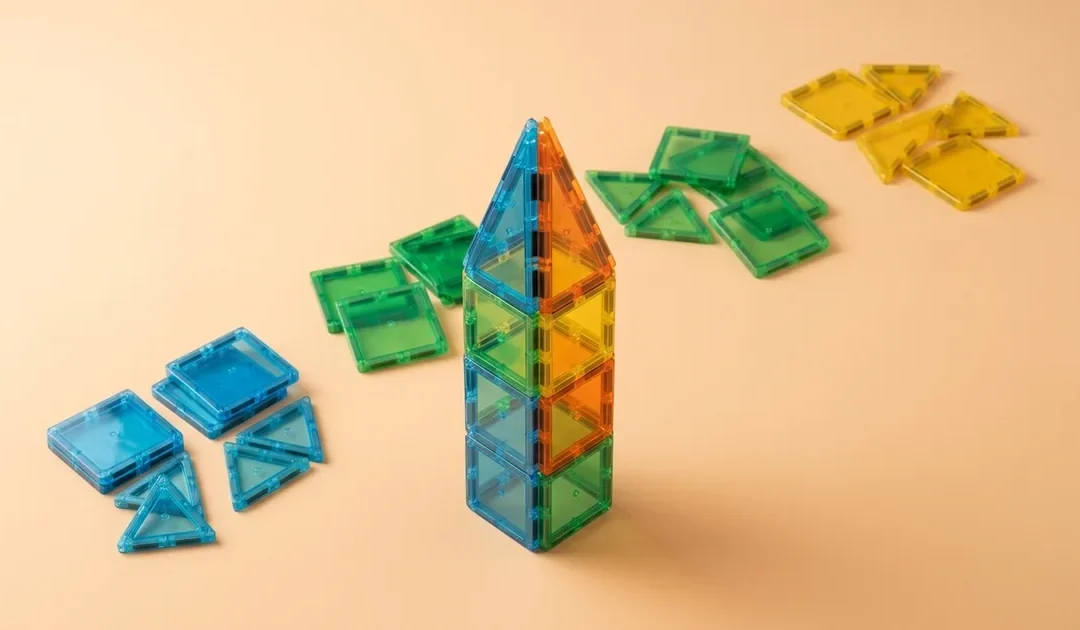
Open-ended toys, such as building sets, art supplies, and construction pieces, do not have one “correct” way to be used. A magnetic building set can become a train track today and a bridge tomorrow. This flexibility keeps a child’s imagination working rather than following a fixed script, and research consistently shows open-ended play supports stronger problem-solving skills than toys with a single, pre-determined outcome.
3. It Builds a Specific, Identifiable Skill
Whether it is hand-eye coordination, early numeracy, colour recognition, storytelling, or spatial reasoning, a genuinely educational toy has a clear skill or set of skills it nurtures. When you are shopping, it helps to ask yourself: what will my child’s hands, eyes, and mind actually be doing while they play with this?
4. It Grows With the Child
The best educational toys are not “one and done.” A well-designed building set or art kit can be used in simple ways by a three-year-old and in far more complex ways by a five or six-year-old, which means it stays relevant and interesting for longer, offering better long-term value in AED for your family.
5. It Invites Connection, Not Isolation
Some of the richest educational moments happen when a parent, sibling, or friend plays alongside a child. Toys that naturally invite two or more people to build, sort, or create together support language development and social skills far more than toys designed for solitary, passive use.
Core Developmental Skills to Look For in Preschool Toys
When you understand the core skills preschoolers are developing, it becomes much easier to evaluate any toy on the shelf, whether in a UAE toy shop or online.
Fine Motor Skills
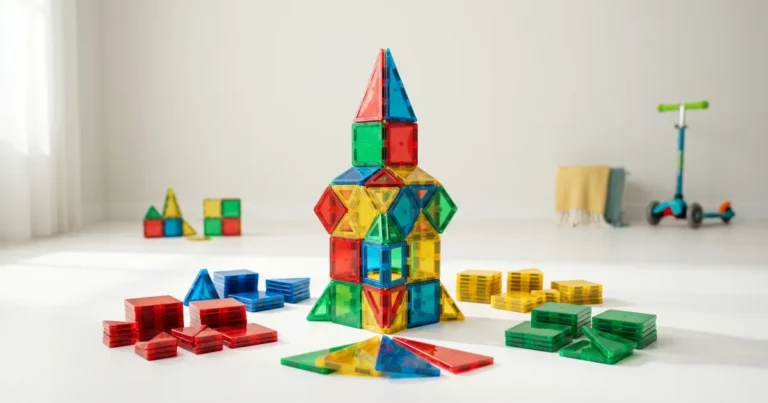
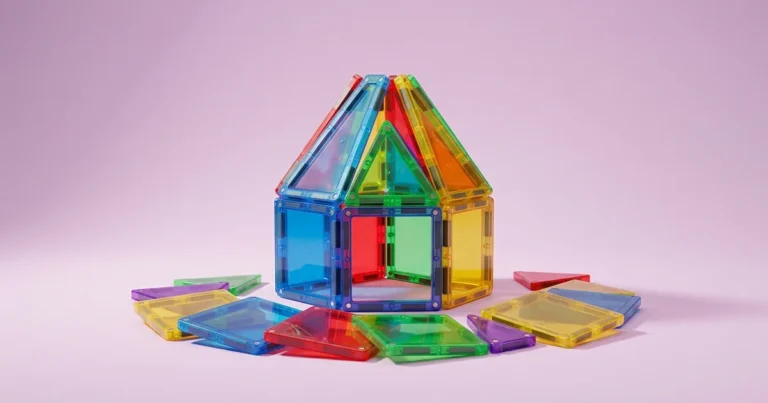
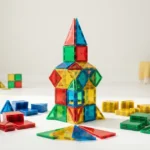
Fine motor skills involve the small muscles in the hands and fingers, and they are essential for everything from holding a pencil correctly to buttoning a shirt. Toys that involve pinching, twisting, stacking, threading, or connecting small pieces, such as magnetic building sets, are excellent for strengthening these muscles. A toy like the Graflo Magnetic Train Set (65 pieces) asks a child to line up, connect, and balance pieces with precision, which is quietly training the same hand muscles they will later use for writing.
Gross Motor Skills
While fine motor skills focus on small movements, gross motor skills involve larger muscle groups used for running, jumping, climbing, throwing, and balancing. While many educational toys focus indoors on tabletop play, it is worth balancing screen-free indoor toys with plenty of outdoor or large-movement play as well, such as ride-on toys, balls, and climbing frames.
Cognitive and Problem-Solving Skills
This is the ability to plan, sequence, predict outcomes, and adjust when something does not go as expected. Building sets are particularly strong here, because a child has to figure out how pieces fit, what order to assemble them in, and how to fix a structure that has collapsed. A more complex set, such as the Magnetic Train Set (178 pieces), offers more pieces and more possible configurations, which keeps the cognitive challenge appropriately stretching as a child’s skills advance from age three through to five and beyond.
Language and Communication Skills
Preschoolers are in a critical period for vocabulary growth. Toys that encourage naming, describing, and storytelling, such as pretend play sets, puppets, and picture books, help children practise new words in a low-pressure, enjoyable context. Simply narrating play alongside your child (“I see you’ve made the train very long, how many carriages did you use?”) turns any toy into a language-building opportunity.
Social and Emotional Skills
Sharing, taking turns, negotiating who gets which piece, and managing the disappointment of a tower falling down are all social-emotional lessons wrapped inside ordinary play. Toys that are naturally suited to being played with alongside a sibling or friend, such as larger building sets or shared art projects, give children daily, low-stakes practice at these life skills.
Creativity and Imagination
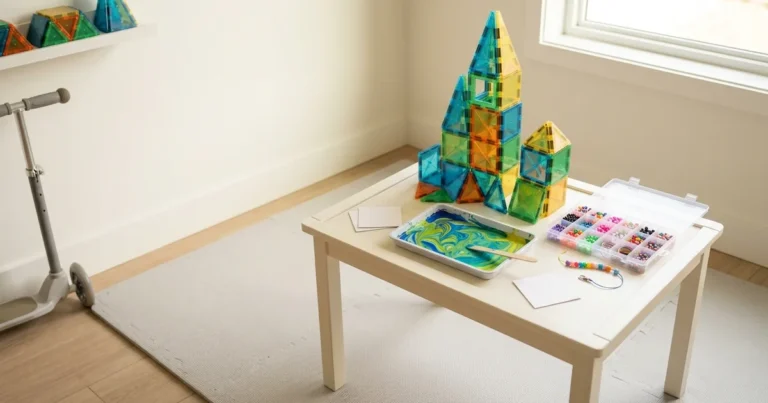
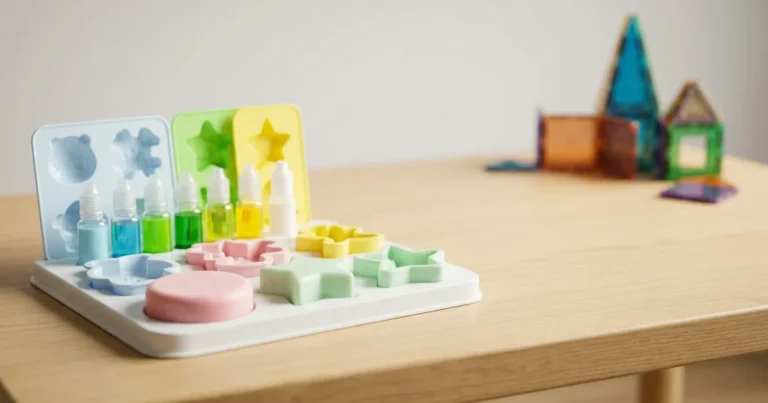
Art supplies, pretend play props, and construction toys without a single “correct” build all nurture creative thinking. A set of Finger Paint for Kids (12 colors) is a wonderful example, because there is no wrong way to use it. A child can mix colours, experiment with textures, and create something entirely their own, which builds both creative confidence and comfort with open-ended exploration, a mindset that supports learning well beyond the preschool years.
Categories of Educational Toys for Preschoolers, Explained
Understanding the broad categories of educational toys helps parents build a well-rounded toy collection rather than accumulating many toys that all target the same skill.
Building and Construction Toys
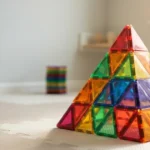
Building toys, including magnetic construction sets, blocks, and interlocking pieces, are often considered the backbone of an educational toy collection. They support fine motor skills, spatial reasoning, early engineering concepts, and patience. Magnetic train and track sets are especially popular with preschoolers because the pieces connect easily (encouraging independent play and early success) while still offering enough complexity to keep older preschoolers engaged as they build longer, more elaborate tracks.
Art and Sensory Toys
Art supplies designed for young children, such as chunky crayons, washable finger paints, and dough, support creativity, fine motor control, and sensory exploration. Sensory play, in particular, is important for preschoolers because it helps regulate the nervous system and supports focus. Look for art supplies that are explicitly labelled non-toxic and washable, since preschoolers are still developing the fine motor control to use paint neatly.
Puzzles and Matching Games
Simple wooden puzzles, shape sorters, and matching card games build early logic, memory, and shape recognition. For three-year-olds, look for puzzles with large, chunky pieces (fewer than 12 pieces is often ideal), while four and five-year-olds can typically manage 20 to 48-piece puzzles with more detailed images.
Pretend Play and Role-Play Toys
Play kitchens, doctor kits, dress-up costumes, and dolls allow children to act out real-world scenarios, which builds empathy, language, and an understanding of social roles. Pretend play is also one of the best ways for children to process new or slightly stressful experiences, such as a first visit to the dentist or the arrival of a new sibling.
Books and Early Language Toys
Board books, picture books, and simple phonics toys build vocabulary, listening skills, and a lifelong love of reading. Reading aloud daily, even for just ten minutes, remains one of the single most powerful things a parent can do for a preschooler’s long-term academic success.
Outdoor and Gross Motor Toys
Balance bikes, balls, and simple climbing equipment support large muscle development, coordination, and confidence in physical movement. In the UAE’s warmer months, look for shaded outdoor play areas or plan outdoor play during cooler morning or evening hours to keep this important category of play safe and enjoyable year-round.
Safety Guidelines Every Parent Should Check Before Buying
Safety should never be an afterthought when shopping for preschool toys. Here is a practical checklist to run through before adding any toy to your cart.
Age Labelling
Always check the manufacturer’s recommended age range on the packaging. Age labels are based on developmental appropriateness as well as physical safety, including choking hazard assessments for small parts.
Choking Hazards
For children under three, avoid any toy with small, detachable pieces. For children aged three and above, small parts can be appropriate, but supervision is still recommended, particularly if there is a younger sibling in the home who might pick up loose pieces.
Non-Toxic, Child-Safe Materials
Preschoolers still explore the world with their hands and sometimes their mouths, especially younger three-year-olds. Choose toys made from non-toxic materials, and for art supplies specifically, always confirm the paint or dough is labelled washable and non-toxic.
Sturdy Construction
Check that pieces are well-made, without sharp edges, splinters, or parts that could easily snap off. Magnetic toys in particular should have magnets securely and permanently embedded, never loose or removable, since loose magnets pose a serious swallowing risk.
Recognised Safety Standards
Look for toys that meet internationally recognised safety certifications. Reputable toy brands will display this information clearly on packaging or on their product pages, and it is worth taking the extra minute to verify before purchasing, especially for toys with small magnetic or detachable components.
Choosing Educational Toys by Age: 3, 4, and 5 Years
While every child develops at their own pace, age-based guidelines are a useful starting point when narrowing down toy choices.
Age 3: Building Independence and Early Coordination
Three-year-olds are refining fine motor control, expanding vocabulary rapidly, and beginning to enjoy simple pretend play. Good choices at this age include large, chunky building pieces, simple 6 to 12-piece puzzles, washable finger paints, shape sorters, and basic pretend play sets like a toy kitchen or doctor kit. Supervision during art and building play is still recommended at this stage.
Age 4: Expanding Imagination and Problem-Solving
Four-year-olds are usually ready for more complex building projects, longer stories, and games with simple rules. This is a wonderful age to introduce more elaborate construction sets, such as a magnetic train set with a moderate number of pieces, 20 to 48-piece puzzles, drawing and colouring supplies, and pretend play sets that involve more storytelling, such as a farm set or a small world play scene.
Age 5: Preparing for School-Ready Skills
Five-year-olds are typically developing early literacy and numeracy interests, longer attention spans, and more sophisticated social play. At this age, larger and more complex building sets, such as the 178-piece magnetic train set, offer plenty of room to grow, since children can design longer, more intricate tracks and structures. This is also a good time to introduce simple board games with turn-taking, early counting and letter toys, and more advanced art projects.
Browsing by Age Group
If you would like to browse a curated selection matched to your child’s stage, Graflo Toys organises products by developmental age group, including a dedicated collection for ages 3 to 5 years. For families with older siblings or preschoolers who are advanced for their age, the ages 6 to 8 years collection is worth browsing too, since some five-year-olds are ready for slightly more complex sets.
How to Get the Most Educational Value Out of Playtime
Buying the right toy is only half the equation, how you support play at home makes a real difference to how much learning actually happens.
Play Alongside Your Child, at Least Sometimes
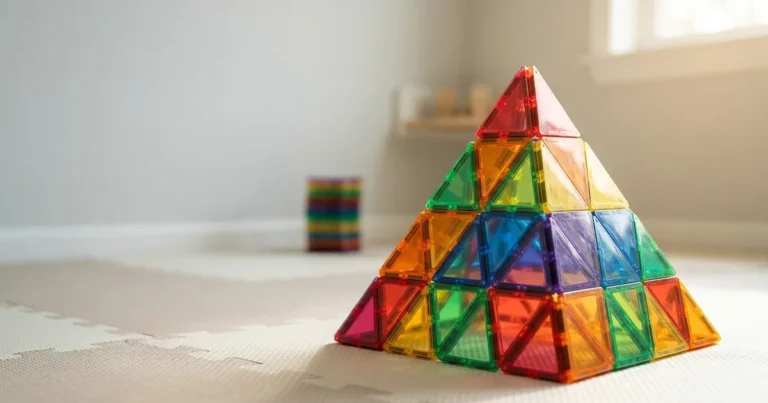
You do not need to structure every play session, but joining in occasionally, asking open-ended questions, and modelling new vocabulary (“Look, this magnetic piece is a triangle, can you find another triangle?”) significantly boosts the learning value of any toy.
Resist the Urge to Fix Every Mistake
When a tower falls or a puzzle piece will not fit, it can be tempting to step in immediately. Try to pause and let your child attempt a solution first. This builds resilience and problem-solving confidence, two skills that matter far beyond the playroom.
Rotate Toys Instead of Overwhelming the Shelf
Preschoolers, like adults, can become overstimulated by too many choices at once. Try rotating toys every few weeks, keeping some out of sight and reintroducing them later. This keeps existing toys feeling fresh and helps children engage more deeply with fewer options at a time.
Create a Dedicated, Safe Play Space
A low shelf where toys are visible and easy for a preschooler to reach independently encourages self-directed play and helps children learn to tidy up after themselves. Keep small pieces or art supplies in a supervised area if you have a younger sibling crawling around the home.
Connect Toys to Everyday Life
Talk about how the shapes in a building set relate to shapes you see on a walk, or how a pretend play kitchen connects to helping in the real kitchen. These small connections help children see that learning is not confined to a specific toy or moment, but woven throughout everyday life.
Common Mistakes Parents Make When Choosing Educational Toys
Choosing Based on Packaging Claims Alone
Many toys are labelled “educational” purely as a marketing term. Always evaluate the toy itself against the criteria in this guide, rather than relying on the box alone.
Overlooking Age Appropriateness
A toy that is too advanced can lead to frustration, while a toy that is too simple can lead to boredom. It is worth erring slightly toward a toy that offers a bit of a stretch, since children generally rise to a reasonable challenge, but avoid anything wildly beyond their current stage.
Prioritising Screens and Batteries Over Hands-On Play
Battery-operated toys with flashing lights and sounds can capture attention quickly, but they often involve passive watching rather than active building or creating. Hands-on toys, such as building sets and art supplies, generally offer richer developmental value for the same play session length.
Buying Too Many Toys at Once
A smaller, thoughtfully chosen collection of high-quality, open-ended toys almost always supports deeper, more sustained play than a large volume of toys that each get only a few minutes of attention.
Ignoring Storage and Reusability
Toys with many small pieces, such as building sets, benefit from proper storage solutions from day one. This protects pieces from being lost and keeps the toy usable and enjoyable for years, offering far better value in AED over time.
A Sample Balanced Toy Collection for a Preschooler
If you are starting from scratch or refreshing your child’s toy shelf, a well-rounded collection for a preschooler might include one substantial building or construction set, one open-ended art supply, one or two puzzles matched to their current skill level, one pretend play set, and a small rotating selection of picture books. For the building category, a magnetic train set such as the 65-piece Graflo Magnetic Train Set is a strong starting point for younger preschoolers, while the larger 178-piece set suits children who are ready for more ambitious builds. For open-ended art, a washable finger paint set gives children creative freedom without the stress of worrying about mess, since the paint is designed to wash away easily from skin, clothing, and most surfaces.
Bringing It All Together
Choosing educational toys for preschoolers does not need to be complicated or expensive. It starts with putting safety first, then looking for toys that are open-ended, skill-building, and able to grow alongside your child. A thoughtfully chosen building set, a set of washable paints, a well-matched puzzle, and plenty of unstructured play time together will do more for your child’s development than a shelf overflowing with flashy, single-use toys. As you shop, keep coming back to the simple question at the heart of this whole guide: what will my child’s hands, eyes, and mind actually be doing while they play with this? If the answer involves building, creating, problem-solving, or connecting with you, you are almost certainly on the right track.
Frequently Asked Questions
What age should preschoolers start using educational toys?
Most children can benefit from educational toys from around age two or three, once they have developed enough hand control and understanding to engage with building pieces, puzzles, or art supplies. Always check the manufacturer’s age labelling on each toy, since it reflects both developmental appropriateness and safety, including small part hazards.
Are magnetic building sets safe for a three-year-old?
Magnetic building sets are generally safe for children aged three and above when the magnets are securely and permanently embedded in the pieces, rather than loose or removable. Always check the age recommendation on the packaging, supervise younger children during play, and keep loose magnetic toys away from any younger sibling still at the mouthing stage.
How many educational toys does a preschooler actually need?
Quality matters far more than quantity. A small, balanced collection covering building, art, puzzles, and pretend play, rotated every few weeks, generally supports deeper and more sustained learning than a large volume of toys that each receive only a few minutes of attention.
Is finger painting messy and difficult for young children to manage?
Finger painting is naturally hands-on, but choosing a washable, non-toxic finger paint set designed for young children makes cleanup simple, since it washes easily from skin, clothing, and most household surfaces. Laying down a mat or old newspaper and supervising the session helps keep things tidy while still giving your child full creative freedom.
What is the best type of toy to support school readiness at age five?
At age five, toys that combine problem-solving with sustained focus tend to support school readiness well, such as larger building sets with more pieces, 24 to 48-piece puzzles, simple board games with turn-taking, and early literacy or counting toys. Reading aloud together daily remains one of the most valuable habits for this age group alongside hands-on play.