Last updated: September 27, 2026
Choosing the best toys for preschoolers in UAE is not just about keeping little hands busy, it is about protecting a stage of brain development that never repeats itself. Between the ages of three and five, your child’s brain is forming roughly one million new neural connections every second, and the toys you place in their hands directly shape how those connections form. A toy that is unsafe, too advanced, or purely passive can waste this precious window. A toy that is safe, age-appropriate, and open-ended can build fine motor control, early language, social skills, and the kind of confident, curious thinking that carries into school and beyond.
This guide walks UAE parents through everything that matters when choosing toys for preschoolers, from safety certifications and heat-safe materials suited to our climate, to the specific skills each type of toy builds, to age-by-age recommendations for 3, 4, and 5 year olds. We will also cover common shopping mistakes, how to build a balanced toy collection without overspending, and where to find trusted, tested options for your child’s stage.
Why the Preschool Years Are a Critical Window for Toy Choice
Preschoolers, generally defined as children aged three to five, are moving out of the exploratory toddler phase and into a stage where they can plan, imagine, negotiate, and problem-solve. This is when children start to:
- Hold a crayon with a proper tripod grip in preparation for writing
- Sort objects by more than one property, such as color and shape together
- Engage in cooperative pretend play with siblings or friends
- Follow multi-step instructions, like building a small structure from a picture
- Begin recognizing letters, numbers, and simple patterns
Toys designed for this age group should meet children exactly where they are, offering just enough challenge to stretch their skills without causing frustration. Too simple, and a child loses interest quickly. Too advanced, and a child may feel discouraged or unsafe using the toy without close supervision. The sweet spot is what child development experts call the “just right” challenge, and it is the single most important factor in choosing toys that get played with again and again rather than gathering dust in a corner.
The Cost of Getting It Wrong
Many parents in the UAE tell us they have cupboards full of toys their child touched once. Often this happens because the toy was chosen based on packaging appeal rather than developmental fit, or because a well-meaning gift did not match the child’s actual stage. Understanding what your specific 3, 4, or 5 year old needs developmentally, rather than what looks impressive on a shelf, saves money and gives your child toys that genuinely support growth.
Safety First: What Every UAE Parent Should Check Before Buying
Before considering educational value, every toy for a preschooler must pass a basic safety check. This matters even more in the UAE, where high indoor temperatures, frequent travel, and diverse toy sourcing from different markets mean parents need to be extra vigilant.
1. Small Parts and Choking Hazards
Although most preschoolers have outgrown the toddler habit of mouthing everything, small siblings in the same household have not. If you have a younger child at home, always check that preschool toys do not contain small magnets, beads, or detachable pieces smaller than a standard bottle cap. Magnetic building sets, for example, should have securely sealed pieces so that no small magnet can be pulled loose, which is exactly why parents look for tested, well-reviewed sets such as the Graflo Magnetic Train for Kids (65pcs), designed with rounded edges and secure magnetic housings suitable for supervised preschool play.
2. Material Safety and Non-Toxic Certification
Look for toys labeled non-toxic, BPA-free, and compliant with recognized safety standards such as EN71 (European) or ASTM F963 (US), both of which are widely referenced across UAE retailers. This is especially important for art supplies. A finger paint set that touches your child’s skin and sometimes their mouth should always be water-based and non-toxic, like the Finger Paint for Kids (12 Colors), formulated to wash off easily from skin, clothing, and most surfaces without harsh chemicals.
3. Heat and Material Durability in the UAE Climate
Toys left in a hot car or on a sun-drenched balcony can warp, release odors, or become brittle, especially cheaper plastics. When shopping for outdoor or ride-on toys, check that materials are UV-stabilized and rated for high-temperature environments. For indoor play, which is where most UAE preschoolers spend the majority of their time due to summer heat, prioritize toys that hold up to repeated indoor use across tiled or carpeted floors, such as sturdy building sets and washable art materials.
4. Cord and Battery Safety
Any electronic or light-up toy should have a securely sealed battery compartment that requires a screwdriver to open, preventing curious preschoolers from accessing button batteries, which pose a serious swallowing hazard. Avoid toys with loose cords longer than 30cm for children under five.
5. Look for Local and International Certification Marks
When shopping online or in UAE malls, check for CE marking, and where available, look for compliance with GCC technical regulations for toys. Reputable UAE toy retailers will clearly display these certifications on product listings.
The Core Developmental Skills Preschool Toys Should Build
Rather than shopping by toy category first, it helps to think in terms of the skill you want to nurture. Here is a breakdown of the five key developmental areas and the toy types that support each one.
Fine Motor Skills
Fine motor skills involve the small muscles in the hands and fingers, and they are the foundation for handwriting, buttoning clothes, and using cutlery independently. Toys that build fine motor control include:
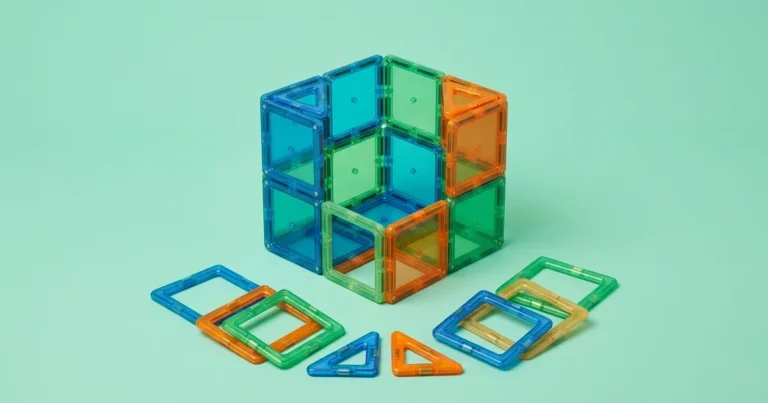
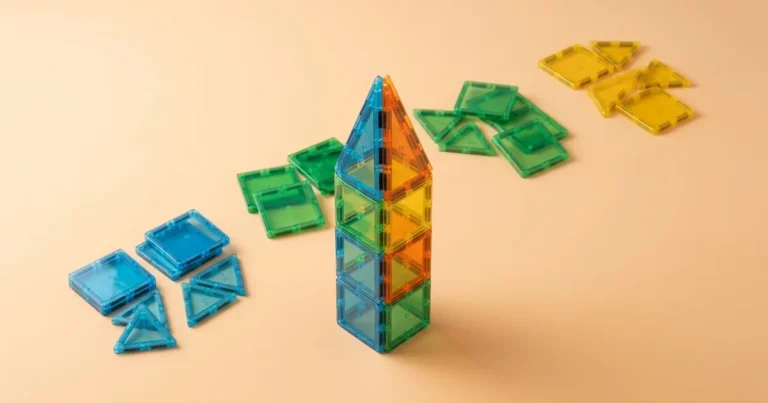
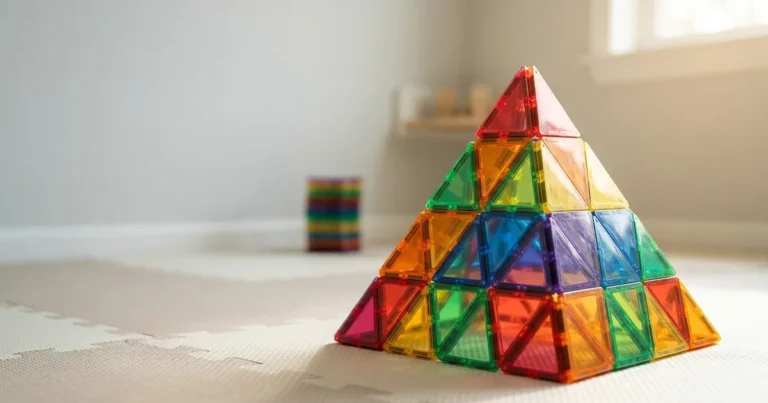
- Magnetic tiles and connector sets that require pinching, aligning, and snapping pieces together
- Finger paints and chunky crayons that build hand strength and grip control
- Lacing cards, threading beads, and simple puzzles with large, easy-to-grip pieces
- Play dough and modeling clay for squeezing, rolling, and shaping
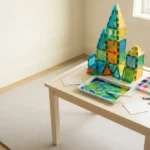
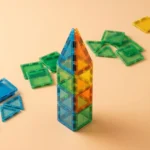
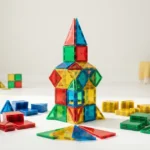
A well-designed magnetic building set is one of the most effective fine motor tools available, because it combines repetitive hand movement with an immediate, satisfying visual result. The Graflo Magnetic Train Set (65pcs) is a good entry point for younger preschoolers around age 3, offering large, easy-to-handle pieces that click together with a satisfying magnetic snap, encouraging repeated practice without frustration.
Gross Motor Skills
Gross motor skills involve the large muscles used for running, jumping, climbing, and balancing. While outdoor space can be limited in some UAE homes, especially apartments, there are still excellent indoor and balcony-friendly options:
- Soft climbing sets and balance beams sized for indoor use
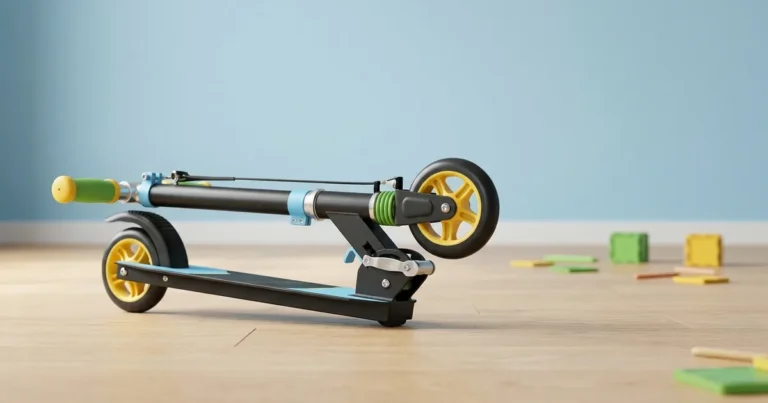
- Ride-on toys and balance bikes for community park visits
- Ball sets for simple catching and throwing games
- Dance mats or simple obstacle courses set up with cushions
Because UAE summers can limit outdoor play for several months of the year, prioritizing some indoor gross motor toys ensures your child stays physically active year-round, not just during cooler months.
Cognitive and Problem-Solving Skills
This is the category most parents associate with “educational toys,” and for good reason. Preschoolers are developing early logic, sequencing, and pattern recognition. Strong choices include:
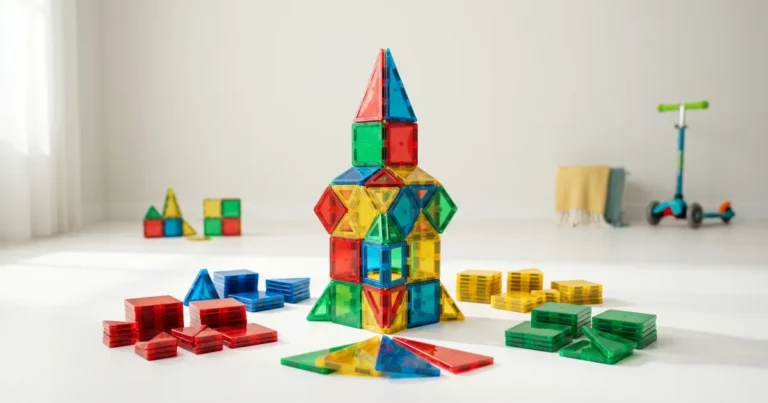
- Larger, more complex magnetic building sets that introduce structure and sequencing, such as the Magnetic Train Set for Kids (178pcs), which suits slightly older preschoolers ready for more advanced building challenges with tracks, junctions, and multi-piece structures
- Shape sorters and simple jigsaw puzzles (start with 12-24 pieces for age 3, up to 48-100 pieces by age 5)
- Simple board games that introduce turn-taking and counting
- Building blocks that encourage stacking, balancing, and spatial reasoning
Language and Early Literacy
Preschool is when vocabulary explodes and early letter recognition begins. Supportive toys include:
- Picture books and simple storytelling props
- Alphabet puzzles and magnetic letters for the fridge
- Pretend play sets (kitchen, doctor, market) that naturally generate conversation and new vocabulary
- Finger puppets for storytelling and narrative play
Creativity, Imagination, and Emotional Expression
Open-ended toys, meaning toys without a single “correct” way to play, are consistently linked to stronger creative thinking and emotional regulation. Art supplies are especially valuable here because there is no wrong answer, only exploration. A set like the Finger Paint for Kids (12 Colors) lets preschoolers freely express themselves through color and texture, building confidence and reducing the performance pressure that can come with more structured toys. Pretend play sets, dress-up costumes, dollhouses, and building sets that can be assembled in endless configurations all serve this same open-ended purpose.
Age-by-Age Toy Guide for Preschoolers
Because “preschooler” spans a wide developmental range, from a newly turned three-year-old to a nearly-six-year-old ready for kindergarten, it helps to break recommendations down by age.
Age 3: Building Independence and Basic Coordination
At three, children are refining their grip, starting to use scissors with supervision, and beginning simple pretend play scenarios like feeding a doll or pushing a toy car while making sound effects. Good choices for this age include:
- Chunky magnetic building sets with large, simple pieces, like the smaller 65-piece magnetic train set, which offers an achievable challenge without overwhelming a young three-year-old
- Large-piece puzzles (12 to 24 pieces)
- Finger paints and washable crayons for early creative expression
- Simple pretend play props such as a play kitchen or doctor kit
- Soft building blocks for stacking and knocking down
At this age, supervision remains important, particularly with any toy containing small magnetic pieces or paint. Sessions of 15 to 20 minutes of focused play are typical and healthy for a three-year-old’s attention span.
Age 4: Expanding Complexity and Social Play
Four-year-olds are ready for more intricate building challenges, longer pretend play storylines, and simple games with rules. Consider:
- Larger magnetic building sets like the 178-piece option, which allows for more complex structures, tracks with junctions, and collaborative building with a sibling or friend
- Puzzles in the 24 to 48 piece range
- Board games with simple rules, such as matching or counting games
- Art projects with multiple steps, such as painting a scene rather than a single shape
- Dress-up sets that support imaginative storytelling with friends
Four-year-olds also benefit from toys that encourage cooperative play, since this is often the age when structured playdates and preschool friendships become important. A shared building project, like assembling a magnetic train track together, teaches turn-taking, negotiation, and shared problem-solving.
Age 5: Preparing for School-Level Thinking
Five-year-olds are on the cusp of kindergarten or already enrolled, and their toys can start to bridge into early academic skills while remaining playful. Strong options include:
- Complex magnetic building sets with multi-step assembly instructions
- Puzzles of 48 to 100 pieces
- Simple science kits, such as magnet exploration sets or basic nature discovery kits
- Board games involving strategy, counting, or early reading
- Art supplies that allow for more detailed, planned creations rather than purely sensory exploration
Many five-year-olds are ready to graduate into toys designed for slightly older children, and browsing a dedicated collection for ages 6 to 8 can help you find the next step up before your child outgrows their current toys, ensuring a smooth transition rather than a sudden jump in difficulty.
Building a Balanced Toy Collection Without Overspending
One of the most common questions we hear from UAE parents is how many toys a preschooler actually needs. The answer is fewer than most people think. Research on child play consistently shows that children engage more deeply, for longer, and with more creativity when they have fewer toys available at once, not more. This is sometimes called the “toy rotation” approach.
How Toy Rotation Works
- Divide your child’s toys into 3 to 4 groups, mixing categories (one building toy, one art activity, one pretend play set, one puzzle) into each group
- Store all but one group out of sight, in a closet or storage bin
- Leave one group accessible for one to two weeks
- Rotate to the next group, and watch as “old” toys feel new and exciting again
This approach not only reduces clutter, a real concern in many UAE apartments, but also stretches the value of every toy you purchase, since children return to rotated toys with fresh enthusiasm.
Prioritizing Quality Over Quantity
When budgeting for preschool toys, it is far more effective to invest in a smaller number of high-quality, durable, open-ended toys than to buy many cheap, single-purpose items. A well-made magnetic building set, for example, can be used in dozens of different configurations over several years, growing in complexity as your child does, while a single-function light-up toy often loses its appeal within days. Browsing a curated collection for ages 3 to 5 can help you focus on toys specifically vetted for developmental fit at this stage, rather than sorting through toys designed for much younger or older children.
Common Mistakes Parents Make When Buying Toys for Preschoolers
Mistake 1: Choosing Based on Character Branding Alone
It is tempting to buy a toy simply because it features your child’s favorite cartoon character. While there is nothing wrong with the occasional branded toy, character-based toys often have a single, fixed way to play, limiting long-term engagement. Balance branded purchases with open-ended toys that encourage independent creativity.
Mistake 2: Overestimating or Underestimating Age Range
Buying a toy labeled for age 6 and up for a three-year-old, hoping they will “grow into it,” usually results in frustration and abandoned play. Conversely, buying toys well below your child’s actual skill level leads to boredom. Always check the manufacturer’s recommended age range as a starting guide, then adjust slightly based on your own child’s individual development.
Mistake 3: Ignoring Noise and Sensory Overload
Many preschool toys marketed as “educational” are actually electronic toys that talk, light up, and play music constantly. Research suggests that toys which do too much of the work themselves, such as naming shapes and colors aloud without requiring the child to respond, can actually reduce the quality and quantity of language a child produces during play, compared to simpler toys like blocks or puzzles that require the child to think and speak.
Mistake 4: Overlooking Storage and Cleanup
A toy with dozens of tiny loose pieces and no dedicated storage container quickly becomes a source of household stress rather than joy. Look for sets that include a storage box or bag, and involve your preschooler in cleanup as part of the play routine itself, which also builds early responsibility skills.
Mistake 5: Forgetting About Messy Play
Some parents avoid art supplies like finger paint out of fear of mess, but sensory and creative play is essential at this age. The solution is not to avoid messy toys, but to choose ones designed for easy cleanup, such as washable, non-toxic finger paints, and to set clear boundaries (a designated art mat or table) rather than eliminating the activity altogether.
Setting Up a Preschooler-Friendly Play Space at Home
The environment around a toy matters almost as much as the toy itself. A few simple adjustments can dramatically increase how much your preschooler engages with their toys:
- Low, open shelving: Preschoolers are far more likely to choose and return toys independently when they can see and reach them without help.
- Designated zones: A small reading corner, a building area with a flat mat, and an art table with a washable cover help children mentally switch between different play modes.
- Limited visible options: Following the toy rotation principle, keep only a handful of toys visible at any time to avoid overwhelming choice paralysis.
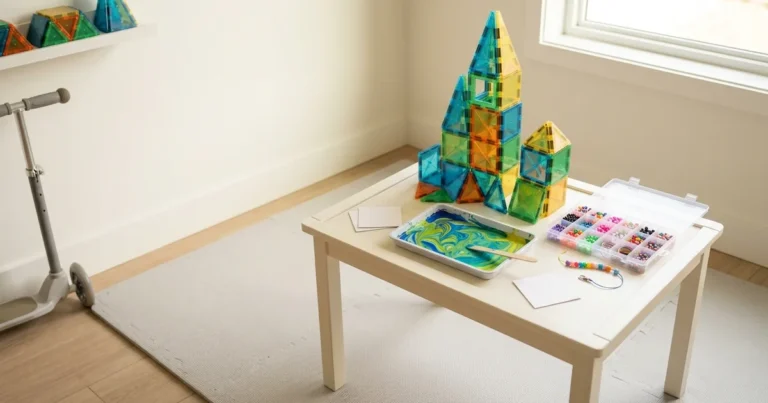
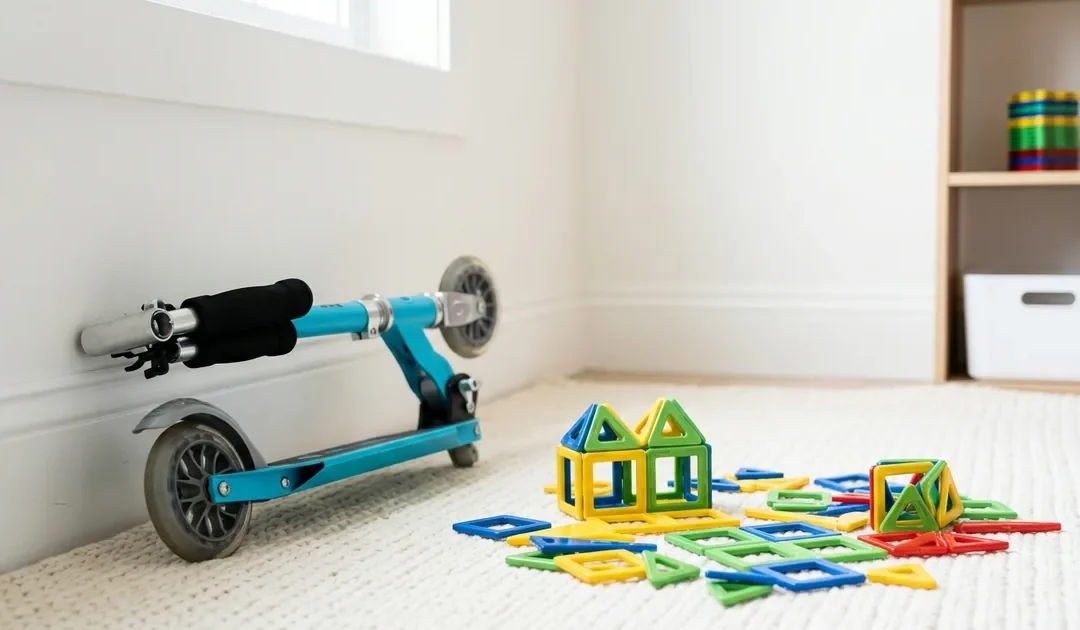
- Soft flooring for building play: A rug or foam mat protects both floors and small fingers during magnetic tile or block building sessions, and makes cleanup of small pieces easier.
How to Involve Preschoolers in Choosing Their Own Toys
While parents should always have final say on safety and appropriateness, involving preschoolers in the selection process, even in a small way, builds a sense of ownership and increases engagement. Try offering two or three pre-vetted, age-appropriate options and letting your child choose between them, rather than an unrestricted choice from an entire store. This respects their growing independence while keeping the final options within a safe, developmentally appropriate range that you have already screened.
Seasonal and Occasion-Based Toy Ideas
UAE families often look for toy ideas tied to specific occasions. Here are some practical suggestions:
Birthday Gifts
A larger, more complex building set makes a memorable birthday gift because it offers weeks of engagement rather than a single afternoon of play. The 178-piece magnetic train set is a popular choice for four and five-year-old birthdays specifically because it can grow with the child, offering simple layouts at first and more complex track designs as skills develop.
Eid and Holiday Gifting
Art supply sets, such as finger paints, make thoughtful holiday gifts because they support quiet, calm creative time during busy family gatherings, giving preschoolers a productive outlet amid the excitement.
School Readiness Gifts
For a child about to start their first year of formal schooling, puzzles, simple board games, and fine motor building sets help ease the transition by strengthening the patience, focus, and hand control that classroom activities will require.
Bringing It All Together
Choosing the right toys for your preschooler does not require an expensive shopping spree or a home full of gadgets. It requires a clear understanding of your child’s current developmental stage, a firm commitment to safety and material quality, and a willingness to prioritize open-ended, hands-on play over passive entertainment. A handful of well-chosen, well-made toys, rotated thoughtfully and matched to your child’s age and interests, will do more for their growth than an overflowing toy box ever could.
Whether you are outfitting a first magnetic building set for a curious three-year-old, introducing a more advanced 178-piece structure for a five-year-old ready for a challenge, or simply looking for a safe, washable way to encourage creative expression through finger painting, the goal remains the same: support your child’s natural curiosity with tools that are safe, engaging, and built to grow alongside them.
Frequently Asked Questions
What are the best toys for preschoolers in UAE for developing fine motor skills?
Magnetic building sets, lacing cards, chunky crayons, and finger paints are excellent for fine motor development. Magnetic tiles require pinching and aligning, which strengthens the small hand muscles preschoolers need for handwriting. A set like the Graflo Magnetic Train for Kids (65pcs) offers large, easy-to-grip pieces perfect for children around age 3, while art supplies like finger paints build hand strength through squeezing and spreading motion.
How many toys does a preschooler actually need?
Far fewer than most parents assume. Research shows children play more deeply and creatively with a smaller, rotated selection of toys rather than an overflowing collection. A good approach is to keep 5 to 8 toys accessible at a time across different categories (building, art, pretend play, puzzles), and rotate the rest in and out every one to two weeks.
Are magnetic building sets safe for 3 to 5 year olds?
Well-made magnetic building sets designed for this age group, with securely sealed magnets and rounded, chunky pieces, are safe for supervised preschool play. Always check that magnets are firmly encased and cannot be pried loose, and supervise play if younger siblings are present in the home, since loose magnets pose a serious choking hazard for infants and toddlers.
What should I check on toy packaging before buying for my preschooler in the UAE?
Look for the recommended age range, non-toxic and BPA-free labeling, and recognized safety certifications such as EN71 or ASTM F963. For any toy with a battery compartment, confirm it is screw-secured rather than simply snapped shut, since button batteries are a serious swallowing hazard for young children.
How do I know if a toy is too advanced or too simple for my child’s age?
Watch how your child engages with it. If they abandon the toy within minutes or seem frustrated and need constant help, it may be too advanced. If they master it instantly and lose interest quickly, it may be too simple. The best toys offer a ‘just right’ challenge, achievable with some effort but not so difficult that adult help is constantly required.