Last updated: August 12, 2026
Six is a magical age. Your son can now hold a whole story in his head, build a spaceship out of cushions, and argue passionately about why his magnetic train needs a secret underground tunnel. Choosing the right imaginative toys for 6 year old boys at this stage is not just about entertainment, it is about feeding a brain that is rapidly learning to plan, problem-solve, and express big feelings through play. This guide walks UAE parents through exactly what to look for, which categories matter most, and how to build a safe, screen-light play routine your son will actually love, all with prices in AED and safety at the centre of every recommendation.
Why Imaginative Play Matters So Much at Age 6
Somewhere between the toddler years and early primary school, a shift happens. A 6 year old no longer just copies what he sees, he starts inventing entirely new worlds. This is one of the richest developmental windows in early childhood, and the toys you place in front of him can either open that door wider or leave it firmly shut.
Developmental Benefits at This Age
Imaginative play at 6 supports several skills at once, often without the child even realising he is “learning”:
- Language and storytelling – inventing dialogue for action figures or narrating a train journey builds vocabulary and sentence structure.
- Emotional regulation – acting out a scary monster scenario or a hospital visit lets boys process feelings in a safe, controlled way.
- Problem-solving – building a bridge that keeps collapsing teaches persistence and cause-and-effect thinking.
- Fine motor control – snapping magnetic tiles together, gripping paint brushes, or dressing up in costumes all refine hand strength and coordination.
- Social skills – shared pretend play with siblings or friends teaches negotiation, turn-taking, and compromise.
What Changes in a 6-Year-Old’s Play Compared to a Younger Child
A 3 or 4 year old often plays in short bursts and needs a parent to keep the story moving. By age 6, boys typically want longer, more complex play sessions, multi-step building projects, and toys that let them create something unique rather than follow a single fixed outcome. This is exactly why open-ended toys, the kind that can be rebuilt a hundred different ways, tend to hold a 6 year old’s attention far longer than toys with only one “correct” way to play.
What to Look for in Imaginative Toys for 6 Year Old Boys
With so many options on shelves and online, it helps to have a simple checklist before you buy. As a parent-first toy brand, we always put safety ahead of flashy packaging.
Safety Checklist for Parents in the UAE
- Age-appropriate parts – by 6, small magnetic pieces and building blocks are generally safe, but always check the manufacturer’s recommended age range on the box.
- Non-toxic materials – look for toys made with child-safe paints and materials, especially for arts and craft supplies like finger paints that little hands will touch and sometimes taste-test by accident.
- Strong magnets, securely sealed – if you are choosing magnetic building sets, make sure the magnets are fully enclosed in the tile or piece and cannot be pried out, since loose magnets are a genuine swallowing hazard.
- Sturdy construction – toys that are meant to be built, knocked down, and rebuilt daily need to survive real enthusiasm, not just gentle handling.
- Compliance markings – check for recognised safety certifications on packaging before purchasing, whether shopping in-store in the UAE or online.
Open-Ended vs Single-Purpose Toys
A single-purpose toy, like a plastic figure that only does one action, tends to get played with intensely for a week and then forgotten. Open-ended toys, like magnetic tiles, blank canvases, building sets, or dress-up costumes, invite a different story every single day. When budgeting for imaginative toys, prioritise open-ended options first, then add single-purpose favourites as bonus treats for birthdays or good report cards.
Top Categories of Imaginative Toys for 6 Year Old Boys
Below are the categories that consistently work well for boys at this age, based on what actually gets played with long-term rather than left in a cupboard after week one.
1. Building and Construction Sets
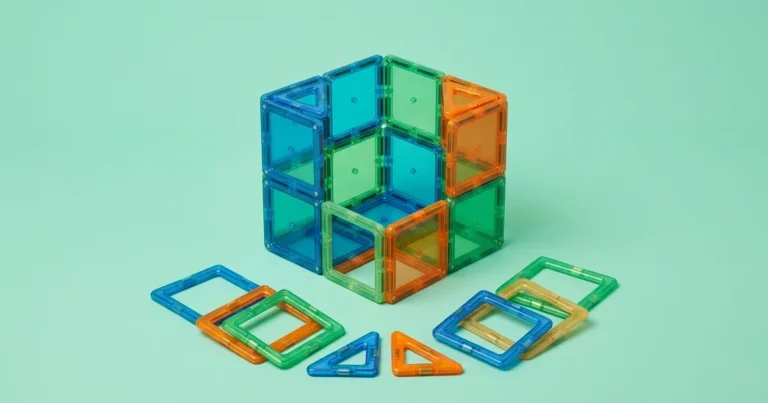
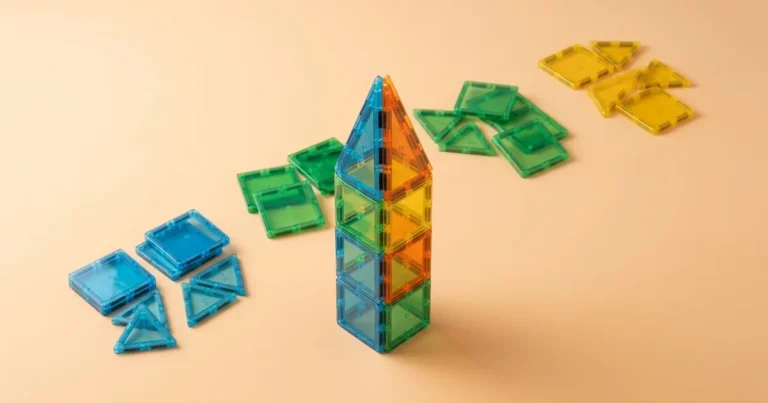
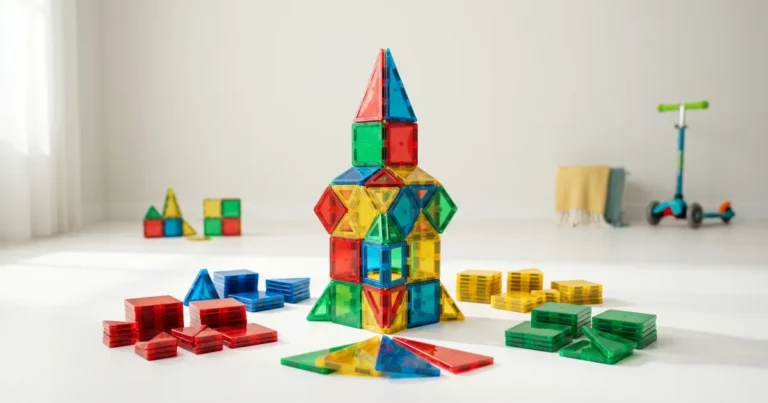
Six year old boys are natural engineers. They want to build towers, garages, robots, and then knock them down and start again. Classic block sets are a great foundation, but for something that combines building with movement and storytelling, magnetic construction sets bring an extra layer of excitement because pieces click together instantly and hold their shape, letting a child focus on the story rather than fighting with the mechanics.
2. Magnetic Building Tiles and Trains
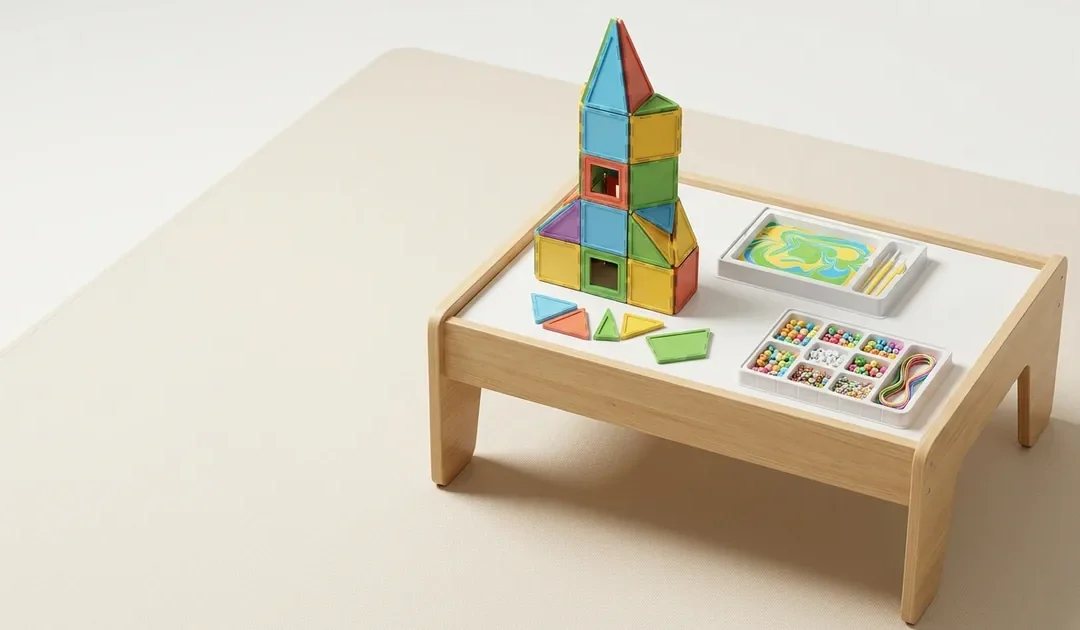
This is one of the strongest imaginative-play categories for this age group, and for good reason. Magnetic tiles let a child build a city, then a train line running through it, then a whole imaginary world with garages, tunnels, and bridges. A set like the Graflo Magnetic Train for Kids, 65pcs STEM Tiles Set combines the tactile satisfaction of magnetic building with a moving train, giving boys a reason to design entire layouts, stations, and storylines rather than just stacking pieces. For families who want more building potential and longer solo or sibling play sessions, the larger Magnetic Train Set for Kids, 178pcs gives significantly more pieces to work with, which is ideal for boys who already love building and are ready for bigger, more ambitious projects like multi-level cities or long winding rail networks.
These STEM-style magnetic sets are particularly good value because they grow with the child. A 6 year old might build a simple loop track today and a complex multi-station city by age 8, using the exact same pieces.
3. Arts, Crafts and Sensory Play
Imaginative play is not only about building physical worlds, it is also about expressing ideas visually. Finger painting remains one of the most underrated imaginative activities for 6 year olds because it has no wrong answer, encourages free storytelling through colour and shape, and doubles as a calming sensory activity after a busy day at school. A set of Finger Paint for Kids, 12 Colors gives a wide enough palette for a boy to paint anything from a dinosaur battle scene to an imaginary planet, and washable, non-toxic formulas make clean-up far less stressful for parents.
Tips for Mess-Free Painting Sessions
- Lay an old bedsheet or plastic tablecloth under the painting area.
- Dress your son in an old t-shirt reserved just for messy play.
- Keep a damp cloth nearby for quick hand wipes between colours.
- Let the painting dry flat before hanging it up, to avoid drips.
4. Pretend Play and Role Costumes
By age 6, many boys have very specific pretend-play interests, firefighters, astronauts, knights, superheroes, or explorers. Costumes and role-play props (a toy stethoscope, a cardboard sword, a cape) give a physical anchor to these imagined identities and often lead to hours of independent or group storytelling. Rotating a costume box every few weeks keeps this category fresh without needing to buy something new constantly.
5. STEM and Engineering Toys
Six is a wonderful age to introduce lightweight engineering concepts through play. Magnetic tile sets already mentioned above double as STEM toys because children intuitively experiment with balance, symmetry, and structural strength while building. Simple gear sets, marble runs, and basic circuit kits also fall into this category and pair naturally with imaginative storytelling, for example, turning a marble run into an imaginary water park or amusement ride.
6. Storytelling and Puppet Play
Hand puppets, finger puppets, or even simple sock puppets made at home give boys a low-pressure way to act out stories, practise voices, and build confidence with public speaking in a fun, private setting. This category pairs beautifully with the arts and crafts category above, since many puppets can be decorated using finger paints as a joint activity.
Graflo Toys Picks for Imaginative Play
If you want a shortlist to start with, here is how we would prioritise a first purchase for a 6 year old boy who is new to open-ended imaginative toys:
- Start with a magnetic building set – the 65pcs STEM Tiles Set is a strong entry point because it combines building with a moving train for extra storytelling potential.
- Upgrade for bigger builders – if your son already loves blocks or has outgrown a smaller set, the 178pcs Magnetic Train Set gives more room to design and build without running out of pieces mid-project.
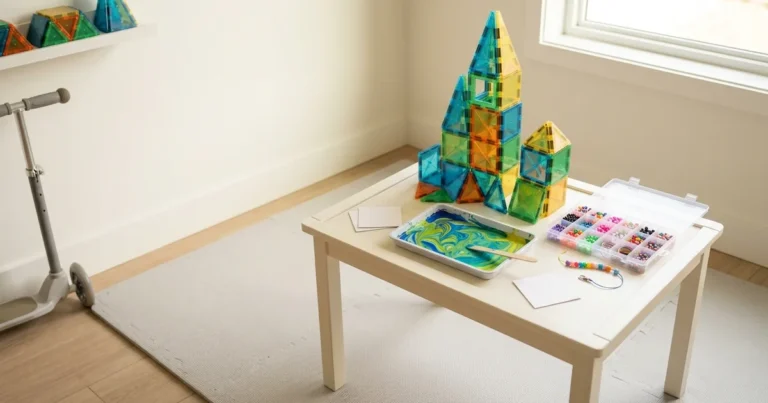
- Add a creative outlet – pair the building set with Finger Paint for Kids, 12 Colors so your son has both a construction outlet and an artistic one, covering two very different imaginative styles.
- Browse by age for more ideas – if your son is on the younger edge of 6, our Ages 3 to 5 Years collection still has plenty of relevant open-ended toys, while boys who are confident builders and ready for more complexity will find a wider range in our Ages 6 to 8 Years collection.
How to Encourage Imaginative Play at Home
Buying the right toy is only half the equation. How you set up the environment around play matters just as much for a 6 year old’s engagement and creativity.
Creating a Dedicated Play Corner
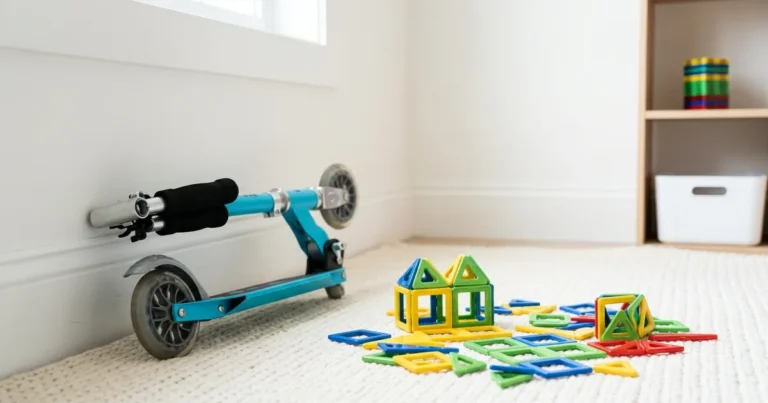
A small, defined space, even a corner of the living room or a section of a bedroom, signals to a child that this is “his” area to build and imagine freely. Keep a low shelf or storage bin nearby so building pieces, costumes, and art supplies are easy to reach and easy to tidy away independently, which also builds a sense of ownership and responsibility.
Rotating Toys to Keep Interest Alive
Instead of leaving every toy out all the time, try storing half of the collection away and rotating it in every two to three weeks. Toys that have been “missing” for a while often feel brand new again when reintroduced, and this simple trick can significantly extend the life and value of imaginative toys for 6 year old boys without spending anything extra.
Joining In Without Taking Over
Six year olds often want a parent to play alongside them, but they also want to lead the story. A good rule of thumb is to follow your son’s lead, ask open questions like “what happens next?” rather than directing the plot, and step back once he is absorbed in independent play. This balance builds confidence while still giving him the connection he is seeking.
Setting Screen-Free Play Windows
Many UAE families find it helpful to set a consistent daily window, for example straight after school or before dinner, that is reserved for hands-on imaginative play with no screens involved. Consistency helps a 6 year old settle into deep, focused play rather than bouncing between short bursts of attention.
Age-Appropriate Progression: From Age 3 to Age 8
Imaginative play does not stay static, it evolves quickly across early childhood. Understanding this progression helps you buy toys that will actually last rather than being outgrown within weeks.
- Ages 3 to 5 – shorter play sessions, simpler cause-and-effect toys, larger building pieces that are easier to grip. Explore our Ages 3 to 5 Years range for options suited to this stage.
- Age 6 – the sweet spot for complex, multi-step imaginative play, longer attention spans, and a genuine love of storytelling combined with building.
- Ages 6 to 8 – boys start wanting bigger, more ambitious projects and enjoy toys that offer more pieces, more complexity, and more room for personal creativity. Our Ages 6 to 8 Years collection is designed with exactly this stage in mind.
Because six sits right in the middle of this range, it is often worth buying slightly ahead in complexity rather than slightly behind, since a bored 6 year old with an overly simple toy will lose interest far faster than one who has room to grow into a more advanced set.
Budgeting for Imaginative Toys in the UAE
Imaginative toys do not need to be expensive to be effective, but it does help to think in terms of value per hour of play rather than sticker price alone. A well-made magnetic building set priced at a moderate number of AED but played with almost daily for a year offers far better value than a cheaper novelty toy that is abandoned within a week. When planning a toy budget in AED, consider:
- One core investment piece – a strong open-ended set such as a magnetic building or train set that can be expanded later.
- One creative consumable – art or craft supplies like finger paints that will need occasional restocking but are low-cost per session.
- Small rotating extras – inexpensive costume pieces or props that keep pretend play fresh without a large spend.
Spacing purchases around birthdays, school holidays, and seasonal occasions also helps manage cost while still giving your son something new to look forward to throughout the year.
Common Mistakes Parents Make When Choosing Imaginative Toys
Even well-meaning parents can accidentally choose toys that look exciting in the shop but do not hold up at home. Watch out for these common pitfalls:
Choosing Toys That Are Too Structured
Toys with only one possible outcome, such as a puzzle with a single solution, tend to be played with once and then set aside. Favour toys that can be rebuilt or reimagined dozens of different ways.
Ignoring the Manufacturer’s Age Range
It is tempting to buy “up” for a child who seems advanced, but age ranges usually reflect genuine safety considerations, particularly around small parts and magnet strength, not just difficulty level.
Overloading the Toy Shelf
Too many toys available at once can actually reduce focus and creativity. A smaller, rotating collection, as described earlier, tends to produce deeper and more imaginative play than an overflowing toy box.
Skipping Safety Checks on Second-Hand or Discounted Toys
Bargain toys can be a great way to expand a collection affordably, but always double-check that magnets are sealed, paint is non-toxic, and no parts are cracked or loose before handing them to your son.
Bringing It All Together
Choosing imaginative toys for 6 year old boys is really about choosing tools for storytelling, engineering, and self-expression, wrapped in something that looks and feels like play. A strong magnetic building or train set, a solid set of finger paints, and a rotating costume box will cover the vast majority of what a 6 year old needs to build entire worlds at home, safely and affordably, all priced in AED and easy to source without ever leaving the house. Start with one core open-ended toy, add a creative outlet, and let your son’s imagination do the rest.
Frequently Asked Questions
What are the best imaginative toys for 6 year old boys in 2026?
Open-ended toys work best at this age, especially magnetic building and train sets, construction blocks, dress-up costumes, and non-toxic art supplies like finger paints. These allow a 6 year old to invent a new story or structure every time he plays, rather than being limited to one fixed outcome.
Are magnetic building sets safe for a 6 year old boy?
Yes, as long as the magnets are fully sealed inside sturdy tiles or pieces and cannot be pried loose, and the set is labelled for the appropriate age range. Always check for secure construction and avoid any set with visibly loose or exposed magnets before giving it to your child.
How can I encourage my son to play imaginatively instead of relying on screens?
Set a consistent screen-free play window each day, create a small dedicated play corner with easy access to building pieces or art supplies, and rotate toys every two to three weeks to keep the collection feeling fresh. Joining in briefly and asking open questions like \’what happens next?\’ also helps extend imaginative play sessions.
How much should I budget in AED for imaginative toys for a 6 year old?
Focus your budget on one strong open-ended investment piece, such as a magnetic building or train set, then add a lower-cost creative consumable like finger paints and a few inexpensive pretend-play props. This approach gives better long-term play value in AED than buying many cheap, single-purpose toys.
What is the difference between toys for ages 3 to 5 and ages 6 to 8?
Toys for ages 3 to 5 tend to have larger pieces, simpler mechanics, and shorter play sequences, while toys for ages 6 to 8 offer more pieces, greater complexity, and room for longer, more ambitious building or storytelling projects. Since 6 year olds sit right at this transition, it is often better to choose a slightly more advanced set so they have room to grow into it.