Last updated: September 20, 2026
Six is a big year. Your child is reading their first full sentences, doing simple addition in their head, tying their own shoelaces, and negotiating game rules with the confidence of a tiny lawyer. The best learning toys for 6 year olds are not the ones with the most flashing lights or the loudest packaging promises, they are the ones built with safety-tested materials, age-appropriate challenge, and open-ended play value that grows with your child through the school year and beyond. This guide walks UAE parents through exactly what to look for, which categories of toys matter most at this age, and how to build a home play collection that supports real learning without cluttering your shelves or draining your wallet.
Why Age 6 Is a Pivotal Year for Learning Through Play
Developmental psychologists often call the years between five and seven a cognitive growth spurt. Your six year old is moving from purely imaginative play into what experts call “concrete operational” thinking, where they start to understand cause and effect, basic logic, and simple rules-based systems. This is exactly why the toy aisle suddenly looks different once your child turns six. Puzzles get harder, building sets get more intricate, and games introduce actual strategy instead of pure luck.
At the same time, six year olds are refining their fine motor skills (handwriting, buttoning, using scissors) and their gross motor coordination (skipping, catching, balancing). A well-rounded toy collection at this age should support:
- Early literacy and pre-reading fluency
- Number sense, counting, and simple arithmetic
- Fine motor precision for handwriting readiness
- Logical thinking, sequencing, and problem solving
- Creativity and open-ended imaginative play
- Social skills like turn-taking, patience, and cooperation
- Emotional regulation and confidence building
The good news is that you do not need a toy for every single skill on that list. Many of the best learning toys for 6 year olds naturally combine three or four of these benefits in one product, which is exactly what we look for when we design and select toys at Graflo.
What Makes a Toy Genuinely Educational (Not Just Labeled That Way)
Walk into any toy shop in Dubai Mall or Mall of the Emirates and you will see the word “educational” printed on nearly every box. Parents deserve a clearer standard than marketing copy. Here is what we believe actually separates a genuinely educational toy from one that just uses the word as decoration.
1. It Offers the Right Level of Challenge
A toy that is too easy gets abandoned in a week. A toy that is too hard causes frustration and gets shoved to the back of the cupboard. The best learning toys for 6 year olds sit in what educators call the “zone of proximal development”, challenging enough to require real thinking, achievable enough that a six year old feels proud when they succeed. This is why toy sets often come with age bands like our ages 6-8 years collection, which groups toys at the right complexity level rather than leaving parents to guess.
2. It Rewards Repetition Without Getting Boring
Open-ended toys, magnetic building sets, art supplies, and construction pieces can be reassembled into something new every single time. A toy that only does one thing loses its educational value after the novelty wears off. Look for toys where the instructions are a starting point, not a limit.
3. It Is Genuinely Safe for Independent Play
By age six, most children want to play without a parent hovering over every move, and that independence is itself a developmental milestone worth protecting. That means the toy needs to be free of small detachable parts that could pose a choking risk, made from non-toxic materials, and sturdy enough to survive enthusiastic six-year-old handling. Certifications matter here far more than packaging claims.
4. It Connects to Real Life Skills
Counting toy coins is more meaningful when your child understands they are learning to handle real money one day. Building a magnetic train track that loops back on itself teaches basic engineering logic. The best educational toys quietly bridge play and real-world competence.
Safety First: What UAE Parents Should Check Before Buying
Safety is not a footnote, it is the foundation everything else is built on. Before you add any toy to your cart, whether shopping online or in a Dubai or Abu Dhabi toy store, run through this checklist.
Look for Recognized Safety Certifications
Toys sold in the UAE should meet international safety standards such as EN71 (the European toy safety standard) or ASTM F963. These certifications test for choking hazards, chemical safety, flammability, and structural durability. Reputable toy brands will display this information clearly on the packaging or product page.
Check Material Quality, Especially for Magnetic and Small-Piece Toys
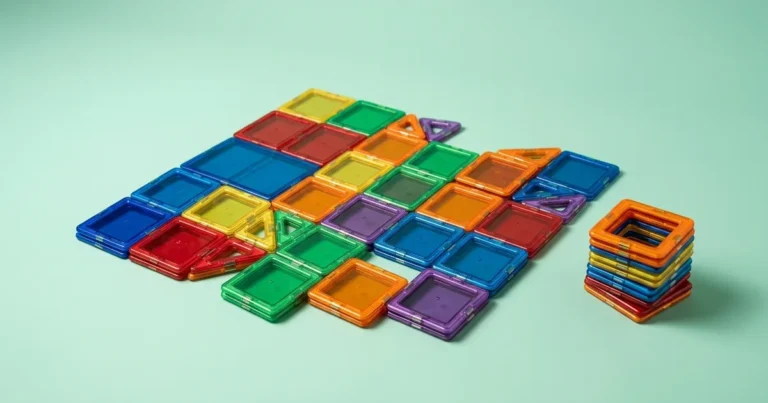
Magnetic building toys have become hugely popular for their STEM value, but not all magnets are created equal. Choose sets where magnets are securely sealed inside thick, impact-resistant casing so pieces cannot be pried open by curious hands. Our 65-piece magnetic train set and the larger 178-piece magnetic train set are built with this exact concern in mind, giving six year olds the joy of building elaborate tracks and structures with parents’ peace of mind fully intact.
Consider the UAE Climate
Toys that will spend time outdoors, on a balcony, by the pool, or in the car, need to tolerate heat without warping, releasing odors, or degrading quickly. Look for UV-stable plastics and materials rated for higher temperatures if the toy will see any outdoor use.
Non-Toxic, Washable Art Supplies
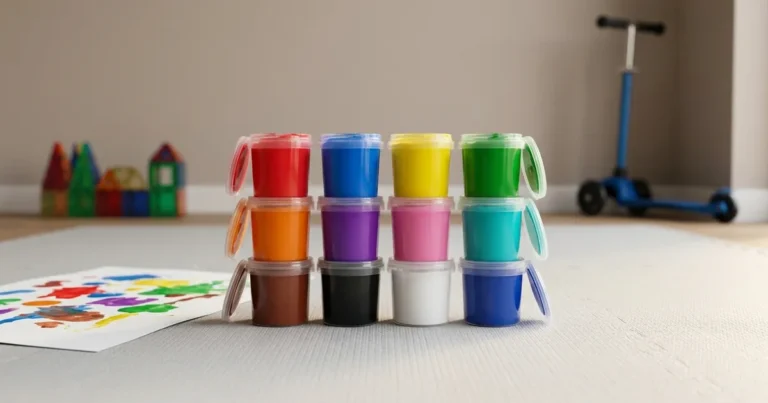
Creative play is essential at this age, but six year olds still sometimes get paint on their hands, clothes, and occasionally their mouths. Choosing non-toxic, washable formulas like our 12-color finger paint set means creative sessions stay stress-free for both parent and child, and cleanup from little fingers, tables, and even walls stays manageable.
Avoid Overly Loud Electronic Toys
Many “smart” electronic learning toys rely on flashing lights and loud sound effects to hold attention. Pediatric researchers have raised concerns that these can actually reduce quality language interaction between parents and children compared to simpler, more open-ended toys. When in doubt, choose toys that invite conversation and hands-on building over toys that do all the talking themselves.
Top Categories of Learning Toys for 6 Year Olds
Rather than listing individual products in isolation, it helps to think in categories. A well-rounded collection at home should ideally include at least one toy from most of these groups.
1. Magnetic and Construction Building Sets
Building toys are consistently rated by educators as some of the best learning toys for 6 year olds because they simultaneously develop spatial reasoning, fine motor control, patience, and creative problem solving. At six, children are ready to move beyond basic block stacking into more complex structures, tracks, and connected systems that require planning ahead.
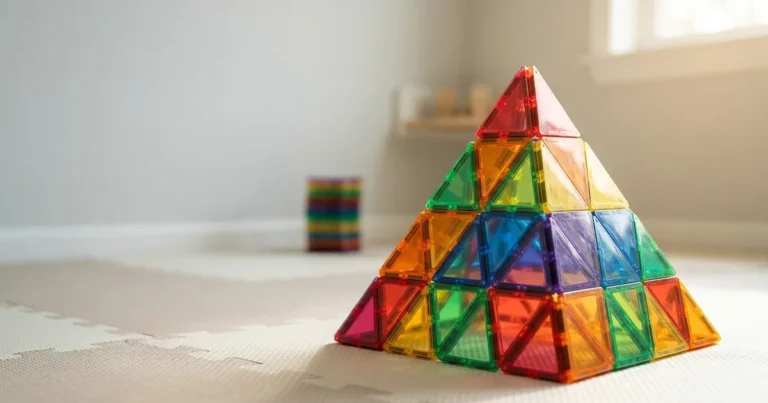
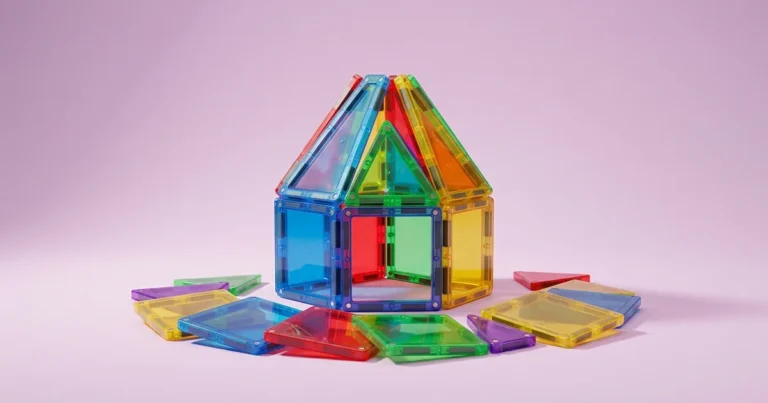
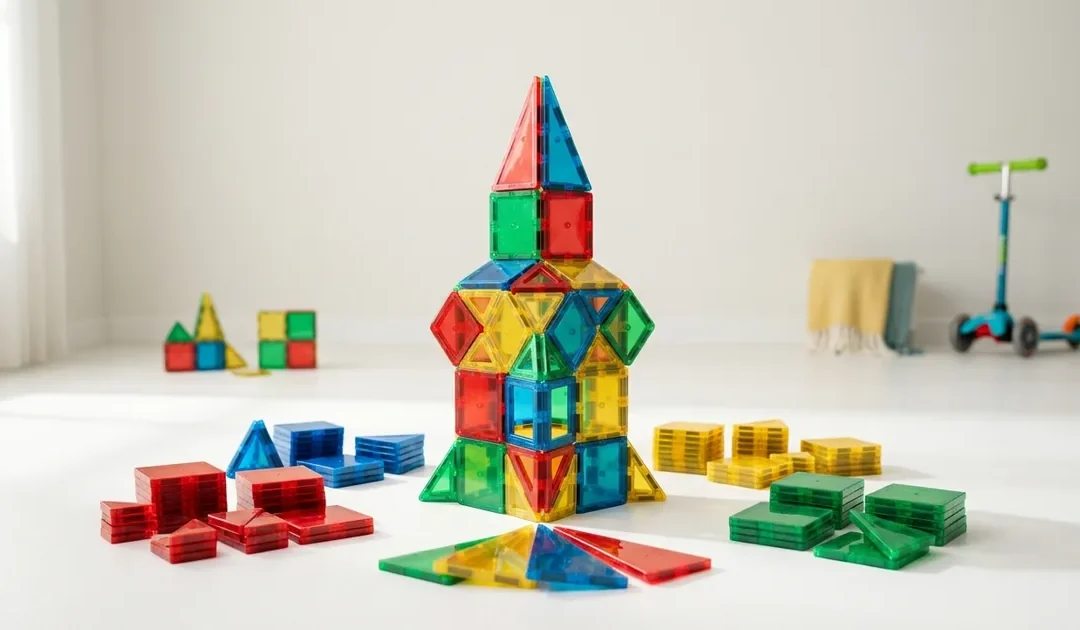
Magnetic construction sets are particularly valuable because the pieces connect from any angle, which means there is no single “right” way to build. A six year old might start by following a train track diagram, then abandon it entirely to build a bridge, a tower, or an entirely imaginary vehicle. This flexibility is exactly what keeps a toy relevant for years rather than weeks. Our magnetic train sets, available in both the compact 65-piece starter set and the more expansive 178-piece set, let children design increasingly ambitious layouts as their confidence and planning skills grow.
What to look for in this category:
- Strong, securely enclosed magnets that will not detach
- A good balance of straight pieces, curves, and connector shapes for varied builds
- Enough pieces to build something genuinely satisfying, not just a short track
- Compatibility with imaginative add-ons like toy figures or vehicles
2. Board Games and Strategy Games
Six is the age when children can finally grasp turn-taking, basic strategy, and the emotional skill of losing gracefully. Simple board games teach counting, pattern recognition, and social skills all at once. Look for games with clear, short rule sets so a six year old can play with only light adult guidance, and gradually introduce games with a bit more strategic depth as their confidence grows over the school year.
Card-matching games are especially good for memory development, while simple dice-and-board games introduce basic addition in a completely painless, playful way. The social element also matters, playing a board game with siblings or cousins teaches patience, fair play, and how to handle disappointment when the dice do not go their way.
3. Arts, Crafts, and Sensory Creative Toys
Creative expression remains a core pillar of learning at age six, even as academic skills take center stage at school. Painting, drawing, and craft activities build fine motor control for handwriting, support emotional expression, and give children a low-pressure outlet after a structured school day.
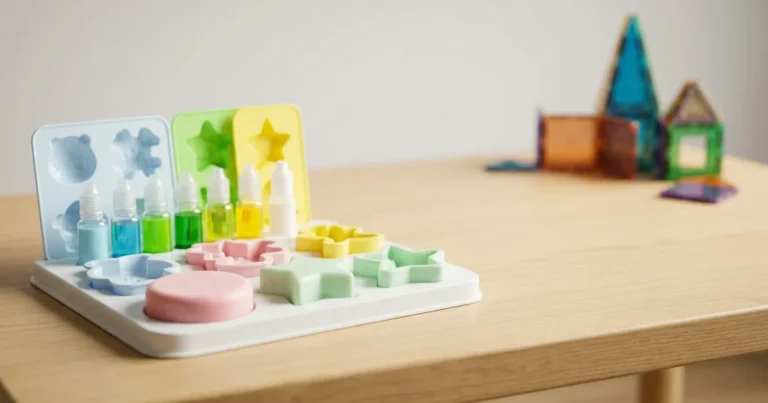
A quality finger paint set, like our 12-color washable finger paint kit, is still highly relevant at age six, not just for younger children. Six year olds enjoy mixing colors to discover new shades, painting with tools beyond just fingers such as sponges or cotton buds, and creating more detailed, intentional artwork compared to their toddler scribbles. Encourage them to paint a story, a favorite animal, or a scene from a book they just read, this bridges creativity with literacy and comprehension.
Other valuable creative toys at this age include modeling clay or dough, simple sewing or lacing kits for fine motor precision, and beginner craft kits that involve cutting, folding, and assembling.
4. Early Literacy and Reading Support Toys
Most six year olds are somewhere in the exciting, sometimes frustrating middle of learning to read fluently. Toys that support this journey without feeling like extra homework are incredibly valuable. Look for phonics-based games, word-building tile sets, or simple storytelling card decks that encourage your child to create their own short stories using picture prompts.
Reading is also supported indirectly by toys that build vocabulary and sequencing skills, such as sequencing card sets where children arrange story cards in the correct order, or simple rhyming card games. The goal is to keep literacy playful and pressure-free at home, since children get plenty of structured reading practice at school already.
5. Math and Logic Toys
Six year olds are usually working on addition, subtraction, and basic number patterns at school. Toys that reinforce these skills through play, rather than worksheets, help cement understanding in a way that feels like fun rather than drilling. Counting bead sets, simple abacus toys, pattern block sets, and logic puzzle games (like sliding puzzles or simple tangram sets) are excellent choices.
Look particularly for toys that make abstract number concepts tangible. A physical set of counting objects that a child can move, sort, and group teaches number sense far more effectively at this age than a screen-based math app, because the hands-on manipulation reinforces the concept through multiple senses at once.
6. STEM and Early Engineering Toys
Simple science kits, basic building and engineering sets, and cause-and-effect toys introduce six year olds to concepts like balance, gravity, and simple machines. Magnetic construction sets fall into this category too, since building a stable track or tower requires understanding weight distribution and structural balance, even if your child could not explain it in those terms yet.
Look for STEM toys that involve genuine trial and error. A tower that falls down is not a failure, it is a lesson in physics your child just experienced firsthand. The best STEM toys for this age are forgiving of mistakes and encourage children to try again immediately rather than getting stuck.
7. Outdoor and Gross Motor Learning Toys
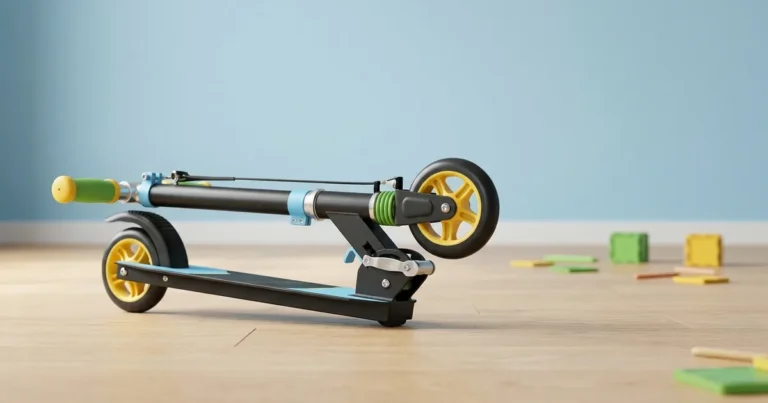
Learning is not confined to the table. Outdoor play toys like jump ropes, balance boards, simple sports equipment, and bicycles support the gross motor development that complements fine motor and cognitive growth. In the UAE, outdoor play often needs to be timed around cooler morning or evening hours, so having a rotation of both indoor and outdoor learning toys ensures your child stays active and engaged year-round, even during the hottest summer months.
8. Social-Emotional Learning Toys
Six year olds are developing empathy, self-regulation, and an understanding of others’ feelings. Role-play toys, simple family or community-themed playsets, and cooperative (not just competitive) games all support this emotional growth. Cooperative board games, where the whole family works together toward one shared goal rather than competing against each other, are particularly good for teaching teamwork and reducing the sting of losing.
How to Choose the Right Toy Based on Your Child’s Personality
Every six year old is different, and the best learning toys for 6 year olds are the ones matched thoughtfully to the individual child in front of you, not just their age bracket.
For the Builder and Engineer
If your child loves stacking, connecting, and constructing, invest in a larger magnetic building set they can grow into over months rather than weeks. The 178-piece magnetic train set gives ambitious builders enough pieces to design elaborate, multi-level layouts, keeping the challenge fresh long after a smaller set would have been fully explored.
For the Artist and Dreamer
Children who are always drawing, coloring, or asking for craft supplies will thrive with an expanded art station at home. Rotate in new tools alongside a reliable core set like the 12-color finger paint kit, adding stencils, textured paper, or simple craft add-ons to keep their creative sessions evolving.
For the Cautious or Reserved Child
Some six year olds prefer quieter, more predictable play. Puzzles, matching games, and simple building sets that do not require social interaction to enjoy can help a more reserved child build confidence at their own pace before gradually introducing group games and social play toys.
For the Social Butterfly
If your child thrives on playing with siblings, cousins, or friends, prioritize board games, cooperative building challenges, or team-based playsets. Two children building together on a large magnetic track, for example, naturally practices sharing, negotiation, and joint problem solving.
For the Child Who Gets Bored Quickly
Open-ended toys are your best friend here. A single well-designed magnetic building set or a versatile art kit can be reinvented dozens of different ways, which helps hold the attention of a child who tends to lose interest in single-purpose toys within days.
Building a Balanced Toy Collection at Home
Rather than buying dozens of individual toys, think of your six year old’s play collection the way you might think of a wardrobe, a few high quality, versatile pieces that can be mixed and matched will always outperform a pile of single-use items that get forgotten after their first use.
A well-rounded starter collection for a six year old might include:
- One substantial building or construction set for spatial reasoning and STEM play
- One quality art and craft kit for creative expression
- Two or three board or card games spanning both strategy and cooperative play
- One literacy-focused toy or game to reinforce reading skills
- One math or logic-focused toy for number sense
- Outdoor equipment appropriate for your family’s lifestyle and available space
If your child already has toys designed for younger ages, do not rush to discard them. Many toys in our ages 3-5 years collection can still be enjoyed by six year olds in more advanced ways, a younger sibling’s building blocks might become the base of a more complex structure, or an old sorting game might be repurposed into a timed challenge. As your child’s needs shift, our ages 6-8 years collection is specifically curated to match the complexity and safety needs of this stage.
How Much Should You Budget for Learning Toys?
Parents across the UAE often ask how much is reasonable to spend on educational toys without overspending or under-investing in quality. A helpful rule of thumb is to prioritize spending on toys that will be used repeatedly over months, such as building sets or quality art supplies, and spend more modestly on toys with narrower, shorter-term appeal, such as simple themed playsets.
Rather than a strict number, think in terms of value per hour of engaged play. A magnetic building set priced higher upfront but used weekly for a year offers far better value than a cheaper toy abandoned within days. When shopping, always check listed prices in AED and compare the piece count, material quality, and safety certifications side by side rather than choosing based on price alone.
Screen-Free Learning: Why It Still Matters at Age Six
With so many educational apps and tablets marketed to school-age children, it is worth pausing to consider why physical, hands-on learning toys remain so valuable even in 2026. Physical toys engage tactile senses, require real-world spatial reasoning, and often involve more genuine social interaction than screen-based alternatives. Building a magnetic train track with a sibling teaches negotiation and cooperation in ways a tablet game simply cannot replicate. Painting with actual finger paint engages texture, smell, and full-hand movement, all of which support sensory development that a touchscreen cannot offer.
This does not mean screens have no place in a balanced routine, but it does mean that hands-on learning toys deserve a protected, prioritized spot in your child’s daily play time, especially during the after-school hours when many UAE families are looking for calm, screen-free activities before dinner and bedtime routines begin.
Creating a Simple Weekly Learning-Through-Play Routine
Consistency helps six year olds get the most benefit from their toys. Consider a loose weekly rhythm rather than a rigid schedule:
- Weekday afternoons: Short, focused sessions with building or literacy toys after school, when your child still has mental energy but needs a break from formal study.
- Weekday evenings: A relaxed creative wind-down with art supplies before dinner and bath time.
- Weekend mornings: Longer, more ambitious building projects or a family board game session when there is no school-day time pressure.
- Weekend outdoor time: Cooler morning or evening hours for gross motor play, especially important during warmer months in the UAE.
This kind of gentle rhythm helps children anticipate and look forward to their play time, which in turn increases genuine engagement rather than treating toys as background noise while attention drifts elsewhere.
Common Mistakes Parents Make When Choosing Learning Toys
Buying Based on Packaging Claims Alone
The word “educational” on a box does not guarantee real developmental value. Always look past the marketing language to the actual materials, complexity, and open-endedness of the toy itself.
Choosing Toys That Are Too Advanced Too Soon
It can be tempting to buy toys marketed for older children hoping to “challenge” a bright six year old, but toys designed with too much complexity or too many small, intricate pieces can lead to frustration rather than growth. Trust age recommendations as a starting guide, and adjust based on your specific child’s demonstrated skill level.
Overloading the Toy Shelf
Too many toy options at once can actually reduce a child’s ability to focus and engage deeply with any single toy. Rotating a smaller, curated selection of high-quality toys, rather than keeping everything accessible all the time, often leads to deeper, more sustained play.
Ignoring Safety Details for the Sake of a Bargain
A lower price is only a good deal if the toy is genuinely safe. Always verify certifications and material quality before prioritizing cost, particularly for toys involving magnets, small parts, or materials that will contact skin, like paints and craft supplies.
Signs a Toy Is Truly Working for Your Child
How do you know if a toy is actually delivering on its learning promise? Watch for these signs over the first few weeks of ownership:
- Your child returns to it repeatedly without being prompted
- They use it in new, unexpected ways over time
- They talk about what they built, drew, or figured out with enthusiasm
- You notice gradual improvement in the specific skill the toy targets, such as more complex builds or steadier brushstrokes
- They want to show family members or friends what they created
If a toy consistently fails to spark any of these responses after a fair trial period, it may simply not be the right match for your child’s current interests or developmental stage, and that is completely normal. Every child’s play preferences are unique.
Bringing It All Together
Choosing the best learning toys for 6 year olds does not require an overwhelming shopping list or an expensive haul. It requires a thoughtful, safety-first approach, an understanding of what your specific child is ready for, and a willingness to prioritize open-ended, high-quality toys over flashy, single-use novelties. A sturdy magnetic building set, a reliable washable art kit, and a couple of well-chosen games can carry your child through an entire year of joyful, meaningful play, supporting their reading, math, creativity, and social skills all at once.
As your six year old grows through this exciting stage, keep checking in on what excites them, what challenges them just enough, and what they keep returning to on their own. That instinct, more than any packaging label, is the truest sign you have found the right toy.
Frequently Asked Questions
What are the best learning toys for 6 year olds to support school readiness?
Toys that reinforce fine motor control, number sense, and early reading, such as building sets, counting toys, and simple word games, work best alongside washable art supplies for handwriting practice. Combining a construction toy with a literacy-focused game covers most core school readiness skills at once.
Are magnetic building toys safe for a 6 year old?
Yes, as long as the magnets are securely sealed inside impact-resistant casing and the set meets recognized safety certifications like EN71. Our magnetic train sets are designed with securely enclosed magnets specifically so six year olds can build independently with parents’ full peace of mind.
How many learning toys does a 6 year old really need at home?
Quality matters far more than quantity. A small, curated collection covering building or construction, creative arts, one or two games, and a literacy or math-focused toy is usually enough to support balanced development without overwhelming your child’s play space.
Is finger painting still appropriate for a 6 year old, or is it too babyish?
Finger painting remains genuinely valuable at six, since children at this age create more detailed, intentional artwork and enjoy mixing colors and experimenting with new tools. A washable, non-toxic finger paint set is just as engaging for a six year old as it was at a younger age, simply used in more advanced ways.
What should I check before buying an educational toy for my child in the UAE?
Verify safety certifications such as EN71 or ASTM F963, check that materials are non-toxic and suitable for the UAE climate if used outdoors, and confirm the toy matches your child’s current skill level rather than relying solely on the age printed on the box.