Last updated: July 29, 2026
Before any toy earns a spot in your child’s playroom, it should pass two tests: is it safe for small hands and curious mouths, and will it actually help your child grow? Between the ages of two and six, a child’s brain forms more than a million new neural connections every second, and the toys they touch, stack, sort, and squeeze every day are quietly shaping how they think, speak, move, and relate to others. Choosing the best preschool toys for learning is not about filling shelves with the flashiest boxes at the mall. It is about picking a small number of well-made, age-appropriate toys that are free of choking hazards, sharp edges, and toxic paint, and that match exactly where your child is developmentally right now. This guide walks UAE parents through everything from safety standards to skill-building categories, age-by-age recommendations, and practical shopping tips, so you can build a preschool toy collection that is safe, purposeful, and genuinely fun.
Why the Right Preschool Toys Matter More Than You Think
Preschoolers do not learn the way older children or adults do. They learn almost entirely through their hands, their senses, and repeated, joyful practice. A toy is never just a toy to a three-year-old, it is a tool for testing gravity, cause and effect, language, emotion, and social rules. This is why pediatric development experts consistently point to play as the single most important “job” of early childhood.
The Science of Learning Through Play
Around 90 percent of a child’s brain architecture is established by age five. During this window, open-ended play, the kind that lets a child decide what happens next, builds executive function skills like planning, self-control, and flexible thinking far more effectively than passive entertainment. When a toddler stacks blocks and watches them topple, she is running dozens of tiny physics experiments. When a four-year-old pretends a wooden spoon is a microphone, he is practicing symbolic thinking, a skill that later underpins reading and math. Preschool toys that encourage this kind of active, hands-on exploration give children repeated low-stakes chances to fail, adjust, and try again, which is exactly how confidence and resilience are built.
Safety First: Non-Negotiable Standards for Preschool Toys
No developmental benefit matters if a toy is not safe. For children under three, and for the many three, four, and five year olds who still mouth objects when concentrating, every toy in the house should be checked against a simple safety checklist:
- Choking hazard size: Any toy or detachable part smaller than a AA battery is unsuitable for children under three and should be kept well out of reach.
- Non-toxic materials: Look for toys made with water-based, non-toxic paints and food-grade or medical-grade materials, especially for anything that touches the mouth or skin, such as art supplies and teethers.
- No sharp edges or splinters: Wooden and plastic toys should be sanded, rounded, and free of burrs, particularly on toys designed for building and stacking.
- Secure battery compartments: Any electronic toy should have a screw-locked battery cover, since button batteries are a serious swallowing risk.
- Strong stitching and no loose strings: Soft toys and dress-up items should have reinforced seams and no ribbons longer than 20 cm that could pose a strangulation risk.
- Recognised safety testing: Look for toys tested against internationally recognised standards, with clear age labeling on the box.
Reputable retailers will always list the recommended age range and safety certification clearly on the product page, so make this the very first thing you check, before price or design.
How to Choose Preschool Toys for Every Stage of Development
“Preschool” actually spans a huge range of ability, from a wobbly two-year-old to a confident six-year-old about to start school. A toy that is perfect at age two may be too simple by age five, and a toy meant for a five-year-old may contain small parts that are unsafe for a younger sibling. Here is how needs shift year by year.
Ages 2-3: Building Independence and Coordination
At this age, children are mastering basic motor control, first words, and the thrilling discovery that they can do things themselves. The best toys for this stage are simple, sturdy, and forgiving of clumsy hands: chunky puzzles with four to six pieces, large stacking rings, simple shape sorters, big crayons, and push-and-pull toys that encourage walking and balance. Toys with big, satisfying cause-and-effect actions, like a lever that pops open a door, build early problem-solving confidence. Everything at this stage should be free of small detachable pieces and easy to clean, since mouths are still very much part of how toddlers explore.
Ages 3-4: Expanding Imagination and Language
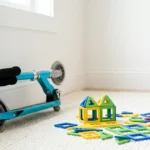
Between three and four, vocabulary explodes and pretend play becomes far more elaborate. Children start assigning roles (“you be the doctor, I’ll be the patient”) and can follow two-step instructions. This is the ideal age to introduce simple building sets, dress-up costumes, play kitchens, chunky jigsaw puzzles with 10-20 pieces, and early art supplies like washable finger paints that let them experiment freely with color and texture without worrying about mess or toxicity. Magnetic building toys also become genuinely engaging here, since a three or four year old can start following simple patterns and building small structures independently, laying groundwork for later STEM confidence. Browsing a curated collection of toys for ages 3 to 5 is a good way to see options that are pre-filtered for this exact stage.
Ages 4-5: School Readiness and Problem-Solving
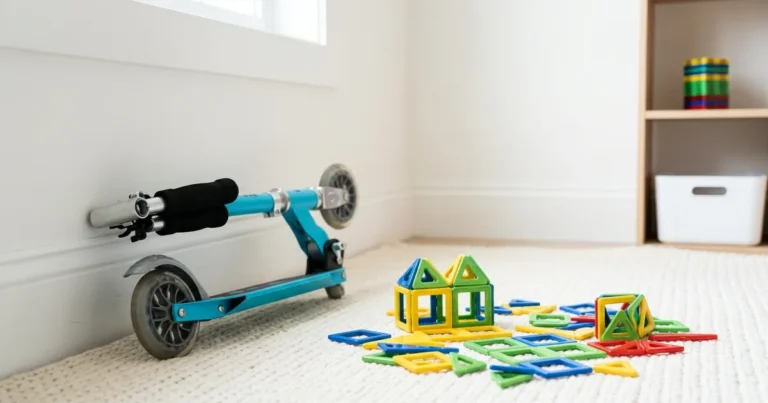
By four to five, children are refining fine motor control for pencil grip, learning letters and numbers, and beginning to understand rules and turn-taking in games. This is the sweet spot for more complex construction toys, simple board games, tracing and pattern activities, and open-ended building sets that reward planning ahead. A 65-piece magnetic train and STEM tiles set fits beautifully here, since it gives children enough pieces to build increasingly ambitious tracks and shapes while strengthening spatial reasoning and patience.
Ages 5-6: Bridging to Formal Learning
As children approach school age, they are ready for toys that combine open-ended creativity with a bit more structure and challenge, longer-format puzzles, simple strategy games, larger construction sets with more pieces, and toys that encourage cooperative building with siblings or friends. A larger 178-piece magnetic train STEM tiles set is designed for exactly this stretch, giving five and six year olds (and even up to age eight) enough complexity to keep building new designs long after simpler sets have been outgrown. For families with children in this age bracket, it is worth exploring a dedicated range of toys for ages 6 to 8 so the collection can grow alongside your child rather than being replaced all at once.
Types of Preschool Toys and the Skills They Build
Rather than shopping by trend, it helps to think in terms of the developmental skill each toy targets. A well-rounded preschool toy shelf usually covers all six of the categories below.
Fine Motor Skill Toys
Fine motor toys strengthen the small hand and finger muscles children need for holding a pencil, using scissors, and buttoning a shirt. Good options include lacing cards, chunky tweezers-and-pompom games, playdough with simple cutters, threading beads, and puzzles with knobbed pieces for younger toddlers. Art materials belong firmly in this category too, since the pincer grip used to hold a paintbrush or crayon directly trains the same muscles used later for handwriting. Washable, non-toxic finger paints are especially valuable because they let very young children practice hand control and color mixing without needing a brush at all, making them accessible even to two and three year olds who are still building grip strength.
Gross Motor and Active Play Toys
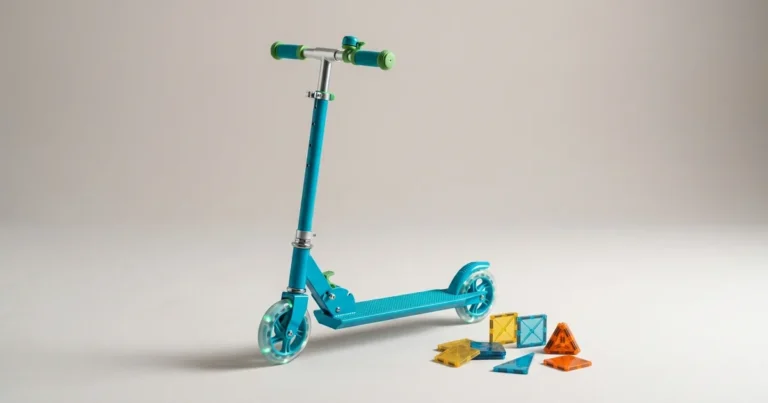
Preschoolers need to run, climb, balance, and throw every single day, and toys that support this are just as important as tabletop activities. Ride-on toys, balance beams, soft climbing sets, balls of various sizes, and simple obstacle-course kits help children build core strength, coordination, and the confidence to try physically challenging tasks. In the UAE’s warmer months, indoor gross motor toys become especially valuable for keeping active play going even when outdoor time is limited.
STEM and Building Toys
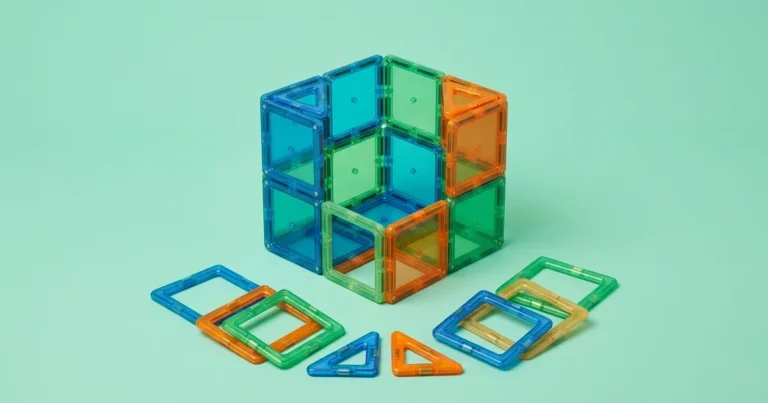
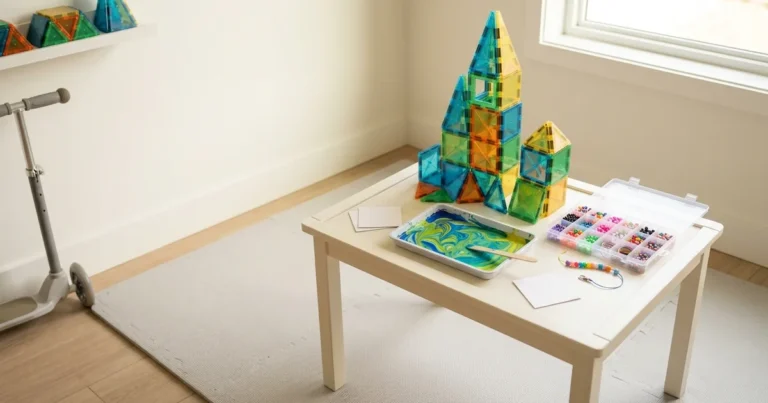
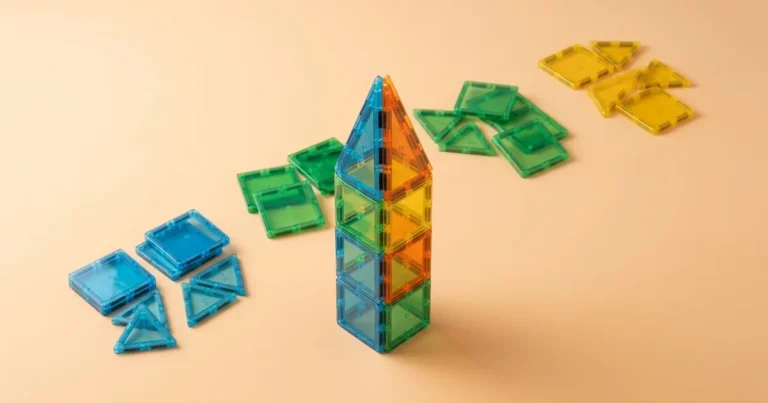
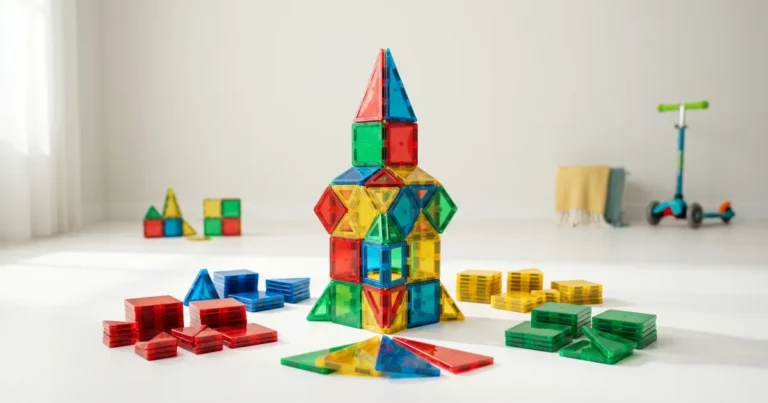
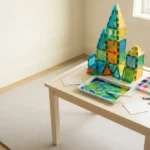
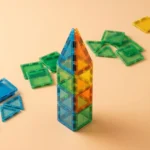
Construction toys are among the most valuable preschool purchases a family can make, because a single set can be rebuilt in hundreds of different ways over years of play, delivering a genuinely open-ended return on investment. Magnetic building tiles are particularly effective for this age group because the pieces click together instantly with a satisfying snap, removing the frustration that can come with fiddly connector toys, while still requiring real spatial reasoning to plan a stable structure. Sets that combine flat tiles with train pieces, like the 65-piece magnetic train STEM tiles set, let children experiment with both 2D shape-building and 3D track design in the same play session, which is exactly the kind of varied, hands-on exploration that supports early engineering and math thinking. For children who are ready for bigger, more ambitious builds, the 178-piece STEM tiles set offers enough pieces to build multi-level structures, longer train circuits, and collaborative builds with siblings or friends.
Language, Literacy and Early Numeracy Toys
Letter puzzles, simple picture-matching games, counting toys, and story-based sorting activities help preschoolers connect spoken words to symbols long before formal reading instruction begins. Toys that combine a physical action with a word or number, such as placing a numbered peg into a matching hole, reinforce learning far more effectively than flashcards alone, because the hands-on action helps cement the concept in memory.
Social-Emotional and Pretend Play Toys
Play kitchens, doctor kits, dollhouses, puppet sets, and dress-up costumes give children a safe space to rehearse real-life situations, practice empathy, and work through big feelings. When a child pretends to comfort a “sick” stuffed animal or negotiates roles with a sibling during pretend play, they are practicing the exact same emotional regulation and negotiation skills they will need on their first day of school.
Sensory Play Toys
Sensory toys, including textured balls, sand and water play sets, sensory bins, and washable paints, help regulate a child’s nervous system and are especially valuable for children who are highly active or easily overwhelmed. Sensory play also builds vocabulary around texture and temperature (rough, smooth, cold, squishy) that children use constantly in early descriptive language.
Spotlight: Magnetic Building Toys for Preschoolers
If you are only going to invest in one category of preschool toy this year, magnetic building sets deserve serious consideration. Unlike toys with a single fixed outcome, magnetic tiles and train pieces can be reconfigured endlessly, which means the same set that entertains a three-year-old with simple towers can challenge a six-year-old to build elaborate multi-track railway systems. This longevity makes magnetic building toys genuinely good value in AED terms, since families are not replacing the toy every few months as a child’s skills advance.
From a safety standpoint, look for sets with securely embedded magnets, rounded edges, and pieces large enough that they are not a choking hazard, all of which should be clearly stated on the product listing. The 65-piece magnetic train STEM tiles set is a strong starting point for younger preschoolers or first-time buyers, while the 178-piece set designed for ages three to eight suits families who want a set that will keep pace with a child for several years, or households with more than one child building together.
Beyond spatial reasoning, magnetic building play also quietly builds patience and frustration tolerance. A tower that collapses is not a failure, it is an invitation to problem-solve, adjust the base, and try again, which is precisely the resilience mindset early years educators try hardest to nurture.
Spotlight: Sensory and Art Toys
Art supplies are often the most-used and most quickly discarded category of preschool toy, so choosing safe, washable, well-made options matters both for your child’s skin and for your walls and furniture. Non-toxic, washable finger paints in 12 colors give preschoolers a low-barrier way to explore color mixing, texture, and self-expression without needing to master a paintbrush grip first. Because finger painting uses the whole hand rather than fine pincer control, it is often the very first true art experience a toddler has, making it a wonderful entry point before moving on to crayons, chunky pencils, and eventually brushes.
When shopping for any art supply for a preschooler, always check that the packaging confirms the product is non-toxic and suitable for the stated age range, and choose washable formulas so that art time stays stress-free for the whole family.
Creating a Toy Rotation System at Home
One of the most underrated ways to get more developmental value out of the toys you already own is toy rotation. Instead of leaving every toy out at once, which can overwhelm a young child and lead to shallow, scattered play, store two-thirds of your child’s toys in labeled boxes and rotate a smaller selection onto the shelf every one to two weeks. Children consistently engage more deeply and for longer stretches with a smaller, curated set of toys, and “new” toys reappearing after a break in storage often generate the same excitement as a fresh purchase, without any extra spending.
A simple rotation system also makes it much easier to maintain the safety checks mentioned earlier, since you are inspecting a smaller batch of toys regularly rather than an overflowing toy box only once or twice a year.
Balancing Toys and Screen Time
Physical, hands-on toys offer something screens simply cannot: three-dimensional spatial feedback, tactile input, and the ability to fail and rebuild in real time. This does not mean screens have no place in a preschooler’s week, but pediatric guidance generally recommends prioritising hands-on play, especially construction, art, and pretend play toys, as the primary daily activity, with screen time used more sparingly and always alongside an adult. If your child gravitates heavily toward tablets, introducing an engaging hands-on alternative, such as a magnetic building set with a clear “challenge” (build a train track that loops back to the start, build the tallest tower that can hold a toy figure) can make the transition away from screens far smoother than simply removing the device.
Budgeting for Preschool Toys in the UAE
It is entirely possible to build an excellent preschool toy collection without overspending, provided you focus on quality and versatility over quantity. As a general guide for UAE households, budget-friendly staples like puzzles, lacing cards, and basic art supplies typically fall in the AED 20 to AED 60 range, while more substantial open-ended toys such as magnetic building sets, play kitchens, and larger construction kits generally sit between AED 100 and AED 400 depending on piece count and complexity. Because sets like the 65-piece and 178-piece magnetic STEM tiles collections are designed to be used for years rather than months, they tend to offer stronger long-term value per AED spent than single-use novelty toys.
A practical budgeting approach is to invest a slightly larger amount in two or three high-quality, multi-year toys (a building set, a pretend play set, an art supply set) and supplement with smaller, less expensive items like puzzles and sensory toys that can be swapped out more frequently through your toy rotation system.
Safety Checklist Before You Buy
Whenever you are evaluating a new preschool toy, whether online or in-store, run through this quick checklist:
- Is the recommended age range clearly stated, and does it match your child’s current stage rather than just their interests?
- Are there any parts smaller than a AA battery that could pose a choking hazard for younger siblings in the home?
- Is the material non-toxic, and is this clearly confirmed on the packaging or product page?
- Are edges, corners, and seams smooth, rounded, and free of splinters or sharp points?
- If the toy uses batteries, is the compartment secured with a screw rather than a simple snap-open lid?
- Is the toy easy to clean, especially important for art supplies and anything that will end up in little mouths?
- Does the toy offer more than one way to play, supporting open-ended exploration rather than a single fixed outcome?
If a toy passes every point on this list, you can feel confident it belongs in your child’s collection.
Tips for Shopping for Preschool Toys Online in the UAE
Shopping online for preschool toys adds convenience, but it also means you cannot physically inspect a toy before it arrives. To shop confidently, always check the product description for the safety details listed above, read the stated age range carefully rather than relying on the cover photo alone, and browse category pages that are already organised by age, such as the ages 3 to 5 collection or the ages 6 to 8 collection, so you are only comparing toys genuinely suited to your child’s stage. Keeping receipts and checking the retailer’s exchange policy is also wise, since even carefully chosen toys sometimes do not match a particular child’s interests, and being able to swap sizes or sets keeps your toy budget working efficiently.
Building a Well-Rounded Preschool Toy Shelf
Rather than aiming for the most toys, aim for the most varied set of developmental opportunities. A genuinely well-rounded shelf for a preschooler typically includes one open-ended construction toy, one pretend-play set, one art or sensory activity, one puzzle or matching game, and one active or gross motor toy. Reviewed together, this small, carefully chosen collection can support fine motor skills, language, spatial reasoning, emotional regulation, and physical development every single day, without requiring an overflowing toy room or a strained budget.
Conclusion
The best preschool toys for learning are not defined by flashing lights or trending characters, but by two simple, non-negotiable qualities: they are genuinely safe for your child’s stage, and they invite real, hands-on exploration. By checking safety details first, matching toys to your child’s current developmental stage, covering all the key skill categories, and rotating a smaller, well-loved collection rather than a sprawling one, UAE families can build a preschool toy shelf that grows with their child for years. Whether you are starting with a simple puzzle for a two-year-old or investing in a larger magnetic STEM tiles set for a soon-to-be schooler, every safe, thoughtfully chosen toy is one more building block in your child’s early development.
Frequently Asked Questions
What are the best preschool toys for learning at home?
The best preschool toys for learning combine safety with open-ended play, such as magnetic building tiles, non-toxic art supplies like washable finger paints, simple puzzles, and pretend play sets. Look for toys that support fine motor skills, language, and problem-solving rather than toys with only one fixed way to play.
How do I know if a toy is safe for my preschooler?
Check that the toy is labeled for your child’s exact age range, has no parts smaller than a AA battery, uses non-toxic, washable materials, has smooth rounded edges with no splinters, and, if battery-operated, has a screw-locked battery compartment rather than a simple snap lid.
Are magnetic building toys good for preschoolers?
Yes, magnetic building sets are excellent for preschoolers because the pieces snap together easily, reducing frustration, while still building spatial reasoning, patience, and early STEM thinking. Sets like a 65-piece or 178-piece magnetic train STEM tiles collection can be rebuilt in countless ways, making them suitable from early preschool years right through to around age eight.
How much should I budget for preschool toys in AED?
Basic items like puzzles and art supplies typically range from AED 20 to AED 60, while larger, longer-lasting toys such as magnetic building sets or play kitchens usually fall between AED 100 and AED 400. Investing more in a few versatile, multi-year toys and supplementing with smaller rotating items generally offers the best value.
How can I make my child’s existing toys feel new again?
Try a toy rotation system by storing two-thirds of your child’s toys out of sight and rotating a smaller selection every one to two weeks. Children tend to engage more deeply with a curated set of toys, and previously stored toys often feel exciting again once reintroduced, without any extra spending.