Last updated: August 19, 2026
Choosing the best educational toys for kids in the UAE means balancing two things at once: keeping your child physically safe and giving their growing brain something worthwhile to do. It is not about buying the flashiest box on the shelf. A toy earns the word “educational” only when it is age-appropriate, free of choking or chemical hazards, and built to hold a child’s attention long enough for real learning to happen. This guide walks you through exactly how to tell a genuinely developmental toy from a gimmick, how to shop by age, and which categories of toys are worth the AED you spend on them in 2026.
What Actually Makes a Toy “Educational”?
Every toy box in the mall claims to build brains. Very few actually do. Before you compare prices or brands, it helps to understand the traits that separate a genuinely developmental toy from a toy that simply lights up and makes noise.
Open-Ended Play Beats Single-Purpose Toys
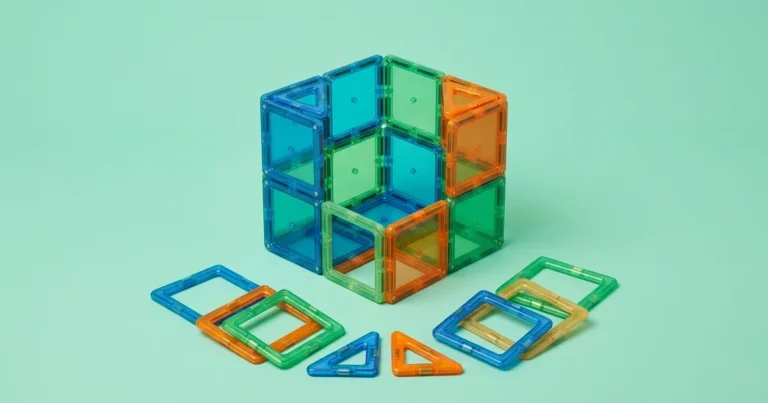
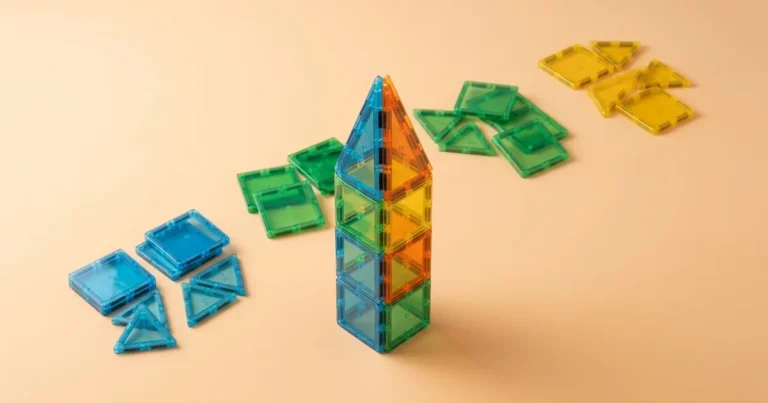
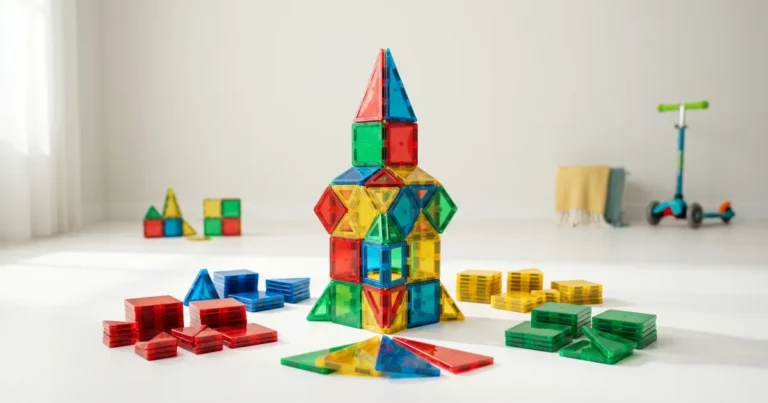
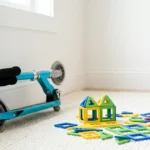
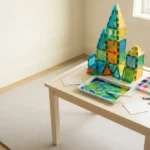
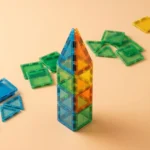
An open-ended toy can be used in dozens of different ways. A set of magnetic building tiles can become a house, a car, a bridge, or a spaceship, and the child decides which. A single-purpose toy, like an electronic quiz machine that only asks pre-recorded questions, runs out of novelty within a week. Open-ended toys grow with your child because the complexity of what they build or imagine increases as their skills do. This is why classic categories like building sets, art supplies, and construction toys stay relevant from toddlerhood through the early school years.
The Toy Should Build a Specific Skill
Genuinely educational toys tend to fall into one or more of these skill categories:
- Fine motor skills – toys that require pinching, stacking, threading, or drawing, which strengthen the small hand muscles needed later for writing.
- Gross motor skills – ride-on toys, balance boards, and large building sets that get the whole body moving.
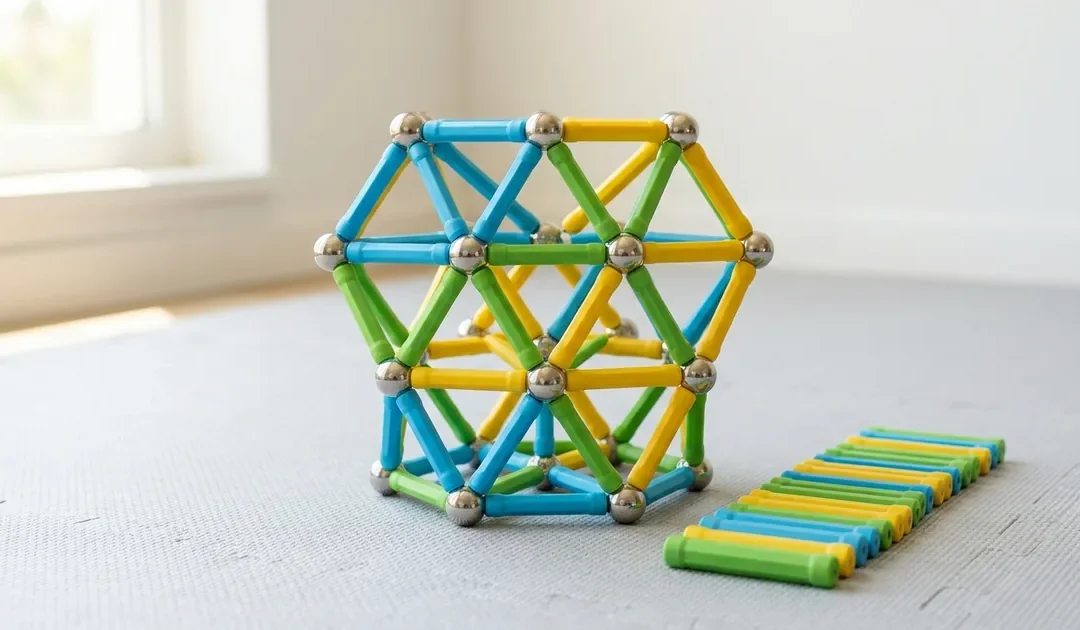
- Early STEM thinking – magnetic construction sets, gears, and simple circuits that introduce cause and effect, spatial reasoning, and basic engineering logic.
- Language and communication – picture books, puppet play, and role-play sets that encourage naming, storytelling, and back-and-forth conversation.
- Creativity and self-expression – art materials, open-ended blocks, and pretend-play props that have no single “correct” outcome.
- Emotional regulation and social skills – cooperative games, turn-taking toys, and pretend kitchens or doctor sets that model sharing and empathy.
A strong toy shelf usually has at least one toy from each category rather than ten toys from the same one.
It Should Survive Real Play, Not Just a Product Photo
Educational value means nothing if the toy breaks on day two. Look for solid stitching on plush toys, thick and rounded pieces in building sets, and washable, tested paints in art supplies. A toy that survives being dropped, chewed, and dragged across the floor for months is the one that actually gets used long enough to teach anything.
How to Choose a Toy by Age
Age-appropriateness is the single most important safety and developmental filter when buying toys. A toy that is perfect for a six-year-old can be genuinely dangerous for a one-year-old, and a toy designed for toddlers will bore a seven-year-old within minutes. Here is how to think about it stage by stage.
Toddlers, Roughly 1 to 3 Years
At this age, everything goes in the mouth, balance is still developing, and attention spans are short but curiosity is enormous. Prioritise:
- Large, chunky pieces with no small parts that could be swallowed.
- Soft edges and non-toxic, water-based paints or dyes.
- Simple stacking, shape-sorting, and push-pull toys that reward cause and effect.
- Board books and textured toys for sensory exploration.
Avoid anything with small magnets, button batteries that are easy to access, or thin strings longer than 30cm.
Preschoolers, Roughly 3 to 5 Years
Children in this range have better hand control, longer attention spans, and a growing interest in pretend play and simple problem-solving. This is the golden age for construction toys, art supplies, and matching or sorting games. A magnetic building set is an excellent fit here because pieces click together with a satisfying snap, encouraging both fine motor control and early geometry without any tools or adult assembly required. You can browse a full range of age-matched options in our ages 3 to 5 years toy collection, all screened for safety and skill-building value.
Early School Age, Roughly 6 to 8 Years
By now, children can follow multi-step instructions, enjoy a bit of challenge, and start to appreciate toys with a “build it, then play with it” structure. Larger magnetic train and track sets shine here, because kids can design their own layouts, problem-solve when a track does not connect the way they planned, and then enjoy imaginative play once it is built. Our ages 6 to 8 years toy collection is built around exactly this stage, favouring toys that reward patience and planning.
Tweens, Roughly 9 to 12 Years
Older kids want toys that respect their growing independence. Look for advanced construction kits, strategy games, science experiment kits, and creative toys that let them work on longer-term projects over days rather than minutes. Toys that feel “babyish” get abandoned quickly at this stage, so complexity and a genuine challenge matter more than bright colours.
General Age-Checking Rules That Always Apply
- Always check the manufacturer’s age label on the box, then compare it honestly against your own child’s coordination and impulse control, not just their age in years.
- If in doubt between two age ranges, choose the lower one for safety and the higher one only if your child has clearly outgrown simpler toys.
- Reassess toy safety as siblings of different ages share a play space, since a toddler will often get hold of an older sibling’s small-parts toy.
Safety First: What Every UAE Parent Should Check Before Buying
Before a toy earns a spot in your home, it should pass a quick safety check regardless of how educational the packaging claims it is.
Look for Recognised Safety Standards
Toys sold in the UAE should meet recognised international safety standards such as EN71 (the European toy safety standard) or ASTM F963. These standards test for things like sharp edges, flammability, and the amount of force needed to break a toy apart. Reputable retailers will state this certification clearly on the product listing or packaging. If a toy has no safety certification information at all, that is a reason to skip it, no matter how appealing the price.
Check for Choking Hazards
The classic test is simple: if a toy or any of its parts can fit inside a standard toilet paper roll, it is a choking risk for children under three. Be especially careful with small magnets and button batteries, both of which can cause serious internal injury if swallowed. Magnetic sets designed for younger children should use larger, securely embedded magnets rather than loose small pieces.
Check the Materials
Non-toxic, water-based, and dermatologically tested materials matter most for toys that touch the skin or go near the mouth, such as art supplies and teething toys. For example, a good finger paint set for young children should be labelled washable and non-toxic, like our finger paint for kids in 12 colors, so that art time stays joyful rather than stressful for parents worried about stains or skin reactions.
Inspect Build Quality Regularly
Even a safe toy at purchase can become unsafe over time if pieces crack, plastic becomes brittle, or stitching comes loose. Make it a habit to check well-loved toys every few months, especially building sets and anything with small magnetic pieces, and retire anything that is cracked, splitting, or missing parts.
Top Categories of Educational Toys Worth Investing In
Not every toy category delivers the same developmental return. Here are the categories that consistently earn their place on a UAE playroom shelf.
Magnetic Building Sets
Magnetic construction toys are some of the strongest STEM toys available for young children because they combine spatial reasoning, planning, and creativity in one simple, screen-free activity. A smaller starter set, such as our magnetic train set for kids, 65 pieces, is a great entry point for preschoolers who are building confidence with construction toys for the first time. As a child’s skill and patience grow, a larger set like the magnetic train set for kids, 178 pieces opens up far more complex track layouts, bridges, and multi-level designs, keeping the challenge fresh well into the early school years.
What makes magnetic sets particularly good value is that they rarely get outgrown the way single-purpose toys do. A child who builds a simple circular track at age four will design switching junctions and multi-level bridges with the same set at age seven.
Sensory and Art Toys
Art supplies remain one of the most underrated categories of educational toy. Finger painting in particular strengthens fine motor control, introduces colour recognition, and gives children an outlet for self-expression that has no wrong answer. Choosing a set that is genuinely washable and non-toxic, such as our 12-colour finger paint set, removes the usual parental stress about mess and stains, so art time can happen more often rather than being saved for special occasions.
Puzzles and Logic Games
Jigsaw puzzles, shape sorters, and simple logic games build patience, pattern recognition, and problem-solving skills. Start with large, chunky wooden puzzles for toddlers and move toward 100-plus piece jigsaws or simple strategy board games as children approach the six-to-eight age range.
Role-Play and Language Toys
Pretend kitchens, doctor kits, puppet sets, and dress-up costumes all encourage language development, storytelling, and social-emotional learning. Children rehearse real-world scenarios through pretend play, which builds vocabulary and helps them process their own feelings and experiences in a low-pressure way.
Construction and Engineering Kits
Beyond magnetic tiles, gear sets, simple pulley kits, and beginner building block systems introduce basic engineering concepts. These toys are particularly valuable because they let children fail safely; a tower that falls down is not a disaster, it is a lesson in balance and structure that they will apply on the next attempt.
Best Educational Toys for Kids in the UAE, Organised by Age and Budget
Here is a practical shortlist you can use while shopping, organised by age group with realistic AED budget ranges so you know what to expect.
Ages 1 to 3: Budget Roughly AED 40 to AED 150
- Chunky shape sorters and stacking rings.
- Soft-bodied push-and-pull toys.
- Board books with textures or flaps.
- Large, simple wooden puzzles with knobs for tiny hands.
Ages 3 to 5: Budget Roughly AED 80 to AED 300
- Starter magnetic building sets, such as a 65-piece train set, to introduce construction play.
- Washable finger paints and large paper rolls for open-ended art.
- Simple pretend-play sets, like a toy kitchen or doctor kit.
- 25 to 60-piece jigsaw puzzles with familiar images.
- Browse our full ages 3 to 5 years collection for pre-screened, age-matched options.
Ages 6 to 8: Budget Roughly AED 150 to AED 450
- Larger magnetic construction sets, such as a 178-piece train and track set, for more ambitious builds.
- Beginner science or engineering kits.
- Strategy board games designed for family play.
- 100-plus piece jigsaw puzzles.
- See our dedicated ages 6 to 8 years collection for toys matched to this stage of development.
Ages 9 and Up: Budget Roughly AED 200 and Above
- Advanced building and robotics kits.
- Longer-form strategy and logic games.
- Craft kits that produce a finished, keepable project.
- Science experiment sets with multiple, more complex activities.
How to Budget for Educational Toys Without Overspending
It is easy to overspend on toys, especially with school terms, birthdays, and holidays all creating pressure to buy something new. A few practical habits keep spending sensible while still giving your child what they genuinely need for development.
Buy Fewer, Better Toys
Five well-chosen, durable toys that get played with for months each will do more for your child’s development, and your wallet, than fifteen cheap toys that break or bore within a week. Open-ended toys like magnetic building sets are particularly good value because they can be expanded later with an add-on set rather than replaced entirely.
Plan Around Growth Stages, Not Just Occasions
Instead of buying reactively for every birthday or trip to the mall, keep a rough mental map of what skills your child is working on next. If your five-year-old is about to start school, a puzzle or simple construction set that builds patience and sequencing may matter more right now than another character-branded toy.
Share and Rotate
Toy rotation, where only a portion of the toy collection is out at any time, keeps existing toys feeling fresh and reduces the pressure to keep buying new ones. Storing half the toy box away and swapping it in a month later can renew a child’s interest in a toy you already own.
Compare AED Price Against Expected Play Life
A toy priced at AED 300 that gets played with weekly for two years is far better value than a AED 60 toy abandoned after three days. When comparing prices, mentally divide the price by the number of months you realistically expect it to be used.
Common Mistakes Parents Make When Buying Educational Toys
Buying for the Age on the Box, Not the Child in Front of You
Every child develops at a slightly different pace. Use the age label as a starting guide, then adjust based on your own child’s coordination, attention span, and interests.
Choosing Novelty Over Longevity
Bright colours and character branding catch a child’s eye in the shop, but they rarely predict how long a toy will hold their attention at home. Favour toys with genuine open-ended play value over ones that simply look exciting on a shelf.
Ignoring the Instructions on Storage and Care
Art supplies dry out, batteries corrode, and small magnetic pieces get lost if storage is an afterthought. A simple labelled bin or pouch for each toy set extends its usable life considerably.
Overlooking Sibling Safety
A toy that is perfectly safe for your seven-year-old may still pose a real risk to a younger sibling who shares the same playroom. Always consider the youngest child with access to a play space when checking for small parts or choking hazards.
How Graflo Toys Chooses What We Sell
Every toy in our range is chosen with the same three questions in mind: is it safe, does it genuinely build a skill, and will it hold up to real play. That is why our magnetic building sets use securely embedded, robust magnets rather than tiny loose pieces, why our finger paints are washable and non-toxic, and why our age-based collections for ages 3 to 5 and ages 6 to 8 are organised around real developmental stages rather than marketing trends. As a parent shopping for your own children, that is exactly the standard we hold ourselves to.
Conclusion
The best educational toys for kids in the UAE are not the most expensive or the most technologically advanced ones on the shelf. They are the toys that match your child’s current age and abilities, pass a genuine safety check, and offer open-ended play that grows richer as your child grows more capable. Start with the age guidance in this article, prioritise safety certifications and non-toxic materials, and choose a small number of durable, skill-building toys over a large pile of short-lived novelties. Your child’s playroom, and your AED budget, will both be better for it.
Frequently Asked Questions
How do you choose a toy by age?
Start with the manufacturer’s age label on the box as your baseline, then adjust it against your own child’s real coordination, attention span, and impulse control rather than their age in years alone. For toddlers (1 to 3 years), prioritise large pieces with no small parts and soft, non-toxic materials. For preschoolers (3 to 5 years), look for toys that build fine motor skills and early problem-solving, such as construction sets and simple puzzles. For early school age (6 to 8 years), choose toys with more complex, multi-step building or logic, since attention spans and hand control are much stronger. If a household has children of different ages sharing a play space, always check safety for the youngest child who might get hold of the toy, not just the child it was bought for.
What age do educational toys stop being useful?
Educational toys do not have a fixed age where they stop mattering, but the type of toy needs to change as skills grow. Open-ended toys like building sets, art supplies, and strategy games can be used well into the tween years and beyond because their complexity scales with the child. Simpler single-purpose toys, like basic stacking rings or shape sorters, naturally get outgrown once a child masters the underlying skill, usually by around age three or four.
Are magnetic building toys safe for toddlers?
Magnetic building toys can be safe for toddlers as long as the pieces are large, securely embedded, and cannot be pried apart to reveal small loose magnets, which are a serious swallowing hazard. Always check the manufacturer’s recommended age range, choose sets specifically designed for younger children, and supervise play until you are confident your toddler is not putting pieces in their mouth.
How much should I spend on educational toys?
There is no fixed AED amount that guarantees educational value, but as a general guide, expect to spend roughly AED 40 to 150 for toddler-appropriate toys, AED 80 to 300 for preschool-age toys like starter building sets and art supplies, and AED 150 to 450 for more advanced sets suited to ages 6 to 8. It is generally better to buy fewer, higher-quality toys that last months of active play than many cheap toys that are abandoned within days.
Can screen-free toys really compete with tablets and apps for keeping kids engaged?
Yes, when the toy is genuinely open-ended and matched to the child’s current skill level. Building sets, art materials, puzzles, and pretend-play toys give children control over the outcome in a way that passive screen content cannot, and that sense of control is a major reason well-chosen physical toys hold a child’s attention for extended periods without needing constant novelty.