Last updated: July 26, 2026
Choosing educational toys for child development is one of the most meaningful decisions a parent makes, because the right toy does far more than fill an afternoon. It shapes how a child’s brain builds connections, how confidently their small hands learn to grip a pencil, and how they begin to understand the world around them. In the UAE, where families often juggle busy schedules with a genuine desire to give their children the best start, it helps to have a clear, safety-first roadmap for what to buy, why it matters, and how to make it last. This guide walks through everything from the science of play to practical shopping advice, priced in AED, so you can make confident choices for children of every age.
What Makes a Toy Truly “Educational”?
Not every toy labelled “educational” on a box actually earns that title. A genuinely educational toy does two things at once: it keeps a child safe while they explore, and it invites them to think, build, question, or create rather than simply watch or press a button. The best toys do not teach one narrow fact. Instead, they open the door to dozens of small lessons, patience, cause and effect, colour recognition, spatial reasoning, cooperation, without the child ever feeling like they are being tested.
Safety First: The Non-Negotiable Foundation
Before anything else, every toy in your home should meet strict safety standards. Look for non-toxic, child-safe materials, rounded edges with no sharp points, and no small parts that could pose a choking hazard for children under three. Magnetic toys deserve extra attention: strong magnets must be securely enclosed so they cannot be pried loose and swallowed. Reputable, well-designed magnetic building sets are engineered with this in mind, using sealed, rounded tiles that little hands can click together safely under age-appropriate guidance. Always check the recommended age range on the packaging and choose toys that match your child’s current stage, not the stage you hope they will reach next month.
The Balance Between Fun and Learning
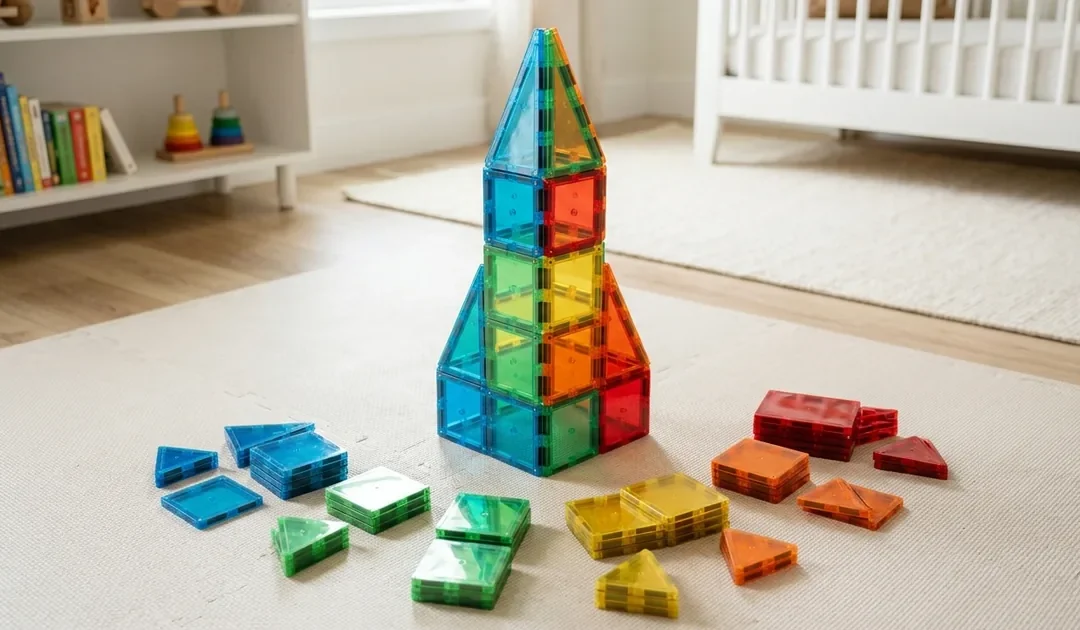
A toy that feels like homework will gather dust in the cupboard. The magic of great educational toys is that children do not realise they are learning at all. A child stacking magnetic tiles into a wobbly tower is quietly absorbing lessons in geometry and balance. A toddler smearing finger paint across paper is developing hand strength and colour theory while simply having fun. When a toy is genuinely enjoyable, children return to it again and again, and repetition is exactly how deep learning happens.
Educational Toys by Age Group and Developmental Stage
Children’s brains and bodies develop in fairly predictable stages, and matching toys to these stages means every play session works harder for your child’s growth. Here is a closer look at what tends to serve children best at each age, along with where to find suitable options.
Toddlers and Preschoolers (Ages 3-5)
Between three and five, children are refining fine motor control, learning to sort and classify, beginning to recognise letters and numbers, and developing the language to describe what they see and feel. This is a wonderful age for open-ended building toys, simple puzzles, chunky art supplies, and pretend play sets. A gentle magnetic building set, for example, lets a three-year-old click large, safe pieces together with satisfying clicks, building confidence with every small success. You can browse a curated selection of options in our toys for ages 3-5 years collection, which is organised specifically around what children need at this stage.
At this age, sensory exploration is also crucial. Finger painting is one of the simplest and most powerful tools available to parents, because it requires no special skill, just curiosity and willing fingers. A good finger paint set designed for little hands lets toddlers experiment with colour mixing, texture, and self-expression, all while strengthening the small muscles in their fingers that will later help them hold a pencil correctly.
Early Primary Years (Ages 6-8)
By six to eight years old, children are ready for more complex challenges. They can follow multi-step instructions, understand basic cause and effect in more sophisticated ways, and enjoy the satisfaction of completing a bigger project. This is the ideal window for expanded STEM building sets with more pieces and more possible configurations, board games with real strategy, and craft kits that result in something they can proudly display. Our toys for ages 6-8 years range is built around this stage, offering more advanced versions of the same trusted toy categories children loved when they were younger, so the learning curve feels natural rather than jarring.
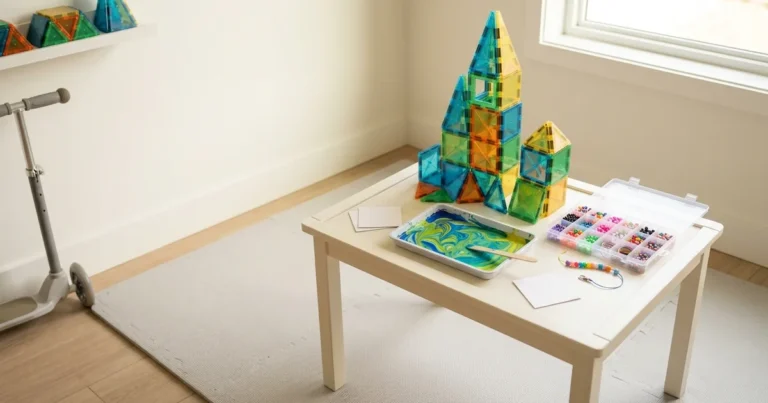
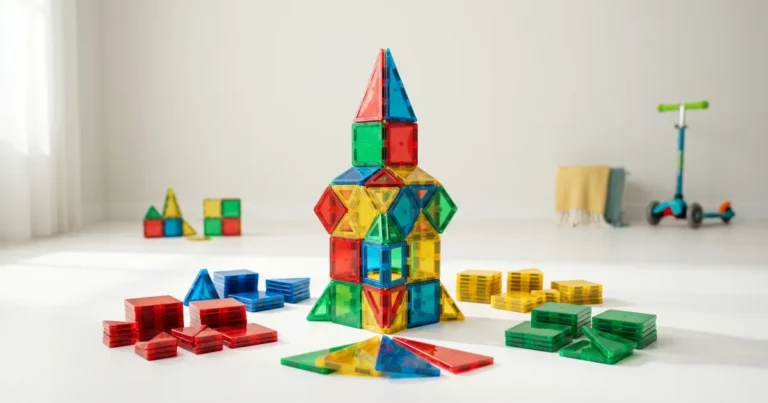
A larger magnetic tile set is a perfect example of how a toy category can grow with a child. Where a younger child might build a simple wall or a small house, a six to eight-year-old with more pieces and more patience can attempt elaborate castles, moving vehicles, or even simple machines, developing engineering intuition long before they ever hear the word “engineering” in school.
Key Categories of Educational Toys and Why They Work
With so many toys on the market, it helps to understand the major categories and the specific developmental benefits each one offers. Here are the categories we consider essential for a well-rounded toy shelf at home.
STEM and Building Toys
Building toys are the backbone of hands-on STEM learning at home. Whether it is wooden blocks, interlocking bricks, or magnetic tiles, the act of constructing something from individual pieces teaches spatial reasoning, planning, and problem-solving. Children learn through trial and error, discovering for themselves why a wide base is more stable than a narrow one, or how a shape needs to be rotated to fit correctly. These lessons are absorbed far more deeply through play than through any worksheet.
Magnetic Construction Sets
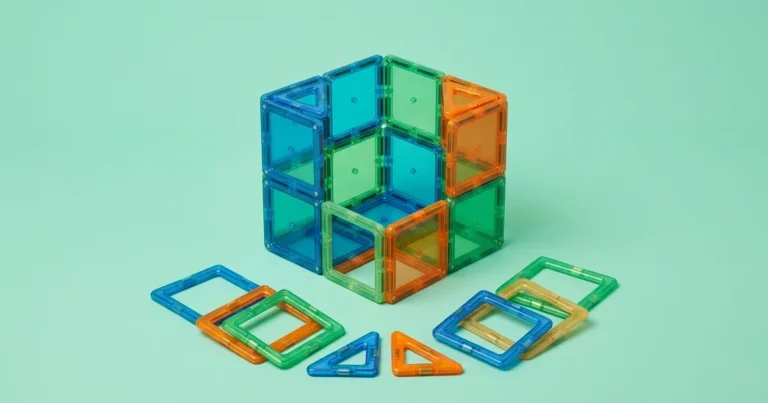
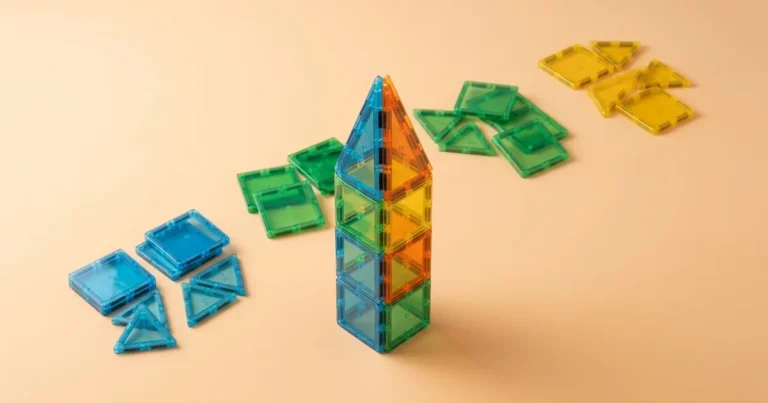
Magnetic building sets deserve a special mention because they combine so many benefits in one toy. The satisfying click of magnetic tiles connecting gives children instant, positive feedback, which keeps them motivated to keep building. Because the pieces are usually translucent and colourful, children also absorb early lessons in colour and light as they hold their creations up to a window. For families looking for a well-designed starter set, our 65-piece magnetic train STEM tiles set is a lovely entry point, offering enough pieces for genuine creativity without overwhelming a younger builder. For children who are ready for bigger, more ambitious projects, or for families with more than one child building together, the 178-piece magnetic train STEM tiles set offers considerably more scope, including moving train elements that introduce simple ideas about motion and momentum.
Both sets are designed with the safety-first mindset every parent should insist on, using securely sealed magnets and smooth, rounded edges suitable for the stated age range. Because the pieces are compatible with each other, families can start small and expand the collection over time as a child’s skills and ambitions grow, which also makes these sets a genuinely good long-term value in AED terms.
Sensory and Creative Play
Creative play toys, like paints, playdough, and craft kits, give children a rare kind of freedom: there is no wrong answer. A finger painting session does not require a child to follow instructions or achieve a specific outcome, which makes it wonderfully low-pressure while still building important skills. Our finger paint range is formulated to be safe for young skin and easy to wash out of clothing, so parents can say yes to messy play without dreading the cleanup. Creative play like this also supports emotional regulation, giving children a healthy outlet to express feelings they may not yet have the words for.
Puzzles and Logic Games
Jigsaw puzzles, shape sorters, and simple logic games teach children to recognise patterns, plan ahead, and tolerate the mild frustration of a piece that does not fit on the first try. This kind of productive struggle is incredibly valuable, because it builds resilience in a low-stakes environment. Starting with large, chunky puzzle pieces for younger children and progressing to smaller, more intricate puzzles as they grow keeps the challenge level well matched to their ability.
Pretend Play and Social-Emotional Toys
Play kitchens, doctor kits, dolls, and dress-up costumes might look like pure fun, but they are quietly teaching children about empathy, social roles, and how conversations work. When a child pretends to be a doctor caring for a stuffed animal patient, they are rehearsing kindness and problem-solving. When siblings share a pretend kitchen, they are practising negotiation and turn-taking, skills that will serve them well long after the toy itself is outgrown.
The Science Behind Play-Based Learning
Parents do not need a psychology degree to choose great toys, but understanding a little of the science can make the choices feel even more purposeful.
Cognitive Development
Young children learn primarily through direct sensory experience rather than abstract instruction. This is why hands-on toys are so much more effective than passive screens for building early cognitive skills. Every time a child sorts colours, counts blocks, or predicts what will happen when they stack one more tile, they are strengthening neural pathways related to memory, logic, and problem-solving.
Fine and Gross Motor Skills
Fine motor skills, the small, precise movements of fingers and hands, are built through activities like painting, threading beads, and clicking small toy pieces together. Gross motor skills, the larger movements of arms, legs, and the whole body, benefit from toys that encourage climbing, throwing, or building large structures a child has to walk around. A well-rounded toy collection should include options that challenge both types of movement over the course of a week.
Social and Emotional Growth
Play is also where children first practise sharing, waiting their turn, handling disappointment when a tower falls, and celebrating a friend’s success. Toys that naturally invite group play, building sets, board games, pretend play scenarios, give children low-pressure opportunities to rehearse these social skills again and again until they become second nature.
How to Choose the Right Educational Toy
With so many attractive options available, it helps to have a simple framework to fall back on whenever you are deciding what to add to your child’s toy shelf.
Safety Certifications and Materials
Always check for recognised safety certifications, and inspect materials for non-toxic finishes, especially for toys that younger children are likely to put in their mouths. Sturdy construction matters too, a toy that breaks into sharp fragments after a few weeks of normal play is not a bargain, no matter how low the price in AED might seem at first glance.
Age-Appropriateness
Resist the temptation to buy “up” for a child’s age in the hope they will grow into a toy. A toy that is too advanced often leads to frustration rather than learning, while a toy that is slightly too simple can still be valuable if it is used in more creative, open-ended ways. When in browsing, use age-specific collections such as our ages 3-5 years and ages 6-8 years ranges as a helpful starting filter, then read the specific product details to confirm fit.
Open-Ended vs Single-Purpose Toys
Open-ended toys, like building sets, art supplies, and blocks, can be used in endless different ways and tend to hold a child’s interest for years rather than weeks. Single-purpose toys, like a puzzle with only one correct solution, still have value, but they are naturally finite. A healthy toy collection leans more heavily toward open-ended options, supplemented by a smaller number of single-purpose toys for variety.
Durability and Value for Money
When you calculate value in AED, think beyond the sticker price. A magnetic tile set that a child plays with almost daily for three years, and which can be expanded with additional piece sets as they grow, often represents far better value than a cheaper toy that is abandoned within a month. Look for toys designed to be modular or expandable, since these tend to keep pace with a child’s growing skills rather than being outgrown all at once.
Practical Tips for Parents in the UAE
Beyond simply choosing good toys, a few practical habits can help you get far more developmental value out of the toys you already own.
Rotating Toys to Keep Learning Fresh
Rather than leaving every toy out all the time, try storing a portion of your child’s toys out of sight and rotating them every few weeks. Children often rediscover a “forgotten” toy with fresh enthusiasm, which extends its useful life and keeps daily play feeling new and interesting without any additional purchases.
Creating a Safe Play Space at Home
Dedicate a specific, low-traffic area of your home for messier or more involved play, particularly for activities like painting or building large structures. A washable mat, good lighting, and easy access to storage bins for small pieces all make daily play smoother for both children and parents. For magnetic tile sets in particular, a shallow storage tray keeps pieces organised and makes cleanup a quick, manageable task rather than a chore.
Balancing Screen Time with Hands-On Play
Many UAE households are mindful of managing screen time, and hands-on educational toys are one of the most effective ways to offer an engaging alternative. Setting aside a consistent daily window, even just twenty to thirty minutes, for undistracted building, painting, or pretend play helps children build a genuine habit of hands-on exploration rather than defaulting to a screen out of boredom.
Common Mistakes to Avoid When Buying Educational Toys
Even well-meaning parents can fall into a few common traps when shopping for educational toys. Being aware of these can save both money and frustration.
- Buying too many toys at once. A shelf overflowing with options can overwhelm a child, leading to shorter attention spans rather than deeper engagement. Fewer, well-chosen toys usually lead to richer play.
- Ignoring the age guidance on packaging. This is especially important for toys with small magnets or small parts, where age recommendations exist for genuine safety reasons, not just marketing.
- Choosing toys based on packaging alone. A colourful box does not guarantee a durable or genuinely engaging toy. Reading detailed product descriptions helps set realistic expectations.
- Overlooking expandability. Toys that can grow with a child, through additional piece sets or more advanced versions, tend to offer far better long-term value than toys with a single fixed use.
- Forgetting to involve the child in play, at least initially. Sitting with a child during their first few sessions with a new toy, especially a building set, helps them understand its possibilities and builds confidence faster than being left to figure it out entirely alone.
Educational Toy Ideas for Every Budget
Building a well-rounded collection of educational toys does not need to happen all at once, and it does not need to strain the household budget. Here is a simple way to think about spacing out purchases over time.
Start with one strong, versatile core toy, such as a starter magnetic building set, and a set of art supplies like finger paint, since both offer enormous open-ended play value for their price in AED. From there, add smaller, more specific items gradually: a puzzle here, a pretend play accessory there, always guided by what you notice your child gravitating toward naturally. As your child’s skills grow, consider upgrading from a smaller building set to a larger one with more pieces, which lets them tackle more ambitious projects without needing an entirely new toy category. This gradual, observant approach tends to result in a toy collection that is genuinely used and loved, rather than one that simply accumulates in a cupboard.
Conclusion
Choosing educational toys for child development does not need to be complicated, but it does deserve real thought. Start with safety, match the toy to your child’s current stage rather than an aspirational one, and favour open-ended options that can grow alongside your child’s abilities. Whether it is a set of magnetic building tiles that grows from a simple 65-piece starter into an ambitious 178-piece project, or a humble tub of finger paint that becomes the source of a child’s very first proud piece of art, the right toys quietly and joyfully do a great deal of developmental heavy lifting. With a little planning and the right choices, playtime becomes one of the most valuable parts of your child’s day.
Frequently Asked Questions
What age should children start using magnetic building toys?
Most well-designed magnetic building sets are suitable from around age 3, provided the magnets are securely sealed inside rounded, child-safe tiles. Always check the manufacturer’s age guidance on the packaging, and supervise younger children during their first few play sessions.
How many educational toys does my child actually need?
Fewer, higher-quality, open-ended toys are generally more beneficial than a large pile of single-purpose items. A small rotating collection covering building, art, puzzles, and pretend play usually offers more developmental value than dozens of toys at once.
Is finger paint safe for toddlers?
Good quality finger paint made for young children is formulated to be non-toxic and safe for skin contact, and it typically washes out of clothing and off surfaces easily. Always supervise young children during painting and check the product label for specific age recommendations.
How do I know if a toy is genuinely educational or just labelled that way?
Look beyond the packaging claims and consider whether the toy invites open-ended thinking, building, creating, sorting, or problem-solving, rather than simply requiring a child to press buttons and watch. Toys that can be used in many different ways over time tend to offer the richest learning.
Can the same magnetic tile set be used by children of different ages?
Yes, magnetic tile sets are naturally adaptable. Younger children may build simple walls or small shapes, while older children with the same or an expanded set can attempt more complex structures, making these sets a good shared option for families with children a few years apart in age.