Last updated: September 23, 2026
When a toy brings the whole family to the same table, something quietly powerful happens. Screens get put away, siblings stop bickering long enough to build a magnetic train track together, and a toddler learns to wait her turn while a parent gently guides her hands. Choosing popular family bonding toys is not just about filling a toy box, it is about creating safe, repeatable moments where children feel seen, supported, and connected to the people who love them most. In this guide, we walk UAE parents through exactly which toys bring families closer, why they work developmentally, and how to pick options that are safe, durable, and genuinely fun for every age from toddlers to primary school kids.
Why Family Bonding Toys Matter More Than Ever
Modern family life in the UAE is busy. Between school runs, work schedules, and the pull of tablets and phones, dedicated one-on-one time can shrink without anyone noticing. Toys built for shared play act like a gentle invitation back to the table. They give parents and children a reason to sit down together with no agenda except building, imagining, or laughing.
Child psychologists have long pointed out that the strongest predictor of a secure parent-child bond is not the amount of time spent together, but the quality of shared attention during that time. A well-chosen toy creates structure for that attention. It gives everyone something to look at, touch, and talk about, which naturally lowers the pressure of forced conversation and lets connection happen sideways, while hands are busy and minds are relaxed.
The Developmental Payoff of Shared Play
Family bonding toys are not just emotionally valuable, they are developmentally rich too. When a parent and child build a magnetic train track together, the child practices:
- Fine motor control – snapping magnetic pieces together, gripping small connectors, and placing train cars on track.
- Spatial reasoning – figuring out how curves, bridges, and straight sections fit into a loop.
- Turn-taking and patience – waiting while a sibling adds the next piece.
- Language growth – narrating what the train is carrying, where it is going, and what happens next.
- Emotional regulation – coping calmly when a tower falls or a track does not connect the first time, with a parent modelling patience nearby.
These are the same skills schools spend years trying to build through structured lessons, yet a child absorbs them naturally during twenty relaxed minutes of shared play on the living room floor.
Screen-Free Time That Feels Like a Treat, Not a Punishment
Many UAE parents worry about screen time but struggle to find alternatives that genuinely hold a child’s attention. The trick is choosing toys engaging enough to compete with a tablet. Open-ended, hands-on toys like magnetic building sets, creative art supplies, and cooperative board games tend to win because they offer something screens cannot: a real object to touch, a real parent to react to, and a sense of ownership over what gets created.
What Makes a Toy Genuinely Good for Family Bonding
Not every toy invites togetherness. Some are designed for solo play, and that is fine too, but if your goal is bonding, look for a few specific qualities before you buy.
1. Open-Ended Design
Toys with a single “correct” way to play tend to get boring fast and rarely need a second player. Toys that can be rebuilt, reimagined, and rearranged, like magnetic construction sets, invite endless replay and naturally pull in more hands. A 65-piece magnetic train set can become a farm delivery route on Monday and a city subway system on Friday, with a parent and child negotiating the new design together each time.
2. Safe, Certified Materials
Because bonding toys often involve close physical interaction, hands touching the same pieces, mouths occasionally near them with younger toddlers, materials matter enormously. Look for BPA-free plastics, non-toxic paints, and rounded edges. Always check for age labelling and choking hazard warnings, especially with magnetic sets that include small connector pieces.
3. Room for More Than One Player
A toy that only has one seat, so to speak, will not build family time. Look for sets generous enough that a parent, a sibling, and a child can all contribute pieces at once. Larger building sets, like a 178-piece magnetic train set, work well for exactly this reason, there is enough material for a big shared build rather than one child hoarding all the pieces.
4. Encourages Conversation
The best bonding toys give families something to talk about. A finger painting session naturally leads to questions like “what did you make?” or “why did you pick that color?” A cooperative board game leads to strategy chats. A puzzle leads to problem-solving out loud. Toys that are silent and screen-based, by contrast, tend to shrink conversation rather than grow it.
5. Durable Enough for Repeated Family Sessions
Family bonding is built on repetition, the same game on a Friday evening, the same building set every weekend. A toy that breaks after two uses cannot support that ritual. Prioritize sturdy construction, washable materials, and strong storage boxes so the toy survives months, not weeks, of enthusiastic little hands.
Popular Categories of Family Bonding Toys
Across UAE households, a handful of toy categories consistently rise to the top when it comes to genuine family connection. Here is a closer look at each, along with why they work so well.
Magnetic Building and Train Sets
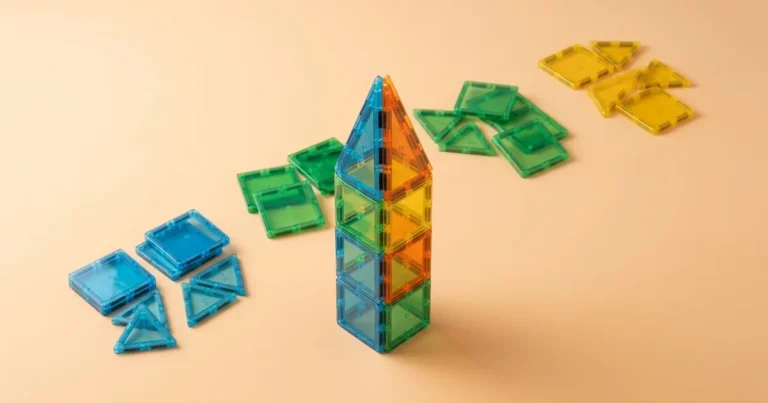
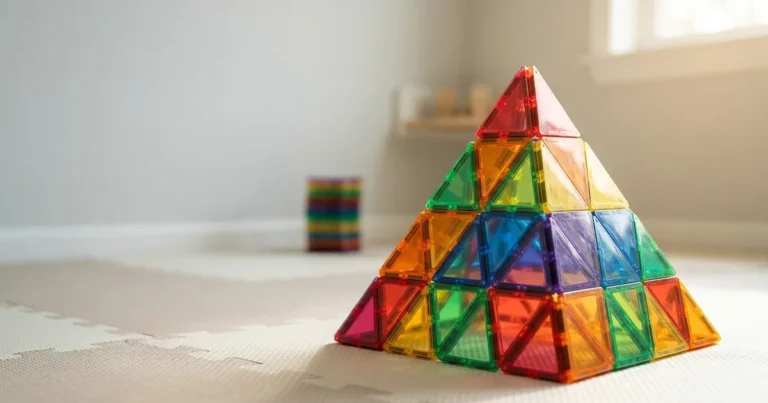
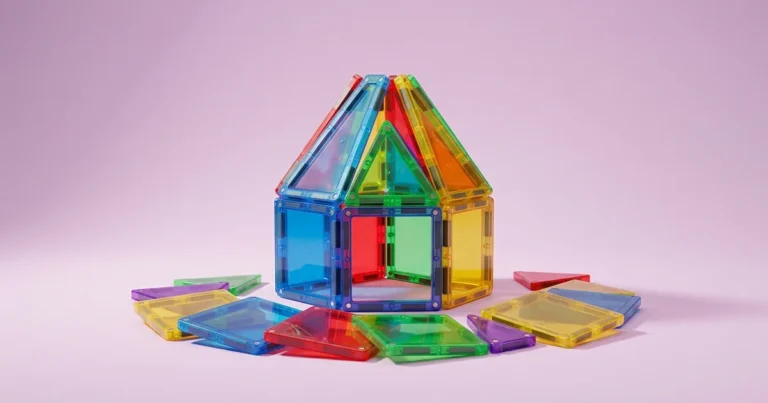
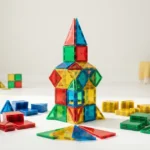
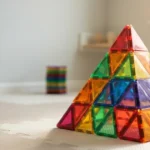
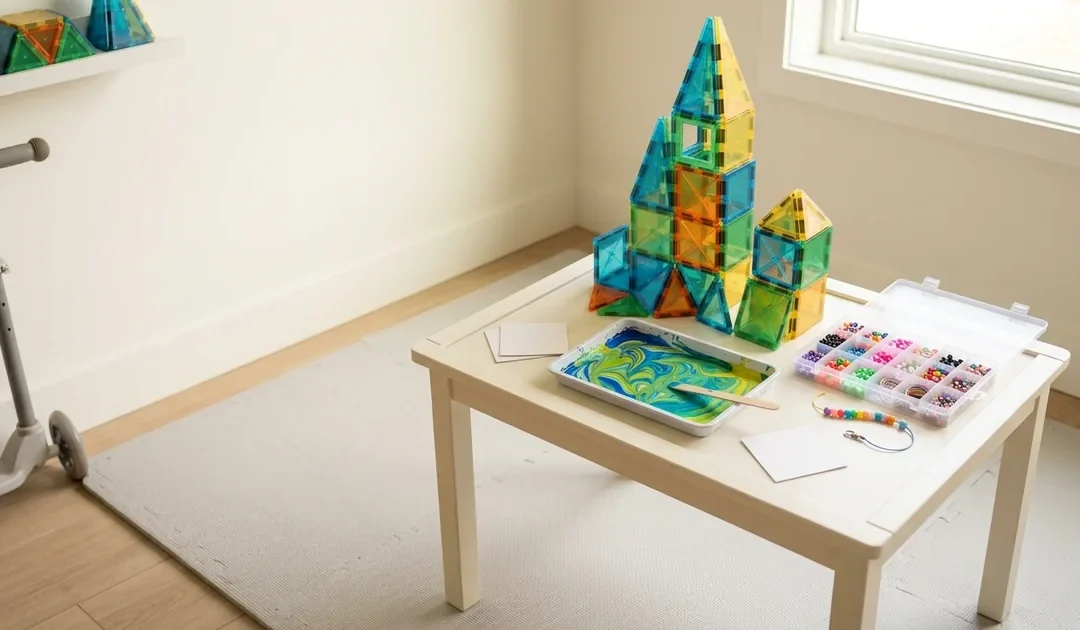
Magnetic construction toys are one of the most reliable family bonding tools available today, and it is easy to see why. The satisfying click of magnets snapping together gives instant positive feedback, which keeps both toddlers and older siblings engaged. Parents love that these sets are open-ended, mess-free, and easy to store, while kids love that every session can look completely different.
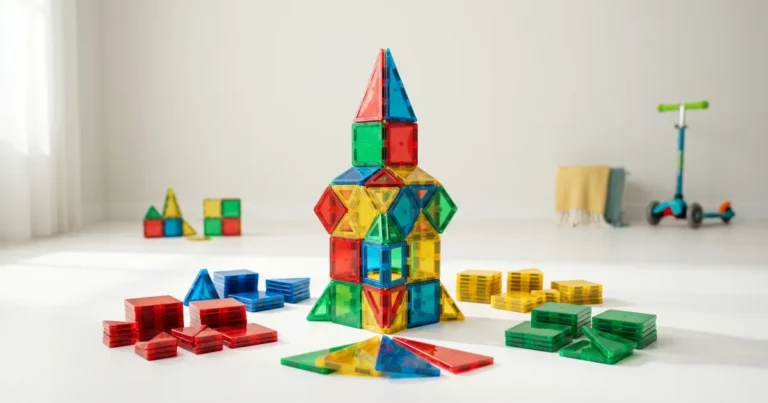
Starting with a smaller set like the 65-piece magnetic train set is ideal for families with a younger child, since the pieces are simple to manage and the tracks can be built in five or ten minutes for a quick after-dinner bonding session. Families with two or more children, or those who love ambitious, sprawling builds, often prefer the 178-piece magnetic train set, which has enough variety to keep a whole weekend afternoon busy with bridges, loops, and multi-level track designs.
What makes these sets special for bonding specifically is the natural division of labor that happens. A parent might hold the base steady while a child places the connector, or an older sibling might design the layout while a younger one adds decorative pieces. Everyone has a job, and everyone can see the shared result taking shape.
Creative Art Supplies
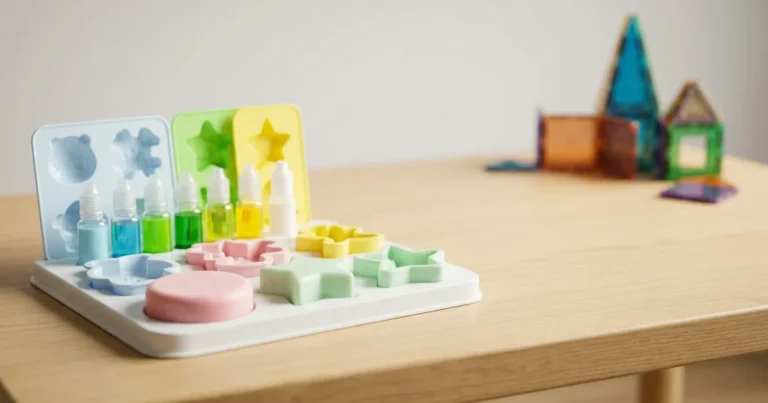
There is something deeply bonding about making a mess together, safely. Finger painting in particular strips away the pressure of “doing it right” and lets both parent and child express something purely for fun. A set of 12-color finger paint for kids is an easy, affordable way to turn a rainy Friday afternoon into a memorable, laughter-filled hour.
Look for finger paints labelled non-toxic and washable, ideally ones that rinse cleanly off skin, clothing, and most fabrics with just water. Lay down an old bedsheet or washable mat, put on comfortable clothes everyone does not mind getting a little dirty, and let the session be unstructured. Some of the best family bonding moments come from painting handprints together, comparing colors, or making up silly stories about what each blob of paint “is.”
Cooperative and Turn-Based Board Games
Board games remain a timeless family bonding tool because they create a shared ritual, the same box coming off the shelf every week, the same rules everyone slowly masters together. Cooperative games, where the whole family plays against the game rather than against each other, are especially gentle for younger children who might otherwise get upset about losing. Simple matching games, memory card games, and cooperative story-building games work beautifully for children between three and eight years old.
Puzzles
Jigsaw puzzles and wooden shape puzzles are quiet, low-pressure bonding tools. They ask nothing more than patience and shared focus, and they naturally lead to soft conversation while pieces are sorted and tested. Puzzles are also wonderfully flexible for family size, a toddler can hand pieces to an older sibling, while a parent works on tricky edge sections, and everyone contributes to the same finished picture.
Role-Play and Pretend Play Sets
Kitchen sets, doctor kits, and dress-up costumes invite parents into a child’s imagination directly. Pretend play is one of the richest bonding activities because it requires a parent to follow the child’s lead, listening to their made-up rules and storylines rather than directing the activity. This builds a child’s confidence enormously, since they get to be the expert and the leader for once.
Outdoor and Active Toys
Not all bonding needs to happen indoors. Simple outdoor toys, bicycles, balls, skipping ropes, and garden building sets, get the whole family moving together, which is especially valuable in the UAE’s cooler months from November through March when outdoor play is most comfortable. Physical play together builds trust and releases the kind of relaxed energy that makes later quiet bonding time, like reading or building, even more enjoyable.
Choosing Family Bonding Toys by Age
The right bonding toy changes significantly as children grow. Matching the toy to the developmental stage keeps frustration low and connection high.
Toddlers and Preschoolers (Ages 3 to 5)
At this stage, children are developing fine motor skills, basic language, and early social understanding like sharing and turn-taking. Toys should have larger pieces, simple mechanics, and plenty of room for a parent’s hands to guide alongside a child’s. Finger painting is wonderful here, since it needs no reading or complex instructions, just color and touch. Simple magnetic building pieces are also excellent, letting a child snap two pieces together successfully within seconds, which builds confidence fast.
Parents shopping for this age group can browse a full range of age-matched options in the ages 3 to 5 years collection, which is curated specifically around safety and developmental appropriateness for this stage.
Tips for bonding play with this age group:
- Keep sessions short, ten to fifteen minutes is often plenty before attention wanders.
- Sit at floor level rather than on a chair, so eye contact feels natural.
- Narrate what you are doing out loud, this supports language development while you play.
- Let the child lead the direction of play even if it does not follow “the rules” exactly.
Early Primary School Children (Ages 6 to 8)
By this age, children can follow multi-step instructions, enjoy a bit of friendly competition, and start to appreciate more complex building challenges. This is the perfect stage for bigger magnetic train sets with more pieces and more elaborate track designs, cooperative board games with real strategy, and puzzles with a higher piece count. Children this age also love being given “real responsibility” within a shared toy, like being the one who reads instructions aloud or manages a game’s scorekeeping.
The ages 6 to 8 years collection is a great place to find toys matched to this stage, from advanced building sets to creative kits that reward a bit more independence and problem-solving.
Tips for bonding play with this age group:
- Let the child take the lead role sometimes, being the “teacher” who explains the game to a younger sibling or parent.
- Introduce mild challenges, like building the tallest tower or longest train loop, to add a light layer of friendly competition.
- Ask open questions during play (“what if we tried it this way?”) rather than giving direct instructions.
- Celebrate effort and creativity over the “correct” outcome, this keeps the activity feeling like fun rather than a test.
Older Siblings and Mixed-Age Families
Many UAE households have children spanning several ages, which can make toy shopping tricky. The good news is that several categories, especially magnetic building sets and simple board games, flex well across ages when a parent adjusts the complexity of the challenge for each child. An older sibling might be asked to design the track layout, while a younger one is responsible for choosing colors or placing the simplest pieces. This kind of shared responsibility, rather than separate toys for each child, is often where the deepest family bonding actually happens.
A Safety-First Checklist Before You Buy
Because family bonding toys are meant to be used again and again, often by children of different ages within the same household, safety deserves careful attention every single time.
Look For:
- Age grading on the packaging, and a genuine match to your youngest player’s age, not just your oldest.
- Non-toxic, BPA-free materials, particularly important for finger paints and anything that touches skin.
- Secure magnet housing in magnetic toys, so magnets cannot be pried loose and swallowed.
- Rounded edges and smooth finishes on all wooden or plastic pieces.
- Washable, easy-to-clean components, which matters enormously for families with toddlers who still explore with their mouths.
- Sturdy storage that keeps pieces contained and organized between sessions.
Extra Care for Mixed-Age Households
If you have a toddler and an older child sharing a toy box, always store small-piece sets, like detailed magnetic building kits, out of reach when not directly supervised. A simple rule that works well in many UAE homes is a shared “family play basket” that only comes out during supervised bonding time, keeping small pieces away from little ones during unsupervised play.
How to Turn Toy Time Into Real Bonding Time
Owning the right toy is only half the equation. The way a family actually uses that toy determines whether it becomes a genuine bonding ritual or just another item gathering dust in the toy box. Here are practical, tested strategies UAE parents can use starting this week.
Set a Recurring Time, Not Just an Occasional One
Bonding grows from repetition. Rather than waiting for a free evening to magically appear, pick a recurring slot, perhaps every Thursday after dinner or every Friday morning before the day gets busy, and protect it the same way you would protect a school run or work meeting. Children thrive on predictable rituals, and “Thursday is train-building night” becomes something they genuinely look forward to.
Put Devices Away First
Before starting, put phones in another room, not just on silent. Studies on parent attention consistently show that even a phone sitting face-down on the table subtly reduces the quality of a child’s engagement, since children notice when a parent’s attention might be pulled away at any moment.
Follow the Child’s Pace
Resist the urge to finish the puzzle faster or build the “correct” train layout. Let the session move at the child’s speed, even if that means the train track loops in a slightly odd shape or the painting looks nothing like a recognizable object. The goal of the session is connection, not a perfect finished product.
Ask Questions Instead of Giving Instructions
Swap “put that piece there” for “where do you think this piece should go?” This small shift turns a directive activity into a collaborative one, and it gives children the confidence that their ideas matter during family time.
Celebrate the Process Out Loud
Narrate small wins as they happen. “I love how you figured out that curve on your own” or “that color combination is so creative” reinforces both the bonding moment and the child’s sense of competence.
Keep a Simple Photo Ritual
Many UAE families take a quick photo of the finished train track, puzzle, or painting each session and keep them in a simple album or photo folder. Over months, this becomes a lovely visual record of family time, and children love looking back at “remember when we built that huge bridge?”
Rotate Toys to Keep Interest Fresh
Even the best toy can start to feel routine if it is out all the time. Try rotating two or three bonding toys, a building set one week, art supplies the next, a board game after that, so each session feels a little special rather than repetitive.
Budgeting for Family Bonding Toys in the UAE
One of the most common questions from UAE parents is how much to realistically budget for good-quality bonding toys. The honest answer is that price does not need to be high to achieve strong bonding value, as long as the toy is chosen thoughtfully.
Entry-Level Bonding Toys
Simple art supplies, like a set of finger paints, sit at a very accessible price point in AED and deliver enormous bonding value for the cost, since a single set can be reused across dozens of sessions.
Mid-Range Building Sets
A smaller magnetic train set, such as a 65-piece option, offers a strong middle ground, enough pieces for genuinely engaging builds without a large upfront cost, and it tends to last for years of repeated play as children grow from simple layouts to more advanced designs.
Bigger Investment Sets
Larger sets, like a 178-piece magnetic train set, cost more upfront in AED but offer significantly more replay value for growing families, particularly those with more than one child or a child who loves increasingly ambitious builds. Many parents find that one larger, well-made set actually saves money over time compared to repeatedly buying smaller, less durable toys that get outgrown or broken quickly.
A Simple Rule of Thumb
Rather than chasing the newest trending toy, prioritize sets that flex across at least two developmental stages and multiple children. A toy that stays relevant from age four through age eight, for example, delivers far more value per AED spent than something a child outgrows within a single season.
Common Mistakes UAE Parents Make When Choosing Bonding Toys
Buying for the Oldest Child Only
In mixed-age households, it is tempting to buy toys matched to the oldest, most capable child. This often leaves younger siblings frustrated and excluded from bonding time. Choose sets flexible enough for the youngest regular participant, then let older children add complexity through their own creativity.
Choosing Toys That Require No Parent Involvement
Some toys are designed to entertain a child solo, which is useful sometimes, but does little for bonding. If the goal is connection, choose toys that genuinely benefit from a second set of hands, like a large building set or a two-person board game.
Overlooking Storage and Cleanup
A toy that leaves paint stains on the carpet or scatters two hundred tiny pieces across the floor can quickly turn a lovely bonding session into a stressful cleanup. Choose washable art supplies and building sets that come with dedicated storage boxes, so cleanup itself can even become a small shared ritual rather than a chore one parent dreads alone.
Ignoring Age Labels “Just This Once”
It can be tempting to let a younger sibling play with an older child’s small-piece set under the reasoning that “they’ll be supervised.” Age labels exist for genuine safety reasons, particularly around choking hazards with small magnetic pieces, so it is worth holding this boundary even during joint family sessions.
Building a Weekly Family Bonding Routine Around Toys
Many UAE families find success by loosely mapping different bonding toys to different days or moods, creating a simple, sustainable rhythm without needing rigid rules.
A Sample Weekly Rhythm
- Monday, a quiet ten-minute puzzle session after school to ease back into the week.
- Wednesday, a short finger painting session to unwind mid-week, especially good for releasing pent-up energy.
- Friday evening, the big weekly ritual, an extended magnetic train building session where the whole family adds to an ever-growing layout.
- Weekend mornings, board games or outdoor play, depending on weather and energy levels.
This is only a starting template, of course, every family’s rhythm will look different depending on work schedules, school hours, and how many children are involved. The key principle is consistency over intensity, a short, predictable session most days builds more lasting connection than one long, exhausting session once a month.
Signs a Toy Is Truly Working as a Family Bonding Tool
It can help to know what success actually looks like. Parents often notice these signals once a bonding toy has found its place in family life:
- Children start asking for the toy by name, rather than needing to be prompted.
- Siblings begin negotiating and problem-solving together with less parent intervention needed.
- Play sessions naturally stretch longer than expected without anyone getting bored.
- Children start narrating stories or explaining their creations unprompted.
- The toy gets requested during moments of stress or big feelings, since it has become associated with comfort and connection.
When these signs appear, it is a strong indicator the toy has moved beyond simple entertainment and become a genuine part of the family’s emotional toolkit.
Bringing It All Together
Choosing popular family bonding toys does not require an overwhelming shopping list or an unlimited budget. It requires a thoughtful eye for safety, an understanding of what your child’s current developmental stage genuinely needs, and a willingness to protect small, repeatable pockets of shared time each week. Whether your family gathers around a growing 178-piece magnetic train set, gets happily messy with finger paints, or starts small with a 65-piece magnetic train set, what matters most is the consistent, unhurried attention you bring to the time together. That is the real toy, in a sense, the presence you offer while the pieces click into place.
As your children grow, revisit their toy collection with their current stage in mind, browsing options suited for ages 3 to 5 years or ages 6 to 8 years as needed, so the bonding ritual keeps pace with who your child is becoming, not just who they were last year.
Frequently Asked Questions
What are the safest popular family bonding toys for toddlers in the UAE?
For toddlers aged 3 to 5, look for toys with larger pieces, non-toxic and BPA-free materials, and rounded edges, such as simple magnetic building sets or washable finger paints. Always check the age label on packaging and supervise closely, especially with any small connector pieces. Browsing a curated collection like the ages 3 to 5 years range makes it easier to find options already matched to this stage.
How often should families schedule bonding toy time for it to make a real difference?
Consistency matters more than duration. A short, predictable session most days of the week, even just ten to fifteen minutes, tends to build stronger family connection than one long session once a month. Many UAE families find success anchoring a bigger weekly session, such as a Friday evening building project, alongside shorter daily check-ins.
Are magnetic train sets actually good for bonding, or just for solo building?
Magnetic train sets are genuinely excellent for family bonding because the open-ended design naturally invites more than one builder. Parents and children can each contribute pieces, negotiate track layouts, and problem-solve together, which is why larger sets with more pieces tend to keep whole families engaged for extended, cooperative sessions.
What should I avoid when choosing toys for a mixed-age family in the UAE?
Avoid choosing toys matched only to your oldest child, since younger siblings can quickly feel excluded or frustrated. Instead, prioritize flexible, open-ended options like building sets or art supplies that can be adjusted in complexity for each child, and always keep small-piece toys out of reach for younger toddlers during unsupervised play.
Do family bonding toys need to be expensive to be effective?
Not at all. Simple, affordable options like a set of finger paints can deliver strong bonding value for very little cost in AED, since they can be reused across many sessions. The most important factor is choosing a toy that genuinely invites shared participation and matches your child’s current developmental stage, rather than chasing the most expensive option available.