Last updated: August 19, 2026
Choosing preschool learning toys is one of the most meaningful decisions a parent makes, because the right toy does two things at once: it keeps little hands safely occupied and it quietly builds the brain connections your child will use for the rest of their life. In the UAE, where families often juggle bilingual learning, nursery routines and busy weekends, picking toys that are both safe and genuinely educational can feel overwhelming. This guide breaks down exactly what to look for, why it matters for a child aged 2 to 6, and how to build a home play corner that supports real developmental milestones, without any guesswork or generic advice.
What Are Preschool Learning Toys, Really?
Preschool learning toys are objects designed for children roughly between 2 and 6 years old that combine open-ended play with a specific developmental goal, whether that is counting, sorting, language, fine motor control or early problem-solving. Unlike toys that simply light up or make noise, a true learning toy invites a child to do something: stack, match, sort by colour, build a shape, trace a letter, or complete a pattern. The best ones are simple enough that a toddler can start playing immediately, yet layered enough that a five-year-old can still find new challenges in the same set.
For UAE parents, this distinction matters because shelves (and online stores) are full of toys marketed as “educational” that are really just flashing plastic. A genuine preschool learning toy should pass three quick tests: is it safe for small hands and curious mouths, does it teach a clear skill, and will it hold my child’s attention for more than one afternoon?
The Science of Play: How Preschoolers Actually Learn
Child development experts agree that between the ages of 2 and 6, children learn far more effectively through hands-on play than through passive screen time or rote instruction. This period, sometimes called the “early foundation years,” is when the brain is forming connections at its fastest rate. Every time a toddler stacks a block, matches a shape, or sorts colours, they are strengthening neural pathways tied to memory, logic and coordination.
Cognitive Development Through Play
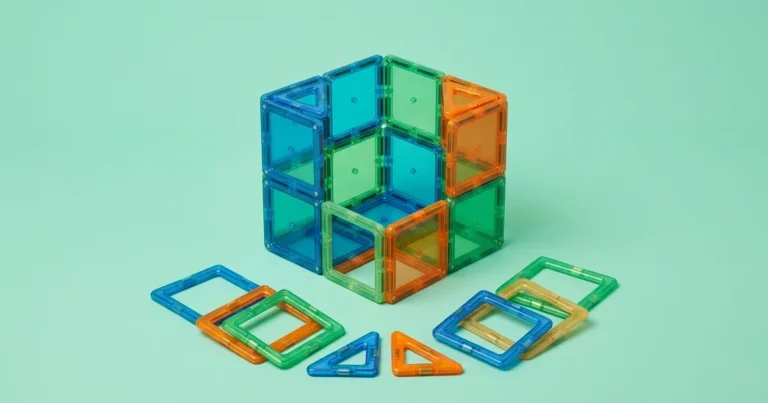
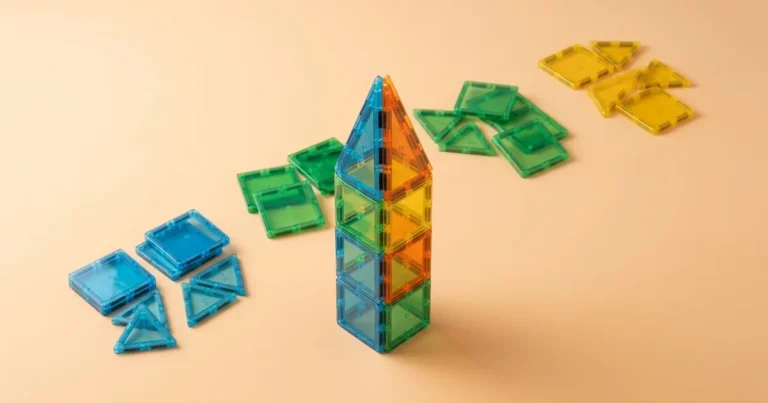
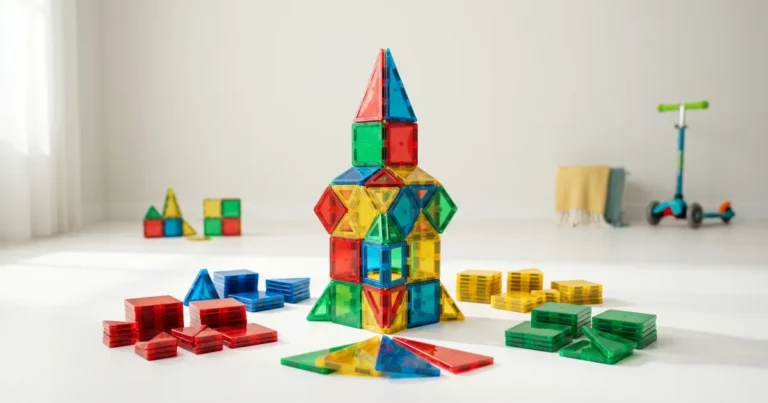
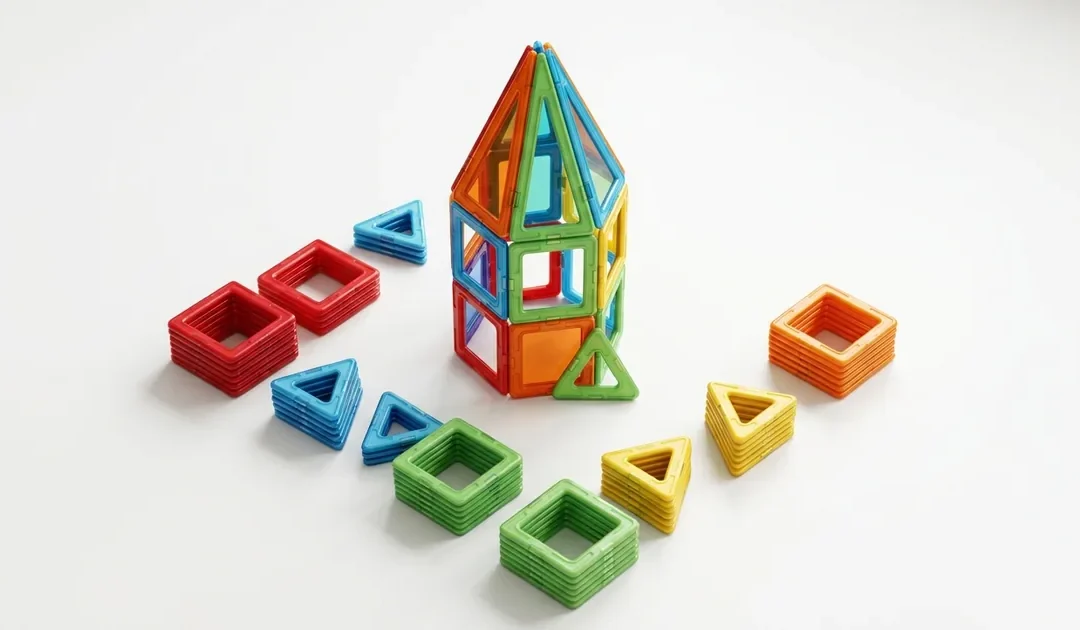
Cognitive skills, such as recognising patterns, understanding cause and effect, and early counting, develop best through repeated, low-pressure play. A magnetic tile set, for example, teaches geometry and spatial reasoning long before a child can name a triangle. A simple sorting toy teaches classification, an early building block of logical thinking used later in math and science. This is why open-ended construction toys are considered some of the most valuable preschool learning toys available today.
Fine Motor and Gross Motor Skills
Fine motor skills, the small, precise movements of fingers and hands, are essential for later tasks like holding a pencil, buttoning a shirt, or using cutlery. Toys that require pinching, twisting, threading or connecting pieces (like a magnetic train set) directly strengthen these muscles. Gross motor skills, meanwhile, benefit from toys that encourage reaching, carrying, building tall and knocking down, all safe within a supervised play space.
Social-Emotional Growth
Learning toys are not only academic. Pretend play toys, shared building sets, and turn-taking games teach patience, cooperation and emotional regulation. A child who spends twenty minutes building a magnetic train track with a sibling is practising negotiation and shared attention, both essential for the classroom years ahead. Toys that reward a small success, like completing a puzzle or finishing a painting, also build confidence and a sense of independent achievement.
Key Categories of Preschool Learning Toys
Not all learning toys serve the same purpose. A well-rounded playroom usually includes a mix from each of the categories below, rather than many toys from just one type.
1. Magnetic Building and STEM Toys
Magnetic construction toys are among the most highly recommended preschool learning toys because they combine spatial reasoning, fine motor practice and pure creative freedom in one product. A child can build a simple line one day and an elaborate loop the next, using the exact same pieces. Sets like the Graflo Magnetic Train for Kids (65 pieces) are ideal for a first-time builder around age 3, while a larger set such as the 178-piece Magnetic Train Set suits older preschoolers and early primary children who want bigger, more complex layouts. Look for rounded magnetic pieces, strong click connections (so tracks do not snap apart unexpectedly), and a size too large to be a choking hazard.
2. Art and Sensory Toys
Creative expression is a core part of early learning, and messy, hands-on art is one of the fastest ways to build fine motor control and confidence. Non-toxic finger paint sets let toddlers explore colour mixing and texture with their whole hand, well before they can hold a brush properly. Always choose paints labelled non-toxic and washable, since preschoolers will inevitably touch their face, clothes and the nearest wall.
3. Puzzles and Matching Games
Simple wooden or chunky cardboard puzzles teach shape recognition, memory and problem-solving in short, satisfying bursts. Start with 4 to 6 large pieces for a 2-year-old, moving up to 12 to 24 pieces by age 4 or 5. Matching games (animal pairs, shadow matching, colour matching) build early memory skills and are excellent for quiet, screen-free time before nap or bedtime.
4. Pretend Play and Role Toys
Play kitchens, doctor kits, and dress-up sets teach empathy, language and social sequencing (first this happens, then that happens). Pretend play is also where children rehearse real-life scenarios, like visiting a doctor or sharing a meal, in a low-stakes, imaginative way that builds emotional resilience.
5. Books and Language Toys
Board books, letter puzzles, and simple phonics toys build vocabulary and pre-reading skills. Bilingual households in the UAE often benefit from toys and books that introduce both Arabic and English letters side by side, giving children an early, playful exposure to both languages.
How to Choose Safe Preschool Learning Toys in the UAE
Safety always comes before educational value, because a toy that is not safe cannot teach anything. Here is what UAE parents should check before adding any toy to the cart.
Safety Certifications to Look For
Look for toys tested to recognised international safety standards (such as EN71 or ASTM), which check for choking hazards, sharp edges, toxic materials and small-parts risk. Reputable toy brands sold in the UAE will display these certifications clearly on the packaging or product page. If a toy has no listed safety standard at all, it is safer to skip it, regardless of how appealing the price seems.
Age-Appropriate Design
Every learning toy should list a recommended age range, and this is not just a marketing detail, it reflects genuine safety testing for piece size and complexity. A toy rated for ages 3 and up, for example, has been tested for small parts that would be dangerous for a younger sibling who might still put objects in their mouth. Always check the recommended age range against your child’s actual developmental stage, not just their birthday, since some children need simpler or more advanced toys than their age suggests.
Non-Toxic Materials
Preschoolers explore with their hands and mouths, so materials matter. Choose toys made from BPA-free plastic, non-toxic paint, or natural wood with water-based finishes. Art supplies specifically should always be labelled non-toxic and, ideally, washable, since spills and hand-to-face contact are inevitable at this age.
Durability for Real Family Life
Preschool toys get dropped, thrown, sat on and occasionally chewed. Sturdy construction, strong seams on soft toys, and solid magnetic connections all matter more than flashy features. A well-made set will survive years of play and can often be safely passed down to a younger sibling or donated afterward.
Age-by-Age Guide to Preschool Learning Toys
Ages 2 to 3: Building the Basics
At this stage, children are developing basic hand-eye coordination and beginning to understand cause and effect. Large, chunky pieces (never small enough to swallow), simple shape sorters, big-piece puzzles, and a first small magnetic building set work well. Supervised sensory play, like a first finger painting session, also fits beautifully here, introducing colour and texture in a safe, guided way.
Ages 3 to 5: The Golden Window for Learning Toys
This is often considered the richest stage for structured learning toys, since children can now follow multi-step instructions, hold conversations, and build more complex creations. Magnetic train sets, medium puzzles (24 to 48 pieces), pretend play kitchens, and early counting or letter toys all thrive here. Parents can browse a full, curated range in the Ages 3-5 Years collection to find sets matched specifically to this developmental window.
Ages 5 to 6: Bridging Into Early School Skills
As children approach primary school, learning toys can introduce early literacy, simple math concepts, and more advanced building challenges. Larger magnetic sets, like the 178-piece option, allow for ambitious, imaginative structures that keep pace with a child’s growing patience and planning ability. Board games with simple rules, advanced puzzles (60-100 pieces), and creative kits that require following multi-step instructions all support this transition well.
Ages 6 to 8: Growing Beyond Preschool
Even after the preschool years, many of the same skill categories, building, art, logic games, continue to matter, just at a higher level of complexity. Once your child outgrows the core preschool range, the Ages 6-8 Years collection offers a natural next step, with more advanced construction sets, detailed art projects and strategy-based games.
Setting Up a Learning Corner at Home
You do not need a dedicated playroom to support meaningful learning play. A small, well-organised corner is often more effective than a room full of scattered toys, because it helps children focus and makes tidying up part of the routine.
Keep the Toy Rotation Small
Rather than leaving every toy out at once, rotate a small selection (5 to 8 items) every week or two. This keeps toys feeling fresh and prevents the overwhelm that often leads to a child abandoning play after a few minutes.
Use Low, Open Shelving
Storing toys in bins or on low, open shelves lets children choose independently and return items on their own, building early responsibility and decision-making skills.
Pair Toys with a Specific Activity Zone
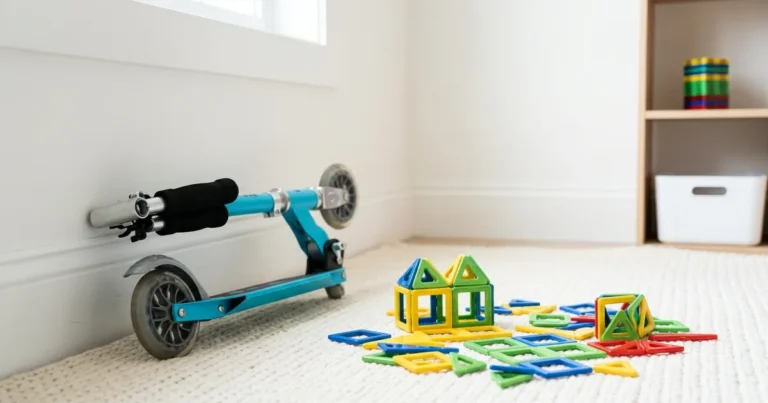
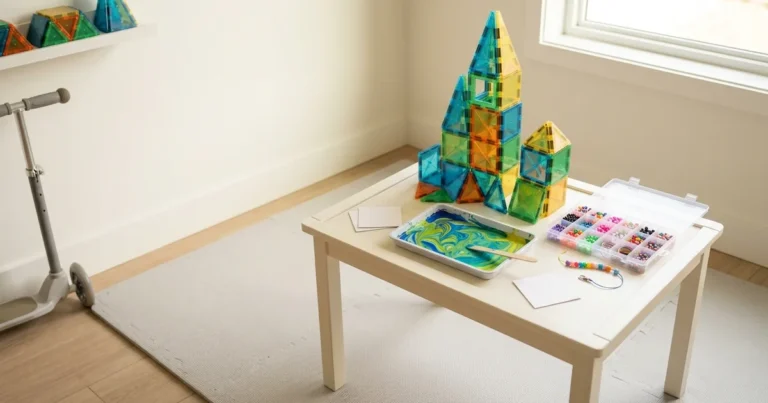
A small table for puzzles and art, a rug or mat for building sets, and a soft corner for pretend play all help children mentally switch between activity types, which supports focus and reduces mess.
Involve Your Child in Tidy-Up Time
Turning clean-up into a short, playful routine (sorting pieces back into labelled bins, for example) reinforces the same sorting and categorising skills the toys themselves are designed to teach.
How Graflo Toys Supports Learning Through Play
At Graflo, every product is designed around the same principle: safety first, learning always. Our magnetic building sets, like the 65-piece Magnetic Train and the larger 178-piece Magnetic Train Set, are built with rounded edges, secure magnetic connections and durable materials that hold up to years of enthusiastic play. Our 12-colour finger paint set uses non-toxic, washable formulas so parents can say yes to messy creativity without worry. Every product is organised by age range, from the Ages 3-5 Years collection to the Ages 6-8 Years collection, making it simple for busy UAE parents to shop with confidence.
Common Mistakes Parents Make When Buying Learning Toys
Choosing Toys That Are Too Advanced
A toy that is too complex leads to frustration rather than learning. If your child abandons a toy quickly or seems overwhelmed, it may simply be built for an older age group.
Overloading the Playroom
More toys do not equal more learning. A cluttered space actually reduces a child’s ability to focus deeply on any single activity. Fewer, better-chosen toys almost always lead to richer play.
Ignoring Safety Labels
It is tempting to buy a cheaper, unbranded version of a popular toy, but unverified products often skip safety testing entirely. Always check for age labelling, material information and choking-hazard warnings before purchase.
Choosing Based on Packaging Alone
Bright boxes and bold “educational” claims do not guarantee real developmental value. Look past the packaging to the actual play pattern: what will your child actually do with this toy, and for how long?
Budget-Friendly Tips for UAE Parents
Quality preschool learning toys do not need to be expensive to be effective. A few practical strategies can help stretch a family’s toy budget in AED without compromising on safety or educational value.
Invest in Open-Ended Toys First
Toys like magnetic building sets or art supplies offer far more replay value per AED spent than single-purpose toys with only one way to play, since children return to them again and again as their skills grow.
Buy Fewer, Better-Made Toys
A single sturdy, well-made set that lasts several years and multiple siblings is often better value than several cheaper toys that break within months.
Share and Rotate Between Siblings or Friends
Swapping toy sets with another family for a few weeks at a time keeps play fresh for both households without any extra spending.
Conclusion
The best preschool learning toys are the ones that combine genuine safety, thoughtful design, and real developmental value, not flashy packaging or empty promises. By focusing on age-appropriate design, non-toxic materials and open-ended play categories like magnetic building sets, art supplies and simple puzzles, UAE parents can build a home play environment that grows with their child from toddlerhood through the early school years. Start small, rotate often, and let your child’s curiosity guide the next addition to the toy shelf.
Frequently Asked Questions
What age should a child start using preschool learning toys?
Most children can begin with simple, chunky learning toys, such as large shape sorters and big-piece puzzles, from around age 2. As fine motor and cognitive skills grow, more complex toys like magnetic building sets and multi-piece puzzles become appropriate, usually from age 3 onward.
Are magnetic building toys safe for preschoolers?
Yes, when the pieces are sized appropriately for the child’s age and the magnets are securely sealed inside durable casing. Always check the recommended age range on the packaging and supervise younger toddlers, since smaller pieces in advanced sets are better suited to children aged 3 and up.
How many learning toys does a preschooler actually need?
Quality matters far more than quantity. A small rotation of 5 to 8 well-chosen toys, covering building, art, puzzles and pretend play, is usually more effective than a large collection, since it helps children focus deeply rather than becoming overwhelmed by choice.
How can I tell if a toy is genuinely educational or just marketed that way?
Look past the packaging and ask what the child actually does with the toy. Genuine learning toys involve an active task, such as building, sorting, matching or creating, rather than passive lights and sounds. Checking for a clear age range and safety certification is also a good sign of a well-designed product.
What should I check for safety before buying a toy in the UAE?
Look for recognised safety testing standards, a clear recommended age range, and non-toxic material labelling. Avoid unbranded toys with no safety information listed, and always supervise play with any toy that includes small or detachable parts.