Last updated: July 29, 2026
By age 10, most boys have moved past simple stacking and sorting and are ready for real engineering challenges, logic puzzles, and hands-on science. Choosing the right stem toys boys age 10 can be the difference between a toy that gathers dust after one weekend and one that turns into a genuine hobby, whether that is robotics, circuit building, or advanced magnetic construction. This guide is written for parents across the UAE who want practical, safety-first advice, real category breakdowns, and clear guidance on what to buy and why, all priced in AED.
Why STEM Toys Matter So Much at Age 10
Ten is a pivotal age developmentally. Boys at this stage are transitioning from concrete thinking to more abstract reasoning. They can hold multi-step instructions in their heads, plan ahead before building, and troubleshoot when something does not work the first time. This is exactly the window where STEM (Science, Technology, Engineering, and Math) toys have the biggest impact, because the toys can now match the child’s growing cognitive ability instead of lagging behind it.
Cognitive Growth at This Stage
Around age 10, children begin to grasp cause-and-effect relationships more deeply. They can ask “why did this bridge collapse” or “why does this circuit not light up” and actually work through the answer logically rather than by trial and error alone. STEM toys that involve building, testing, and rebuilding reinforce this exact skill, which is also the foundation of scientific thinking.
Emotional and Social Benefits
Many STEM toys at this age are collaborative by nature, whether it is a coding kit shared with a sibling or a large magnetic construction set built with friends. This teaches patience, turn-taking, and how to handle frustration when a build does not work on the first attempt. For boys who may be less inclined to sit through long conversations, building something together is often an easier, more natural way to bond and communicate.
Why Age 10 Is Different From Age 6 or 7
Toys designed for younger children, such as those found in our ages 6-8 years collection, focus on foundational shapes, colors, and basic cause-and-effect. By age 10, boys need toys with more pieces, more complex rule systems, and real open-ended problem solving. A 10-year-old who has outgrown a starter set is not done with that category, he is ready for the next level within it.
What Makes a STEM Toy Genuinely Good for a 10-Year-Old
Not every toy labeled “STEM” on the box is actually educational. Here is how to separate the toys that build real skills from the ones that are simply electronic gadgets with an educational sticker.
Open-Ended Over Single-Use
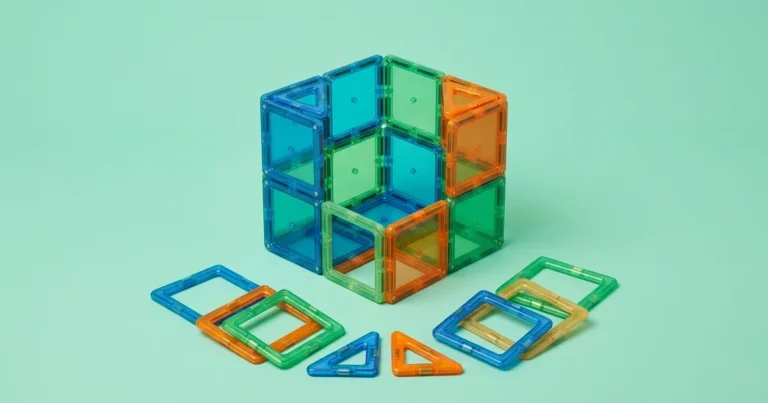
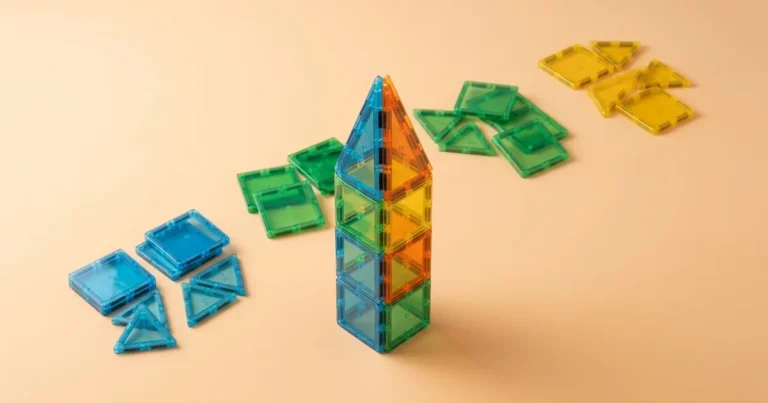
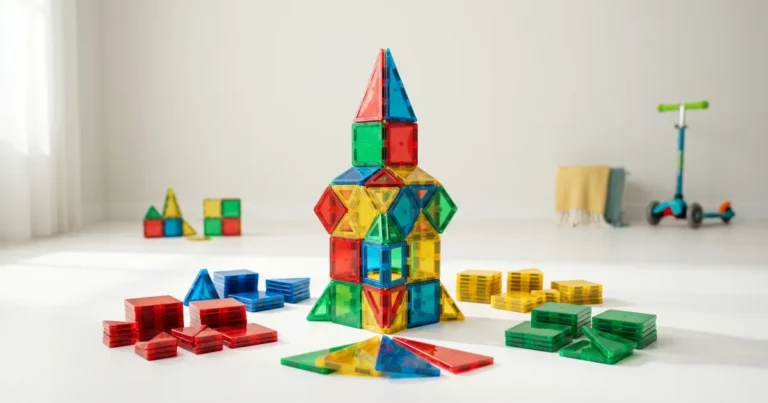
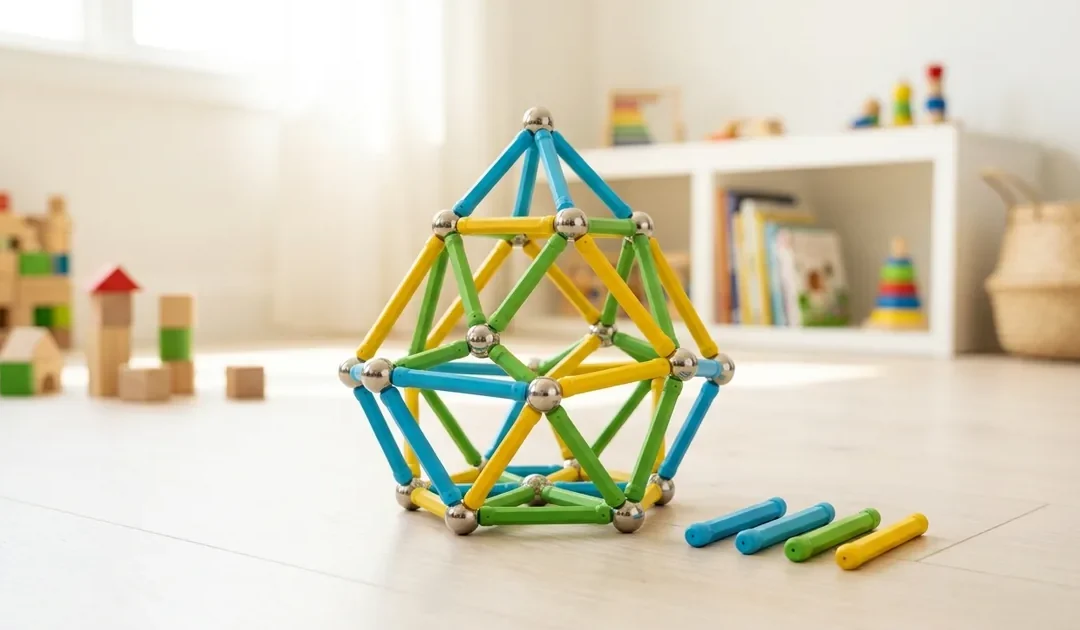
A toy that can only be built one way, following a picture on the box, has a shelf life of one afternoon. Look for toys that allow dozens or hundreds of different builds from the same set. Magnetic construction tiles are a good example, since the same pieces can become a house, a car, a robot, or an entirely imagined structure.
Appropriate Challenge Level
At age 10, a toy that is too simple will be abandoned within minutes. A toy that is too complex, with no scaffolding or instructions to start from, can be discouraging. The best sets offer a starting challenge (a suggested build) alongside total creative freedom to go beyond it.
Real-World Connection
Boys at this age are naturally curious about how the world works, cars, bridges, electricity, computers. STEM toys that connect to real-world systems, even in simplified form, tend to hold attention far longer than abstract puzzle toys.
Quality of Materials
By age 10, choking hazards are largely not a concern the way they are for toddlers, but toy durability absolutely still matters. Cheap plastic that snaps under normal building pressure, magnets that fall out of their housing, or batteries that leak are all safety and frustration risks. Always check for strong build quality, securely sealed magnetic components, and clearly labeled age-appropriate materials.
Safety Considerations Parents Should Not Skip
Even though 10-year-olds are generally past the highest-risk toddler years, safety remains a top priority for any parent choosing toys, and STEM toys have a few specific things to watch for.
Magnet Safety
Magnetic construction toys are extremely popular for STEM learning because they teach geometry, spatial reasoning, and structural engineering in a hands-on way. However, small high-powered magnets can be dangerous if swallowed, particularly if more than one is ingested. For 10-year-olds, the risk is much lower than for toddlers, but it is still wise to choose sets where magnets are securely embedded inside sealed plastic housing rather than loose or exposed. Sets like the Graflo Magnetic Train 65-Piece STEM Tiles Set and the larger 178-Piece STEM Tiles Set are built with enclosed magnets, making them a safer choice for households with younger siblings still in the exploratory mouthing stage, while still offering enough complexity to challenge a 10-year-old builder.
Electronics and Battery Safety
Many STEM toys for this age group involve batteries, circuits, or motors. Always check that battery compartments are screw-secured, that any included wiring is insulated, and that the toy is CE or an equivalent safety certified. Teach your child never to touch bare wires with wet hands and to always ask an adult before replacing batteries.
Tools and Sharp Components
Some engineering kits at this age include small tools like screwdrivers or wire strippers. These should always be used under adult supervision initially, until the child demonstrates safe, careful handling.
Chemical Safety in Science Kits
Chemistry sets marketed for age 8 and up often include mild reactive substances, such as citric acid or baking soda based reactions. Always check ingredient lists, avoid kits with unlisted or vague chemical contents, and supervise the first few experiments even if the box says the kit is “safe for solo use.”
Setting Ground Rules at Home
Simple house rules go a long way: STEM building happens at the table, not on the bed or floor near stairs; small pieces get sorted back into labeled containers after play; anything electronic gets adult sign-off before first use. These habits build a lifelong respect for safe experimentation.
Top Categories of STEM Toys for 10-Year-Old Boys
Rather than recommending a single toy, it helps to understand the broad categories available so you can match a toy to your son’s specific interests, whether that is building, coding, physics, or math.
1. Advanced Construction and Engineering Sets
This is often the most popular category for boys at age 10, because it combines creativity with structural problem solving. Magnetic tile sets, gear-based building kits, and modular construction systems all fall here. What changes at age 10 compared to younger ages is piece count and complexity, a 10-year-old can handle 100 to 200+ pieces and follow multi-stage builds involving moving parts.
For families who already have a magnetic tile set at home from earlier years, expanding the collection rather than replacing it is often the smartest move, since larger sets unlock entirely new build types like moving vehicles, multi-room structures, and working mechanisms. The 178-piece STEM tiles set in particular gives enough pieces for genuinely ambitious builds that will hold a 10-year-old’s attention for hours, especially when a challenge is introduced, such as “build a bridge that can hold a toy car” or “design a tower taller than your knee that does not fall.”
Why Magnetic Construction Still Works at Age 10
Parents sometimes assume magnetic tiles are only for younger children because they are common in preschool classrooms. In reality, the underlying skill, spatial reasoning and structural design, scales up with complexity. A 10-year-old given a large enough set will naturally start experimenting with load-bearing structures, symmetry, and even basic physics concepts like center of gravity, all without ever opening a textbook.
2. Coding and Robotics Kits
Age 10 is a strong entry point for introductory coding, particularly block-based coding platforms that later transition into text-based languages. Robotics kits that combine physical building with programmable movement (light sensors, motors, simple obstacle avoidance) are excellent because they make an abstract skill, coding, tangible and visual.
What to Look For
- Kits with a companion app appropriate for the child’s tablet or a shared family device
- Block-based coding interfaces rather than jumping straight into complex text code
- Reusable components so the robot can be rebuilt into different designs
- Clear beginner missions with room for open-ended experimentation afterward
A Word on Screen Time
Coding kits do require some tablet or computer use. Many parents find it helpful to treat this as “educational screen time” distinct from entertainment screen time, and to set a clear session length, for example 30 to 45 minutes, so the activity stays focused and productive rather than open-ended scrolling.
3. Physics and Mechanical Kits
Kits that teach basic physics, levers, pulleys, gears, hydraulics, are ideal for boys who like to understand “how things work.” These often come as build-your-own-machine kits, such as a hydraulic robotic arm, a solar-powered car, or a catapult kit that teaches projectile motion in a very hands-on, visual way.
Why This Category Builds Real Confidence
Unlike screen-based STEM, physical mechanical kits give immediate, visible feedback. If the pulley system is built wrong, the object will not lift. This instant feedback loop teaches boys to observe, adjust, and retry, which is one of the most valuable habits in both science and everyday problem solving.
4. Chemistry and Science Experiment Kits
Boxed science kits with safe, pre-measured chemical reactions (crystal growing, volcano eruptions, slime chemistry, simple electrolysis) are excellent for curious 10-year-olds who enjoy a bit of mess alongside learning. Always check that the kit clearly lists its included substances and that it is rated for age 8 or above at minimum, ideally with adult supervision built into the instructions for the first few experiments.
5. Math and Logic Games
Not all STEM toys involve building or electronics. Logic puzzle games, strategy board games with a math component, and pattern-based brain teasers are excellent for boys who prefer quieter, more strategic play. These games strengthen the same problem-solving muscles as engineering kits but in a tabletop format that is easy to travel with or use during long car rides and flights, both common in UAE family life.
6. Space, Astronomy, and Nature Exploration Kits
Many 10-year-old boys go through a strong space or nature obsession phase. Beginner telescopes, solar system model kits, or rock and mineral collection sets tap directly into this curiosity while teaching observation skills, classification, and basic scientific method. In the UAE’s clear desert night skies, a beginner telescope in particular can become a genuinely exciting weekend family activity.
Balancing Screen-Based and Hands-On STEM Play
One of the most common questions from parents is how much of a 10-year-old’s STEM time should involve a screen versus purely physical building. There is no single right answer, but a helpful guideline is the 70/30 approach: aim for roughly 70 percent hands-on, screen-free building or experimenting, and 30 percent screen-assisted activities like coding apps or robotics programming. This keeps the majority of playtime tactile and imaginative while still allowing exposure to digital skills that are genuinely useful for the future.
Signs Your Son Is Ready for More Screen-Based STEM
If your son already reads comfortably, follows multi-step written instructions without help, and shows interest in how apps or games are made (not just in playing them), he is likely ready for coding-focused kits. If he still strongly prefers building with his hands and gets frustrated by screens, lean more heavily into physical construction and mechanical kits first.
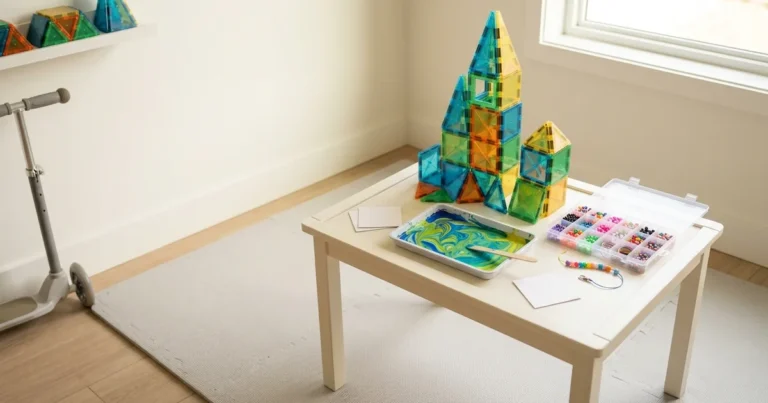
Building a STEM Corner at Home
A dedicated, even if small, STEM space at home dramatically increases how often a child engages with these toys independently, rather than only when a parent initiates play.
Essentials for the Space
- A flat, stable table or floor mat area, away from walkways or stairs
- Clear storage bins labeled by toy type (magnetic tiles, robotics parts, science kit supplies)
- Good lighting, since many builds involve small components
- A visible “in progress” shelf where an unfinished build can sit safely for a day or two without being disassembled
Rotating Toys to Maintain Interest
Rather than leaving every STEM toy out at all times, many parents find that rotating two or three sets every few weeks keeps novelty high. A 10-year-old who has not seen the robotics kit in a month will often approach it with fresh enthusiasm, compared to a toy that has been visible and untouched on a shelf for the same period.
Budgeting for STEM Toys in the UAE
STEM toys can range widely in price, and it is completely possible to build a rich STEM collection without overspending. As a general guide for the UAE market:
- Entry-level sets (small magnetic tile expansions, basic logic games): typically under 150 AED
- Mid-range kits (larger construction sets, beginner robotics, physics kits): roughly 150 to 400 AED
- Premium sets (advanced robotics, telescopes, large multi-hundred-piece construction systems): 400 AED and above
Getting the Most Value
Sets that expand on toys your child already owns, such as adding a larger magnetic tile pack to an existing collection, often deliver more play value per AED than buying an entirely new, unrelated toy. This is because the child already understands the “rules” of the system and can immediately jump into more ambitious builds rather than spending time learning a brand-new toy from scratch.
Creative Ways to Extend a STEM Toy’s Life
Even simple materials can support STEM thinking. A set of quality art supplies, for example the 12-color finger paint set, can be repurposed for hands-on projects like labeling a diorama of the solar system, decorating a cardboard robot casing, or color-coding a home-built circuit diagram. Mixing traditional craft supplies with STEM building is a simple, low-cost way to keep a 10-year-old’s projects fresh and personalized.
Encouraging Independent Exploration
At age 10, many boys want more independence in their play, less “parent shows me how,” more “let me figure it out myself.” Supporting this shift, while still keeping safety in view, is key to long-term engagement with STEM.
Ask Open Questions Instead of Giving Answers
When a build fails or a circuit does not light up, resist the urge to fix it immediately. Instead, ask “what do you think went wrong?” or “what happens if you try it a different way?” This mirrors real scientific thinking and builds resilience.
Celebrate the Process, Not Just the Finished Build
Praising effort, problem solving, and persistence (“I saw you tried three different ways before it worked”) builds a stronger long-term relationship with STEM than only praising the final product.
Let Him Teach You
Ten-year-olds love the reversal of roles where they get to explain something to a parent. Asking your son to explain how his robot works, or how he solved a logic puzzle, reinforces his understanding while also strengthening your connection.
Matching STEM Toys to Different Interests and Personalities
The Builder
If your son is always stacking, constructing, and rearranging things around the house, lean into large-scale construction sets, magnetic tiles, and mechanical kits with moving parts.
The Curious Scientist
If he asks a constant stream of “why” and “how” questions, chemistry kits, physics experiment sets, and nature exploration kits will likely hold his attention longest.
The Strategist
If he prefers quiet, focused activities and enjoys puzzles or strategy games, logic and math-based games are a strong fit, alongside coding kits that emphasize problem solving over building.
The Tech Enthusiast
If he is already drawn to how apps, games, and devices work, robotics and coding kits will likely be the most engaging category, provided screen time stays balanced with physical activity.
Common Mistakes Parents Make When Choosing STEM Toys
Buying Based on Packaging Alone
A flashy box does not guarantee an engaging toy. Read reviews, check piece counts, and consider whether the toy allows multiple different builds or outcomes rather than one fixed result.
Choosing Toys That Are Too Advanced Too Soon
A kit designed for age 14 and up may include steps or concepts a 10-year-old is not ready for, leading to frustration rather than learning. Always check the recommended age range and consider your child’s specific experience level, not just his age in years.
Overloading With Too Many New Toys at Once
Introducing several new STEM toys in the same week often results in shallow engagement with all of them rather than deep engagement with one. Stagger new toys every few weeks for the best long-term results.
Ignoring Your Child’s Actual Interests
A toy that matches a parent’s own interest in engineering or coding will not necessarily excite a child who is far more drawn to space, animals, or art. Observe what genuinely captures your son’s attention before choosing a category.
How to Introduce a New STEM Toy for Maximum Engagement
Unbox Together
Rather than pre-assembling or reading instructions ahead of time, unbox the toy together and let your son explore the pieces first before diving into structured instructions.
Start With a Simple Challenge
Instead of handing over a 50-page instruction booklet immediately, suggest a simple first challenge, “can you build something that stands taller than this cup”, to build early confidence before moving to more complex, multi-step builds.
Document the First Build
Taking a photo of the first creation, whether it is a simple magnetic tile tower or a basic circuit, gives your son a sense of accomplishment and creates a fun record of his STEM journey over time.
Conclusion
Choosing the right stem toys boys age 10 will enjoy comes down to matching real developmental readiness with genuine open-ended play value, all while keeping safety front and center. Whether your son gravitates toward large-scale construction, robotics, chemistry, or quiet logic games, the goal is the same: give him tools that challenge his growing mind, encourage independent problem solving, and make learning feel like play rather than homework. Start with one strong category based on his interests, build a small dedicated STEM space at home, and let curiosity do the rest.
Frequently Asked Questions
What is the best type of STEM toy for a 10-year-old boy who loves building?
Advanced magnetic construction sets or gear-based engineering kits are usually the best fit. Look for sets with 100 or more pieces so builds can become genuinely complex, and choose ones with securely enclosed magnets and durable materials for long-term use.
Are coding and robotics kits too advanced for a 10-year-old?
Not at all. Age 10 is actually a strong starting point for block-based coding platforms combined with simple robotics. Look for kits that pair physical building with an easy-to-use companion app, and keep coding sessions to around 30-45 minutes to keep screen time balanced.
How do I know if a STEM toy is safe for my 10-year-old?
Check that any magnets are securely sealed inside the toy housing, battery compartments are screw-secured, wiring is fully insulated, and the toy carries a recognized safety certification. For chemistry kits, always review the listed ingredients and supervise the first few experiments.
How much should I expect to spend on STEM toys in the UAE?
Prices vary widely. Entry-level sets and small expansion packs are often under 150 AED, mid-range construction or robotics kits typically fall between 150 and 400 AED, and premium sets like advanced robotics or telescopes can exceed 400 AED.
My son already has a smaller magnetic tile set, should I buy a completely new toy or expand it?
Expanding an existing set is often the better value choice. A larger piece count, such as moving from a 65-piece set to a 178-piece set, unlocks entirely new build types like moving structures and multi-room designs, giving more play value since your child already understands how the pieces work together.