Last updated: July 29, 2026
Choosing stem toys girls age 4 can feel overwhelming when store shelves are still divided into pink aisles and blue aisles, and most “educational” packaging promises more than it delivers. The truth is simpler than the marketing: at four years old, a child’s brain is wiring itself for logic, language, spatial reasoning, and problem-solving at an extraordinary rate, and the right toy can gently support that growth while keeping safety as the top priority. This guide walks UAE parents through exactly what to look for, why it matters, and which toys genuinely earn a place in your child’s playroom.
Why STEM Play Matters So Much at Age 4
Four is a magical age developmentally. Girls at this stage are moving from purely imaginative play into more structured thinking. They start to sort, count, compare sizes, ask “why” constantly, and test cause and effect on purpose rather than by accident. This is exactly the window where STEM (Science, Technology, Engineering, Mathematics) toys have the biggest impact, because the brain is primed to absorb patterns and logic through hands-on repetition.
Unlike passive screen time, STEM toys invite a child to touch, build, take apart, and rebuild. Every one of those actions strengthens neural pathways related to spatial awareness, fine motor control, and early problem-solving, skills that later translate into stronger performance in math, reading, and even social cooperation.
What Actually Happens in a 4-Year-Old’s Brain During Play
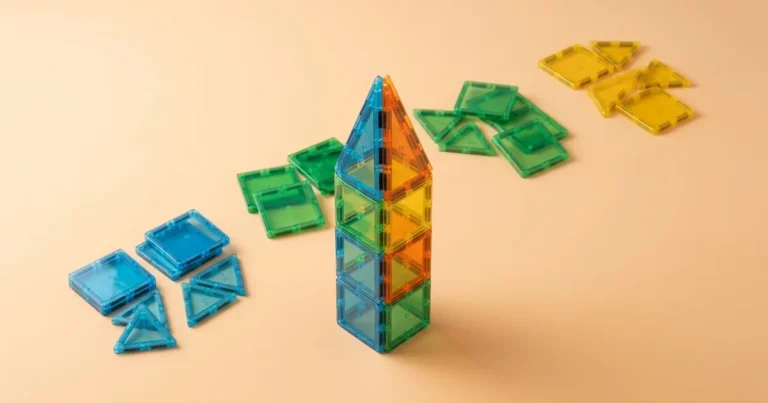
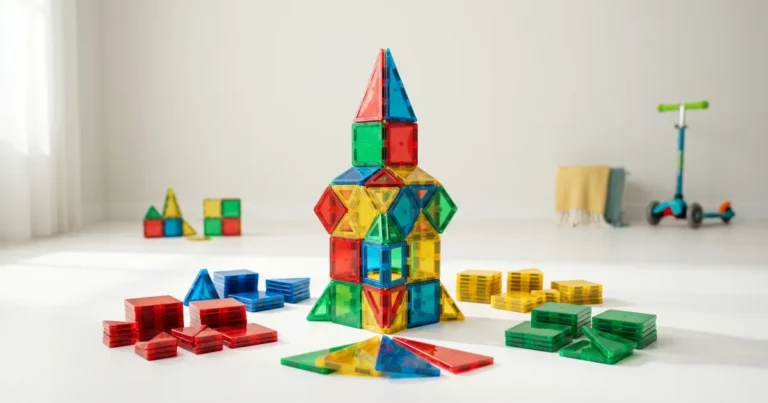
Neuroscience research consistently shows that children learn best through active, hands-on exploration rather than rote instruction. When a 4-year-old girl stacks magnetic tiles into a tower, she is not just having fun, she is practicing:
- Spatial reasoning, understanding how shapes fit together and relate in space
- Cause and effect, seeing what happens when a structure is unbalanced or a piece is missing
- Fine motor precision, the small hand and finger movements needed for writing later on
- Persistence and patience, trying again after a tower falls instead of giving up
- Early math concepts, counting pieces, comparing sizes, recognizing symmetry
These are not abstract benefits. They show up in how a child later grips a pencil, follows multi-step instructions in kindergarten, and approaches new challenges with curiosity instead of frustration.
Breaking the Stereotype: STEM Toys Are Not Just for Boys
One of the biggest barriers to STEM engagement for girls is not ability, it is exposure. Studies on gender and STEM interest consistently show that girls who are introduced to building, engineering, and construction play early on develop just as much confidence and skill as boys, and often go on to show stronger interest in STEM subjects at school age. The gap that appears later in life is largely a gap in early exposure and encouragement, not talent.
As a parent, one of the most powerful things you can do is normalize STEM play for your daughter from a young age, without labeling toys as “for boys” or “for girls.” A magnetic building set, a gear puzzle, or a simple circuit kit should be presented the same way you would present a dollhouse or an art set, as something fun and worth exploring.
How to Talk About STEM Toys Without Reinforcing Stereotypes
Language matters more than most parents realize. Instead of saying “this is a building toy for boys but you can try it too,” simply hand your daughter the toy and ask an open question like “what do you think we could build with this?” Avoid comparing her building skills to a brother’s or cousin’s. Celebrate the process (the trying, the adjusting, the problem-solving) rather than only the finished product. This builds a growth mindset that will serve her well beyond the playroom.
What to Look for When Choosing STEM Toys for a 4-Year-Old Girl
Not every toy labeled “educational” is actually appropriate or safe for a 4-year-old. Here is what genuinely matters when you are evaluating options, whether you are shopping online or in a UAE toy store.
1. Safety First, Always
At age 4, most children have outgrown the mouthing stage, but small parts, sharp edges, and toxic materials remain a real concern, especially with younger siblings around. Look for:
- Non-toxic, BPA-free materials with clear certifications
- Rounded edges and smooth finishes with no sharp points
- Pieces large enough that they are not a choking hazard, especially if there is a baby or toddler at home
- Strong magnets that are securely embedded and cannot be pried loose (critical for magnetic building sets)
- Clear age labeling and safety information from the manufacturer
Magnetic toys deserve special mention here. Loose or weak magnets that can be swallowed are a genuine medical emergency, so always choose sets from reputable brands with securely fixed magnets, like the Graflo Magnetic Train 65pcs STEM Tiles Set, designed with child safety as the starting point rather than an afterthought.
2. Open-Ended Play Beats Single-Use Toys
A toy that can only be used one way loses its appeal within days. Girls at age 4 benefit far more from open-ended toys, ones that can be rebuilt into a dozen different things. A single set of magnetic tiles can become a castle one day, a garage the next, and a spaceship after that. This kind of flexible play keeps engagement high for months or even years, rather than a novelty that gets abandoned after a week.
3. Right Level of Challenge
Too easy, and the toy gets boring fast. Too hard, and it leads to frustration and avoidance. The sweet spot for a 4-year-old is a toy that offers an achievable challenge with room to grow, something she can succeed with today but that also has more advanced ways to play as her skills improve over the following year or two.
4. Encourages Fine and Gross Motor Skills Together
The best STEM toys for this age combine small hand movements (fitting pieces together, connecting magnets, threading, snapping) with larger movements (building tall structures, carrying pieces, arranging large layouts on the floor). This dual engagement supports whole-body coordination, not just finger dexterity.
5. Encourages Language and Social Play
Look for toys that naturally invite conversation and cooperative play. Building sets that can be shared between siblings or friends, where each child adds a piece or takes turns, teach negotiation, patience, and vocabulary (bigger, smaller, longer, more, fewer) alongside the STEM skills themselves.
Best Categories of STEM Toys for 4-Year-Old Girls
Rather than chasing trendy gadgets, focus on a handful of proven categories that consistently deliver developmental value.
Magnetic Building Tiles
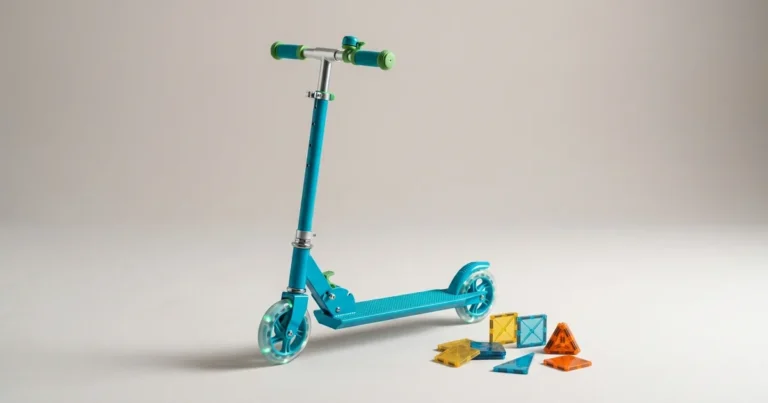
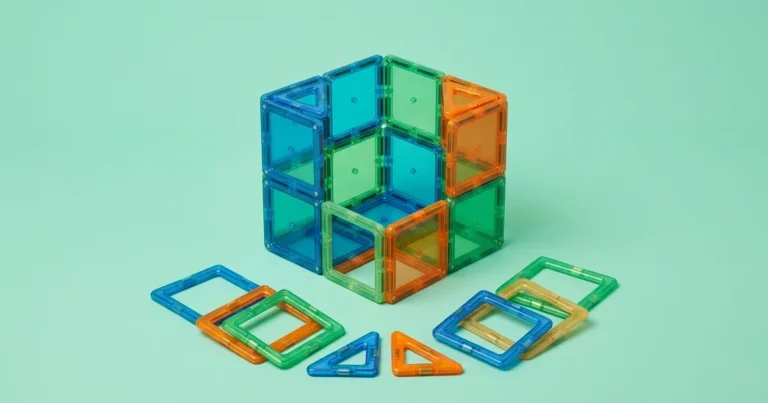
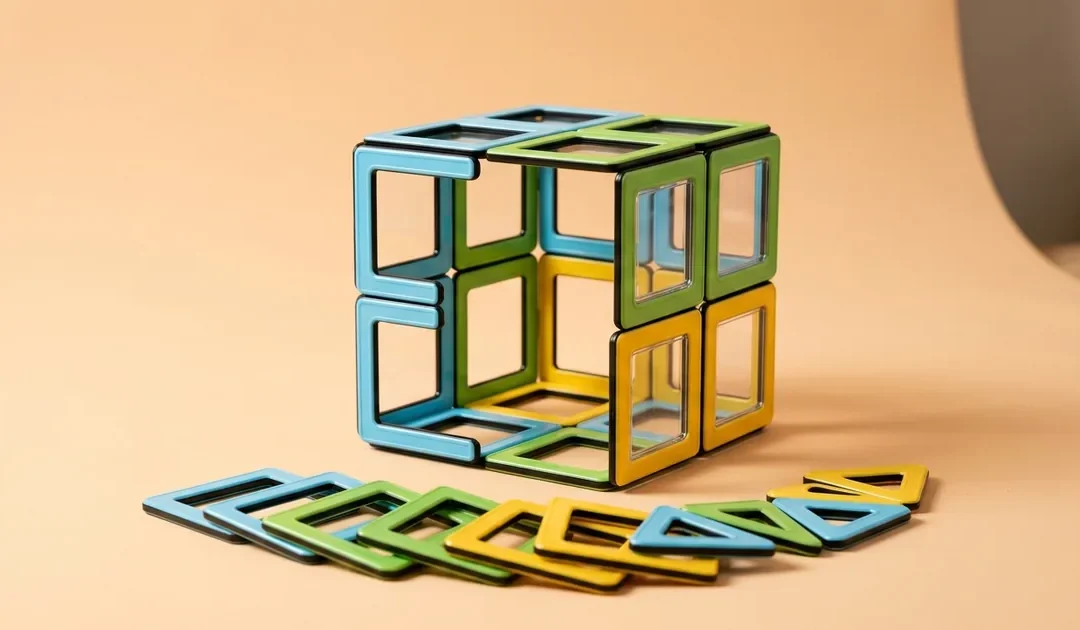
Magnetic tiles are among the most versatile STEM toys available today, and for good reason. They combine geometry, engineering, and creative design into one simple, satisfying activity: click a piece into place and watch a flat shape become a three-dimensional structure. For a 4-year-old just starting out, a smaller set is ideal because it is easier to manage and less overwhelming.
The Graflo Magnetic Train 65pcs STEM Tiles Set is a great entry point, offering enough pieces for real structures without being an unmanageable pile. As her confidence and interest grow over the following year, families often move up to a larger collection like the Graflo Magnetic Train 178pcs STEM Tiles Set (Ages 3-8), which supports more elaborate builds and keeps pace with her expanding imagination for years to come.
What makes magnetic tiles particularly good for girls at this age is the way they blend construction with storytelling. A tower is never just a tower, it becomes a castle for a princess, a home for imaginary animals, or a spaceship heading to the moon. This blend of engineering and narrative play is exactly the kind of activity that keeps girls engaged with STEM concepts far longer than a purely mechanical toy would.
Fine Motor and Sensory STEM Tools
Before children can grasp complex engineering concepts, they need strong fine motor foundations. Simple, sensory-friendly tools that build finger strength and hand-eye coordination lay the groundwork for everything from writing to more advanced building later on. Items like the Finger Paint 12 Colors set offer a wonderfully tactile way to explore color mixing, cause and effect, and creative experimentation, all foundational STEM-adjacent skills that pair beautifully with building and construction play.
Puzzles and Shape Sorters
Puzzles remain one of the simplest and most effective STEM tools for this age group. A good wooden or chunky puzzle with 12 to 24 pieces challenges a 4-year-old to recognize shapes, understand spatial relationships, and practice patience, all while building the satisfaction of completing a task from start to finish.
Simple Building Blocks and Construction Sets
Classic wooden or plastic blocks never go out of style. They teach balance, gravity, symmetry, and basic engineering principles long before a child could ever articulate those words. For 4-year-olds, look for blocks that are chunky enough to grip easily but varied enough in shape to allow for creative structures.
Early Coding and Logic Toys
While full coding kits are usually better suited to slightly older children, simplified logic toys designed for 4-year-olds, such as sequencing games or simple maze puzzles, introduce the basic idea of “if I do this, then that happens” in a playful, screen-free way. These are excellent stepping stones toward more advanced technology-focused toys in later years.
Nature and Science Exploration Kits
Simple magnifying glasses, bug-catching kits, or basic weather charts introduce scientific observation in the most natural way possible, through curiosity about the world around her. These toys work particularly well for girls who enjoy outdoor play and want to bring some of that wonder indoors.
How to Introduce STEM Play at Home
Buying the right toy is only half the equation. How you introduce and support the play matters just as much for building genuine STEM confidence.
Start With a Simple Question, Not an Instruction
Rather than showing your daughter exactly how to build something, try asking “what do you think we could make together?” This small shift changes the entire dynamic of play, from following directions to creative problem-solving, which is the heart of real STEM thinking.
Set Up a Dedicated Building Space
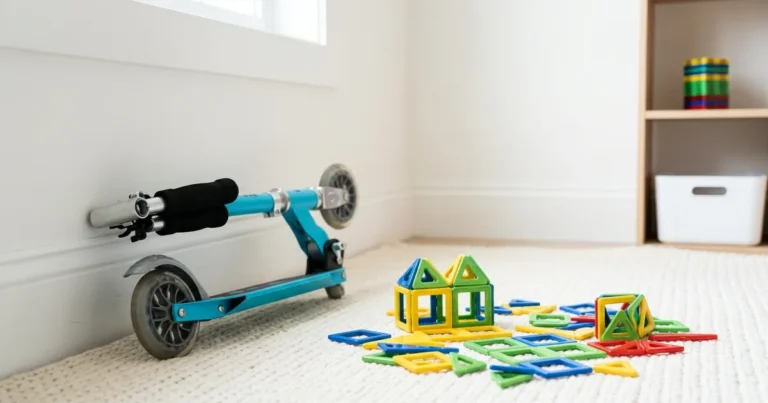
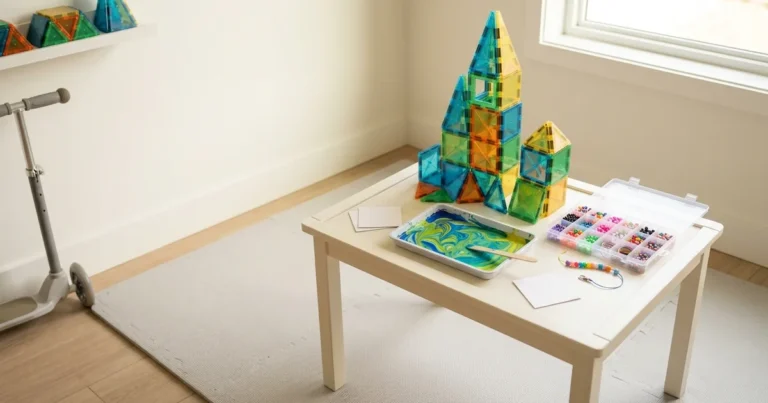
A small corner with a flat surface, good lighting, and enough room to spread pieces out makes a real difference in how often a child engages with building toys. If floor space is limited, even a large tray or a designated section of a play mat works well.
Rotate Toys to Keep Interest Fresh
Rather than leaving every toy out all the time, try rotating a handful of STEM toys every couple of weeks. When a set of magnetic tiles reappears after being tucked away for a while, it often feels brand new again, sparking renewed interest and fresh building ideas.
Play Alongside Her, Not Just Nearby
Four-year-olds thrive on parallel and cooperative play. Sitting down and building your own small structure next to hers, without taking over her project, models problem-solving behavior and gives her language to describe what she is doing (“I’m making mine taller,” “yours has more windows than mine”).
Celebrate the Process, Not Just the Result
When a tower falls or a puzzle piece won’t fit, resist the urge to fix it immediately. Instead, narrate the problem out loud (“hmm, that piece looks like it needs to go the other way”) and let her work through it. This builds resilience alongside the STEM skill itself.
Connect STEM Play to Everyday Life
Point out STEM concepts during daily routines. Counting steps while climbing stairs, noticing shapes in buildings during a drive, or measuring ingredients while baking all reinforce the same skills her toys are building, just in a different context.
Safety Guidelines Every UAE Parent Should Know
Given the UAE’s warm climate and active family lifestyle, a few extra safety notes are worth keeping in mind.
Check for Heat Sensitivity
If toys are left in a car or near a window during summer months, some plastics can warp or release odors under intense heat. Store STEM toys indoors in a cool area, and always inspect pieces after prolonged sun exposure before handing them back to your child.
Regularly Inspect Magnetic and Small-Part Toys
Even well-made magnetic tiles should be checked periodically for cracks or loose magnets, especially in high-use households or homes with multiple children of different ages. If any piece looks damaged, remove it from play immediately and contact the manufacturer for a replacement.
Supervise Mixed-Age Play
If you have a younger sibling or toddler at home, always supervise STEM play sessions closely, since smaller pieces designed for a 4-year-old may still pose a risk to a baby who is still mouthing objects.
Keep an Eye on Screen-Based STEM Toys
Some STEM products marketed for young children rely heavily on tablets or screens. For a 4-year-old, hands-on, screen-free toys generally offer richer sensory and social benefits than app-based alternatives, so prioritize physical building and exploration over digital add-ons whenever possible.
Common Mistakes Parents Make When Choosing STEM Toys
Buying Too Advanced Too Soon
It is tempting to buy a large, complex set thinking it will “last longer,” but an overwhelming number of pieces can actually discourage a 4-year-old rather than inspire her. Start with a manageable size and expand later as skills and confidence grow.
Choosing Based on Packaging Alone
Bright boxes with big “STEM” labels do not always reflect genuine educational value. Look past the marketing and consider whether the toy actually invites building, experimenting, and problem-solving, or if it is simply a themed toy with a STEM sticker attached.
Ignoring Her Actual Interests
STEM toys do not need to look like traditional building sets to be effective. If your daughter loves animals, look for STEM toys themed around habitats or animal anatomy. If she loves art, lean into color and design-based STEM activities. Matching STEM play to existing interests dramatically increases engagement.
Expecting Instant Mastery
Four-year-olds are just beginning to grasp spatial and logical concepts. Progress will look like small wins over weeks and months, not instant mastery. Patience from parents is just as important as the toy itself.
STEM Toys and Social Play
Many of the best STEM benefits emerge not from solo play but from shared building sessions with siblings, cousins, or friends. Encourage collaborative building challenges, such as “let’s see how tall we can build together” or “can we build a house with a door and two windows?” These shared goals teach negotiation, communication, and teamwork alongside the core STEM skills.
If your daughter has an older sibling, look for STEM toy lines that offer age ranges spanning multiple stages, so both children can play together with the same core set at their own level. Sets like those found in Graflo’s Ages 3-5 Years collection are designed with exactly this kind of shared, multi-age play in mind.
Planning Ahead: What Comes After Age 4
STEM interests naturally evolve as children grow. Around ages 5 and 6, many girls are ready for more complex building challenges, simple pattern-based coding games, and early science experiments with adult supervision. Investing in toy lines that grow with your child, rather than becoming obsolete after a few months, offers much better long-term value.
For families thinking ahead, browsing Graflo’s Ages 6-8 Years collection alongside current age-appropriate toys can help you plan a smooth transition as your daughter’s skills and interests mature over the coming years, without needing to replace her entire toy collection all at once.
Budgeting for STEM Toys in the UAE
Quality STEM toys are an investment, but they do not need to break the family budget. A well-made magnetic tile set or a sturdy puzzle, priced fairly in AED, will typically get far more use over a longer period than several cheaper, flimsier alternatives combined. When comparing prices, consider:
- Cost per play session, not just the upfront price. A toy used daily for two years offers far better value than a cheaper toy abandoned after a week.
- Expandability, sets that allow you to add more pieces later stretch your budget further over time.
- Durability, well-made pieces withstand drops, stacking, and enthusiastic play far better than budget alternatives, saving money on replacements down the line.
Setting aside a modest monthly budget for one or two well-chosen STEM toys, rather than many impulse purchases, tends to result in a richer, more focused play experience for your daughter and a tidier playroom for you.
Real-Life Example: A Week of STEM Play With a 4-Year-Old
To make this practical, here is what a simple week of STEM-focused play might look like for a 4-year-old girl at home:
- Monday: Free building session with magnetic tiles, no theme, just open exploration.
- Tuesday: Themed challenge, “build a house for your favorite stuffed animal.”
- Wednesday: Fine motor day with finger paints, exploring color mixing and pattern-making.
- Thursday: Puzzle time, working on a new 24-piece puzzle with a parent.
- Friday: Collaborative build with a sibling or friend, working toward a shared building goal.
- Weekend: Outdoor nature exploration, looking for shapes, patterns, and small creatures in the garden or a nearby park.
This kind of gentle rotation keeps STEM play varied and exciting without requiring a huge toy collection, just a thoughtful mix of a few well-chosen items used in different ways throughout the week.
Signs Your STEM Toy Choices Are Working
It can be hard to know if a toy is genuinely benefiting your child or simply keeping her occupied. Look for these encouraging signs over time:
- She returns to the same toy repeatedly over weeks or months, not just once and then abandoned
- She starts inventing her own building challenges without being prompted
- She uses new vocabulary related to shapes, sizes, and comparisons during play
- She shows increasing patience when something does not work on the first try
- She wants to show you or explain her creations, indicating pride and engagement
These small, everyday signals matter far more than any label on the box, and they are the clearest indication that a STEM toy is truly earning its place in your home.
Conclusion
Choosing the right stem toys girls age 4 comes down to three simple priorities: safety first, genuine open-ended play second, and a real match to your daughter’s interests third. Skip the pink-versus-blue marketing and focus instead on toys that invite building, questioning, and gentle problem-solving. Whether you start with a compact magnetic tile set, a tactile finger paint kit, or a simple puzzle, the goal is the same, giving your daughter hands-on tools to explore the world with confidence, curiosity, and joy, one small build at a time.
Frequently Asked Questions
What are the best STEM toys for a 4-year-old girl just starting out?
Start with something manageable rather than overwhelming, such as a smaller magnetic building set, a chunky wooden puzzle, or a fine motor kit like finger paints. The goal at this age is to build confidence with a small number of pieces before moving on to larger, more complex sets.
Are magnetic building toys safe for a 4-year-old?
Yes, as long as you choose a reputable set with securely embedded magnets and pieces sized appropriately to avoid choking hazards. Always inspect the toy periodically for damage, and supervise play closely if younger siblings are present in the home.
How do I encourage my daughter’s interest in STEM if she prefers dolls or art?
STEM interest does not need to look like traditional building sets. Look for STEM toys that connect to her existing interests, such as design-focused building challenges, color-mixing activities, or storytelling-based construction play, so STEM feels like a natural extension of what she already loves.
How much should I budget for STEM toys for a 4-year-old in the UAE?
Rather than focusing on a specific number, prioritize durability and expandability over the cheapest upfront price. A well-made set priced fairly in AED that gets used daily for a year or two offers far better value than several inexpensive toys that are quickly abandoned.
How do I know if a STEM toy is actually benefiting my child?
Look for signs of genuine engagement over time, such as your daughter returning to the same toy repeatedly, inventing her own building challenges, using new descriptive vocabulary, and showing increased patience when something does not work on the first attempt.