Last updated: August 2, 2026
Choosing educational toys for kids in the UAE means balancing two things every parent cares about most: safety and real developmental value. With so many options on shelves and online, from flashy electronic gadgets to simple wooden blocks, it can be hard to know what actually helps your child grow while keeping little hands, mouths, and curious minds safe. This guide walks you through everything a UAE parent needs to know, from safety certifications to age-by-age recommendations, so you can shop with confidence instead of guesswork.
Why Educational Toys Matter More Than Ever
Children in the UAE grow up in a fast-paced, tech-rich environment. Screens are everywhere, from tablets to smart TVs, and while some screen time has its place, hands-on play remains irreplaceable for building the brain’s foundation. Educational toys, the kind that require a child to sort, stack, build, imagine, or problem-solve, give children something screens cannot: tactile feedback, spatial reasoning, patience, and the quiet satisfaction of figuring something out on their own.
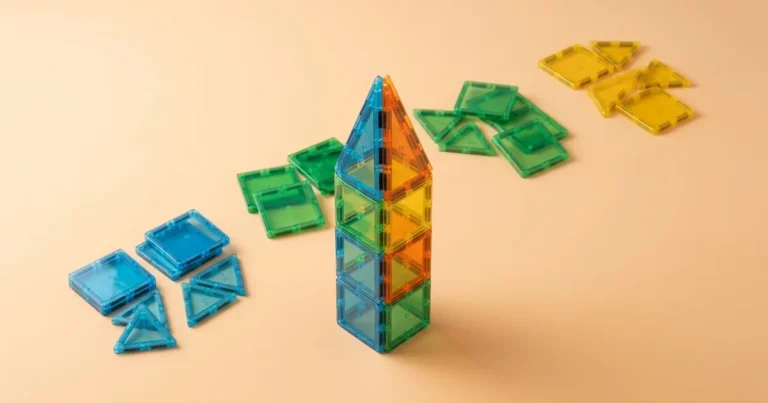
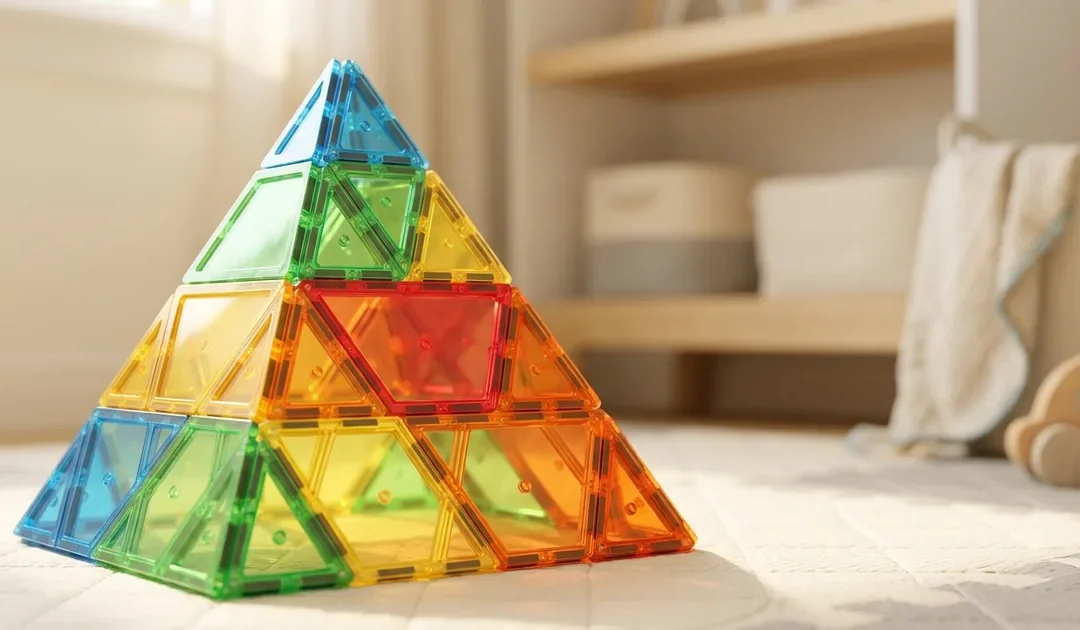
For parents, the goal is not to eliminate fun in favour of “learning.” The best educational toys don’t feel like lessons at all. A child stacking magnetic tiles into a wobbly tower is having fun, but along the way they are quietly practising balance, geometry, cause and effect, and fine motor control. That is the real magic of good educational play.
The UAE Context: Indoor Play and Climate
With long stretches of hot weather each year, many UAE families spend more time indoors than parents in cooler climates. This makes the quality of indoor play even more important. A well-chosen educational toy can turn an afternoon indoors into an hour of focused, joyful learning rather than restless boredom or extra screen time. Investing in a few versatile, high-quality toys often works better than a large pile of one-time novelty items that get forgotten within a week.
Safety First: What Every UAE Parent Should Check
Before anything else, safety has to come first. The UAE follows strict product safety requirements, and as a parent, there are a few practical checks you can do yourself every time you buy a toy, whether in a shopping mall or online.
Look for Recognised Safety Certifications
- ESMA compliance: Products sold in the UAE should meet Emirates Authority for Standardization and Metrology requirements, which cover general product safety.
- EN71 (European Toy Safety Standard): This is one of the most widely recognised toy safety certifications globally and covers mechanical, physical, and chemical safety, including flammability and toxic substances.
- CE marking: Often seen alongside EN71 certification, indicating the product meets European safety requirements.
- Non-toxic, BPA-free, and lead-free labels: Especially important for toys that go near the mouth, like teethers, or that involve paint and dyes, like art supplies.
Reputable toy sellers will display this information clearly on the packaging or product page. If a toy has no safety information at all, it is best to skip it, no matter how appealing the price.
Age Grading Is Not a Suggestion
Every toy comes with a recommended age range, often shown as “3+” or “6+.” This is not marketing, it is a safety guideline based on choking hazards, small parts, and developmental appropriateness. A toy with small magnets or tiny pieces meant for a 6-year-old should never be handed to a toddler who still explores the world by putting things in their mouth. Always check the manufacturer’s age recommendation before buying, and when in doubt, size up rather than down.
Material Quality Matters
Cheaply made plastic toys can have sharp seams, brittle parts that snap easily, or paint that flakes off. Look for toys made with smooth-finished, durable plastic or solid wood, with rounded edges and securely fixed components (no rattling or loose pieces on close inspection). A toy that feels sturdy in your hands at the shop will usually hold up to months of enthusiastic play at home.
Choosing the Right Educational Toy by Age
Developmental needs change quickly in the early years, so what is perfect for a 2-year-old will bore, or worse, unsafe for, an older child, and vice versa. Here is a practical breakdown to guide your shopping.
Infants and Toddlers (0 to 2 Years)
At this stage, babies are learning through their senses. Look for toys with:
- High-contrast colours and patterns for visual development
- Soft textures and different materials to explore through touch
- Simple cause-and-effect actions, like pressing a button to hear a sound
- Large, chunky pieces with no small parts, since everything goes in the mouth at this age
Stacking cups, soft fabric blocks, and simple shape sorters are excellent choices. Avoid anything with small magnets, button batteries that are easily accessible, or long cords.
Preschoolers (3 to 5 Years)
This is often called the golden age of imaginative play. Children this age are developing language rapidly, learning to share, and beginning to grasp early concepts of numbers, letters, and shapes. Good toys for this age group include:
- Building sets with larger, easy-to-connect pieces
- Simple puzzles with 12 to 48 pieces
- Pretend play sets, like play kitchens or doctor kits
- Art supplies designed for little hands, such as chunky crayons or washable paints
A great example here is a finger paint set for kids, which lets preschoolers explore colour mixing and texture without needing fine motor precision they haven’t developed yet. It is messy in the best possible way, and washable formulas make cleanup manageable for parents. For more curated options suited to this stage, browse our toys for ages 3 to 5 years.
This is also a wonderful age to introduce simple magnetic building sets. A set like the magnetic train STEM tiles set with 65 pieces combines the appeal of trains with early geometry and construction concepts, letting children build tracks, towers, and shapes while strengthening hand-eye coordination.
Early Primary Years (6 to 8 Years)
By this stage, children are in school, learning to read fluently, and developing more complex problem-solving skills. They are also more capable of following multi-step instructions and enjoy a sense of achievement from completing something challenging. Look for:
- Advanced building and construction sets with more pieces and complexity
- Board games that involve strategy, counting, or basic logic
- Science kits that introduce simple experiments
- Larger, more intricate puzzles (100+ pieces)
Children in this age range often outgrow smaller sets quickly and benefit from more advanced building systems. A larger option like the 178-piece magnetic train set offers enough variety and complexity to keep them engaged for much longer, encouraging more ambitious builds and creative storytelling as they connect tracks, tiles, and moving trains into elaborate layouts. You can also explore our full collection of toys for ages 6 to 8 years for more ideas suited to this stage.
Older Children (9 Years and Above)
Older children benefit from toys that challenge critical thinking, such as advanced construction kits, coding-based toys, strategy games, and hobby kits (like model building or robotics starter sets). At this age, involving your child in choosing their own educational toys often leads to more sustained interest, since they can articulate what genuinely excites them, whether it is engineering, art, or storytelling.
Types of Educational Toys and Their Specific Benefits
Not all educational toys teach the same skills. Understanding the different categories helps you build a well-rounded toy collection at home rather than duplicating the same type of play experience.
STEM and Construction Toys
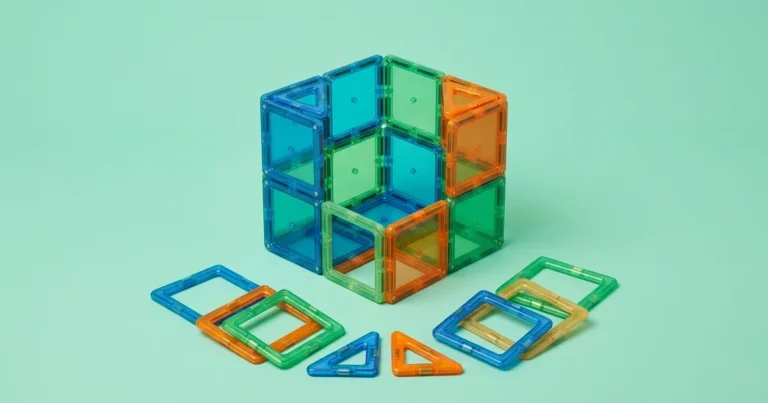
Building sets, magnetic tiles, and construction kits are some of the most powerful educational toys available today. They teach:
- Spatial reasoning and geometry through hands-on building
- Cause and effect, especially with moving parts like trains or gears
- Patience and planning, since bigger builds require thinking ahead
- Fine motor skills through connecting small magnetic pieces precisely
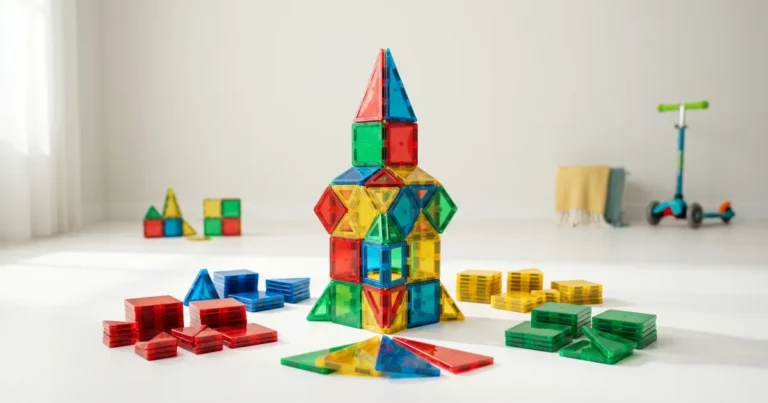
Magnetic building sets are particularly popular with UAE parents because they are quiet, mess-free, and reusable for years across different age stages, unlike toys a child quickly outgrows.
Sensory and Creative Toys
Art and sensory play support emotional regulation, creativity, and fine motor control. Finger painting, in particular, is one of the earliest and most valuable forms of creative expression because it requires no tools, just fingers and imagination. It also helps children who may be sensitive to texture gradually build comfort with different sensations in a controlled, playful way.
Puzzles and Logic Games
Puzzles teach persistence and pattern recognition. Starting with simple 4 to 6 piece puzzles for toddlers and gradually increasing complexity keeps the challenge appropriate without causing frustration. Logic games, like simple matching or sorting games, also build early problem-solving skills that translate directly into school readiness.
Language and Early Literacy Toys
Alphabet blocks, phonics toys, and simple storytelling props help children build vocabulary and early reading skills. In bilingual UAE households, toys that support both Arabic and English language development can be especially valuable, giving children playful exposure to both languages from an early age.
Pretend Play and Social-Emotional Toys
Play kitchens, doctor kits, and dress-up costumes allow children to process real-world experiences and practice social skills like sharing, taking turns, and empathy. This type of play is often underestimated but plays a huge role in emotional development.
How to Build a Balanced Toy Collection at Home
Rather than buying dozens of toys, many UAE parents find more success with a smaller, thoughtfully chosen collection that covers different types of play. A good starting point is to have at least one toy from each of these categories:
- One construction or building toy (like magnetic tiles)
- One creative or art toy (like a paint set)
- One puzzle or logic game
- One pretend play set
- One physical or active toy for movement
This variety naturally encourages children to move between different types of thinking throughout the day rather than repeating the same pattern of play.
Toy Rotation Keeps Interest Fresh
A simple but effective strategy many parents overlook is toy rotation. Instead of keeping every toy accessible at once, store half of your child’s toys away and rotate them every few weeks. Children often “rediscover” toys with renewed enthusiasm when they have been out of sight for a while, which means you get more value out of fewer toys, and your home stays less cluttered too.
Storage Tips for UAE Homes
With many families living in apartments, storage space can be limited. Clear bins with labels, under-bed storage, or a dedicated toy shelf in the living area all help keep things organised. Magnetic building sets and puzzles with smaller pieces benefit especially from labelled boxes, so pieces do not get scattered around the house or lost.
Budgeting for Educational Toys in AED
Educational toys come at a wide range of price points, and higher price does not always mean higher value. When budgeting, consider cost per hour of play rather than just the upfront price. A well-made magnetic building set priced higher in AED but used for years across multiple developmental stages often provides better value than several cheaper, single-use toys that break or get discarded within weeks.
A few practical budgeting tips for UAE parents:
- Prioritise open-ended toys (building sets, art supplies) that can be used in many different ways, over single-purpose electronic toys with limited play patterns.
- Watch for seasonal sales around Ramadan, Eid, back-to-school, and UAE National Day, when many toy retailers offer discounts.
- Consider gifting larger sets, like an expanded magnetic train collection, for birthdays or special occasions, and pairing them with smaller everyday toys throughout the year.
- Involve grandparents or extended family in gifting a single higher-quality toy rather than multiple small, lower-quality ones for celebrations.
Balancing Educational Toys with Screen Time
Many UAE parents worry about the amount of screen time their children get, especially during hot months when outdoor play is limited. Educational toys offer a natural, low-pressure way to reduce reliance on tablets and TV without turning it into a battle. Instead of removing screens abruptly, try setting up an inviting “toy corner” with two or three engaging options, like a building set and an art activity, so children have an easy, appealing alternative when they reach for a device out of boredom.
Rotating in a new or previously stored toy right before a period when you want to reduce screen use (such as before dinner or during a weekend afternoon) can also help shift attention naturally, without needing to say no to screens directly.
Gifting Educational Toys for Special Occasions
Educational toys make thoughtful gifts for birthdays, Eid, and other celebrations in the UAE, especially when chosen with the child’s specific age and interests in mind. A larger construction or magnetic building set often works beautifully as a milestone birthday gift, since it offers months of ongoing play rather than being used once and forgotten. For younger children, a creative set like a finger paint kit makes a lovely, low-cost gift that encourages a special painting session with a parent or grandparent, turning gift-giving into shared quality time rather than just an object.
Common Mistakes Parents Make When Choosing Educational Toys
Buying Based on Packaging Alone
Bright packaging and bold “educational” claims on the box do not guarantee real developmental value. Always check the actual play pattern the toy offers, does it require the child to think, build, or create, or does it simply light up and make sounds passively?
Ignoring Age Recommendations
As mentioned earlier, buying toys above or below the recommended age range is one of the most common and preventable mistakes. A toy that is too advanced leads to frustration, while one that is too simple leads to quick boredom.
Overloading with Too Many Toys at Once
A room overflowing with toys can actually reduce a child’s ability to focus and engage deeply with any single one. Fewer, better-chosen toys, rotated thoughtfully, tend to produce more meaningful play than an overwhelming pile of options.
Overlooking Storage and Durability
A toy with hundreds of small pieces but no proper storage solution often ends up half-lost within weeks. When buying larger sets, factor in how you will store and organise the pieces from day one.
Practical Shopping Checklist for UAE Parents
- Does the toy have visible safety certification (EN71, CE, or ESMA compliance)?
- Is the age recommendation appropriate for your child’s current stage?
- Is it made from durable, non-toxic materials with smooth edges?
- Does it encourage active thinking, building, or creating, rather than passive watching?
- Can it grow with your child, offering more complex play as they develop?
- Do you have a reasonable storage plan for the pieces?
Final Thoughts
Choosing educational toys for kids in the UAE does not need to be complicated once you know what to look for. Start with safety certifications and age-appropriate design, then think about the type of skills you want to nurture, whether that is spatial reasoning through building sets, creativity through art, or logic through puzzles. A smaller collection of well-chosen, high-quality toys, rotated thoughtfully and stored well, will almost always serve your child better than a large pile of quick-forgotten items. With the right choices, playtime becomes more than just a way to pass the hours indoors, it becomes one of the most valuable parts of your child’s day.
Frequently Asked Questions
What safety certifications should I check before buying educational toys in the UAE?
Look for EN71 (the European Toy Safety Standard), CE marking, and general ESMA compliance for products sold in the UAE. Also check for non-toxic, BPA-free, and lead-free labels, especially on toys meant for babies or toddlers who still explore items with their mouths.
At what age can my child start using magnetic building toys?
Most magnetic building sets are recommended from age 3 and above, since they involve smaller pieces that require careful handling. Always check the specific age grading on the packaging, and supervise younger children during play to ensure pieces are not put in the mouth.
How many educational toys does my child actually need at home?
Quality matters more than quantity. A balanced collection with one construction toy, one creative toy, one puzzle, and one pretend-play set is often enough. Rotating toys every few weeks keeps interest fresh without needing to buy constantly.
Are educational toys a good alternative to screen time for children in the UAE?
Yes, especially during hot months when outdoor play is limited. Setting up an inviting toy corner with two or three engaging options, like a building set and an art activity, gives children an easy alternative to reaching for a tablet out of boredom.
What is the best type of educational toy for a preschooler aged 3 to 5?
At this age, children benefit most from open-ended toys like building sets, simple puzzles, pretend play sets, and washable art supplies such as finger paints. These support imagination, early numeracy, and fine motor development without requiring skills the child has not yet developed.