Last updated: October 28, 2026
If you have spent the last hour scrolling through toy listings trying to figure out which ones are actually worth your dirhams, you are not alone. Every box claims to be “educational,” every seller claims their product is “award-winning,” and somewhere between the glitter and the marketing copy, parents are left wondering what their child will genuinely gain from the toy sitting under the tree or waiting in a birthday gift bag. This guide cuts through that noise. We have put together a practical, safety-first breakdown of the top rated educational toys 2026 has to offer UAE families, based on real developmental value, build quality, and what actually keeps children engaged for more than a week.
Whether you are shopping for a toddler taking their first steps toward independent play, a primary schooler who needs a screen-free outlet after homework, or a tween who is ready for more complex problem-solving, this article will help you choose with confidence. We will cover what “top rated” really means, how to match a toy to your child’s stage of development, safety checks every UAE parent should run before adding anything to the cart, and specific product categories, including magnetic building sets, STEM kits, and active outdoor toys, that consistently earn their place in family homes.
What Actually Makes a Toy “Top Rated” and Educational in 2026?
The toy industry loves the word “educational,” but not every toy that claims it deserves the label. A genuinely top rated educational toy in 2026 is judged on more than flashy packaging. Here is what separates the toys worth your money from the ones that end up forgotten in a cupboard within a month.
1. It Builds a Real Skill
A toy earns the “educational” tag when it actively develops a skill, not just occupies a child’s hands. That could be fine motor control, spatial reasoning, early literacy, emotional regulation, or logical sequencing. If you cannot name the specific skill a toy supports, it is probably closer to a novelty item than an educational one.
2. It Grows With the Child
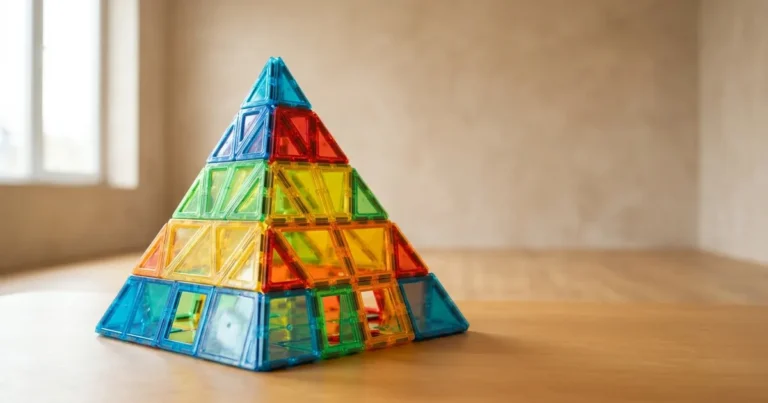
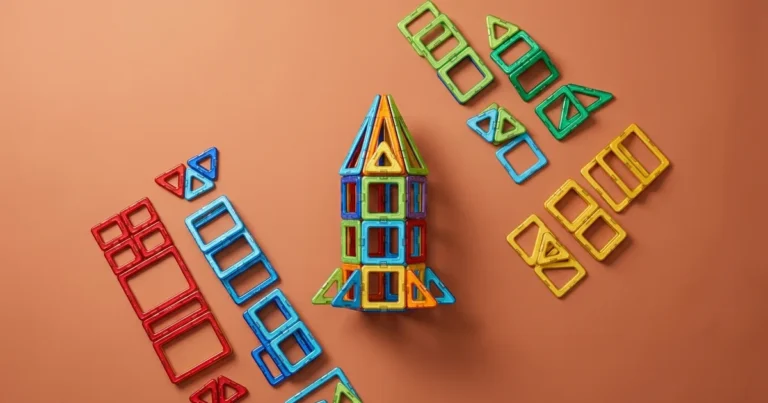
The best-rated toys this year are the ones that offer more than one level of play. A magnetic building set, for example, can be used by a 3-year-old to stack simple shapes and by a 7-year-old to build complex structures with planning and symmetry. This kind of open-ended design is why modular toys consistently top parent recommendation lists.
3. It Passes Strict Safety Standards
No toy deserves a “top rated” badge if it compromises on safety. This means non-toxic materials, no small detachable parts for younger age groups, rounded edges, and compliance with recognized safety certifications. We will go deeper into this in the safety section below, because this is non-negotiable for us at Graflo Toys.
4. It Encourages Independent and Social Play
Toys that only work with constant adult involvement burn out quickly, both for the child and the parent. The strongest educational toys support both solo exploration and group play, which matters a lot in UAE households where cousins, siblings, and friends often play together across different age groups.
5. It Has Lasting Durability
A toy that falls apart after two weeks of enthusiastic play is not a good investment, no matter how clever its design. Durability directly affects value for money, something every UAE parent budgeting in AED cares about deeply.
Why Educational Toys Matter More Than Ever for UAE Families
UAE households are navigating a unique mix of influences, bilingual or trilingual home environments, busy dual-income schedules, hot outdoor months that push play indoors for half the year, and increasing screen exposure from a young age. Educational toys are one of the most effective, low-pressure ways to counterbalance all of that.
During the cooler months, from around October through April, outdoor play becomes realistic again, and that is the perfect window to introduce toys that build gross motor skills and confidence, such as a foldable kick scooter that strengthens balance and coordination while giving kids a reason to get outside with friends or family in the evening. During the hotter months, indoor-friendly, screen-free options like magnetic building sets or puzzle-based STEM kits keep young minds active without relying on tablets.
There is also the matter of long school days and after-school fatigue. Children often need a form of play that feels relaxing rather than demanding. Open-ended educational toys, the kind that do not have a single “correct” way to play, give children a sense of control and creativity after a day of following instructions at school.
How We Choose the Top Rated Educational Toys 2026 List
Before recommending any specific product category or item, we apply a consistent set of criteria. This is the same checklist we encourage parents to use themselves when comparing options, whether shopping with us or elsewhere.
Age Appropriateness
A toy rated highly for a 6-year-old could be a choking hazard for a 2-year-old. Always check the manufacturer’s recommended age range, and when in doubt, choose the safer, slightly older recommendation rather than guessing downward.
Material Safety and Certification
Look for BPA-free plastics, lead-free paints, and compliance with international safety standards such as EN71 or ASTM. Reputable UAE toy retailers should be transparent about this, and you should never hesitate to ask before buying.
Skill Development Mapping
We mentally map each toy against a skill category, fine motor, gross motor, logic and sequencing, language, emotional development, or creativity, so that parents can build a well-rounded toy collection instead of five versions of the same skill.
Parent and Child Feedback
Reviews that mention sustained interest over weeks or months carry far more weight than those praising unboxing excitement alone. A toy that is still being played with a month later has earned its rating.
Value for Money in AED
UAE parents are savvy shoppers. A toy priced higher in AED can still be the better value if it replaces three cheaper toys that would have been abandoned quickly. We will break this down further in the budget section.
Top Rated Educational Toys 2026, By Age Group
Children’s needs shift dramatically across ages, so rather than offering one generic list, here is a breakdown by developmental stage.
Ages 3 to 5 Years: Building Early Foundations
This age range is about sensory exploration, early logic, and language explosion. Children at this stage benefit enormously from toys that are tactile, colorful, and simple enough to use with growing independence but complex enough to hold their attention.
- Magnetic building pieces: Large, chunky magnetic shapes let preschoolers experiment with balance, color sorting, and simple construction without needing adult help for every step.
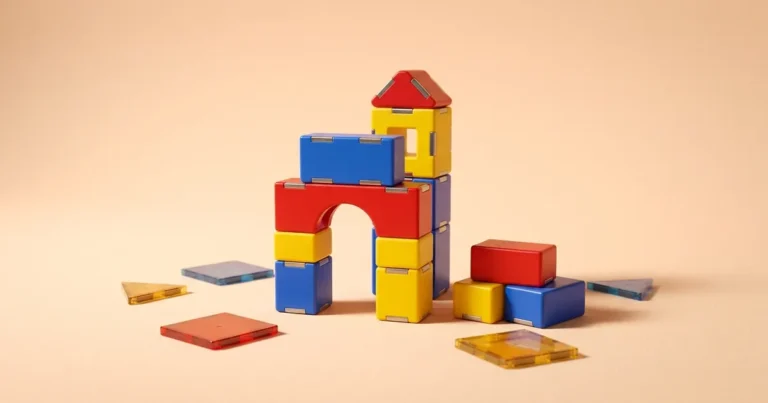
- Chunky puzzles: Wooden or thick cardboard puzzles with large knobs build fine motor control and early problem-solving.
- Pretend play sets: Kitchen sets, doctor kits, or simple dress-up props support language development and emotional understanding through role play.
- Sorting and stacking toys: These reinforce early math concepts like size, order, and categorization.
If you are shopping specifically for this stage, our collection for ages 3 to 5 years is organized around exactly these developmental priorities, making it easier to shop without second-guessing age fit.
Ages 6 to 8 Years: Logic, Strategy, and Independence
By this age, children are ready for multi-step thinking, longer attention spans, and toys that reward patience and planning. This is often when parents notice their child gravitating toward building, strategy games, and more structured STEM activities.
- Advanced magnetic construction sets: With more pieces and more complex connectors, these sets push children to plan ahead, troubleshoot when a structure collapses, and experiment with geometry in a hands-on way.
- Beginner STEM kits: Simple circuits, gears, and pulley systems introduce cause-and-effect engineering concepts.
- Strategy board games: Games that require turn-taking and forward planning build patience and social skills alongside logic.
- Active balance and coordination toys: At this stage children are refining gross motor skills, making this the perfect window to introduce a scooter or similar ride-on toy that challenges balance in a fun, low-pressure way.
Browse our dedicated toys for ages 6 to 8 years if your child is entering this stage and you want options that are already vetted for appropriate challenge level.
Ages 9 and Up: Complexity and Mastery
Older children crave mastery and challenge. At this stage, toys with modular expansion packs, intricate building challenges, and competitive or cooperative games that require real strategy tend to perform best. Children in this group often enjoy revisiting simpler toys from earlier years but using them in far more advanced, self-directed ways, which is a strong argument for investing in open-ended toys early rather than single-use gadgets.
Top Categories of Educational Toys Dominating 2026
Beyond age brackets, certain toy categories are consistently topping parent recommendation lists this year because of their proven developmental return.
Magnetic Building and Construction Toys
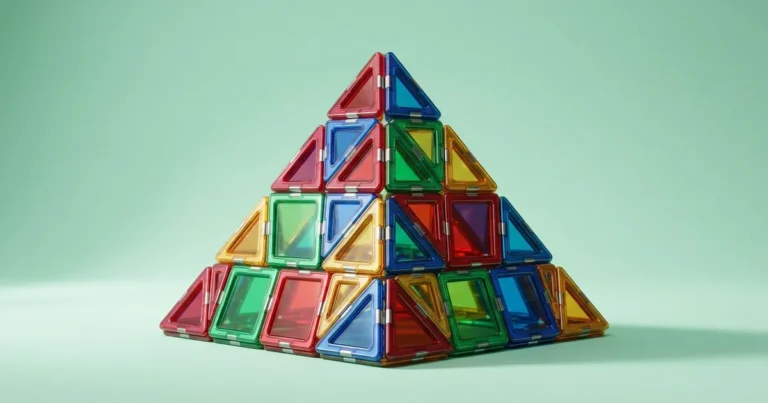
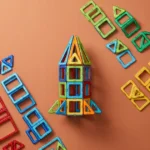
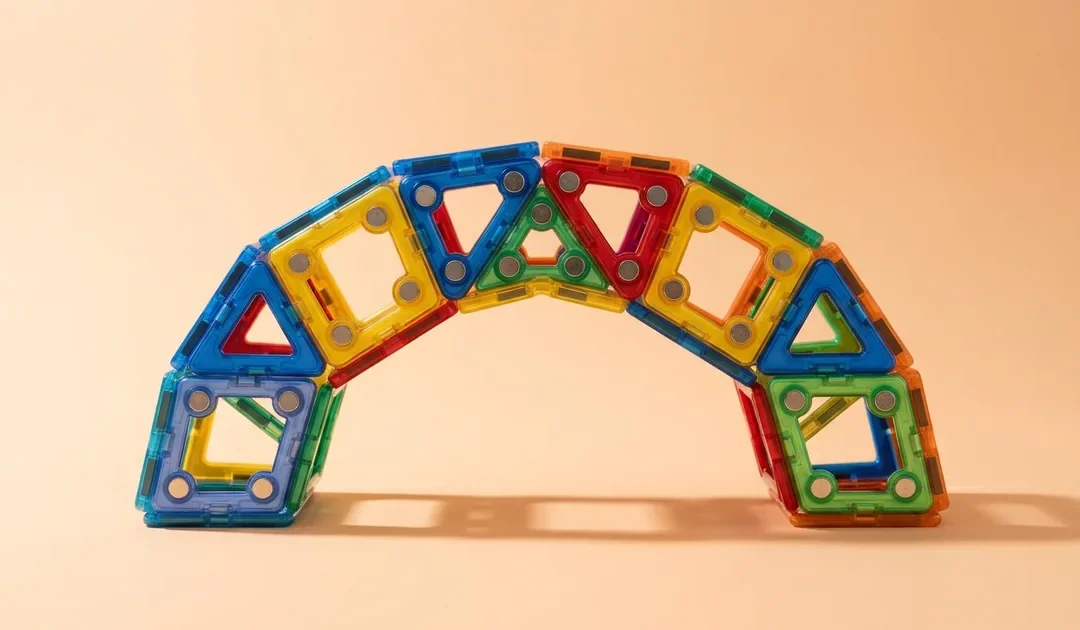
Magnetic toys remain one of the strongest performers in the top rated educational toys 2026 conversation, and for good reason. They combine spatial reasoning, fine motor development, and creative freedom in a single toy category, and they scale beautifully across ages. A younger child might simply enjoy snapping pieces together and watching them hold, while an older child will attempt bridges, towers, and symmetrical patterns.
Our 65-piece magnetic train set is a strong entry point for families new to magnetic building, offering enough pieces for real construction without overwhelming a younger child. For families with a child who has outgrown smaller sets or who wants a bigger collaborative building challenge with siblings or friends, the 178-piece magnetic train set offers significantly more scope for complex layouts, moving trains, and imaginative world-building.
What makes magnetic train sets particularly valuable from a developmental standpoint is the combination of free-form building with a functional, moving end result. Unlike static block towers, a magnetic train track rewards planning because the track has to actually connect and function, giving children a built-in feedback loop that teaches persistence and troubleshooting.
STEM and Engineering Kits
Early STEM exposure does not need to look like a science lab. Simple kits involving gears, pulleys, ramps, and basic circuits let children experiment with real physics concepts through trial and error, often without even realizing they are learning. Look for kits with large, parent-reviewed instructions and enough open-ended pieces that children can deviate from the manual once they understand the basics.
Active Play and Motor Skill Toys
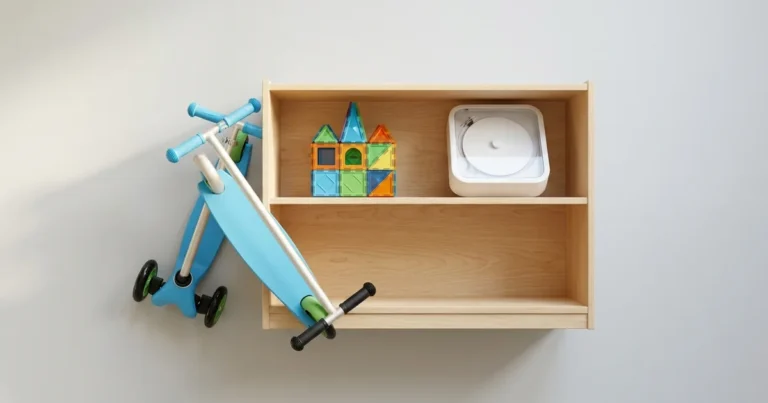
Not every educational toy is about sitting at a table. Gross motor development, balance, coordination, and spatial awareness are just as important to long-term cognitive growth as fine motor skills, and active toys are an essential part of a well-rounded toy collection. A foldable kick scooter is a great example of a toy that looks purely recreational but is quietly building core strength, balance, spatial judgment, and confidence with every ride. The foldable design also matters practically for UAE families living in apartments, since it can be stored compactly between uses and brought along easily to parks, community courtyards, or weekend outings.
Puzzles and Problem-Solving Toys
Puzzles remain a quiet classic because they teach patience, pattern recognition, and spatial reasoning without needing batteries, screens, or complicated setup. From simple wooden shape puzzles for toddlers to intricate 500-piece challenges for older children, this category scales smoothly with age and rarely goes out of style.
Pretend Play and Social-Emotional Toys
Role play toys, from kitchen sets to doctor kits to dollhouses, teach empathy, language, and social negotiation skills, especially when played with siblings or friends. These toys also give parents a gentle window into how their child is processing daily experiences, since children often reenact real-life scenarios during pretend play.
Safety First: What Every UAE Parent Should Check Before Buying
No matter how impressive a toy’s educational claims are, safety always comes first. Before adding any toy to your cart this year, run through this checklist.
Check the Age Label, Every Time
Age recommendations exist because of real testing around choking hazards, part sizes, and skill complexity. Even if your child seems “advanced,” small parts rated for 6 plus should stay away from a 3-year-old’s reach, especially in homes with multiple children of different ages.
Inspect Material Quality
Run your fingers along edges and seams. Quality educational toys should feel smooth, with no sharp plastic burrs, loose threads, or flaking paint. Strong odors from plastic or paint can be a red flag worth avoiding entirely.
Look for Secure Small-Part Construction
For magnetic toys especially, check that magnets are securely embedded and cannot be pried loose by curious fingers. Loose magnets are a serious ingestion hazard, so this is one area where buying from a trusted retailer with proper quality control genuinely matters.
Test Stability for Ride-On and Active Toys
For toys like scooters, check the weight capacity, wheel grip, and folding mechanism lock before your child’s first ride. A scooter that folds unexpectedly mid-use is a real safety risk, so always test the lock mechanism yourself a few times before handing it over.
Always Supervise Early Use
Even the safest, top rated educational toy benefits from a first supervised session. This lets you confirm the toy behaves as expected and gives you a natural opportunity to explain any usage rules, such as helmet use for scooters or not putting small magnetic pieces near the mouth.
Spotlight: A Closer Look at Graflo’s Top Picks
To bring all of this guidance into something concrete, here is a closer look at three toys that consistently reflect everything outlined above, safety, skill-building, durability, and long-term play value.
65-Piece Magnetic Train Set
This set strikes a balance between manageable scale and real building potential. It is ideal for a child building their first independent structures, and the magnetic connections make assembly satisfying even for smaller hands still developing fine motor precision. Parents often find this is the set that first reveals a child’s natural interest in construction or engineering-style play.
178-Piece Magnetic Train Set
For families ready to go bigger, this expanded set opens the door to collaborative building between siblings, more intricate track designs, and longer periods of focused, independent play. Because it shares the same magnetic connection system as the 65-piece set, families can combine both for even more ambitious builds, which is a great long-term value consideration.
Foldable Kick Scooter
This is the toy we most often recommend as a counterbalance to screen-heavy or sedentary play. It is compact enough for UAE apartment living, sturdy enough for daily use, and genuinely effective at building balance, coordination, and the kind of outdoor confidence that supports both physical and emotional development.
How to Match Toys to Your Child’s Developmental Stage
Rather than shopping by trend, try shopping by observation. Spend a week paying attention to what naturally captures your child’s focus, stacking things, asking “why” questions, moving constantly, or acting out stories with whatever is nearby. This tells you far more about what toy category will succeed than any bestseller list.
A general rule of thumb: if your child is constantly moving and seeking physical challenge, prioritize active play toys. If they linger over small details and like fitting pieces together, construction and puzzle toys will likely hold their attention longest. If they talk to their toys, assign them voices, or create little storylines, pretend play sets will likely be the highest-value purchase.
Mixing Toy Categories for Balanced Development
The strongest toy collections are not built around one category alone. A thoughtful mix might include one open-ended building toy, one active outdoor toy, one puzzle or logic toy, and one pretend play or social toy. This mix ensures a child is developing fine motor, gross motor, logical, and social-emotional skills across their overall play time, rather than overloading one area.
Budget Guide: Shopping for Educational Toys in AED
Value matters just as much as developmental benefit, especially when building a toy collection over time rather than buying everything at once. Here is how to think about budget allocation without compromising on quality or safety.
Prioritize Toys With Longer Play Lifespans
A toy priced a little higher in AED but used consistently for a year or more is a better investment than several cheaper toys abandoned within weeks. Modular toys like magnetic building sets are a strong example, since they can be expanded over time rather than replaced entirely.
Spread Purchases Across Occasions
Rather than buying a large toy collection all at once, consider spacing purchases across birthdays, school holidays, and seasonal milestones. This also helps you observe which toy categories your child gravitates toward before investing further in that direction.
Consider Shared or Expandable Sets
For siblings, toys that can be shared or combined, like two magnetic sets of different sizes, offer better long-term value than buying entirely separate toy types for each child.
Tips for Encouraging Learning Through Play at Home
Owning a great toy is only half the equation. How it is introduced and supported at home matters just as much for maximizing its educational value.
Let Children Lead the Play
Resist the urge to correct or direct every step. Part of the educational value of open-ended toys comes from children experimenting, failing, and adjusting on their own terms.
Rotate Toys Instead of Leaving Everything Out
Keeping every toy accessible at all times can actually reduce engagement. Rotating a smaller selection every couple of weeks keeps interest fresh and makes each toy feel newly exciting when it reappears.
Join In, But Don’t Take Over
A few minutes of parent involvement, asking questions about what your child is building or why a character is doing something in pretend play, can deepen the learning without turning play into a lesson.
Create a Dedicated, Safe Play Space
A consistent play area, even a small corner, helps children feel ownership over their play and makes supervision easier for parents, especially with toys that include small magnetic pieces.
Common Mistakes Parents Make When Buying Educational Toys
Even well-intentioned parents fall into a few predictable traps when shopping for educational toys. Being aware of these can save both money and frustration.
Buying for the Age You Wish Your Child Was
It is tempting to buy slightly advanced toys hoping a child will “grow into them,” but this often leads to frustration or safety risks. Buy for your child’s current stage, with maybe one step of appropriate challenge built in.
Overestimating Novelty, Underestimating Open-Ended Play
Flashy, single-function toys often excite in the first hour and get ignored after that. Toys that allow multiple types of play tend to earn their place as long-term favorites.
Ignoring Storage and Space Realities
A toy that is wonderful on paper but takes up too much space in a UAE apartment will likely end up unused. This is part of why compact, foldable designs, like a foldable scooter, are so popular among space-conscious families.
Skipping the Safety Check
In the excitement of a good deal, it is easy to skip double-checking age ratings or material safety. Make this a non-negotiable step every single time, regardless of how trusted the brand appears.
Trends Shaping Educational Toys in 2026
A few clear patterns are shaping what UAE parents are prioritizing this year.
Screen-Free STEM Is Having a Moment
As screen time concerns grow, parents are actively seeking hands-on STEM alternatives, physical building sets, gear mechanisms, and magnetic construction, that deliver the same engineering-style thinking without a screen involved.
Modular, Expandable Toy Systems
Rather than single-use toys, families are gravitating toward systems that can be added to over time, like expanding a magnetic train collection from 65 to 178 pieces, which protects the original investment and keeps the toy relevant for longer.
Balanced Indoor-Outdoor Play Collections
With more awareness around the importance of gross motor development, parents are more intentionally pairing indoor construction or puzzle toys with outdoor active toys like scooters, rather than focusing on just one category.
Transparency Around Safety Standards
UAE parents are increasingly reading material safety information before purchasing, not just relying on branding, which is pushing retailers to be clearer about certifications and sourcing.
Conclusion
Choosing from the sea of options labeled as the top rated educational toys 2026 does not need to be overwhelming once you know what to look for. Prioritize safety first, match the toy to your child’s actual developmental stage rather than a trend, and lean toward open-ended, expandable options that grow in value rather than losing relevance after a few weeks. Whether that means starting with a manageable magnetic building set, expanding into a larger collection, or balancing indoor construction play with an outdoor confidence-builder like a foldable scooter, the goal is the same, play that is genuinely good for your child, and genuinely worth your trust as a parent.
Frequently Asked Questions
What age should children start with magnetic building toys?
Most magnetic building sets are appropriate from around age 3, as long as pieces are large enough to avoid choking risk and magnets are securely sealed inside the components. Younger children can start with simple shapes and stacking, while older children can move on to larger sets like a 178-piece collection for more advanced builds.
How do I know if a toy is truly educational and not just marketed that way?
A genuinely educational toy should clearly support a specific skill, such as fine motor control, logical sequencing, or language development, and should allow for more than one way to play. If a toy only offers a single fixed activity with no room for creativity or progression, it is likely more novelty than educational value.
Are foldable scooters safe for young children in the UAE?
Foldable scooters can be very safe when matched to the correct age and weight recommendation, used with a helmet, and supervised during early use. Always check that the folding mechanism locks securely before each ride, and choose a smooth, safe riding surface such as a community park or courtyard.
How many educational toys does a child actually need at once?
Quality matters far more than quantity. A balanced collection of around four to six toy categories, including one building toy, one active play toy, one puzzle or logic toy, and one pretend play toy, is usually enough to support well-rounded development without overwhelming the child or the home.
What is the best way to budget for educational toys in AED?
Focus spending on toys with long-term play value, such as expandable magnetic sets or durable active toys, rather than multiple cheaper, single-use items. Spacing purchases across birthdays and seasonal milestones also helps you observe what your child genuinely enjoys before investing further in that category.