Stepping into the toys world can be overwhelming for any mother, especially with so many options claiming to make your child smarter, faster, and better prepared for the future. But among the endless aisles of plastic action figures and flashy, noisy gadgets, a specific category stands out as truly transformative: STEM toys. If you find yourself asking, “What exactly are STEM toys, and why does my child need them before even starting school?”—you are in the exact right place.
As children grow, their brains are like sponges, eagerly absorbing every interaction, texture, and physical rule of the universe. In this comprehensive guide, we will dive deep into how these brilliant playthings can shape your preschooler’s future, why they are the ultimate screen-free alternative, and how to choose the right ones.
What Exactly Does “STEM” Mean for a Preschooler?
You have likely heard the acronym STEM in educational discussions. It stands for Science, Technology, Engineering, and Mathematics. When applied to high school or college, this brings to mind coding, advanced calculus, and robotics. But what on earth does it mean for a 3-year-old?
For preschoolers, STEM is not about memorizing the periodic table or writing software. It is about laying the foundational cognitive framework for how the world works.
Here is what STEM looks like in early childhood:
- Science: Observing cause and effect. (e.g., “If I push this block, the tower falls.”)
- Technology: Using tools to make a job easier. (e.g., “Using a plastic lever to separate two magnetic tiles.”)
- Engineering: Designing, building, and understanding spatial awareness. (e.g., “How high can I build this tower before gravity pulls it down?”)
- Mathematics: Recognizing patterns, sorting by color, and understanding geometry and volume. (e.g., “Two small triangles make one big square.”)
STEM toys are simply playthings designed to naturally encourage these four areas of exploration through hands-on, open-ended play.
Why Before School? The Critical Window of Brain Development
You might be wondering, Shouldn’t my child just relax and play now? They will learn math and science when they go to school!
While traditional schooling will formally teach these subjects, the neurological groundwork is laid much earlier. Between the ages of 3 and 5, a child’s brain is highly plastic and exceptionally active. In fact, during these early years, a child’s brain forms over 1 million new neural connections every single second.
When a child engages with STEM toys during this critical window, they are doing much more than passing time. They are actively building the neural pathways responsible for logic, critical thinking, and problem-solving. Waiting until elementary school to introduce these concepts is like waiting until a house is fully built before deciding to pour the foundation.
By introducing STEM concepts through play in the preschool years, you ensure that when your child eventually encounters formal math and science, they do not view them as foreign, intimidating subjects, but rather as familiar concepts they have been playing with for years.
Traditional Toys vs. STEM Toys: What is the Difference?
To truly understand the value of the STEM toys world, it helps to compare them to traditional, “closed” toys.
A closed toy dictates how the child should play with it. An open-ended STEM toy allows the child to dictate the play.
| Feature | Traditional / “Closed” Toys | STEM / “Open-Ended” Toys |
| Primary Function | Entertain the child. | Engage the child’s mind. |
| Replay Value | Low (Child gets bored once they figure out the single function). | High (The toy can become something new every day). |
| The “Doer” | The toy does the work (e.g., moves, lights up, sings). | The child does the work (e.g., builds, stacks, connects). |
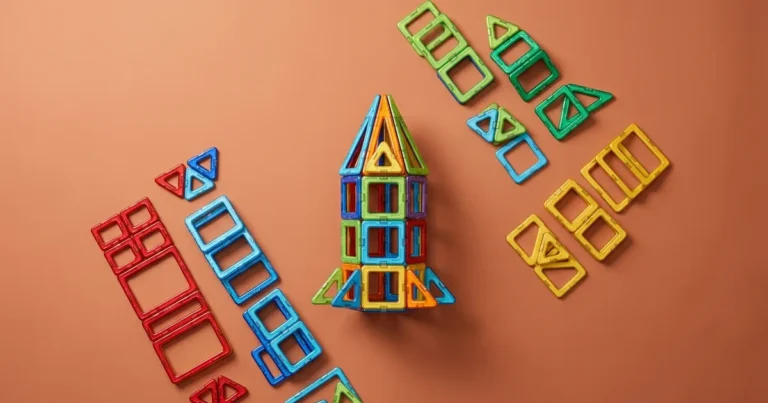
| Outcome | Fixed (A toy car is always a toy car). | Limitless (Magnetic tiles can be a castle, a rocket, or a garage). |
| Error Handling | If it breaks or stops working, the play ends. | Failure (a falling tower) is part of the learning process. |
When you invest in an open-ended STEM toy, you are not buying a single experience; you are buying a toolkit that your child will use to invent hundreds of different experiences over several years.
Top 5 Benefits of STEM Toys for Early Childhood Development
The benefits of integrating STEM toys into your child’s daily routine extend far beyond academic preparation. Here is how these toys impact holistic development:
1. Fostering Unshakable Problem-Solving Skills
When a child tries to build a bridge out of magnetic tiles and it collapses in the middle, they face a problem. A STEM toy encourages them to pause, assess what went wrong (maybe it needs a center support?), and try again. This iterative process of trial and error builds immense cognitive resilience. They learn that failure is not a stopping point, but rather a source of data for their next attempt.
2. Enhancing Fine Motor Skills and Hand-Eye Coordination
Connecting small pieces, aligning magnets, and carefully balancing wooden blocks require precision. These micro-movements strengthen the small muscles in a child’s hands and fingers. This physical development is a crucial prerequisite for later skills, such as holding a pencil correctly, tying shoelaces, and using scissors.
3. Boosting Spatial Awareness and Geometry
Before a child can understand geometry on a chalkboard, they need to feel it in their hands. STEM toys allow children to physically manipulate 3D shapes. They learn organically that a wider base provides more stability, or that combining certain shapes creates entirely new ones. This tactile understanding of space and volume is invaluable.
4. Encouraging Independent, Focused Play (The iPad Alternative)
One of the biggest struggles for modern parents is managing screen time. The rapid dopamine hits provided by tablets and smartphones can severely reduce a child’s attention span. STEM toys offer a healthy alternative. Because they require active mental engagement, they induce a state of “flow.” It is highly common for a child who usually cannot sit still for 5 minutes to spend 45 minutes quietly constructing a magnetic fortress.
5. Building Confidence and Self-Esteem
There is a specific look of sheer pride on a child’s face when they finally complete a complex structure they have been working on. Because STEM play is driven entirely by the child’s own effort—without the help of batteries or automated mechanisms—the sense of achievement they feel is 100% genuine and earned. This builds profound self-esteem.
Busing the 3 Biggest Myths About STEM Toys
As the popularity of STEM toys grows, so do the misconceptions. Let us clear up a few common myths:
- Myth 1: STEM toys are heavily digital and require screens.
- Fact: The best STEM toys for preschoolers are entirely analog and screen-free. Magnetic tiles, wooden building blocks, and connecting sticks are pure, physical, tactile experiences that protect your child’s eyes and attention span.
- Myth 2: My child is too creative and artsy for STEM; they prefer drawing.
- Fact: STEM and Art go hand-in-hand (often referred to as STEAM). Building a colorful mosaic out of magnetic tiles, or designing a structurally sound yet beautiful castle, requires immense creativity.
- Myth 3: STEM toys are mostly for boys.
- Fact: Engineering, spatial logic, and mathematics are universal. Girls benefit exactly as much as boys do from building and problem-solving play. Providing these toys to girls at a young age helps close the gender gap in STEM fields later in life.
How to Choose the Perfect STEM Toy for Your Preschooler
If you are ready to introduce STEM into your home, how do you choose the right product? Keep these three golden rules in mind:
1. Prioritize Open-Ended Design
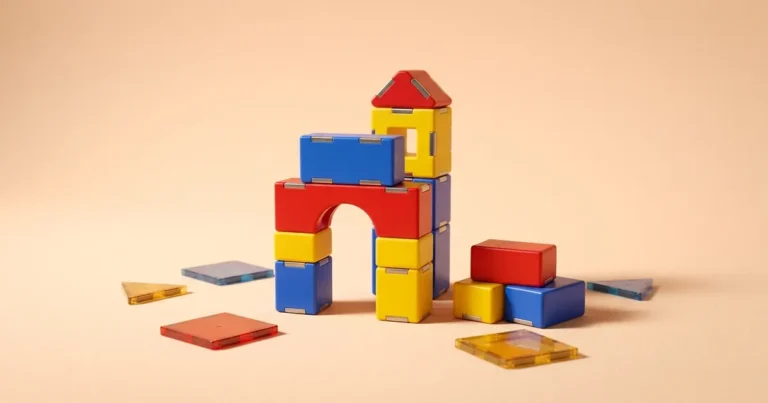
Ask yourself: Can this toy be used in more than one way? If the answer is no, skip it. You want toys like building blocks, magnetic tiles, or construction sticks that can be reinvented daily based on your child’s mood and imagination.
2. Look for Scalability
The best educational toys grow with your child. A 3-year-old might use magnetic tiles simply to sort colors or build flat squares on the floor. A 5-year-old will use the exact same set to build 3D cubes and tall towers. An 8-year-old will use them to build complex architectural domes and marble runs. Invest in high-quality sets that will survive years of play.
3. Insist on Safety and Durability
Preschoolers are rough on their toys. Ensure that the STEM toys you buy are made from non-toxic materials (BPA-free plastic, food-grade paints) and feature strong structural integrity. For magnetic toys, ensure they use ultrasonic welding so that the small magnets are securely locked inside the plastic housing and cannot break loose.
Graflo’s Top Recommendations for Your Preschooler
If you are looking to start or expand your child’s collection, here are highly recommended, safety-certified STEM toys available in our store that perfectly align with early childhood development:
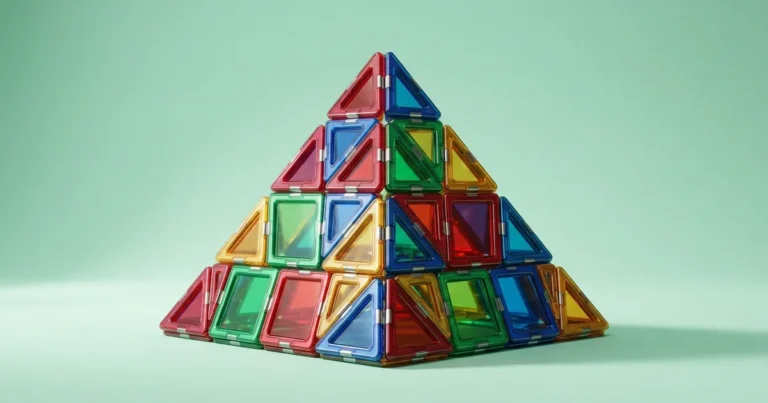
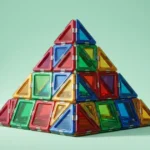
- GRAFLO 140pcs / 150pcs Magnetic Building Tiles: The absolute gold standard of early STEM. These sets introduce geometry, magnetism, and architectural engineering in a bright, colorful, and incredibly safe package. They are the ultimate cure for the “I’m bored” complaints on a weekend.
- Magnetic Building Sticks: Excellent for younger children developing their grip. These sticks teach the fundamentals of structural joints and flexibility, allowing children to build molecular-like structures and domed tents.
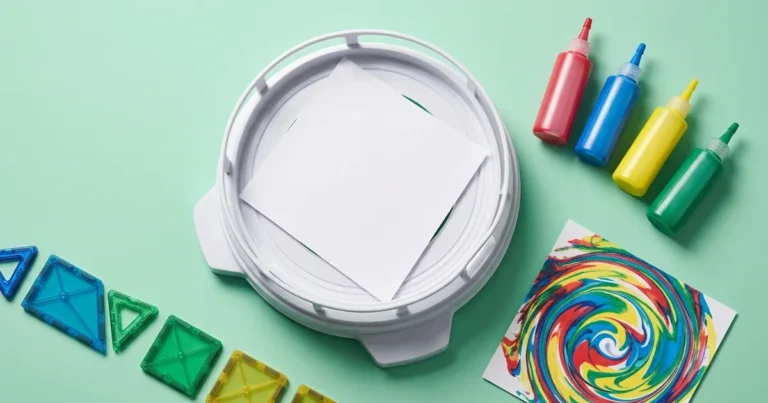
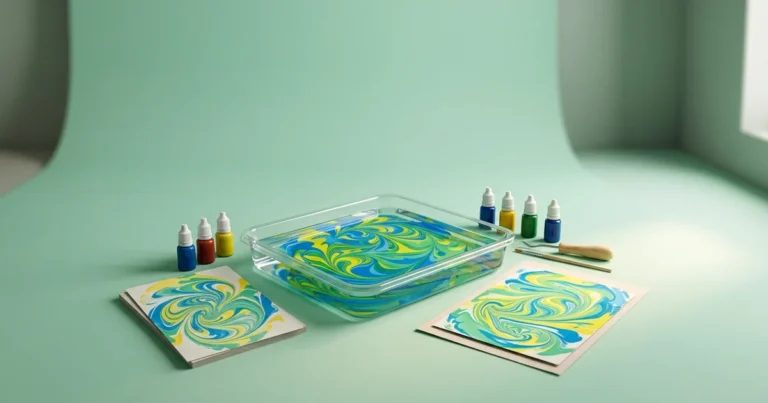
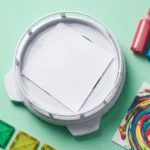
- Educational Art & Craft Sets: For a blend of science and art, tactile play kits (like Washable Finger Paints and Marbling Paint Kits) teach children about color mixing, fluid dynamics, and material properties through highly engaging sensory play.
Parent’s Playbook: How to Engage Without Taking Over
Buying the toy is only step one. How you interact with your child while they play is just as important. Here are a few tips for parents to maximize the STEM experience:
- Do not build it for them. It is tempting to step in and build a perfect tower to show them how it is done. Instead, sit back. Let them struggle a little.
- Ask open-ended questions. Instead of saying, “Put the red block there,” ask, “Why do you think the tower keeps leaning to the left?” or “What shapes do you need to make a roof?”
- Celebrate the process, not just the result. If their structure collapses, say, “Wow, that was a spectacular crash! I wonder how we can make it stronger this time?” This reinforces the idea that experimentation is fun and failure is not a big deal.
Final Thoughts
Navigating the educational toys world does not have to be a stressful chore. By focusing on STEM toys that prioritize open-ended play, creativity, and problem-solving, you are giving your preschooler an incredible head start. You are not just buying them a toy; you are gifting them a laboratory for their imagination, a tool for their cognitive development, and a joyful alternative to digital screens.
The next time your child sits down with a pile of magnetic blocks, watch closely. They are not just playing; they are engineering their future, one piece at a time.