Last updated: September 6, 2026
When a child cannot yet find the words for what they feel, a crayon, a paintbrush, or a lump of playdough often can. Art therapy activities for kids are not about producing a pretty picture for the fridge, they are a gentle, evidence-backed way to help children process big emotions, build confidence, and develop the fine motor and cognitive skills they need for school and life. Whether your child is anxious about starting a new nursery, working through a house move, or simply needs a calm outlet after a long day, art therapy activities are one of the safest and most accessible tools a parent has at home.
What Is Art Therapy for Kids, Really?
Art therapy is a recognised form of expressive therapy that uses drawing, painting, sculpting, and other creative processes to help a person understand and manage their feelings. Professional art therapists are trained clinicians, but many of the core principles, self-expression without judgement, sensory engagement, and process over product, can be safely brought into everyday family life without a clinical setting.
For children specifically, art therapy activities work because kids are naturally drawn to sensory, hands-on exploration long before they have the vocabulary to say “I feel frustrated” or “I’m scared of the dark.” A scribbled storm of red and black lines on paper can say all of that instantly. As a parent, you do not need a therapy degree to offer these activities at home. You simply need the right materials, a safe space, and the patience to let your child lead.
How Art Therapy Differs from a Regular Craft Session
A normal craft activity usually has a clear end goal, like making a paper plate lion that looks like the picture on Pinterest. Art therapy activities, on the other hand, are open-ended. There is no wrong way to fill a page. The focus shifts from the finished product to the process, how the child chooses colours, how hard they press the crayon, whether they talk while they work or stay silent. This shift is what makes art therapy such a powerful window into a child’s inner world.
Why Art Therapy Activities Matter for Child Development
Beyond emotional processing, art therapy activities for kids support several areas of development at once, which is part of why paediatricians and early years educators recommend regular creative play.
1. Emotional Regulation
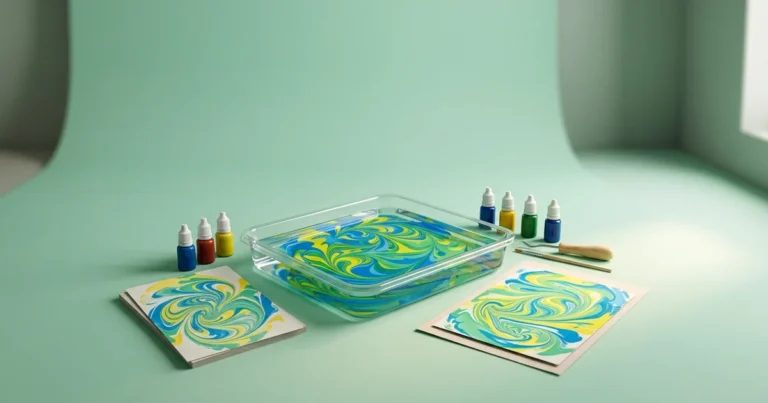
Repetitive, rhythmic art movements, like swirling paint in circles or pressing playdough flat and rebuilding it, have a calming, almost meditative effect on the nervous system. This is especially helpful for children who struggle with tantrums, separation anxiety, or sensory overload.
2. Fine Motor Skill Development
Gripping a crayon, squeezing a paint tube, or pinching clay all strengthen the small muscles in the hand and wrist that your child will later need for handwriting. Activities like finger painting are particularly good for toddlers and preschoolers because they engage the whole hand without requiring a precise grip.
3. Language and Communication
Art gives non-verbal or shy children a bridge to conversation. A parent can ask, “Tell me about this part of your picture,” and often a child will open up about their day, their worries, or their friendships far more freely than if asked directly.
4. Confidence and Self-Esteem
Because there is no “wrong” answer in art therapy, children experience a rare kind of success, the success of simply trying. Over time, this builds genuine confidence that carries into schoolwork and social situations.
5. Focus and Patience
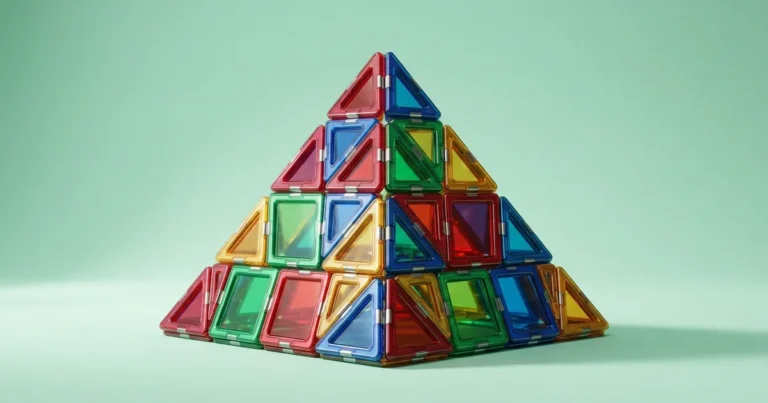
Structured but creative play, such as building a scene with connected pieces or working through a layered art project, teaches children to sit with a task longer, plan ahead, and tolerate small frustrations, all valuable pre-school skills.
Signs Your Child Might Benefit from Art Therapy Activities
You do not need a diagnosis or a referral to start using art therapeutically at home. Consider introducing more structured art therapy activities if your child:
- Has recently experienced a big change, such as a new sibling, a house move, or starting school
- Struggles to describe how they feel, or says “I don’t know” often when asked
- Has frequent meltdowns that seem to come from nowhere
- Is naturally quiet or introverted and prefers solitary play
- Shows signs of anxiety, such as clinginess, trouble sleeping, or stomach aches with no medical cause
- Simply loves drawing, painting, or building and asks for it often
If your child is showing persistent, intense distress, it is always worth speaking to a paediatrician or a licensed child therapist. Home-based art activities are a wonderful supplement to daily life, but they are not a replacement for professional support when it is needed.
Safety First: Setting Up Art Therapy at Home
Because young children explore with their hands and mouths, safety has to come before creativity. A few non-negotiables for any parent setting up an art corner at home:
Choose Non-Toxic, Age-Appropriate Materials
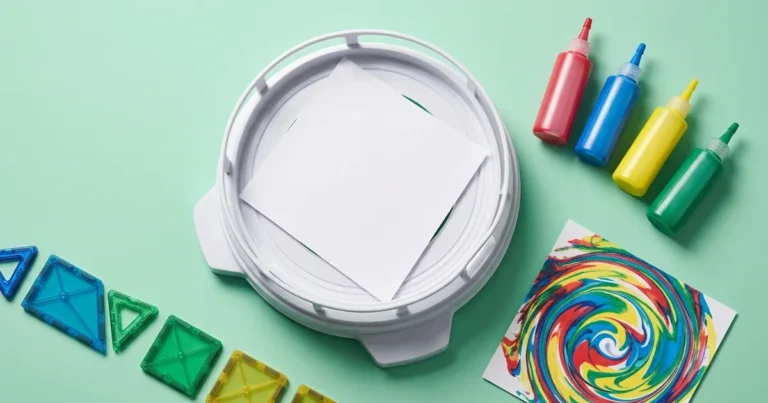
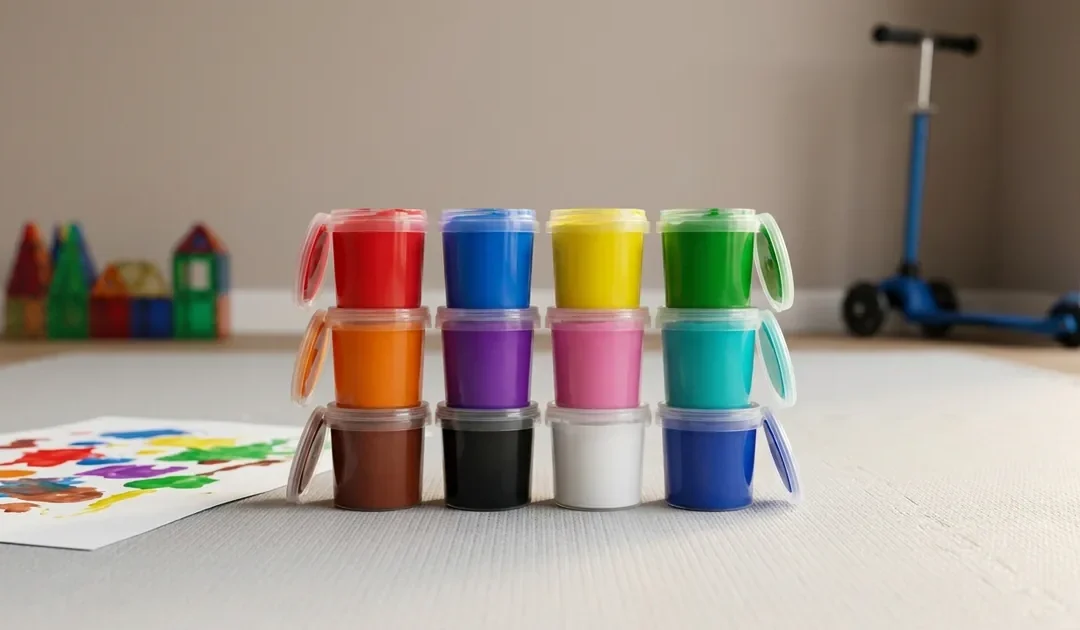
Always check that paints, crayons, and clays are labelled non-toxic and suitable for your child’s age group. Water-based, washable options are far easier to clean up and reduce the worry of stains on clothes, furniture, or little hands. A good example is a set like our finger paint for kids in 12 colors, designed to be gentle on skin and simple to wash off, so parents can relax and let toddlers explore texture and colour freely.
Supervise, Don’t Control
Stay close enough to guide safe use of materials (no eating paint, no throwing brushes) but resist the urge to correct the artwork itself. Comments like “the sky isn’t purple” undo the safe, judgement-free space that makes art therapy effective.
Protect the Space, Not the Outcome
Lay down a washable mat or old bedsheet, roll up sleeves, and let go of the idea that the table needs to stay spotless. A little mess is part of the process, and it is far easier to plan for it than to fight it mid-session.
Mind Choking Hazards for Younger Siblings
If you have a toddler and an older child sharing a play space, keep smaller art supplies, like buttons for collage or small clay beads, away from children under three. Always supervise mixed-age art sessions closely.
Age-by-Age Art Therapy Activities for Kids
What works for a three-year-old will frustrate a seven-year-old, and vice versa. Tailoring activities to developmental stage keeps the experience calming rather than stressful.
Ages 3 to 5: Sensory-First Exploration
At this age, the process matters far more than the result. Children this young are still developing hand-eye coordination and emotional vocabulary, so keep instructions simple and sensory-rich.
- Finger painting free-for-all: Let your child paint with fingers instead of brushes to engage touch as well as sight. Ask open questions like “How does the paint feel?” rather than directing what to paint.
- Emotion colour matching: Introduce simple colour-to-feeling associations (red for angry, blue for calm, yellow for happy) and let your child paint how they feel that day.
- Playdough squeeze and rebuild: Rolling, squeezing, and flattening dough is deeply regulating for little nervous systems and strengthens hand muscles at the same time.
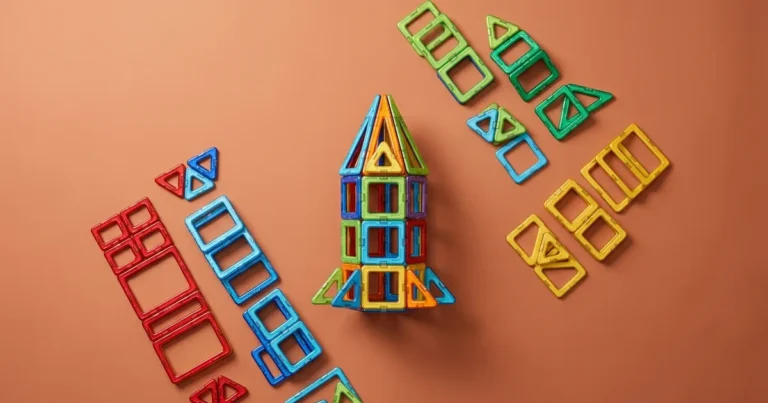
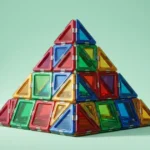
- Building as art: Constructive play is a close cousin of art therapy. A set like our magnetic train set for kids (65 pieces) lets preschoolers build, dismantle, and rebuild their own little world, which is calming, repetitive, and creatively satisfying in the same way painting is. Browse more options suited to this stage in our ages 3 to 5 years collection.
Ages 6 to 8: Story-Driven and Reflective Art
By age six, children have a richer vocabulary and can reflect on their art more deliberately. Activities can introduce light structure while still leaving room for open expression.
- Draw your day: Ask your child to draw three things that happened that day, one happy, one hard, and one they are looking forward to tomorrow. This builds emotional literacy through a low-pressure format.
- Worry jar drawings: Have your child draw their worry on a small piece of paper, fold it, and place it in a jar. This externalises the worry and gives a sense of control over it.
- Collaborative mural: Roll out a long sheet of paper and invite the whole family to add to a shared drawing. This builds social connection alongside self-expression.
- Build-and-tell stories: Older children enjoy more complex builds that let them narrate a story as they go. A larger set like the magnetic train set for kids (178 pieces) gives room for elaborate layouts, encouraging patient, focused, creative problem-solving that mirrors the benefits of traditional art therapy. Explore more age-matched picks in our ages 6 to 8 years collection.
Simple Art Therapy Activities to Try This Week
If you are short on time, here are five activities you can set up with materials you likely already have at home, each taking 15 to 30 minutes.
1. The Feelings Wheel
Draw a large circle divided into six or eight sections. Ask your child to fill each section with a colour or scribble that represents a different feeling, happy, angry, calm, excited, worried, proud. Talk through each section together afterward, no right or wrong answers.
2. Torn Paper Collage
Give your child a stack of old magazines or coloured paper and let them tear (not cut) shapes to glue onto a page. The physical act of tearing can be a great outlet for pent-up frustration in a safe, contained way.
3. Family Portrait, Abstract Style
Instead of asking for a realistic drawing, ask your child to represent each family member with a colour, shape, or squiggle instead of a face. This often reveals surprising insight into how your child sees family dynamics.
4. Safe Place Drawing
Ask your child to draw a place, real or imaginary, where they feel completely safe and calm. Keep this drawing somewhere visible, and refer back to it during moments of anxiety as a grounding tool.
5. Sensory Painting with Texture
Mix a little sand, rice, or salt into washable paint to add a textural element. This is particularly effective for children who are highly sensory-seeking and benefit from extra tactile stimulation during art time.
How to Talk to Your Child During Art Therapy Sessions
The words you use while your child creates matter as much as the materials you provide. A few guiding principles:
- Ask open questions, not leading ones. Instead of “Is that a sad face?” try “Tell me about this part.”
- Avoid praise tied to skill. Rather than “That’s beautiful,” try “I can see you worked really hard on that” or “Thank you for sharing that with me.”
- Sit alongside, not across. Sitting beside your child rather than facing them can feel less like an interview and more like companionship.
- Let silence happen. Not every session needs conversation. Sometimes the value is simply in the quiet, focused activity itself.
- Follow their lead on sharing. If your child does not want to explain their drawing, respect that. The therapeutic benefit does not require full disclosure every time.
Building a Calm Art Corner at Home
You do not need a dedicated playroom to make art therapy a regular part of family life. A small, consistent space works just as well.
- Pick a low-traffic corner away from screens and noise, even a corner of the dining table can work if it is used consistently.
- Keep supplies visible and accessible in labelled bins so your child can choose materials independently, which builds a sense of ownership over the activity.
- Rotate materials seasonally to keep interest fresh, swap in new textures, colours, or tools every few weeks rather than overwhelming the space with everything at once.
- Keep a shelf for finished pieces or a simple folder, so your child sees their creative history valued without pressure to keep every single piece forever.
Common Mistakes Parents Make (and How to Avoid Them)
Even well-meaning parents can accidentally undermine the benefits of art therapy activities. Watch out for these common pitfalls:
- Correcting the artwork. Suggesting a child “fix” proportions or colours shifts focus from feeling to performance.
- Turning it into a test. Quizzing a child on what every mark means can make future sessions feel like an interrogation rather than a safe space.
- Rushing the process. Art therapy activities work best without a strict timer. Even ten unhurried minutes is more valuable than thirty rushed ones.
- Comparing siblings. Every child’s art style and pace is different, comparisons can quietly damage the confidence these activities are meant to build.
When to Consider a Professional Art Therapist
Home art activities are wonderful for everyday emotional support, but there are moments when a licensed art therapist or child psychologist is the right next step. Consider seeking professional guidance if your child shows persistent withdrawal, extreme or escalating anger, signs of trauma after a specific event, or if their art repeatedly features distressing themes that concern you. A professional can offer trained interpretation and a structured therapeutic plan that goes beyond what a parent can safely provide at home. This is not a failure on your part, it is simply recognising that some situations need specialised support, much like you would see a doctor for a persistent physical symptom.
Conclusion
Art therapy activities for kids do not require a therapist’s office, expensive supplies, or a perfect Pinterest setup. They require a safe corner, a few non-toxic materials, and a parent willing to sit alongside their child without judgement. Whether it is a finger-painted storm of feelings, a quietly built magnetic train world, or a torn paper collage, these small, regular moments of creative expression help children build emotional resilience, fine motor confidence, and a lifelong comfort with their own feelings. Start small this week, choose one activity, set aside fifteen unhurried minutes, and watch what your child chooses to show you.
Frequently Asked Questions
What age should children start art therapy activities?
Children can benefit from simple, sensory-based art activities from as young as two years old. At this age, keep sessions short and focus on textures and colours rather than structured tasks. From age six onward, children can engage with slightly more reflective activities, like drawing their day or a worry jar exercise.
Do I need special training to do art therapy activities with my child at home?
No, you do not need clinical training to offer everyday art therapy activities. The key is providing a safe, non-toxic, judgement-free space and asking open questions rather than directing the outcome. If your child shows signs of significant distress or trauma, a licensed art therapist can offer deeper, structured support.
How often should we do art therapy activities at home?
Even two or three short sessions a week, around 15 to 30 minutes each, can make a meaningful difference to a child’s emotional regulation and fine motor development. Consistency matters more than duration, a regular small habit is more effective than occasional long sessions.
What materials are safest for toddlers doing art therapy activities?
Choose washable, non-toxic paints and clays specifically labelled safe for young children, and always supervise sessions closely. Products like washable finger paints are a good starting point since they are gentle on skin and easy to clean off surfaces and clothing.
Can building and construction toys count as art therapy activities?
Yes, open-ended constructive play shares many of the same benefits as traditional art therapy, including calming repetition, fine motor development, and creative self-expression. Building sets that let a child design and redesign their own layout, like magnetic train sets, can serve a similar therapeutic purpose to drawing or painting.