Last updated: August 30, 2026
Choosing the right scooter for your child is not about picking the flashiest colour on the shelf, it is about matching the scooter’s design to your child’s balance, coordination, and confidence at their exact stage of development. A scooter that is too advanced can lead to falls and frustration, while one that is too babyish will bore an older child and get pushed to the back of the garage within a week. This guide breaks down exactly how to choose a kids scooter by age, so you can shop with confidence and keep your little one safe from the very first ride.
In the UAE, smooth community pathways, mall promenades, and cooler evening weather from October through April make scooting one of the most popular outdoor activities for children. But with so many models available, from three-wheeled toddler scooters to sleek two-wheeled kick scooters, parents often feel overwhelmed. Below, we walk through every age group, the safety features that matter most, and practical shopping tips so you never have to guess again.
Why Age-Appropriate Sizing Matters So Much
A scooter is not a one-size-fits-all toy. Children’s centre of gravity, leg strength, and reaction times change dramatically between ages 2 and 10. A scooter designed for the wrong age group can create real safety risks:
- Too big: Handlebars set too high force a child to stretch upward, throwing off their balance and making it harder to react quickly to obstacles.
- Too small: A scooter designed for toddlers will feel unstable and slow for an older child, tempting them to lean too far forward or ride recklessly to compensate.
- Wrong wheel count: Three or four wheels provide the wide stability young children need, while two wheels demand more advanced balance that most children only develop after age 5 or 6.
Getting the fit right the first time also saves money. A scooter matched correctly to your child’s age and skill level will get used for years, not months, because it grows with their confidence rather than holding them back or pushing them too far too soon.
Scooters for Toddlers (Ages 2 to 3)
At this age, children are still mastering basic walking coordination, so the goal is stability over speed. Toddler scooters should never be about going fast, they are about building confidence, encouraging outdoor play, and strengthening leg muscles in a controlled, safe way.
What to Look For
- Three or four wheels: Wide wheelbases prevent tipping and let toddlers stand comfortably with feet apart.
- Low deck height: A deck close to the ground reduces the distance of any potential fall and makes it easier for short legs to push off.
- Seated option: Many toddler scooters convert into a seated ride-on, which is ideal for children who are not yet confident standing and steering at the same time.
- Adjustable handlebar with a low starting height: Look for a range that starts low enough for a 2-year-old but can extend as they grow.
Safety Notes for Toddlers
Always supervise toddlers closely, even on flat, quiet paths. Choose a scooter with a wide, non-slip deck and rounded edges. Helmets are non-negotiable at this age too, even for slow-speed play, since toddlers have less developed reflexes to catch themselves during a fall. Keep rides short, 10 to 15 minutes, and always on soft or grassy ground when possible while they are still learning.
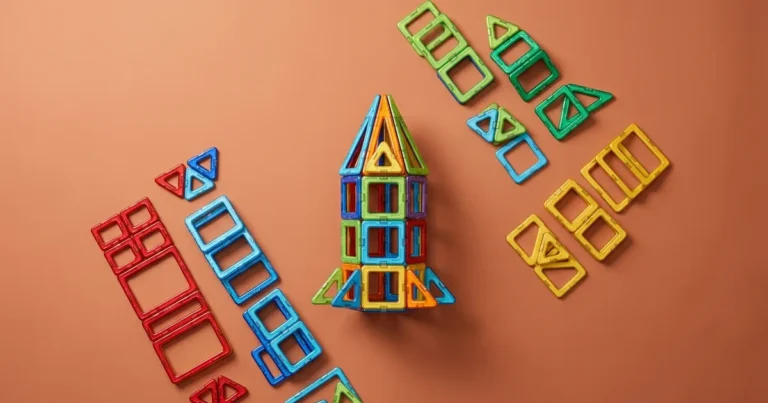
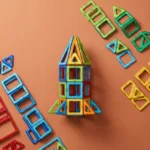
Indoor motor-skill toys work beautifully alongside outdoor scooter time at this age. Building fine motor control with something like the Graflo Magnetic Train for Kids (65 pcs) on rest days helps toddlers develop the hand-eye coordination and focus that also supports better balance and body awareness when they are back on their scooter.
Scooters for Preschoolers (Ages 3 to 5)
By age 3 to 5, most children have much better balance and are ready for slightly more independence, though they are still developing spatial awareness and quick reaction skills. This is often the golden age for the classic three-wheeled kick scooter.
What to Look For
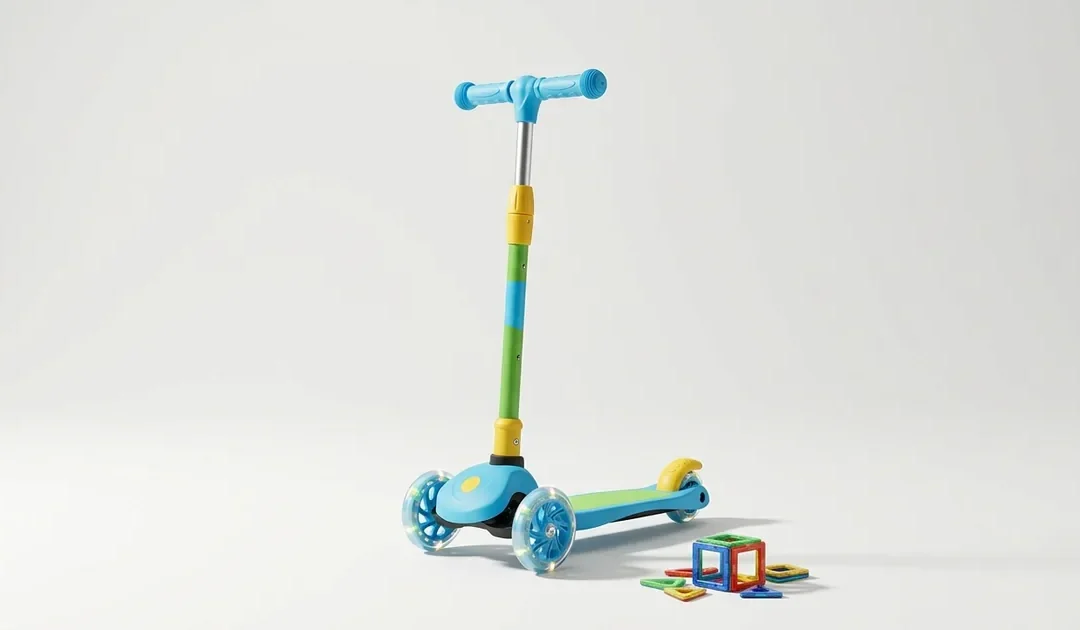
- Lean-to-steer three-wheel design: These scooters respond to body weight shifts rather than sharp handlebar turns, which suits developing coordination and reduces the risk of over-steering.
- Adjustable handlebar height: Your child should stand upright with a slight, comfortable bend in the elbows, never hunched over or reaching upward.
- Wider deck with grip texture: Preschoolers are still refining foot placement, so a textured, slightly wider deck reduces slipping.
- Weight capacity check: Confirm the scooter’s maximum weight limit comfortably exceeds your child’s current weight, allowing room to grow.
Building Confidence Gradually
At this stage, introduce gentle slopes and short community paths, but avoid busy areas with cyclists or pedestrians until your child can stop reliably using the rear brake. Practice the brake in a controlled, flat space first. Many parents find it helpful to set up a simple obstacle course with cones or chalk marks to build turning confidence in a safe, enclosed area like a compound courtyard or quiet park.
If you are shopping for a well-rounded set of age-matched toys and gear for this stage, browsing a dedicated ages 3-5 years collection can help you find complementary developmental toys that reinforce the same coordination and confidence-building skills scooting encourages.
Scooters for Early Elementary Kids (Ages 6 to 8)
This is typically when children transition toward two-wheeled scooters, assuming they have solid balance from prior scooter or bike experience. However, every child develops at their own pace, so do not feel pressured to switch just because of a birthday. Watch their actual riding skill rather than the calendar.
Signs Your Child Is Ready for a Two-Wheeler
- They can ride a three-wheeled scooter confidently without wobbling on straight paths.
- They can turn corners at a moderate pace without needing to slow to a crawl.
- They show interest in going faster or keeping up with older siblings or friends.
Key Features for This Age Group
- Larger wheels (100mm to 125mm): Bigger wheels roll more smoothly over small cracks and pebbles, which matters more as riding speed increases.
- Reinforced deck and frame: Look for aluminium alloy frames, which are lighter and more durable than plastic for this more active riding stage.
- Foldable design: Many 6 to 8 year olds start scooting to school or to the park independently, so a fold-down mechanism makes storage and transport far easier for both child and parent.
- Rear fender brake plus front hand brake (optional): Some models introduce a hand brake at this stage, which is excellent for building the fine motor control needed for cycling later on.
Protective gear becomes even more important here, since higher speeds and two-wheel balance mean falls can happen more suddenly. A properly fitted helmet, knee pads, and wrist guards should always be part of the package, not an optional extra. For families exploring toys and gear suited to this age bracket, our ages 6-8 years collection offers a good starting point for complementary indoor and outdoor activities that build on the same growing independence.
Scooters for Older Kids and Tweens (Ages 9 and Up)
Children aged 9 and above who have scootered regularly for a few years often move toward performance-oriented two-wheeled or even trick-style scooters. At this stage, the conversation shifts from basic stability to durability, speed control, and, in many cases, the beginning of stunt or park riding.
What Changes at This Age
- Higher weight capacity and reinforced components: Older kids ride harder and faster, so look for scooters explicitly rated for greater weight and rougher use.
- Solid or reinforced core wheels: If your child is interested in skate parks or ramps, wheels built for trick riding (often with a metal core) will hold up far better than standard hollow-core wheels.
- Taller maximum handlebar height: Growth spurts happen fast in this age range, so choose a model with plenty of extension range left.
- ABEC-rated bearings: Smoother, faster bearings matter more once children are riding longer distances or want more speed for commuting to school or friends’ houses.
Even confident, experienced riders in this age group should continue wearing a helmet at minimum, with knee and elbow pads strongly recommended anytime they are attempting new tricks, ramps, or unfamiliar terrain.
The Core Sizing Formula: Matching Handlebar Height to Your Child
Regardless of age, one universal rule applies: your child’s handlebar height should sit somewhere between their hip and waist when they are standing next to the scooter in flat shoes. Here is a simple way to check fit at home:
- Have your child stand up straight next to the scooter, feet together.
- Look at where the handlebar grips sit relative to their hip bone.
- The ideal range is roughly at the hip to just below the belly button for younger children, and hip to waist for older kids who want more control at speed.
- If your child needs to bend forward or reach upward to hold the grips, the height is not yet adjusted correctly.
Most quality scooters today offer adjustable handlebars with 3 to 5 height settings, so you rarely need to buy a new scooter for height reasons alone, only when your child outgrows the wheel size, weight capacity, or skill level of the model.
Wheel Type and Material: What Actually Matters
Parents often overlook wheels, but they significantly affect both safety and ride quality.
Polyurethane (PU) Wheels
The vast majority of kids’ scooters use PU wheels, which offer a good balance of grip, durability, and smoothness on pavement. Look for wheels rated at least 70mm for toddlers and preschoolers, and 100mm or above for elementary-age children who ride longer distances.
Wheel Size and Speed Control
Smaller wheels naturally limit top speed, which is actually a safety benefit for very young riders. As children develop better reflexes and braking control, larger wheels support faster, smoother rides without constant jarring on small cracks or uneven tiles common on UAE community pathways.
LED Light-Up Wheels
Many toddler and preschool scooters include light-up wheels that activate with motion. These are a fun bonus feature but also serve a real safety purpose, improving visibility if your child rides during early evening hours, which is popular in the UAE once temperatures cool down after sunset.
Weight Capacity: A Detail Parents Often Miss
Every scooter has a maximum weight rating, usually printed on the box or product page. Always check this figure against your child’s current weight, with some buffer room for growth. Riding a scooter that is under-rated for your child’s weight can cause the deck or frame to crack, the wheels to wear unevenly, or the folding mechanism to loosen over time, all of which create real safety hazards.
As a general guide:
- Toddler scooters typically support up to 20kg.
- Preschool three-wheel scooters usually support 25kg to 50kg.
- Elementary two-wheel scooters commonly support 50kg to 60kg.
- Tween and performance scooters often support 60kg to 100kg or more.
Where and How Kids Will Ride: Matching the Scooter to Your Environment
UAE families often ride in a mix of environments, from smooth mall corridors and compound pathways to sandier park edges and community jogging tracks. Consider where your child will actually use the scooter most:
- Smooth indoor or mall floors: Softer PU wheels with good grip prevent slipping on polished tiles.
- Community pathways and parks: Larger wheels (100mm+) glide more comfortably over small cracks, pebbles, or uneven joins in paving.
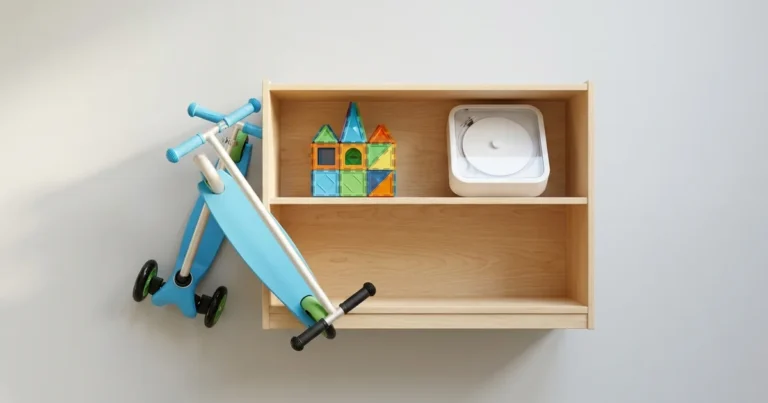
- Balcony or villa courtyard practice: A compact, lightweight scooter that is easy to store and pull out for short sessions works well for daily practice in tighter spaces.
Given the intense summer heat in the UAE, most families naturally shift scooter time to early mornings, evenings, or fully air-conditioned indoor play areas between May and September. Keep this seasonal rhythm in mind when planning how often your child will realistically use their scooter throughout the year.
Safety Gear Checklist for Every Age
No matter which scooter you choose, safety gear should never be optional. Here is what we recommend at every stage:
- Helmet: A properly fitted, certified helmet is essential from the very first ride, even for slow toddler scooting.
- Knee and elbow pads: Especially important for preschoolers and early elementary riders who are still building balance.
- Wrist guards: Recommended once children start riding faster or attempting turns and stops at speed.
- Closed-toe shoes: Sandals and flip-flops are a common cause of scooter-related toe injuries. Always insist on proper closed shoes with good grip.
Make trying on the helmet and pads part of the fun when you bring home a new scooter. Letting your child pick their own helmet colour or pattern increases the odds they will actually want to wear it every time.
Signs It Is Time to Upgrade to the Next Scooter Size
Even the best-fitted scooter eventually needs replacing. Watch for these signals:
- The handlebar is at its maximum height setting and your child still has to bend forward.
- Your child’s weight is approaching or has passed the manufacturer’s stated weight limit.
- The deck feels noticeably small under their feet, with little room for foot placement during turns.
- Your child has clearly outgrown the skill level the scooter was designed for, riding it too cautiously or, conversely, pushing it well beyond its intended speed and stability limits.
Reassessing scooter fit once or twice a year, ideally at the start and midpoint of the school year, helps you catch these signs early before they turn into a safety issue.
Balancing Screen-Free Outdoor Play with Indoor Development
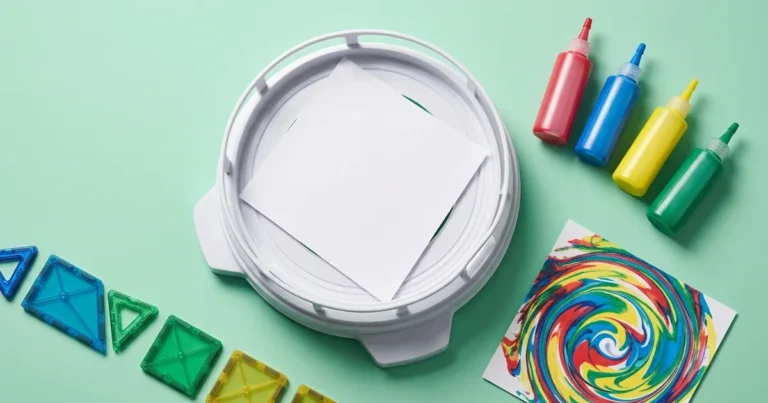
Scooting is a wonderful way to build gross motor skills, balance, and outdoor confidence, but it works best as part of a broader mix of developmental play. On hot days or quiet evenings at home, activities like open-ended building with the Magnetic Train Set for Kids (178 pcs) or creative sessions with Finger Paint for Kids (12 Colors) nicely complement the physical coordination scooting builds, rounding out fine motor skills, creativity, and focus alongside all that outdoor balance and confidence.
Quick Reference: Scooter Choice by Age
- Ages 2 to 3: Three or four wheels, low deck, seated option, short supervised sessions.
- Ages 3 to 5: Lean-to-steer three-wheel design, adjustable handlebar, wider textured deck.
- Ages 6 to 8: Two-wheel option (if ready), larger wheels, foldable frame, optional hand brake.
- Ages 9 and up: Performance or trick-capable frame, reinforced wheels, higher weight capacity, taller handlebar range.
Conclusion
Learning how to choose a kids scooter by age comes down to watching your child’s actual balance, confidence, and coordination rather than simply following a birthday number. Start with wide, stable wheels and a low deck for toddlers, move to a lean-to-steer three-wheeler for preschoolers, and only shift to a two-wheeled model once your child shows genuine readiness. Always pair the right scooter with a properly fitted helmet and pads, check weight and height limits regularly, and reassess as your child grows. With the right fit and the right safety habits from day one, scooting becomes a joyful, confidence-building part of childhood that lasts for years, not just weeks.
Frequently Asked Questions
What age can a child start using a scooter?
Most children can start using a simple three or four-wheeled toddler scooter around age 2, once they can walk confidently and stand unassisted for short periods. Always choose a low-deck, wide-wheelbase model and supervise closely during early rides.
How do I know if my child is ready for a two-wheeled scooter?
Your child is likely ready for a two-wheeled scooter, typically around age 6 to 8, if they can ride a three-wheeler confidently without wobbling, turn corners at a steady pace, and show interest in riding faster. Skill level matters more than age alone, so let your child’s balance guide the decision.
What handlebar height is correct for a kids scooter?
The handlebar grips should sit roughly between your child’s hip and waist when they stand next to the scooter in flat shoes. If they need to bend forward or reach upward to hold the grips, the handlebar is set too low or too high for a safe, comfortable ride.
Do toddlers need a helmet for a scooter?
Yes, a properly fitted helmet is essential from the very first ride, even for slow-speed toddler scooting. Toddlers have less developed reflexes, so a helmet, along with knee and elbow pads, significantly reduces the risk of injury during falls.
How often should I check if my child’s scooter still fits?
We recommend checking the fit at least twice a year, such as the start and midpoint of the school year. Watch for the handlebar reaching its maximum height, your child’s weight nearing the scooter’s limit, or the deck feeling too small for comfortable foot placement.