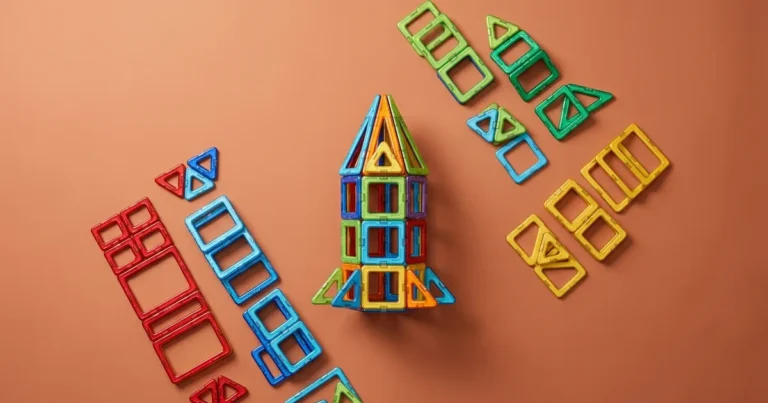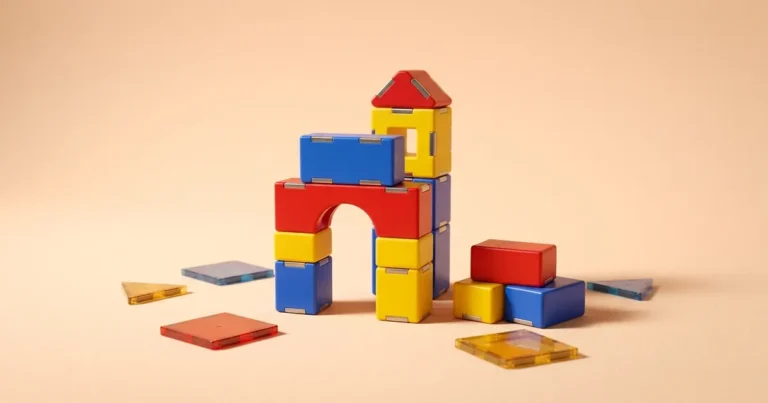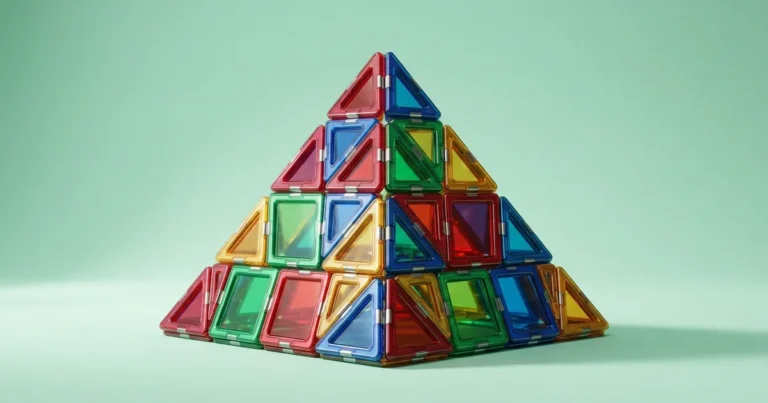
If your living room floor has ever turned into a construction site of colorful, click-clacking squares and triangles, you already know the quiet magic of magnetic tiles. But beyond the simple joy of building a tower and knocking it down, magnetic tiles for kids ideas can turn a rainy afternoon in Dubai or a quiet weekend in Riyadh into a rich, screen-free learning adventure. This guide is built for parents who want more than just “stack and go” – we will walk through safety essentials, age-by-age project ideas, themed challenges, and practical tips so your child gets the most developmental value from every play session, without you worrying about small parts or sharp edges.
Why Magnetic Tiles Are a Parent Favorite Across the UAE
Magnetic tiles have become a staple in nurseries, playrooms, and even pediatric therapy centers for good reason. Unlike toys that light up and make noise on their own, magnetic tiles ask something of the child, they require little hands to plan, place, and problem-solve. That is exactly the kind of open-ended play that early childhood experts recommend.
For families in the UAE, where indoor play is often necessary during the hotter months, a sturdy set of magnetic tiles offers hours of engagement without a single screen. They are lightweight enough for toddlers to carry, yet satisfying enough to challenge a ten-year-old building a multi-room castle.
The Safety Case for Magnetic Tiles
Before we get to the fun part, safety always comes first in our house and yours too, we hope. Here is what to check when choosing a set:
- Rounded edges: Quality tiles have smooth, beveled corners so little fingers do not get nicked during enthusiastic building sessions.
- Sealed magnets: The magnets should be fully enclosed in the plastic frame with no way for a curious toddler to pry them loose. Always inspect tiles regularly for cracks, especially after they have been dropped or stepped on.
- Age labeling: Sets designed for children under 3 should have larger, chunkier pieces. For families with mixed-age siblings, supervision during shared play is essential so older kids’ smaller accessory pieces stay away from younger toddlers who still mouth objects.
- Non-toxic materials: Look for BPA-free, phthalate-free plastic, particularly important in the UAE’s warm climate where toys may sit in sunlit rooms.
A well-made set like the 140-piece magnetic building tiles set is designed with these safety details in mind, giving parents peace of mind while children explore freely.
Getting Started: A Simple Safety Checklist Before Playtime
Even the safest toy benefits from a few household habits. Before your child dives into their next magnetic masterpiece, run through this quick checklist:
- Clear the play area of hard-edged furniture corners nearby, since tall towers do eventually topple.
- Set a firm rule that tiles are for building, not throwing, especially with younger siblings in the room.
- Inspect a handful of pieces every few weeks for cracks or loose seams, more often if the set gets heavy daily use.
- Keep the storage bin within reach so cleanup becomes part of the play routine, not a chore fight.
- If you have a baby or toddler who still explores with their mouth, store the tiles up high between older siblings’ play sessions.
With that groundwork in place, let’s get to the part everyone is waiting for, the ideas themselves.
Magnetic Tiles for Kids Ideas by Age Group
One of the best things about magnetic tiles is how they grow with your child. The same box of pieces can support a toddler’s first tower and, years later, a tween’s geometry experiment. Here is how to tailor the play to different developmental stages.
Ages 3 to 5 Years: Building Confidence and Fine Motor Skills
At this stage, children are developing hand-eye coordination, color recognition, and basic spatial awareness. Keep ideas simple, colorful, and quick to complete so little builders feel a sense of accomplishment.
- Color towers: Ask your child to build a tower using only red and blue tiles, alternating colors as they go. This reinforces pattern recognition in a playful way.
- Shape sorting walls: Build a flat wall using only squares, then a second wall using only triangles. Compare how each shape behaves when stacked.
- Animal enclosures: Create small open-top boxes and let your child populate them with toy animals, a gentle introduction to the idea of borders and boundaries.
- Copy-the-picture game: Show your child a simple photo of a house shape and encourage them to recreate it. This builds visual matching skills before formal schooling begins.
- Rainbow bridges: Line up tiles in rainbow order to form a flat bridge, then walk a small figurine across it.
Sets curated for this age bracket are easy to browse in our Ages 3-5 collection, where piece sizes and quantities are matched to preschool hands.
Ages 6 to 8 Years: Encouraging Planning and Storytelling
By six or seven, children are ready for multi-step projects and enjoy narrating their creations. This is the age to introduce structure, symmetry, and imaginative themes.
- Two-story dollhouse: Guide your child to build a base floor, then a second level using flat tiles as a “floor” connector. Add small furniture pieces or paper cutouts for beds and tables.
- City block challenge: Build three or four different buildings, a school, a shop, a mosque or house of worship representing your family’s traditions, and a park, then connect them with roads made of flat tiles laid on the floor.
- Symmetrical castles: Challenge your child to build one half of a castle, then mirror it exactly on the other side. This is a wonderful hands-on introduction to symmetry, a concept they will soon meet in school math.
- Story cube: Build an enclosed cube with one open side like a stage, then use small toys to act out a story inside it.
- Bridge strength test: Build a flat bridge between two chairs and test how many small toy cars it can hold before flexing. This introduces basic engineering thinking in a low-stakes, playful way.
For this age group, larger sets with more pieces open up bigger, more ambitious builds. Browse our Ages 6-8 collection for sets with the piece count needed for these multi-room projects.
Ages 9 to 12 Years: STEM Thinking and Independent Projects
Tweens are ready for real engineering challenges and enjoy having creative ownership over bigger, more complex builds. At this stage, magnetic tiles shift from simple play to genuine STEM practice.
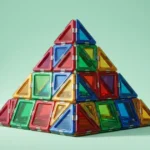
- Geometric solid exploration: Challenge your child to build every 3D shape they can name, cube, pyramid, prism, and label each one. This pairs beautifully with school geometry lessons.
- Load-bearing tower contest: See how tall a tower can get before it topples, then experiment with wider bases versus narrow ones to explore stability.
- Marble run design: Use flat tiles as ramps and see if a small ball can travel from one end of the structure to the other without falling off.
- Model architecture: Encourage older kids to research a famous building, like a local landmark, and attempt to recreate its silhouette using tiles.
- Timed team builds: If your child has siblings or friends over, set a five-minute timer and challenge two teams to build the tallest or widest structure using an equal number of tiles.
A larger, more advanced set such as the 150-piece magnetic building blocks set gives older children the volume of pieces needed to bring these bigger, more detailed ideas to life.
Themed Building Ideas to Spark Imagination
Sometimes the hardest part of open-ended play is simply deciding what to build. Here is a running list of themes you can pull out whenever your child says the dreaded words, “I’m bored.”
Architecture and Structures
- A multi-level parking garage complete with ramps
- A lighthouse with a rotating “light” made from a flashlight or toy torch
- A mosque with an arched doorway built from angled tiles
- A greenhouse using clear or lightly tinted tiles to mimic glass panels
- A skyscraper competition to see who can build the tallest stable tower
Vehicles and Transportation
- A flatbed truck with wheels represented by round toys or bottle caps
- A train station with multiple “platforms” built from flat tile floors
- An airport with a control tower and a runway laid out in a long line of flat tiles
- A boat hull shape, floated in imagination on a “sea” of blue tiles laid flat on the floor
Nature and Animals
- A zoo with separate enclosures for different animal figurines
- A farm with a barn, a fenced field, and a small pond area
- An underwater scene using blue and green tiles to represent coral and seaweed
- A birdhouse on a tall, narrow tile pillar
Fantasy and Imaginative Worlds
- A dragon’s cave with a jagged, uneven entrance
- A fairy garden with tiny archways and paths
- A pirate ship with a triangular “sail” propped up using angled tiles
- A space station with geometric pods connected by tunnels
STEM and Math Challenges
- Counting challenges: “Build a house using exactly 20 tiles, no more, no less.”
- Fraction introduction: split a square tile shape conceptually into halves and quarters using different colors
- Pattern challenges: AB, ABC, and ABB repeating color sequences
- Basic addition: “If this wall has 6 tiles and we add 4 more, how many now?”
- Weight and balance experiments: testing how many small toys a flat platform can hold before collapsing
Setting Up a Magnetic Tile Play Station at Home
Consistency helps children get more out of open-ended toys. Rather than pulling the box out occasionally, consider dedicating a small, permanent corner of a playroom or bedroom to magnetic building. Here is how to set it up thoughtfully:
- Choose a hard, flat surface: Tiles click together best on smooth flooring or a low table rather than thick carpet, which can make bases wobbly.
- Use an open bin, not a lid-locked box: Children are far more likely to start building spontaneously if they can see the colors and shapes at a glance.
- Add a small basket of “extras”: Include a few toy figurines, small cars, or fabric scraps nearby to inspire storytelling alongside the building.
- Rotate a “challenge card”: Write a few of the ideas above on small cards and let your child pick one at random when they need inspiration.
- Photograph favorite builds: Before cleanup, snap a quick photo. Kids love seeing a growing gallery of their own creations, and it softens the disappointment of taking a structure apart.
The Developmental Benefits Behind the Fun
It is easy to think of magnetic tiles as “just a toy,” but the skills being built during play are genuinely significant.
Fine Motor Skills
Picking up, aligning, and clicking tiles together strengthens the small muscles in fingers and hands, skills that later support handwriting and precise tasks like buttoning clothes.
Spatial Reasoning
Understanding how a flat tile becomes a 3D wall, or how two triangles form a square, builds the same spatial reasoning children will later use in geometry, map reading, and even packing a suitcase efficiently.
Early STEM Thinking
Testing whether a tower will stand, adjusting a wobbly base, or figuring out why a roof keeps sliding off, these are genuine engineering problems, scaled down to a child’s world.
Creativity and Storytelling
A finished structure is rarely the end of play. Children often narrate elaborate stories about who lives in the house or where the truck is driving, supporting language development and imaginative thinking.
Social Skills Through Cooperative Building
When siblings or friends build together, they practice negotiation (“you take the roof, I’ll do the walls”), patience, and shared problem-solving, all valuable social skills that extend well beyond playtime.
Tips for Parents: Guiding Play Without Taking Over
It can be tempting to jump in and “fix” a wobbly tower or suggest the “better” way to build a roof. Try to resist that urge. Here is a gentler approach:
- Ask, don’t tell: Instead of “that won’t work,” try “what do you think will happen if you add another tile there?”
- Celebrate the process, not just the result: Praise the thinking behind a build (“I love how you figured out the roof needed a wider base”) rather than only the finished look.
- Let structures fall: A collapsing tower is not a failure, it is a lesson in balance and cause and effect. Resist rebuilding it for them.
- Offer a challenge, then step back: Suggest an idea from the themed list above, then let your child interpret it in their own way, even if it looks nothing like what you imagined.
- Join in occasionally as an equal: Build your own small structure alongside your child rather than directing theirs. Kids often learn new techniques simply by watching a parent experiment nearby.
Combining Magnetic Tiles With Other Activities
Magnetic tiles pair beautifully with other hands-on, screen-free activities to create a well-rounded week of play. On days when your child wants a different kind of sensory project, a guided craft activity like our kids soap making kit offers a similar hands-on, STEM-style experience, just with a different set of senses and skills involved. Rotating between building, crafting, and imaginative play keeps screen time low and curiosity high throughout the week.
Storage and Care Tips That Actually Work
Magnetic tiles are durable, but a little care keeps them looking and working their best for years.
- Wipe, don’t soak: Use a slightly damp cloth to clean tiles rather than submerging them in water, which can affect the magnets over time.
- Store away from extreme heat: In the UAE’s climate, avoid leaving tile sets in a hot car or direct sunlight for long periods, as prolonged heat can warp plastic.
- Sort by shape, not just color: A simple divided bin makes it easier for children to find the piece they need and encourages independent cleanup.
- Do a monthly “tile check”: Quickly inspect edges and magnet seals once a month, replacing any cracked pieces promptly.
- Teach gentle separation: Show children how to pull tiles apart from the edges rather than yanking from the center, which reduces stress on the magnets and connector points.
Choosing the Right Magnetic Tile Set for Your Family
With so many magnetic tiles for kids ideas to try, the right set really depends on your child’s age, the size of your play space, and how many little builders will be sharing the pieces.
- For a first set or younger children: A mid-sized set like the 140-piece magnetic building tiles offers enough variety for early builds without overwhelming small hands.
- For siblings sharing or ambitious builders: A larger set such as the 150-piece magnetic building blocks gives room for two children to build side by side or for one child to attempt bigger, multi-room structures.
- For gifting: Magnetic tiles make an excellent birthday gift since they suit a wide age range and hold their play value for years, unlike toys tied to a single trend or character.
All prices at Graflo Toys are listed in AED, so UAE families can shop with clear, straightforward pricing and no surprises at checkout.
Group Play and Party Ideas
Magnetic tiles are not just for solo play. They work wonderfully as an activity station at birthday parties or playdates.
- Building relay: Split children into teams and see who can build a stable structure of a set height fastest.
- Guess the build: One child builds a mystery object behind a screen or under a blanket while others guess what it is from a description.
- Collaborative city: Instead of competing, have all children contribute to one giant shared city, encouraging cooperation over competition.
- Tile scavenger hunt: Hide a set number of a specific tile shape around the room and have children collect them before building with only those pieces.
These group activities are especially handy for indoor gatherings during the hotter months when outdoor party games are not practical.
Common Mistakes to Avoid
Even well-meaning parents sometimes unintentionally limit the value of magnetic tile play. Here are a few pitfalls to watch for:
- Buying too small a set: A tiny starter pack can frustrate ambitious builders who run out of pieces mid-project. Consider your child’s age and building style before choosing quantity.
- Over-directing play: Constantly suggesting “the right way” to build can dampen a child’s confidence in their own ideas. Offer inspiration, then step back.
- Skipping regular safety checks: Even durable tiles benefit from a quick monthly inspection, especially in busy, multi-child households.
- Mixing incompatible brands without checking magnet strength: Not all magnetic tile brands connect smoothly with one another, which can lead to frustrating, wobbly builds.
- Forgetting to rotate ideas: Using the same three builds repeatedly can lead to “I’m bored” moments. Keep a running list of themes, like the ones above, to refresh interest.
Bringing It All Together
Magnetic tiles for kids ideas are really only limited by the time you give them room to explore. From a toddler’s first wobbly tower to a tween’s carefully engineered bridge, these simple, colorful pieces grow alongside your child, quietly building fine motor skills, spatial reasoning, and creative confidence along the way. Start small with a safety check and a simple color tower, then let the ideas in this guide carry you through months, even years, of screen-free, imagination-rich play. Whichever set you choose, the real magic happens in the building, the knocking down, and the building again.
Frequently Asked Questions
What age is appropriate to start with magnetic tiles?
Most magnetic tile sets are suitable from around age 3, once children are past the stage of putting small objects in their mouths. Always check the manufacturer’s age guidance and supervise play with younger toddlers, especially if older siblings’ sets are being shared.
Are magnetic tiles safe if the magnets are strong?
Strong magnets are safe as long as they are fully sealed inside the plastic tile frame, with no way for a child to access them directly. Regularly inspect tiles for cracks or damage, and remove any piece that shows wear immediately.
How many pieces do I need for a good starter set?
For younger children just starting out, a set of around 100 to 140 pieces, like our 140-piece magnetic building tiles, offers plenty of variety. Older children or households with siblings sharing pieces often benefit from a larger 150-piece set for bigger, more detailed builds.
Can magnetic tiles help with school readiness?
Yes, building with magnetic tiles supports spatial reasoning, counting, pattern recognition, and early geometry concepts, all of which give children a practical, hands-on head start before formal math lessons begin.
How do I keep my child interested in magnetic tiles over time?
Rotate themed building challenges regularly, such as those covering architecture, vehicles, animals, and fantasy worlds. Introducing a fresh idea every week or two, along with occasional group building activities, keeps the play feeling new and exciting.