If your child has already mastered stacking magnetic tiles into towers and houses, the next exciting step is building a magnetic tiles ball run, a moving structure where a small ball rolls, drops, and glides down ramps made entirely from connected tiles. Ball runs are one of the best ways to keep magnetic tile play fresh, because they combine the calm, hands-on satisfaction of building with the thrill of watching something actually work. Done safely and with the right size ball, this is a wonderful rainy-afternoon or weekend project for children roughly aged 3 to 8, and it quietly builds problem-solving, spatial reasoning, and patience along the way.
In this guide, we will walk through everything a UAE parent needs to know before starting, including safety guidelines for choosing an appropriately sized ball, a full list of beginner-to-advanced magnetic tiles ball run ideas, troubleshooting tips for wobbly builds, and suggestions for turning a simple ramp into a full STEM learning session.
Why Magnetic Tiles Are Perfect for Ball Runs
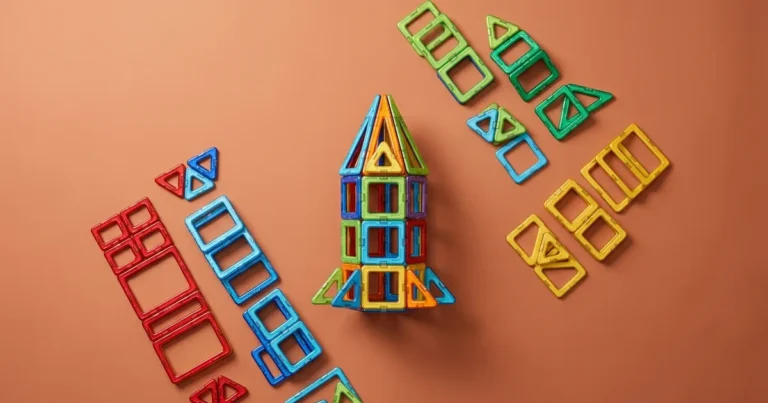
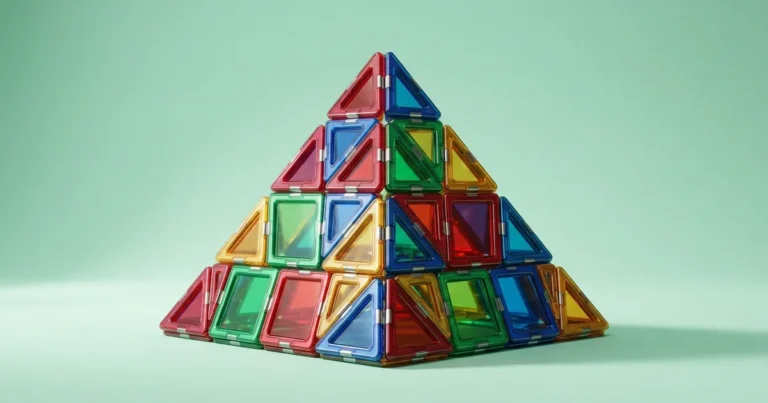
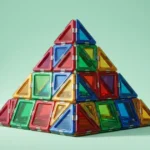
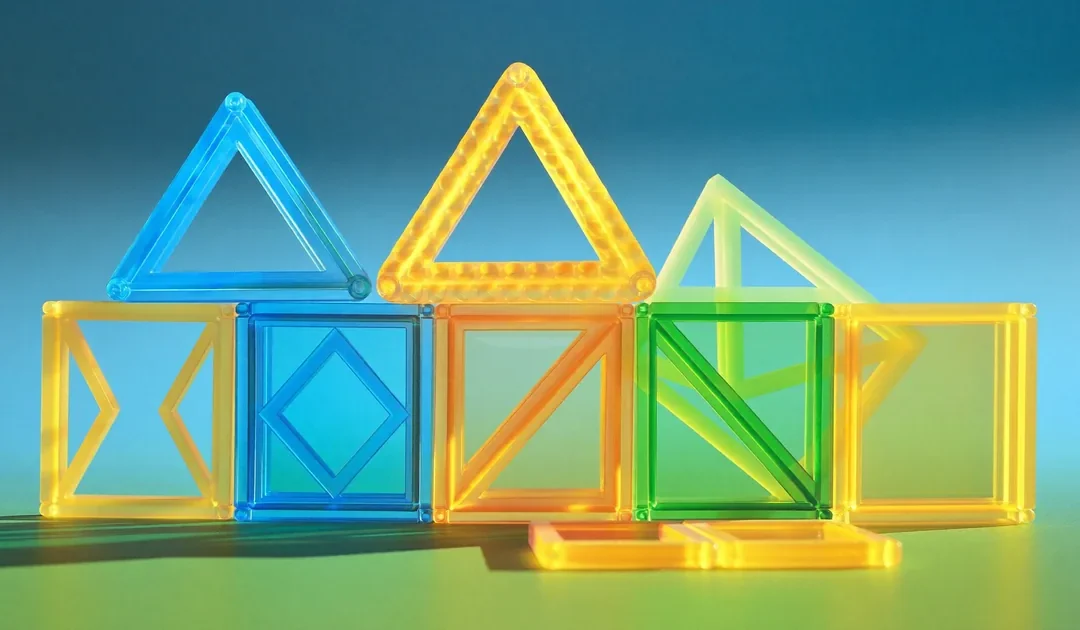
Magnetic building tiles are translucent, lightweight, and snap together instantly thanks to embedded magnets along each edge. Unlike wooden marble runs that need precise slotting, magnetic tiles let children experiment freely, take a piece off, angle it differently, and rebuild in seconds. This flexibility is exactly what makes them so good for ball runs, because children can test an idea, watch it fail, and adjust it immediately without frustration or needing a parent to intervene with tools.
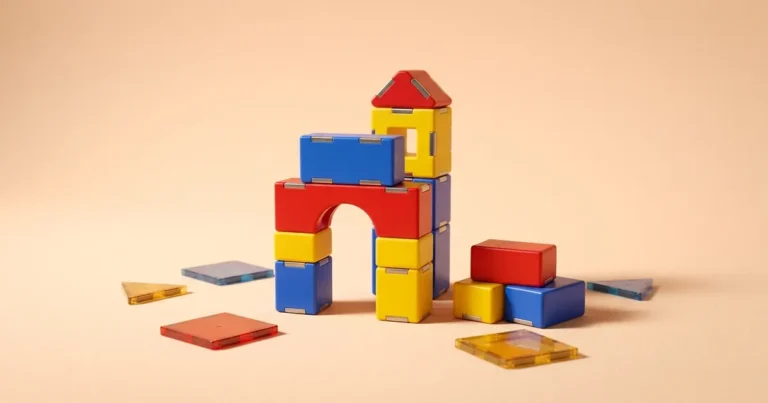
Our 140-piece magnetic building tile set includes squares, triangles, and rectangles that click together at almost any angle, which is ideal for creating slanted ramps and connecting walls. For bigger, more ambitious ball run cities, families often add a 150-piece magnetic building block set to combine flat tiles with 3D block shapes, giving extra height and sturdier support pillars.
Safety First: Ball Run Guidelines for Every Age
Before jumping into build ideas, a few safety basics matter more than any clever design.
Choose the Right Ball Size
Never use marbles or any ball small enough to fit inside a toilet paper roll for children under 3, and always supervise ball run play for children under 6. A soft foam ball, a large plastic pom-pom, or a lightweight rubber ball around 4-5 cm in diameter is a safer choice than a hard glass marble, especially in busy family homes with younger siblings crawling around.
Build on a Stable, Flat Surface
Ball runs rely on gravity, so an unstable table or a rug with uneven padding underneath can cause a tall structure to tip. Always build directly on a hard floor or a solid table, and keep the base wider than the top, just like a real building.
Supervise Height
Tall magnetic tile towers are exciting, but a structure taller than your child’s shoulder height should always be built with an adult nearby, since a toppling tower of tiles, even lightweight plastic ones, can startle or lightly bump a small child.
Age-Appropriate Complexity
For children aged 3 to 5, keep ball runs low, wide, and simple, with one or two ramps at most. Children aged 6 to 8 can handle multi-level designs with branching paths, tunnels, and even simple mechanisms like flip switches or spinning tiles. Browse our toys for ages 3-5 or our toys for ages 6-8 to find magnetic tile sets and complementary building toys matched to your child’s developmental stage.
What You Need to Get Started
- A magnetic tile set with at least one large triangle piece per ramp, since triangles are the easiest shape to angle into a slide.
- A soft, lightweight ball that rolls smoothly but will not hurt if it bumps into a foot or a wall.
- A flat, hard surface such as a wooden floor, tiled floor, or a sturdy table.
- Extra flat tiles or blocks to act as support walls, catchers, and base platforms.
- A little patience, since the first few attempts almost always send the ball flying off in the wrong direction, and that is part of the fun.
Beginner Magnetic Tiles Ball Run Ideas (Ages 3-5)
Younger children benefit from simple, low structures that are easy to see, easy to fix, and quick to rebuild. These beginner ideas focus on cause and effect: the ball rolls, the ball drops, the ball stops.
1. The Single Slope Slide
Lean one large triangle tile against a stack of two or three flat squares to create a single ramp. Place the ball at the top and let it roll down onto the floor. This is often the very first ball run a toddler builds, and it teaches the basic concept before anything more complex is attempted.
2. The Zigzag Path
Add a second ramp facing the opposite direction at the bottom of the first slope, so the ball changes direction once. Use two flat tiles standing upright as side walls to stop the ball from rolling off the edge, which also teaches your child the idea of guiding a path with barriers.
3. The Catch Box
Build a small open-top box from four flat tiles at the bottom of a single slope. Watching the ball land safely inside a container gives young children a satisfying sense of completion and is a great confidence booster for first-time builders.
4. The Tunnel Drop
Prop up two tiles to form a small triangular tunnel or archway partway down a ramp so the ball rolls underneath before continuing. This introduces the idea of the ball briefly disappearing from view, which most preschoolers find delightfully surprising.
5. The Double Ramp Race
Build two identical, side-by-side single ramps and let your child race two balls down at the same time. This simple variation turns building into a game and works well for siblings or a parent-and-child play session.
Intermediate Magnetic Tiles Ball Run Ideas (Ages 6-8)
Older children who already understand basic tile connections are ready for taller, more technical builds involving multiple levels and directional changes.
6. The Three-Tier Cascade
Stack platforms at three different heights, each connected by a short ramp, so the ball zigzags down through three separate levels before reaching the ground. Use square tiles as flat resting platforms between each ramp so the ball briefly pauses, giving your child a moment to watch and anticipate the next drop.
7. The Spiral Tower
Using vertical support walls built from our 150-piece magnetic building blocks, wind a ramp around a central column so it spirals downward like a helter-skelter. This is one of the most visually impressive magnetic tiles ball run ideas and works especially well as a centerpiece for a birthday party building station.
8. The Branching Fork
Midway down a ramp, split the path into two directions using a small triangle wedge, so the ball can roll left or right depending on tiny variations in speed and angle. Children love predicting which way the ball will go and testing the same run repeatedly to see if the outcome changes.
9. The Bridge Crossing
Build two separate towers of equal height and connect them with a flat tile bridge, then attach a ramp on either end so the ball travels up one side is not realistic with gravity alone, so instead let the ball roll across the bridge and down the far ramp. This introduces the concept of a level pathway between two drops, a useful lesson in basic engineering.
10. The Funnel Finish
At the very end of a long run, angle four tiles inward to form a funnel shape that gradually narrows, guiding the ball into a small final container. This is a satisfying finishing touch for any bigger build and gives the whole structure a clear sense of purpose.
11. The Windmill Diverter
Attach a single tile loosely at a pivot point (using just one magnetic edge connection rather than two) so it can swing slightly when the ball hits it, sending the ball in a different direction each time. This near-mechanical element is a favorite among 7 and 8-year-olds who enjoy figuring out how small design choices change the outcome.
Advanced and Multi-Level Ball Run Challenges
For children who have built dozens of runs already and are hungry for a bigger project, try combining several of the ideas above into one large structure. A few ambitious combinations to try together as a weekend project:
12. The Ball Run City
Combine tile ramps with block towers, small rooms, and connecting bridges to build an entire miniature city where the ball run winds through streets, tunnels under buildings, and finally lands in a town square container. This works particularly well when combining pieces from both our 140-piece tile set and the 150-piece block set, since the flat tiles create smooth ramps while the blocks provide sturdy structural support.
13. The Timed Obstacle Course
Add a stopwatch and challenge your child to redesign the run to make the ball travel as slowly as possible, or as quickly as possible, without ever falling off the edge. This turns free play into a genuine engineering challenge and works beautifully as a homeschool or weekend STEM activity.
14. The Multi-Ball Relay
Design a run wide enough for two or three balls to travel down at once, released one after another, and see whether they stay in order or overtake each other along the way. Older children enjoy predicting outcomes and adjusting ramp angles to control the results.
15. The Sound Effects Run
Place a small empty container, an upside-down cup, or a shallow tin at different points along the run so the ball makes a satisfying clink or tap as it passes. Combining sound with motion adds an extra sensory layer that keeps younger builders engaged for longer.
16. The Collapsible Run
Build a run using only single-magnet connections that are deliberately a little loose, so part of the structure is designed to gently give way partway through, redirecting the ball down a completely different path than the one originally built. This is an advanced challenge best suited to children 8 and up who already understand tile stability well.
Adding STEM Learning to Ball Run Play
Magnetic tiles ball runs are naturally rich in early STEM concepts, and a little parent guidance can turn a fun afternoon into genuine learning without it ever feeling like a lesson.
Gravity and Motion
Ask your child why the ball rolls down but never up on its own. This simple question opens a conversation about gravity that even a 4-year-old can grasp through direct observation.
Angles and Speed
Encourage your child to build the same ramp at two different angles and compare how fast the ball travels each time. Steeper ramps send the ball down faster, while gentler slopes slow it down, a concept children as young as 5 can observe and describe in their own words.
Cause and Effect
Every wobble, drop, or unexpected bounce is a chance to ask, “What happened, and why do you think that happened?” This kind of open-ended questioning builds critical thinking far more effectively than simply handing your child the answer.
Persistence and Problem-Solving
Ball runs rarely work perfectly on the first try, and that is exactly the point. Watching a child troubleshoot why a ball keeps rolling off the edge, then adjust a wall height to fix it, builds genuine resilience and patience that carries over into schoolwork and other challenges.
If your family enjoys hands-on STEM learning, magnetic tile ball runs pair wonderfully with other guided craft and science activities. For slightly older children who enjoy following steps and mixing materials, our kids soap making STEM craft kit offers a similar sense of building-and-discovery, just with a different creative medium, making it a great rotation activity for a weekend packed with hands-on projects.
Troubleshooting Common Ball Run Problems
Almost every family runs into the same handful of issues when building their first few magnetic tiles ball runs. Here is how to solve them quickly.
The Ball Keeps Flying Off the Ramp
This usually means the ramp is too steep, or there are no side walls. Lower the incline slightly and add a low tile wall along both edges of the ramp to keep the ball contained.
The Ball Stops Halfway Down
Check for gaps between tiles where the magnets have not fully clicked together, since even a tiny lip can stop a lightweight ball in its tracks. Run your finger along the connection points to smooth out any unevenness.
The Whole Structure Wobbles or Falls
Wide, low structures are always more stable than tall, narrow ones. If a tower keeps tipping, widen the base by adding extra tiles at the bottom before building upward again.
The Ball Rolls Too Fast to Follow
Add a flat resting platform partway down the run so the ball pauses briefly before continuing, breaking a long, fast drop into shorter, more controlled sections.
Choosing the Right Magnetic Tile Set for Ball Runs
Not every magnetic tile set is equally suited to ball run building. Look for a set with a good mix of large triangles, squares, and rectangles, since triangles are essential for creating angled ramps while squares and rectangles form stable walls and platforms. Our 140-piece magnetic building tile set was designed with exactly this balance in mind, giving families enough pieces to build both a simple beginner ramp and a more advanced multi-level design in the same afternoon.
For families who want to build bigger, taller structures like the spiral tower or ball run city described earlier, pairing tiles with a 3D block set adds the structural strength that flat tiles alone cannot provide. Our 150-piece magnetic building block set is a popular add-on for exactly this reason, and many UAE families keep both sets in the same toy basket so children can mix and match freely depending on the day’s project.
When shopping, always check that pieces are strong enough to hold their shape under a rolling ball’s weight, that magnets are securely embedded rather than glued on the surface, and that edges are smooth and rounded for safe little hands. Choosing a well-made set from the start means fewer frustrating collapses and a much more enjoyable building experience overall.
Making It a Regular Family Activity
One of the best things about magnetic tiles ball run ideas is how easily they scale up or down depending on how much time and energy your family has that day. A rushed afternoon might only allow for a quick single slope slide, while a lazy Friday could turn into a full ball run city that takes over the living room floor. Rotating through the ideas in this guide, from beginner slides to advanced collapsible runs, keeps the toy feeling new for months rather than gathering dust after the first week.
Many parents also find that ball runs make an excellent group activity for playdates or birthday parties, since children of different ages can each contribute a section of the run according to their own skill level, then combine everything into one giant shared structure at the end.
Conclusion
Magnetic tiles ball runs turn a familiar building toy into an entirely new kind of play, one where problem-solving, patience, and pure childhood delight all come together in a single rolling ball. Starting with a simple single slope slide and gradually working toward branching forks, spiral towers, or a full ball run city gives your child a sense of progress they can see and feel with their own hands. With the right size ball, a stable flat surface, and a little supervision for taller builds, this is a safe, screen-free activity that UAE families can enjoy again and again, using the very same magnetic tile sets already in your toy box.
Frequently Asked Questions
What size ball is safest for a magnetic tiles ball run?
Choose a soft, lightweight ball around 4-5 cm in diameter, such as a foam ball or lightweight rubber ball. Avoid marbles or any small hard balls for children under 6, since these can be a choking hazard for younger siblings and are harder to control safely on tall ramps.
What age is best for starting magnetic tiles ball run play?
Children as young as 3 can enjoy simple single-slope ball runs with close adult supervision, while children aged 6 to 8 are ready for multi-level, branching designs. Always match the complexity of the build to your child’s current skill level rather than their age alone.
Do I need extra pieces beyond a standard magnetic tile set to build a ball run?
A standard tile set with triangles, squares, and rectangles is enough for most beginner and intermediate designs. For taller, more advanced structures like spiral towers or ball run cities, adding a magnetic building block set provides extra height and stability that flat tiles alone cannot offer.
Why does the ball keep flying off the ramp?
This usually happens when the ramp angle is too steep or there are no side walls to contain the ball. Try lowering the incline slightly and adding a low tile wall along each edge of the ramp to keep the ball rolling smoothly to the bottom.
How can I make magnetic tile ball runs more educational?
Ask open-ended questions while building, such as why the ball speeds up on steeper ramps or what happens when a wall is removed. These simple conversations turn free play into hands-on lessons about gravity, angles, and cause and effect without feeling like a formal lesson.