

Last updated: August 9, 2026
Choosing the best interactive toys for preschoolers is one of the most meaningful decisions a UAE parent can make, because between the ages of three and five, a child’s brain is forming more than a million new neural connections every second through play alone. The right toy does not just entertain, it builds the muscles a child will use to read, count, share, and problem-solve for the rest of their life. But with shelves full of flashing, beeping options in every mall from Dubai to Abu Dhabi, it can be genuinely hard to tell which toys are truly interactive, which are safe, and which will still be loved after the first week. This guide walks you through everything a caring parent needs to know, from safety checks to age-by-age recommendations, so you can shop with confidence.
Why Interactive Play Matters So Much Between Ages 3 and 5
The preschool years are often called a “sensitive period” in child development. This is when language explodes, fine motor control sharpens enough to hold a pencil, and social skills like turn-taking and empathy begin to take root. Interactive toys, meaning toys that respond to a child’s actions, invite two-way engagement, or require cooperation with a caregiver or sibling, are uniquely suited to support all of this growth at once.
Cognitive Development
When a preschooler stacks magnetic tiles to build a tower, or sorts colored beads by size, they are practicing early math concepts like pattern recognition, sequencing, and spatial reasoning long before they ever see a worksheet. Open-ended interactive toys, in particular, encourage children to test hypotheses ( “will this piece fit here?” ) and problem-solve independently, which builds confidence and resilience.
Language and Communication
Toys that involve pretend play, storytelling props, or simple question-and-answer games give children a low-pressure way to practice new vocabulary. A child narrating a pretend tea party or explaining why their magnetic train needs a new track is doing serious language work, even if it looks like just fun.
Fine and Gross Motor Skills
Snapping magnetic pieces together, gripping a paintbrush, or pushing a train along a track all strengthen the small hand muscles preschoolers need for writing later on. Toys that involve larger movements, like ride-on vehicles or activity mats, support balance and coordination too.
Social and Emotional Growth
Interactive toys that are naturally shared, such as building sets or pretend kitchens, give siblings and friends a reason to negotiate, take turns, and cooperate. This is where preschoolers learn patience and empathy in real, low-stakes situations, which is far more effective than simply being told to “share nicely.”
What Actually Makes a Toy “Interactive”?
Not every toy that lights up or makes noise is genuinely interactive in a developmentally useful way. Here is a simple test that UAE parents can use in-store or while shopping online.
- Does it respond to the child’s actions? A magnetic tile that clicks satisfyingly into place, or a paintbrush that leaves a visible mark, gives immediate, meaningful feedback.
- Does it invite open-ended use? The best toys can be used a hundred different ways. A set of magnetic tiles can become a castle one day and a race track the next, unlike a single-purpose electronic toy with only one button to press.
- Does it encourage social play? Toys that work better with two or more people, like a shared train set or a finger-painting session, naturally build connection.
- Does it grow with the child? A toy that a three-year-old can enjoy simply and a five-year-old can use in more complex ways offers years of value rather than weeks.
By this measure, some of the quietest toys on the shelf, like a well-designed magnetic building set or an open-ended art kit, are often more “interactive” in the ways that matter than a battery-powered gadget that only requires passive button-pressing.
Safety First: What Every UAE Parent Should Check Before Buying
Before we get into specific categories and picks, safety has to come first. The UAE’s warm climate, close-knit family gatherings, and the presence of younger siblings in many homes all make certain safety checks especially important.
Age Grading and Small Parts
Always check the manufacturer’s recommended age range on the packaging, and take it seriously, particularly the choking hazard warnings for children under three. If you have a toddler and a preschooler in the same home, look for toys with pieces large enough that they cannot fit through a standard toilet paper roll, a simple and reliable household test.
Material Safety and Certifications
Look for toys made from non-toxic, BPA-free plastics or food-grade materials, especially for art supplies that little hands might bring near their mouths. Reputable toys sold in the UAE should carry recognized safety certifications such as EN71 (European) or ASTM F963 (US), which test for chemical safety, flammability, and mechanical durability. When shopping for art materials like paints, always confirm they are labeled non-toxic and, ideally, washable, since preschoolers are enthusiastic and not always precise.
Magnet Safety
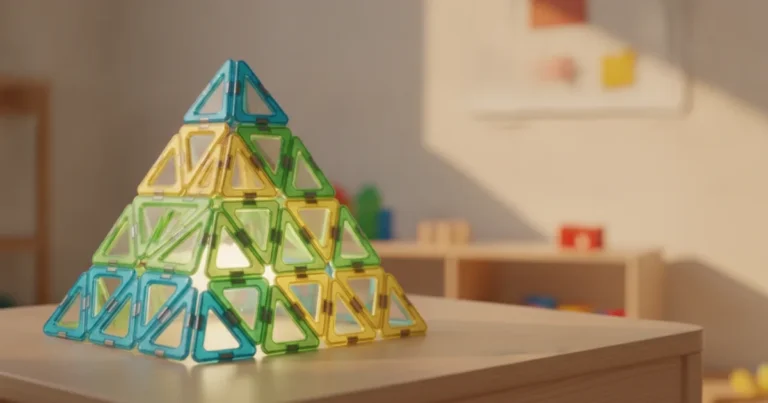
Magnetic building toys have become hugely popular, and for good reason, they are wonderfully open-ended and satisfying to use. However, parents should always choose sets with magnets that are securely encased in thick, durable plastic and are too large to be swallowed, rather than loose or small magnetic beads. Well-made magnetic tile sets, like those designed specifically for STEM play, use large, chunky pieces that are both safer and easier for small hands to manipulate.
Cord and Battery Safety
If a toy has batteries, make sure the battery compartment is secured with a screw, not just a snap-lock, so curious fingers cannot access button batteries, which are extremely dangerous if swallowed. Avoid toys with long cords or strings for children under three.
Durability for the UAE Climate
Toys that will be used outdoors on a balcony or during a cooler winter garden session should be checked for UV-stable, heat-resistant materials, since cheap plastics can become brittle or warp quickly in direct sun and heat.
Categories of the Best Interactive Toys for Preschoolers
With safety covered, let’s explore the categories that consistently deliver the richest developmental value, along with what to look for in each.
1. Magnetic Building and STEM Construction Sets
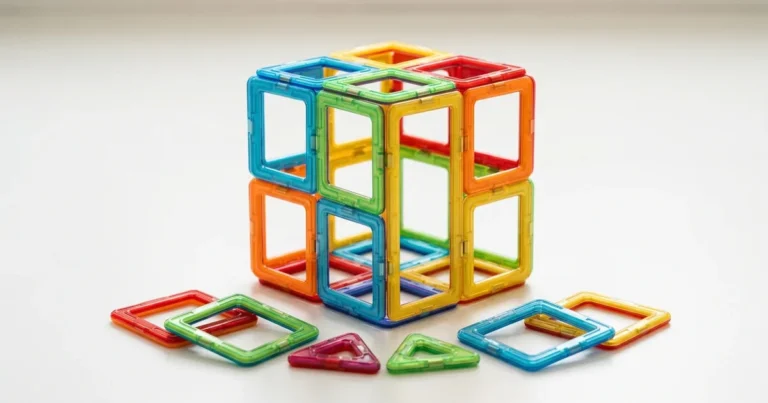
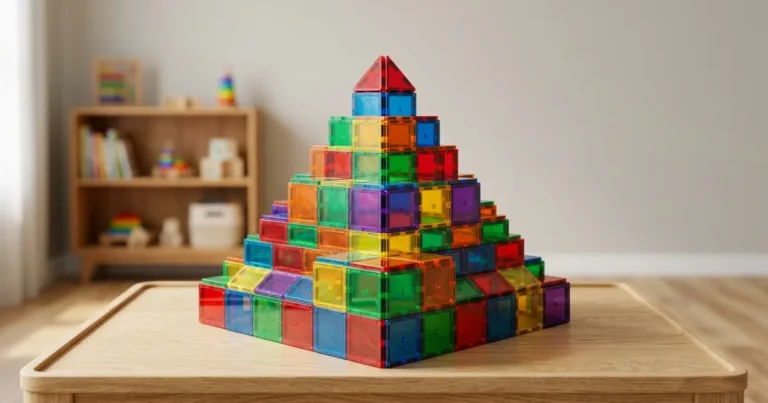
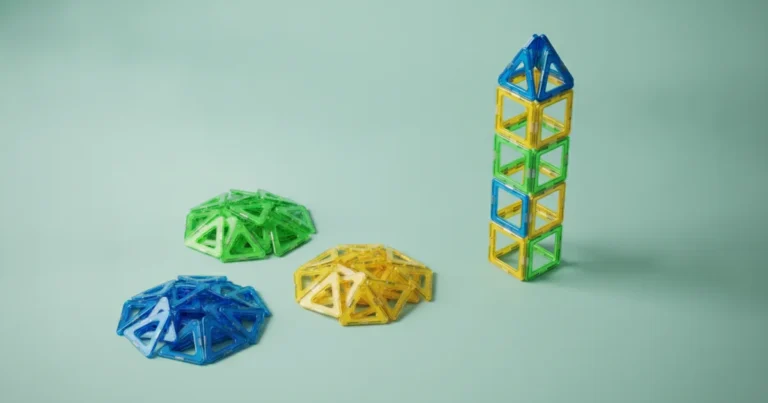
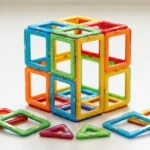
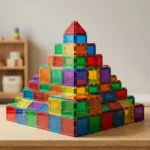
Magnetic tile and magnetic train sets are widely considered some of the best interactive toys for preschoolers because they combine cause-and-effect satisfaction (the click of magnets connecting) with completely open-ended building possibilities. A child can spend twenty minutes building a simple bridge, then knock it down and build a tower instead, all while practicing spatial reasoning, balance, and early engineering concepts.
For families just starting out, a compact set like the Graflo Magnetic Train for Kids 65pcs STEM Tiles Set offers enough pieces for genuinely creative building without overwhelming a first-time builder. It combines classic magnetic tiles with train elements, so children can build a track, a station, and then send their train chugging through it, layering pretend play on top of construction play.
For households with older siblings, multiple children, or a preschooler who has outgrown a starter set, a larger option like the Magnetic Train Set for Kids 178pcs provides enough variety and volume for elaborate, collaborative builds, which is especially valuable for encouraging cooperative play between siblings of different ages.
What to look for in a good magnetic building set:
- Thick, rounded tile edges that are comfortable for small hands
- Strong, securely embedded magnets that do not rattle or come loose
- A good mix of shapes (squares, triangles, arches) to encourage varied building
- Bright, colorfast materials that will not fade or crack over time
2. Creative and Sensory Art Toys
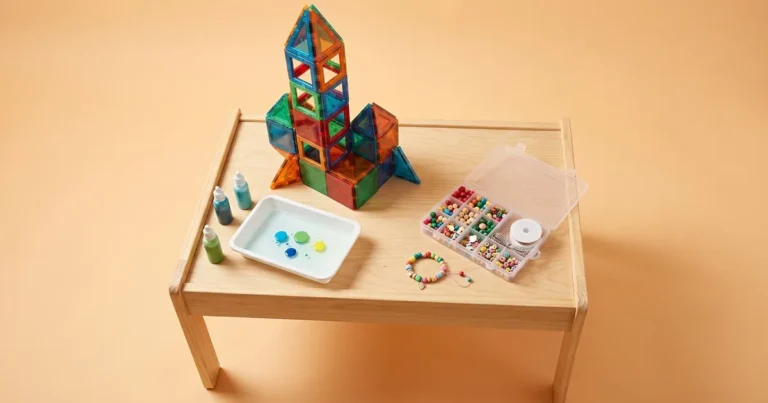
Art supplies designed for preschoolers are deeply interactive because they respond instantly and vividly to a child’s movements. There is no wrong way to finger paint, which makes it one of the most confidence-building activities available to a young child. A quality option such as the Finger Paint Set for Kids 12 Colors gives a wide palette for color exploration while using washable, non-toxic formulas that are far friendlier for parents cleaning up afterward.
Beyond finger painting, look for chunky crayons designed for a preschooler’s grip, dough or clay sets that build hand strength, and simple sticker or stamp kits that offer that same satisfying immediate feedback.
Art play supports:
- Fine motor development through pincer grip and controlled hand movements
- Emotional expression, since young children often “tell” stories through color and shape before they can fully verbalize feelings
- Early pre-writing skills, as the same hand control used to paint a circle transfers directly to forming letters later
3. Pretend Play and Role-Play Sets
Kitchen sets, doctor kits, tool benches, and dress-up costumes are classic for a reason. Pretend play lets preschoolers process the world around them, from a recent visit to the clinic to helping a parent cook dinner, and it is one of the richest forms of language practice available. Look for role-play sets with realistic but safe details, sturdy construction that can survive enthusiastic “customers” or “patients,” and pieces sized appropriately for small hands.
4. Musical and Sound-Based Toys
Simple instruments like xylophones, drums, and shakers are wonderful interactive toys because cause and effect is instant and rewarding. Music play also supports early numeracy through rhythm and pattern, and group music sessions with siblings or classmates build social coordination in a joyful way.
5. Puzzles and Matching Games
Wooden puzzles, shape sorters, and simple matching card games are quietly powerful interactive tools. They teach persistence, since a puzzle piece either fits or it does not, and this immediate, honest feedback helps preschoolers build a healthy relationship with trial and error. Choose puzzles with large, easy-to-grip pieces for three-year-olds, moving to more intricate 12 to 24 piece puzzles for confident five-year-olds.
6. Interactive Books and Early Learning Tools
Lift-the-flap books, sound books, and simple tablet-free learning toys that respond to touch or voice all count as interactive when they genuinely invite a child to participate rather than just watch. Look for books that ask questions, invite a child to point or predict, or include textures to touch.
Choosing the Right Interactive Toy by Age
Preschool covers a wide developmental range, and what delights a just-turned-three-year-old may bore a nearly-six-year-old. Here is a practical breakdown.
Age 3: Building Basic Skills
At three, children are developing basic grip strength and beginning to understand simple cause and effect. Choose toys with larger pieces, simple mechanisms, and lots of room for repetitive, satisfying actions, like clicking magnetic tiles together or stacking blocks. A smaller magnetic set, like a starter 65-piece build, is often ideal here because it is not overwhelming and still offers real building satisfaction.
Age 4: Expanding Imagination and Cooperation
Four-year-olds are ready for more elaborate pretend scenarios and can begin to follow simple multi-step instructions. This is a great age to introduce role-play sets, more detailed art projects, and slightly larger building sets that allow for more complex, imaginative structures. Many families find this the ideal age to expand their magnetic collection, since a four-year-old can start combining pieces in genuinely creative, planned ways rather than just stacking randomly.
Age 5: Preparing for School-Readiness
Five-year-olds are refining fine motor control for pre-writing, developing longer attention spans, and beginning to enjoy toys with light rules or goals, such as simple board games or more complex puzzles. This is a good time to introduce larger, more ambitious building sets, since a five-year-old has the patience and hand control to manage more pieces and more intricate designs. You can browse a full range of age-appropriate options in our Ages 3-5 Years collection, which is organized specifically to make this stage of shopping easier.
Looking Ahead: Ages 6-8
Many of the toys preschoolers love, especially magnetic building sets and creative art kits, continue to offer value well beyond the preschool years, simply used in more advanced ways. If you have an older sibling in the home, or you are shopping ahead, our Ages 6-8 Years collection shows how these same categories evolve with more complex builds and challenges.
Balancing Screen-Free Play in a Digital World
Many UAE parents are understandably cautious about screen time for young children, and the good news is that the most enriching interactive toys for preschoolers require no screen at all. Hands-on toys like magnetic tiles, art supplies, and pretend play sets deliver everything a flashing app promises, sustained attention, satisfying feedback, and skill-building, without any of the concerns around passive screen consumption. Prioritizing tactile, hands-on interactive toys is one of the simplest ways to naturally reduce screen time without a single argument at home.
Budgeting Smartly: Getting the Best Value in AED
Interactive toys for preschoolers in the UAE market range widely in price, and higher cost does not always mean higher quality or more play value. A well-made magnetic building set priced in the mid-range in AED can offer years of use across multiple children, while a flashy electronic toy at a similar price point might lose its appeal within weeks once the novelty wears off. When budgeting, consider:
- Cost per hour of play, not just sticker price. A durable, open-ended toy used weekly for two years offers far better value than a cheaper toy used twice.
- Expandability. Many magnetic building sets allow you to buy a smaller starter set first, in AED-friendly increments, and add on later as your child’s interest and skill grow.
- Multi-child value. Toys that appeal across the 3 to 8 age range, like quality building sets, effectively spread their cost across siblings and years.
How to Introduce a New Interactive Toy at Home
Even the best interactive toys for preschoolers benefit from a thoughtful introduction. Here are a few simple practices that make a real difference.
Play Alongside, Especially at First
Sit with your child for the first few sessions with a new toy. Model a few ways to use it, ask open-ended questions like “what should we build next?”, and then gradually step back as your child gains confidence. This early modeling significantly increases how creatively and independently a child will use the toy later.
Rotate Toys Instead of Overwhelming
Preschoolers often engage more deeply with fewer options. Rather than leaving every toy out at once, try rotating a handful of interactive toys every couple of weeks. A magnetic building set that has been “away” for two weeks often gets rediscovered with fresh enthusiasm.
Create a Dedicated, Safe Play Space
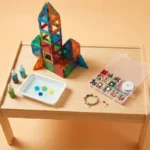
A small rug or table dedicated to building and art play helps children associate that space with focused, creative activity. For messier toys like finger paints, lay down a washable mat or use an easy-to-clean surface so cleanup does not become a source of stress for anyone.
Praise the Process, Not Just the Result
Instead of only saying “good job” when a tower is finished, try noticing effort along the way: “you figured out how to make that piece balance” or “I love how many colors you mixed together.” This kind of specific, process-focused praise builds a stronger sense of capability than general praise alone.
Common Mistakes Parents Make When Choosing Interactive Toys
Choosing Based on Packaging Alone
Bright, exciting packaging is designed to appeal to adults in a store, not to predict how engaging a toy will actually be at home. Always check the age range, materials, and, where possible, real photos or reviews before buying.
Overloading on Single-Use Electronic Toys
Toys that play a fixed sound or light sequence with no real input from the child tend to lose their appeal quickly because there is nothing left to discover after the first few uses. Prioritizing open-ended toys, where the child directs the play, leads to much longer-lasting engagement.
Skipping the Age Recommendation “Because My Child Is Advanced”
It is a common and understandable instinct to buy “up” for a bright child, but age recommendations are primarily about physical safety, particularly small parts and choking hazards, not just intellectual challenge. If you want to stretch an advanced preschooler, look for a toy at the top of their current age bracket with more pieces or more complexity, rather than skipping several years ahead.
Forgetting About Storage and Cleanup
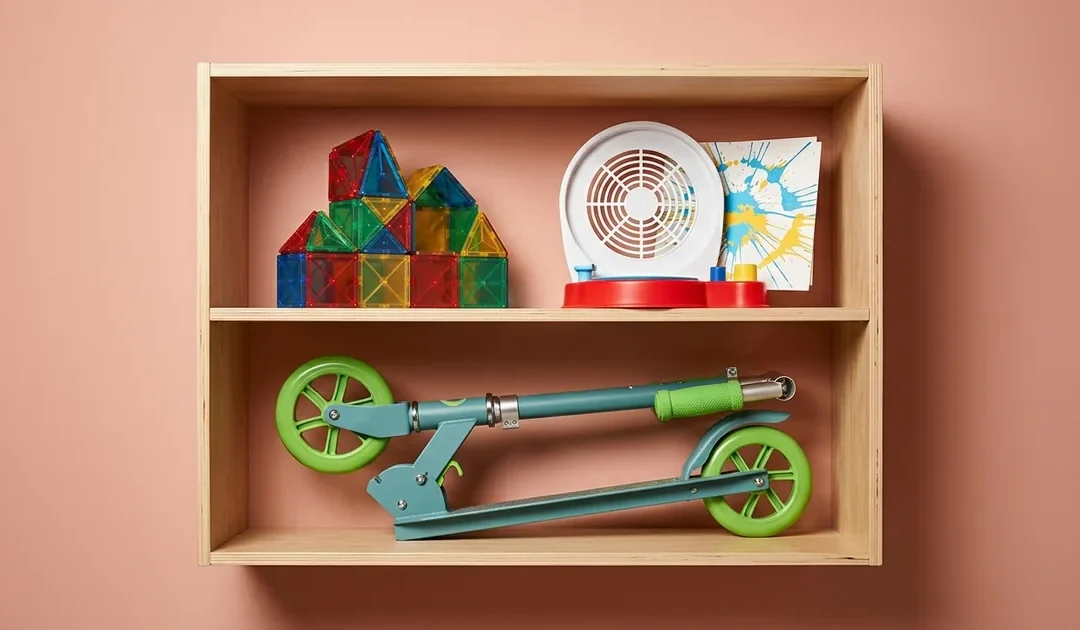
A toy that is fun but chaotic to clean up can quietly become a source of daily stress. Look for sets that come with, or can easily use, a storage box or bag, so that cleanup becomes part of the play routine rather than a battle.
Sample Weekly Interactive Play Plan for Preschoolers
Many UAE parents find it helpful to have a loose weekly rhythm that naturally rotates through different types of interactive play, ensuring a good balance of skills without any rigid scheduling.
- Building day: Bring out the magnetic tiles or train set for open-ended construction, perhaps with a simple challenge like “can you build something taller than your teddy bear?”
- Art day: A finger painting or drawing session, ideally outdoors on a balcony or in an easy-to-clean spot, focused purely on process over product.
- Pretend play day: Kitchen sets, dress-up, or a simple doctor kit, encouraging storytelling and role-play.
- Puzzle or matching day: A short, focused session with a puzzle or matching game to build concentration and patience.
- Music or movement day: Simple instruments or a dance session to build rhythm and gross motor coordination.
This kind of gentle rotation ensures that a preschooler is regularly exercising cognitive, creative, social, and physical skills across the week, all through play that feels like fun rather than a lesson.
Bringing It All Together
The best interactive toys for preschoolers are the ones that are safe, open-ended, and genuinely responsive to a child’s own ideas, not just toys with the most buttons or the loudest sounds. Magnetic building sets, quality art supplies, pretend play kits, simple instruments, and good puzzles consistently outperform flashier, single-purpose gadgets when it comes to real, lasting developmental value. As you shop, keep safety certifications and age recommendations at the center of every decision, choose toys that can grow alongside your child, and remember that your own presence and enthusiasm during play is, in many ways, the most powerful “interactive” element of all. With a thoughtful mix of the categories covered here, you can build a small, rotating collection at home that supports your preschooler’s growth for years to come, well into the school years ahead.
Frequently Asked Questions
What age is best to start introducing interactive toys like magnetic building sets?
Most children are ready for chunky magnetic building sets from around age 3, once they have the grip strength and coordination to click larger pieces together. Always check the manufacturer’s age recommendation on the packaging, since piece size and magnet strength vary between sets.
Are magnetic toys safe for preschoolers if there is a younger sibling in the home?
Choose magnetic sets with large, chunky tiles and magnets that are securely encased in thick plastic rather than loose or small magnetic beads. It is still wise to supervise play and store the set out of reach when a curious toddler is around, since preschoolers may not remember to keep pieces away from younger siblings on their own.
How many interactive toys does a preschooler actually need at once?
Fewer than most parents expect. A rotating selection of 5 to 8 well-chosen toys across categories like building, art, pretend play, and puzzles is usually more engaging than a large pile of options, since preschoolers tend to focus and play more creatively with fewer choices in front of them at one time.
Are washable finger paints really safe for young children who put things in their mouths?
Look specifically for finger paint sets labeled non-toxic and washable, and ideally check for recognized safety certifications on the packaging. Even with safe, non-toxic formulas, it is best to supervise painting sessions with children under three, since art supplies are meant to be used, not eaten.
How do I know if a toy is genuinely interactive rather than just battery-powered entertainment?
Ask whether the toy responds meaningfully to the child’s own actions and allows for open-ended, varied play, rather than simply playing a fixed light or sound sequence when a button is pressed. Toys like magnetic building sets, art supplies, and pretend play kits usually score much higher on this test than single-function electronic gadgets.