Last updated: August 9, 2026
Before anything else, here is the promise every UAE parent deserves: the best educational toys for toddlers in 2026 are the ones that pass a safety check first and a fun check second. A toy that goes viral on social media but has small magnets that can detach, sharp edges, or paint that is not skin-safe has no place in your home, no matter how many views it has. This guide is built the other way around. We start with what keeps little hands and mouths safe, then we show you exactly which toy categories genuinely build brain power, fine motor control, and confidence in children aged one to six, with concrete examples and AED price guidance you can actually plan a budget around.
Toy trends move fast, and 2026 is no exception, with magnetic building tiles, sensory bins, and open-ended STEM sets dominating parenting group chats across Dubai, Abu Dhabi, and Sharjah. But a toy’s popularity online should never be the deciding factor for what lands in your child’s playroom. What matters is whether it is certified safe, age-appropriate, and capable of holding your toddler’s attention long enough to teach them something. Below, we break down exactly how to tell the difference between a fad and a genuinely brilliant learning toy.
Why Educational Toys Matter for Toddler Development in 2026
Toddlerhood, roughly ages one to three, and the preschool years that follow, is the single richest window for brain development a child will ever experience. Neural connections form at an extraordinary rate during play, especially hands-on, repetitive, sensory-rich play. This is why paediatricians and early-years educators across the UAE consistently recommend open-ended toys over passive screen entertainment. A toy that requires stacking, sorting, connecting, or building forces a toddler’s brain to practise cause and effect, spatial reasoning, and problem-solving, all skills that transfer directly into later academic success.
What Counts as “Educational” at Toddler Age
Not every toy labelled “educational” on the packaging actually earns that title. A genuinely educational toy for a toddler should tick at least three of the following boxes:
- It encourages open-ended play rather than a single fixed outcome (building instead of just pressing a button)
- It strengthens fine motor skills through gripping, twisting, pinching, or connecting small pieces
- It introduces early concepts such as colour, shape, counting, cause and effect, or basic engineering
- It can grow with the child, offering new challenges as their skills improve
- It invites shared play, so a parent or sibling can join in and add language and conversation
Toys that flash lights and play pre-recorded songs on repeat rarely meet more than one of these criteria. They may soothe or distract, but they do not build skills the way a set of magnetic tiles, a stacking puzzle, or a paint set does.
Safety First: What UAE Parents Should Check Before Buying
Given our climate, our home layouts, and the realities of shared family spaces, UAE parents have a few extra safety checkpoints to run through before adding any toy to the cart, viral or not:
- Certification marks: Look for EN71 (European toy safety standard) or ASTM F963 compliance printed on the box. These certifications test for choking hazards, toxic materials, and structural durability.
- Small parts warnings: Any toy with pieces smaller than a toilet paper roll’s diameter should carry a clear age warning and be kept away from children under three, or supervised closely if older siblings share the same play space.
- Non-toxic, water-based materials: Especially important for paint sets, crayons, and anything that ends up near a toddler’s mouth. Confirm the packaging states non-toxic and washable.
- Heat resistance: Plastic toys left in a car boot or near a sun-facing window in Gulf summers can warp or release odours. Choose reputable brands with quality-tested plastics, and never leave toys in direct heat.
- Magnet strength and containment: For magnetic building toys, magnets should be fully sealed inside the plastic tile or piece, never loose or exposed, since swallowed magnets are a genuine medical emergency.
Once a toy clears these checks, you can move on to the fun part, choosing based on what skill you want to nurture.
Best Educational Toys for Toddlers by Skill Area
Rather than a single generic list, the smartest way to build a toy collection is by developmental skill area. Here is how to think about each one, with concrete product examples UAE parents are already using in 2026.
Fine Motor Skills and Hand-Eye Coordination
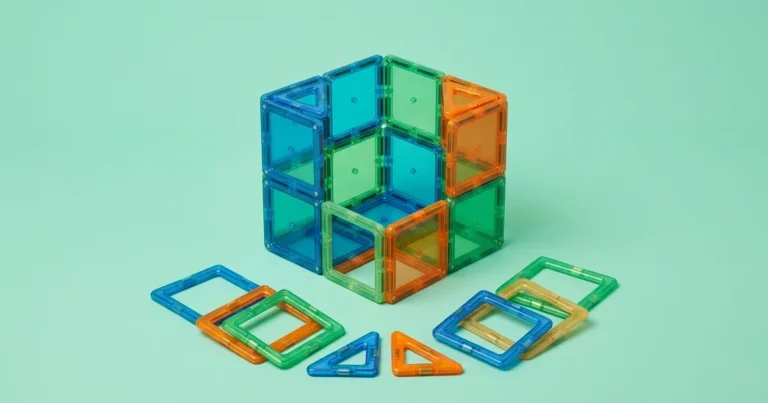
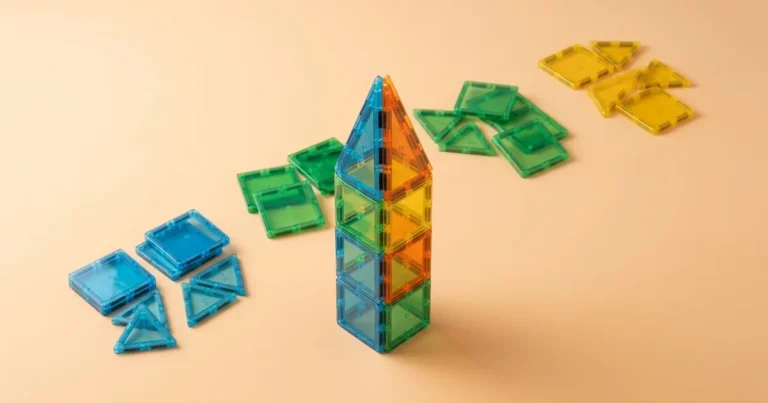
Fine motor toys are anything that asks small fingers to grip, twist, stack, or connect. Chunky building blocks, lacing beads, and magnetic tiles all belong here. Magnetic tile sets in particular have become a household favourite because the pieces click together with a satisfying snap that gives toddlers instant feedback, encouraging them to try again and build higher, longer, or more elaborate structures. The Graflo Magnetic Train for Kids 65pcs STEM Tiles Set is a strong starting point for toddlers who are just discovering how shapes connect, offering enough pieces for a simple train track and a few small structures without overwhelming a first-time builder.
STEM and Early Engineering Toys
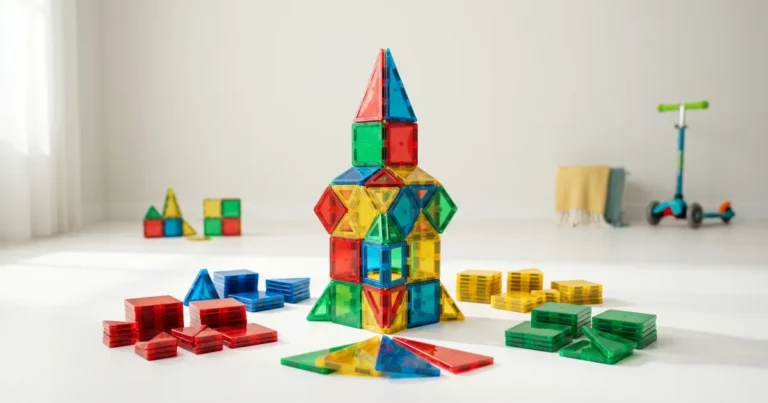
STEM does not need to mean complicated. For toddlers, early engineering simply means understanding that a shape fits into another shape, that a track needs to connect end to end, or that a taller tower needs a wider base. Magnetic building and train sets deliver this naturally because children experiment through trial and error rather than through instruction. As your toddler grows into a preschooler and starts wanting bigger builds, the Magnetic Train Set for Kids 178pcs gives them enough variety and volume to build more ambitious layouts, bridges, and multi-carriage trains, keeping the challenge level rising alongside their skill.
Creative Expression and Sensory Play
Sensory play, the kind that involves texture, colour, and mess, is one of the most underrated categories of toddler learning. Finger painting in particular builds hand strength, colour recognition, and early creative confidence, all while giving toddlers permission to make something imperfect and be proud of it anyway. A quality, washable option like the Finger Paint Set for Kids 12 Colors is formulated to be non-toxic and easy to wipe off skin, tiles, and most fabrics, which matters enormously for parents managing majlis furniture and shared living rooms.
Language and Early Literacy
Board books with textures, simple picture-matching games, and toys that name colours and shapes out loud all help toddlers build vocabulary well before formal schooling starts. The single best literacy tool, though, remains a parent narrating play out loud. Naming colours while stacking blocks, or counting train carriages together, does more for early literacy than almost any standalone toy.
Social-Emotional Development
Toys that require turn-taking, like simple board games, shape sorters shared between siblings, or a train set built together, teach patience, sharing, and cooperative problem-solving. These are the skills that make the transition into nursery or Kindergarten One noticeably smoother.
Age-by-Age Guide to the Best Educational Toys
Development moves quickly in the early years, and a toy that is perfect at eighteen months may be too simple by age four. Here is how to shop by stage.
Ages 1 to 2: Discovery and Repetition
At this stage, toddlers thrive on repetition and simple cause-and-effect toys. Large, chunky pieces that cannot be swallowed, soft stacking cups, simple shape sorters, and their very first set of oversized magnetic tiles are ideal. Keep piece counts low and supervision high. This is not the age for anything with more than a handful of small components.
Ages 3 to 5: Building, Sorting, and Early Pretend Play
This is the golden age for open-ended construction toys, magnetic building sets, and imaginative role play. Children in this range can handle more pieces, follow simple rules, and start building structures independently rather than only imitating a parent. This is exactly when a 65-piece magnetic STEM tile set earns its place as a daily-use toy rather than an occasional novelty. Parents shopping for this stage can browse the full Ages 3-5 Years collection to see options grouped specifically for this developmental window, saving time compared to scrolling through an entire toy catalogue.
Ages 6 to 8: Complex Building, Strategy, and Creative Projects
Once a child moves past the toddler years into early primary school, their attention span and manual dexterity allow for genuinely complex projects, larger magnetic sets with 100 or more pieces, multi-step art projects, and simple strategy games. The Ages 6-8 Years collection is worth bookmarking now even if your toddler is younger, since many families find themselves reaching for the next age bracket sooner than expected once a child develops a strong interest in building or engineering play.
Why Magnetic Building Toys Are Going Viral in 2026
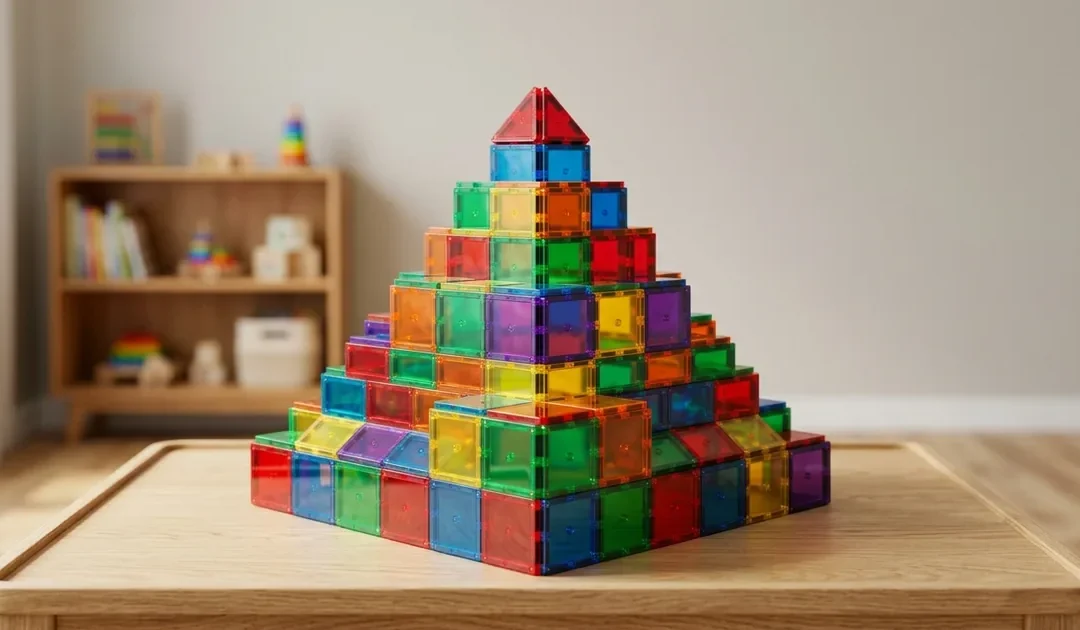
If you have scrolled through parenting content on social media recently, you have almost certainly seen magnetic tile builds trending, glowing towers, rainbow bridges, and elaborate castles built entirely from clicking, colourful tiles. The virality is not accidental. Magnetic building toys satisfy several things at once: they are visually striking for video content, they are genuinely open-ended so no two builds ever look the same, and critically, they hold up to the safety scrutiny that matters most to parents, provided the magnets are properly sealed and the set carries recognised certification.
Graflo Magnetic Train Set, 65pcs STEM Tiles, for First-Time Builders
For toddlers and young preschoolers just starting their building journey, a smaller set avoids overwhelm while still offering enough variety to build tracks, simple houses, and moving train carriages. The 65-piece configuration strikes a practical balance between challenge and manageability, and it fits comfortably into a single storage bin, making tidy-up time far less of a battle.
Magnetic Train Set, 178pcs, for Growing Confidence
As children’s building ambitions grow, so should their toy box. The 178-piece set gives siblings enough pieces to build side by side without constantly negotiating over shared tiles, and it supports more elaborate multi-level structures that keep older preschoolers and early primary schoolers engaged for far longer stretches of independent play.
Sensory and Creative Toys That Build Confidence
While building toys get most of the viral attention, sensory and creative play deserves equal space in a toddler’s toy rotation. Confidence built through creative expression, being proud of a messy, imperfect painting, translates directly into a child’s willingness to try new things later in life, whether that is raising a hand in class or attempting a new physical skill.
Finger Painting for Early Confidence and Fine Motor Strength
Finger painting is deceptively powerful. It strengthens the small muscles in the hand needed later for pencil grip, introduces colour mixing in the most intuitive way possible, and gives toddlers a rare experience of total creative freedom with no wrong answers. Choosing a set specifically designed for young children, like the Finger Paint Set for Kids 12 Colors, means you get pigments formulated to wash out of clothing and off skin easily, which turns a potentially stressful mess into a relaxed afternoon activity rather than a dreaded chore.
Setting Up a Low-Stress Art Station at Home
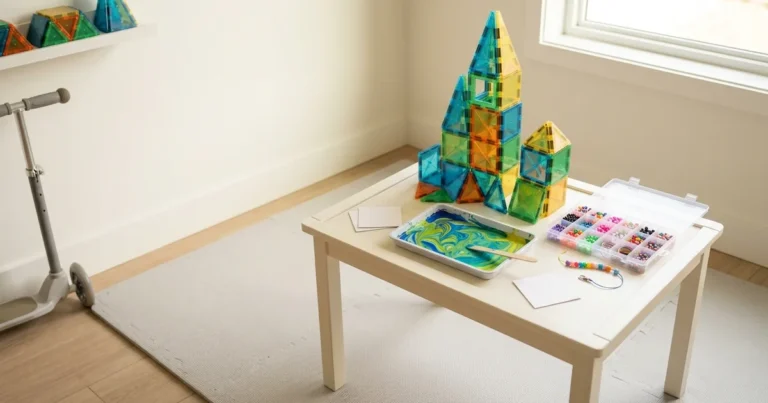
You do not need a dedicated playroom to introduce creative play safely. A washable mat, an old shirt as a smock, and a tray to contain paint pots go a long way. Many UAE apartments have limited floor space, so a fold-flat table by a window with tiled or easily wiped flooring works just as well as a purpose-built art corner.
How to Choose Toys That Last, Not Just Trend
It is tempting to chase whatever toy is trending in your parenting WhatsApp group this month, but the toys that earn their shelf space long-term share a few common traits.
Look for Toys That Grow With the Child
A stacking ring toy that only works one way will be abandoned within weeks. A magnetic tile set, by contrast, can be used by a two-year-old stacking simple towers and, two years later, by the same child building elaborate multi-room structures with moving trains. The best educational toys for toddlers are rarely single-use; they evolve alongside the child’s growing imagination and skill.
Prioritise Durability Over Decoration
Flashy packaging and bright box art sell toys in-store, but durability is what determines whether a toy survives past the first month. Check reviews for how well pieces hold up to repeated drops, whether the magnets stay sealed after regular use, and whether paint or dye rubs off onto hands and furniture.
Fewer, Better Toys Beat a Toy Box Overflowing With Clutter
Child development specialists increasingly point to toy rotation and toy minimalism as more effective than sheer volume. A toddler with five well-chosen, high-quality toys, one building set, one sensory activity, one puzzle, one pretend-play prop, one book, will typically engage more deeply and for longer than a toddler surrounded by dozens of half-used toys competing for attention.
Setting Up a Home Learning Corner in a Small UAE Apartment
Many UAE families live in apartments where floor space is at a premium, but a dedicated learning corner does not need much room to be effective.
Choose a Low Table and a Storage Bin, Not a Full Playroom
A single low table paired with one or two labelled storage bins, one for building toys, one for art supplies, keeps play organised without requiring a spare room. Toddlers respond well to consistent, predictable spaces, so even a small corner used every day becomes a meaningful learning ritual.
Rotate Toys Weekly to Renew Interest
Instead of leaving every toy accessible at all times, store half the collection out of sight and swap it in every one to two weeks. This simple trick makes familiar toys feel new again and stretches your toy budget considerably further, since children rediscover old favourites with fresh enthusiasm.
Budget Guide: Educational Toys in AED
Setting a realistic budget helps avoid impulse purchases driven purely by social media trends. As a general guide for UAE parents building a toddler toy collection in 2026:
- Entry-level building sets (smaller magnetic tile sets, simple stacking toys): typically in the lower AED range, ideal for a first purchase or a birthday gift
- Mid-range building and STEM sets (65 to 100 piece magnetic sets): a moderate investment that usually delivers the longest play lifespan per AED spent
- Larger, expandable sets (150+ piece magnetic train and building sets): a higher upfront cost but exceptional long-term value since they can be combined with future sets and used for years
- Creative and sensory supplies (paint sets, art materials): generally the most affordable category and worth restocking regularly since they are consumable
A practical approach many UAE parents follow is to invest in one higher-value building set as a foundation, then supplement with smaller, affordable sensory or creative toys throughout the year. This keeps the overall toy budget predictable while still giving toddlers variety across skill areas.
Common Mistakes UAE Parents Make When Choosing Toddler Toys
Buying Based on Trend Alone
A toy going viral online does not guarantee it suits your specific child’s stage, interests, or your home’s safety needs. Always cross-check virality against the safety and skill-building criteria outlined earlier in this guide.
Ignoring Age Recommendations on Packaging
Age labels exist because of genuine choking hazard testing, not marketing. A younger sibling in the same household as an older child playing with small-piece sets needs closer supervision, or separate, age-appropriate toy storage entirely.
Overloading the Toy Box
As mentioned above, more toys rarely means more learning. A curated, rotating collection consistently outperforms an overflowing toy box in terms of actual engagement and developmental benefit.
Conclusion
The best educational toys for toddlers in 2026 are not defined by how many views a building video gets online, they are defined by certified safety, genuine skill-building, and the ability to grow alongside your child. Start with the safety checklist, choose toys across the key skill areas of fine motor development, early STEM thinking, creative expression, and social play, and resist the urge to overfill the toy box. Whether you begin with a smaller magnetic tile set for a first-time builder, upgrade to a larger 178-piece set as skills grow, or introduce a washable finger paint set for creative confidence, the goal remains the same: play that is safe, engaging, and genuinely good for your child’s growing mind.
Frequently Asked Questions
What age should toddlers start using magnetic building toys?
Most magnetic tile sets are appropriate from around age three, once children are less likely to put small pieces in their mouths. Always check the packaging for a specific age recommendation and ensure magnets are fully sealed inside each piece before allowing independent play.
Are finger paints safe for toddlers with sensitive skin?
Reputable finger paint sets for children are formulated to be non-toxic and washable, but it is always wise to do a small patch test on your toddler’s skin first if they have known sensitivities, and to supervise play so paint does not reach their eyes or mouth.
How many educational toys does a toddler actually need?
Fewer, higher-quality toys generally lead to deeper, longer engagement than a large, cluttered toy box. A curated collection covering building, sensory play, and pretend play, rotated every one to two weeks, tends to work better than owning dozens of toys at once.
What safety certifications should I look for when buying toys in the UAE?
Look for EN71 or ASTM F963 certification printed on the packaging, along with clear age and small-parts warnings. These indicate the toy has been tested for choking hazards, toxic materials, and structural safety.
Can the same magnetic train set be used by both toddlers and older children?
Larger magnetic train sets, such as 178-piece configurations, are designed to scale in complexity, so a toddler can build simple tracks while an older sibling builds more elaborate structures using the same set, making them a strong long-term investment for growing families.
Shop Safety-Checked Educational Toys
Every toy in our Educational Toys range is chosen for open-ended play, fine motor skill building, and age-appropriate learning, exactly the qualities this guide asks you to look for. Browse the collection and plan your playroom with confidence.
Choosing by Age: 3-5 or 6-8 Years
If your little one is still in the early toddler-to-preschool window, our 3-5 years range keeps pieces and concepts perfectly matched to small hands, while the 6-8 years range steps up to more challenging STEM and building play as skills grow.
Ready to Pick a Winner
Skip the guesswork of viral trends and start with toys already checked for safety and learning value. Explore our featured picks loved by UAE parents.