

Last updated: August 12, 2026
Choosing the best learning toys for kids is not about filling a toy box, it is about giving your child safe, hands-on tools that build little brains while they play. In the UAE, where families juggle bilingual learning, hot afternoons indoors, and a huge range of options at every mall and online store, it helps to know exactly what makes a toy genuinely educational, what makes it safe, and which pieces are worth the AED you spend. This guide walks through everything, from safety certifications to age-specific picks, so you can shop with confidence instead of guesswork.
Why Learning Toys Matter More Than You Think
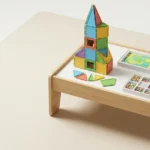
Children under eight learn primarily through their hands, eyes, and repeated play, not through worksheets or screens. A well-designed learning toy turns ordinary playtime into a quiet workout for the brain. When a toddler stacks rings, she is practicing hand-eye coordination and cause-and-effect reasoning. When a six-year-old snaps magnetic tiles into a bridge, he is exploring geometry, balance, and problem-solving without even realizing he is ‘studying’.
Pediatric occupational therapists consistently point to open-ended, hands-on toys as some of the most valuable tools for early development, because they let a child set their own pace and repeat a skill until it clicks. This is very different from toys that only light up or make noise on their own, those tend to entertain for a few minutes and then get abandoned.
The Five Developmental Domains Learning Toys Support
- Cognitive development – sorting, matching, counting, and building toys train memory, logic, and early math thinking.
- Fine motor skills – small parts, magnetic pieces, crayons, and lacing toys strengthen the tiny hand muscles children need for writing later.
- Gross motor skills – ride-on toys, large building sets, and balance boards get bigger muscle groups moving.
- Language and communication – storytelling props, shape-sorters with labels, and pretend-play sets encourage vocabulary growth.
- Social-emotional growth – cooperative building, turn-taking games, and role-play toys teach patience, sharing, and empathy.
The best learning toys rarely target just one of these areas, they usually overlap two or three at once. A magnetic building set, for example, builds fine motor control, spatial reasoning, and (when played with a sibling) social cooperation all in the same afternoon.
Safety First: What Every UAE Parent Should Check Before Buying
Before any toy earns a place on the ‘educational’ shelf, it needs to pass a safety check. This matters even more in the Gulf, where import variety is huge and not every listing online is transparent about materials.
1. Look for Recognized Safety Certifications
Reputable toys sold in the UAE should carry certifications such as EN71 (the European toy safety standard) or ASTM F963 (the US standard). These test for choking hazards, toxic materials, flammability, and sharp edges. If a listing does not mention any certification at all, treat that as a red flag rather than a minor detail.
2. Check Age Grading, Not Just Age Preference
Age labels on toys are safety guidance, not marketing suggestions. A toy graded 3+ usually means it has been tested against small-parts regulations for children under three. If your two-year-old is unusually advanced, it is still safer to wait, or to supervise very closely with any toy that has small magnets, beads, or removable pieces.
3. Magnetic Toys Need Extra Attention
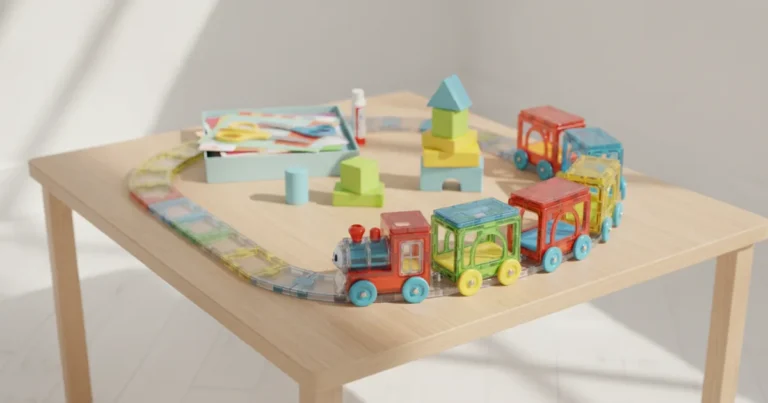
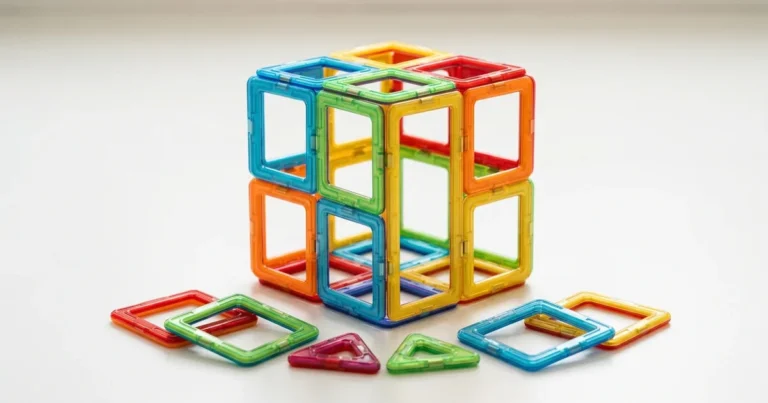
Magnetic building sets are some of the most powerful learning toys available today, but strong small magnets can be dangerous if swallowed, since multiple magnets can attract each other inside the body. Choose sets designed with securely enclosed magnets and oversized, chunky pieces, and always supervise open play until you are confident your child understands the pieces are for building, not tasting. A set like the Graflo Magnetic Train 65pcs STEM Tiles Set is built with this kind of safety-conscious design in mind, with pieces sized and sealed for confident hands-on building.
4. Check Material Quality
Non-toxic, BPA-free plastics and water-based, washable paints matter enormously, especially for children who still explore the world with their mouths. Art supplies such as finger paints should be labeled non-toxic and easy to wash off skin, clothes, and floors, since young artists rarely stay inside the lines.
5. Inspect for Small, Detachable Parts
Even in toys rated for older children, check regularly for loose wheels, cracked joints, or magnets that have popped out of their casing. A quick thirty-second inspection before each play session is a habit worth building, especially for toys that get heavy daily use.
How to Choose Learning Toys by Age
The right learning toy changes dramatically as your child grows. Below is a practical, age-by-age breakdown that UAE parents can use as a shopping checklist.
0 to 12 Months: Sensory Discovery
At this stage, babies are learning through sight, sound, and touch. Look for high-contrast rattles, soft textured balls, and simple stacking cups. Anything with crinkly fabric, gentle bells, or safe teething-grade silicone supports early sensory mapping of the world. Avoid anything with small removable parts, ribbons longer than 15cm, or button batteries that are not screw-locked.
1 to 2 Years: Cause and Effect
Toddlers this age love toys that respond to their actions, shape sorters, simple push-and-pull toys, chunky puzzles with knobs, and stacking rings. This is also a great age to introduce big, soft building blocks. Keep pieces large (bigger than a toilet paper roll opening) to avoid choking risks.
2 to 3 Years: Early Imagination and Language
Pretend play really takes off here. Toy kitchens, simple dress-up props, animal figures, and chunky crayons all support language explosion and imaginative storytelling. Early art materials also shine at this age, a set like Finger Paint for Kids, 12 Colors lets toddlers explore color, texture, and cause-and-effect mark-making with a tool safe enough for curious little fingers.
3 to 5 Years: Building Logic and Fine Motor Precision
This is prime time for construction toys, early STEM sets, and pattern games. Preschoolers can handle smaller pieces with more confidence and love the satisfaction of building something that stands up or connects. A magnetic building set introduces basic engineering concepts, shapes, symmetry, balance, without any pressure or right answer. Browsing a curated collection such as Learning Toys for Ages 3-5 Years is a fast way to find pieces matched to this stage’s motor and cognitive readiness.
6 to 8 Years: Complex Problem-Solving and Early Engineering
School-age children are ready for bigger, more ambitious builds, sets with more pieces, more variety in shapes, and challenges that take real focus to complete. This is the age where a larger magnetic set really earns its place, since children this age can plan multi-step builds, follow instructions, and enjoy the pride of a finished structure. The Magnetic Train Set for Kids, 178pcs gives this age group enough variety and scale to keep building interesting over many months, not just one afternoon. For a wider browse of age-matched options, the Learning Toys for Ages 6-8 Years category is a good starting point.
Types of Learning Toys and What Each One Teaches
Not all learning toys work the same way. Understanding the categories helps you build a well-rounded toy shelf instead of duplicating the same skill five times over.
STEM and Building Toys
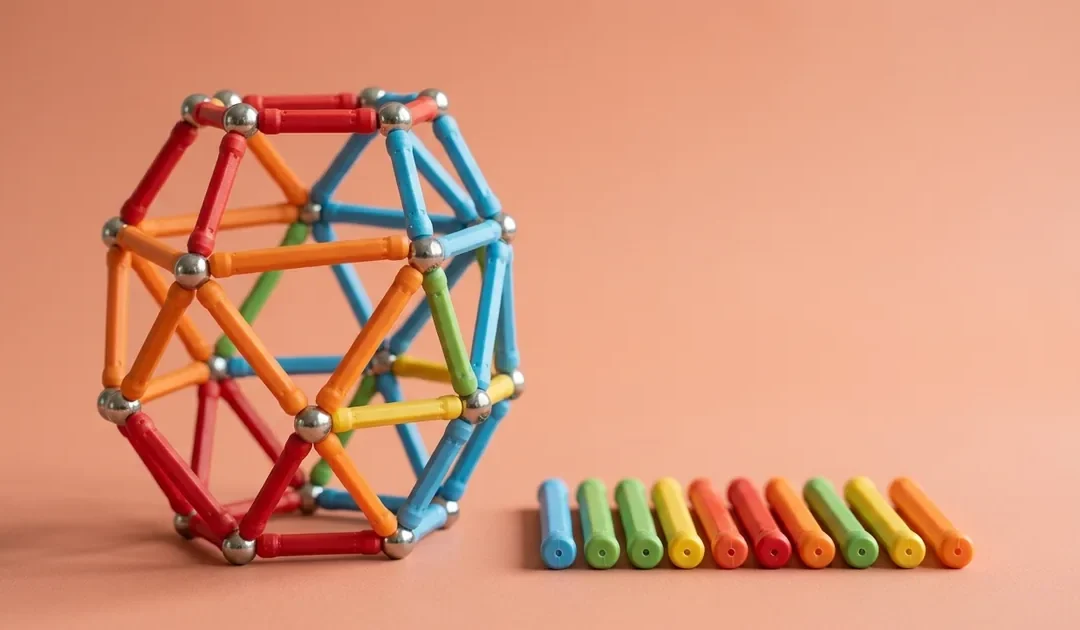
Magnetic tiles, building blocks, and gear sets teach spatial reasoning, early physics (balance, gravity, cause-and-effect), and planning skills. These toys are especially valuable because children rarely ‘finish’ them, the same set can build a train one day and a tower the next, which keeps engagement high for years rather than weeks.
Puzzles and Matching Games
Puzzles build patience, visual discrimination, and memory. Start with 4 to 6 large pieces for toddlers and work up to 100+ piece puzzles by age seven or eight. Matching card games add a social, turn-taking layer on top of memory training.
Art and Sensory Supplies
Paints, playdough, and textured materials support fine motor control and creative expression. Finger painting in particular is one of the earliest, most accessible art forms for toddlers, since it requires no grip strength, just curiosity and washable, non-toxic paint.
Pretend Play and Role-Play Sets
Kitchens, doctor kits, and dress-up costumes build language, empathy, and social scripts. Children rehearse real-world situations through pretend play, which is one of the reasons psychologists consider it so important for emotional development.
Books and Language-Based Toys
While not always labeled ‘toys’, interactive books, flashcards, and letter puzzles belong in the same category. Pairing a physical toy with a related book (a farm animal set with a farm story, for example) deepens vocabulary and comprehension.
Play-Based Learning: Getting the Most Out of Every Toy
Buying the right toy is only half the equation, how you play with it matters just as much.
Follow Your Child’s Lead
Resist the urge to correct ‘wrong’ building or coloring. A house built sideways or a purple sun in a finger painting is still valuable creative and spatial exploration. Let the play be theirs.
Narrate and Ask Open Questions
Simple narration (‘you made the tower so tall, what happens if we add one more piece?’) builds vocabulary and encourages prediction, a key early science skill. Avoid yes/no questions when you want to stretch language, ask ‘what do you think will happen’ instead of ‘is it going to fall’.
Rotate Toys Instead of Buying More
Children often lose interest not because a toy has stopped being useful, but because it has become invisible on a crowded shelf. Store a portion of the toy collection in a closet and rotate every two to three weeks. A magnetic building set that reappears after a break often gets rebuilt in entirely new ways.
Mix Independent Play With Guided Play
Both matter. Independent play builds focus and self-reliance, guided play (where a parent sits down and models a new use for a toy) introduces new skills the child might not discover alone. Aim for a balance rather than hovering constantly or disappearing entirely.
Building a Learning Corner at Home
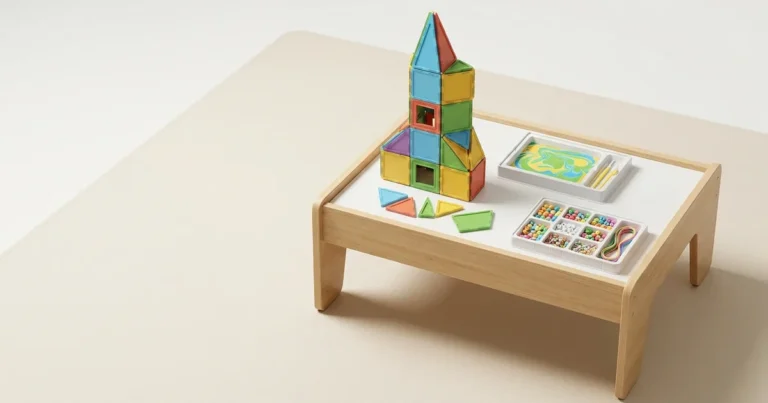
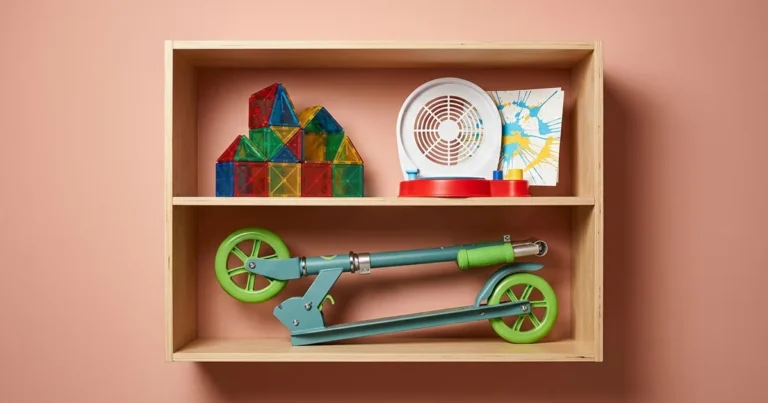
You do not need a dedicated playroom to support learning through toys. A simple, low shelf in a living room corner, with a handful of well-chosen items visible and reachable, works just as well.
Keep It Low and Visible
Store toys at a height your child can reach without help. Open bins or low shelves encourage independent choice, which builds decision-making confidence.
Group by Type, Not Brand
Keep building toys together, art supplies together, and pretend-play props together. This makes clean-up easier and helps children see the ‘categories’ of play, which is itself an early sorting and classification skill.
Protect Surfaces for Messy Play
For art activities like finger painting, a washable mat or an easy-wipe table corner removes the stress of mess, so you can let your child paint freely rather than constantly saying ‘careful’.
Budgeting for Learning Toys in AED
Quality learning toys do not need to be expensive, but they should be chosen deliberately rather than impulsively.
Prioritize Open-Ended Toys
A single well-made magnetic building set or block set can replace several single-purpose toys, since it can be rebuilt in dozens of ways. Spending a bit more AED on one flexible set often works out cheaper per hour of play than several small, single-use toys.
Compare Price Per Play Session, Not Just Sticker Price
A toy priced higher in AED but played with for years is a better investment than a cheaper toy abandoned after a week. Before buying, ask honestly: will this still be interesting to my child in six months?
Avoid Duplicate Purchases
Before adding a new item to the cart, check what skills it teaches against what is already on the shelf. If you already own a shape-sorting toy, a second one rarely adds new value, better to invest that AED in a new category like building or art.
Common Mistakes Parents Make When Choosing Learning Toys
Choosing Toys That Are Too Advanced
A toy that is too complex leads to frustration rather than learning. If a child needs constant help to use a toy, it is likely graded above their current stage. Step down in complexity and let them master it before moving up.
Overloading on Battery-Powered, One-Button Toys
Toys that do all the work themselves (flashing lights, pre-recorded songs, one button to press) offer far less developmental value than open-ended toys the child controls. A small number is fine, but they should not dominate the toy shelf.
Ignoring Interest in Favor of ‘Educational Labels’
A toy marketed as educational but ignored by your child teaches nothing. Watch what genuinely holds your child’s attention, dinosaurs, trains, colors, and lean into that interest with the learning toys you choose.
Skipping the Safety Check on Hand-Me-Downs and Secondhand Toys
Older toys, especially from friends, cousins, or online resale groups, may not meet current safety standards or may have worn, cracked parts. Always inspect and, where possible, check against current certification standards before handing them to a young child.
Balancing Learning Toys With Screen Time
In many UAE households, tablets and phones compete directly with toy shelves for a child’s attention. Hands-on learning toys offer something screens cannot: tactile feedback, three-dimensional problem-solving, and real social interaction when played with siblings or parents. Setting aside a fixed daily window for screen-free, toy-based play, even just 30 to 45 minutes, helps keep those hands-on skills developing alongside digital literacy.
A Practical Shopping Checklist
- Does it carry a recognized safety certification (EN71 or ASTM F963)?
- Is the age grading appropriate, not just ‘close enough’?
- Are magnets, if present, securely enclosed and pieces large enough to avoid choking risk?
- Is it open-ended, allowing many different ways to play, not just one?
- Does it match a skill your child is actively working on right now?
- Will it likely still interest your child in three to six months?
- Is it easy to clean or store, so it stays part of the regular rotation?
Bringing It All Together
The best learning toys for kids are not the flashiest ones on the shelf, they are the safe, well-made, open-ended pieces your child returns to again and again, building new skills each time. Start with strong safety fundamentals, choose toys that match your child’s current stage rather than an aspirational one, and build a small, rotating collection rather than an overflowing toy box. Whether it is a chunky magnetic tile set for your preschooler, a bigger building challenge for your school-age child, or a simple tub of washable finger paint for your toddler’s first creative strokes, the right toy at the right time does more for development than any amount of screen time ever could.
Frequently Asked Questions
What age should children start using magnetic building toys?
Most magnetic building sets are designed for children aged 3 and above, once small parts are less likely to be mouthed. Always check the age grading on the packaging and supervise early play sessions closely, especially with sets that include smaller connector pieces.
Are learning toys really better than screen-based learning apps?
Both have a place, but hands-on learning toys offer tactile feedback, real-world problem-solving, and social interaction that screens cannot replicate. Most pediatric development experts recommend prioritizing hands-on play, especially before age 6, and using screen-based learning as a smaller supplement.
How many learning toys does a child actually need at home?
Fewer, well-chosen toys work better than a large, cluttered collection. A small rotating set covering different skill areas, building, art, pretend play, puzzles, gives more developmental value than dozens of single-purpose toys competing for shelf space.
Is finger paint safe for toddlers who still put things in their mouths?
Look specifically for finger paints labeled non-toxic and washable, designed for young children. These are formulated to be safe if a small amount is mouthed during play, though supervision is still recommended, especially during a child’s first painting sessions.
How do I know if a learning toy is actually helping my child’s development?
Watch for signs of engaged, repeated play, your child returning to the toy on their own, trying new ways to use it, or showing visible pride when they complete a task with it. If a toy is genuinely supporting development, it usually earns a lasting spot in regular play rather than being abandoned after a few days.