Last updated: August 30, 2026
Choosing the best learning toys for kids isn’t about chasing flashy packaging or the loudest marketing claims, it’s about matching a toy to your child’s stage of development while making sure every piece that reaches their hands has been checked for safety. A toy that’s genuinely educational does two things at once: it keeps small fingers and curious mouths safe, and it quietly builds a skill your child will use for years, whether that’s stacking, sorting, naming colours, or working out how two magnetic pieces click together. This guide walks UAE parents through exactly how to choose learning toys by age, what to look for on the safety label, and which categories of toys deliver the most developmental value for your money in AED.
Why Learning Toys Matter for Child Development
Play is not a break from learning, it is how young children learn. Every time a toddler stacks a block and watches it fall, or a five-year-old links magnetic tiles into a train track, their brain is forming new connections between cause and effect, spatial reasoning, and problem-solving. Learning toys simply make this process more focused by presenting a challenge that’s just slightly out of reach, encouraging your child to stretch a little further each time they play.
Building Brain Connections Through Play
In the first eight years of life, a child’s brain forms connections faster than at any other point in their life. Open-ended toys, those that can be used in more than one way, such as building sets, art supplies, and construction pieces, are particularly powerful because they don’t dictate a single “correct” outcome. A magnetic train set can become a straight track today and a looping bridge tomorrow, and each version asks your child to plan, test, and adjust. This kind of flexible thinking is exactly what supports later academic skills like maths and reading comprehension.
Safety First: What Every UAE Parent Should Check
Before any developmental benefit matters, a toy has to be safe. In the UAE, look for toys that carry recognised international safety certifications, check that the packaging clearly states a recommended age range, and always inspect pieces yourself before handing them to a child under three. Small magnets, button batteries, and detachable small parts are the three biggest hazards parents overlook, and we’ll cover each of these in detail later in this guide.
Choosing Learning Toys by Age and Stage
The single biggest factor in picking a good learning toy is age-appropriateness. A toy that’s too advanced will frustrate a child and may pose a safety risk, while a toy that’s too simple will be abandoned within days. Here’s how to think about each stage.
0-12 Months: Sensory Discovery
At this stage, babies are learning through their senses, sight, sound, touch, and taste (yes, everything goes in the mouth). Look for high-contrast rattles, soft textured balls, and toys with different sounds and simple cause-and-effect actions, like a button that lights up when pressed. Everything must be free of small detachable parts, since babies explore almost exclusively with their mouths.
1-2 Years: Cause, Effect, and Early Coordination
Toddlers are mastering walking, grasping, and basic problem-solving. Stacking cups, simple shape sorters, chunky puzzles, and push-and-pull toys are excellent here. This is also the age when large-format building blocks start to matter, since toddlers are developing the hand strength and coordination to connect and pull apart pieces on their own.
3-5 Years: Imagination and Fine Motor Skills
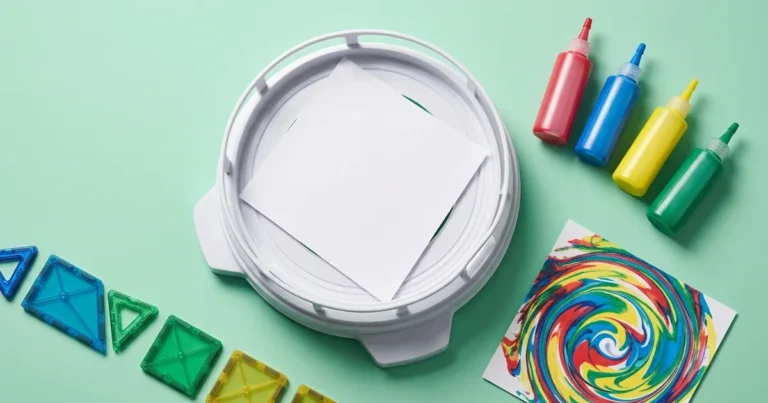
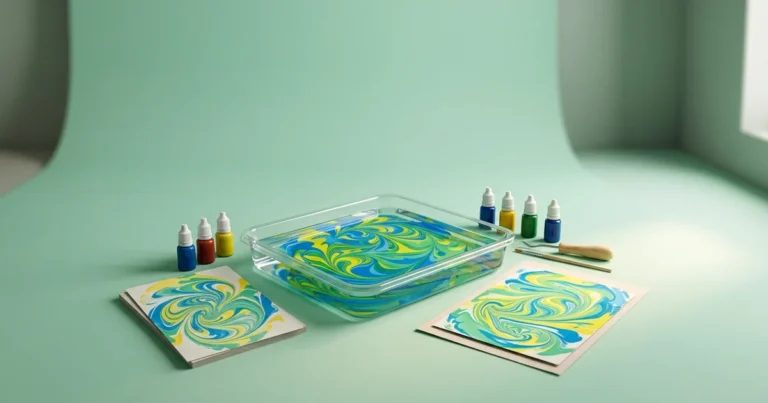
Preschoolers are ready for open-ended construction toys, pretend play sets, and early art materials. This is the age where a set like the Graflo Magnetic Train for Kids (65 pcs) genuinely earns its place in the toy box, since children this age can plan a simple track layout, connect magnetic carriages, and problem-solve when a piece doesn’t fit. Finger painting is another excellent fit for this stage; a set like Finger Paint for Kids (12 Colours) builds fine motor control and colour recognition while giving children a safe, washable outlet for creative expression. You’ll find a wider curated range of age-matched options in our toys for ages 3-5 years collection.
6-8 Years: Logic, Planning, and Longer Focus
By age six, children can hold a multi-step plan in mind, follow more complex instructions, and enjoy the satisfaction of finishing a bigger project. This is the ideal age to introduce a larger, more advanced construction set such as the Magnetic Train Set for Kids (178 pcs), which offers enough pieces for elaborate track designs, junctions, and multi-level builds that keep older children engaged far longer than a smaller starter set. Browse more options suited to this stage in our toys for ages 6-8 years collection.
9 Years and Up: Strategy, Depth, and Independence
Older children are ready for toys and games that involve strategy, longer-term projects, and independent research, such as advanced building kits, science experiment sets, and strategy board games. At this stage, children also appreciate toys that let them teach younger siblings, which reinforces their own understanding while building patience and leadership skills.
Best Learning Toys for Kids by Category
Once you know your child’s age and stage, the next step is choosing the right category of toy to match the skill you want to nurture. Here’s a breakdown of the categories that deliver the most developmental value.
Magnetic Building Toys for Problem-Solving
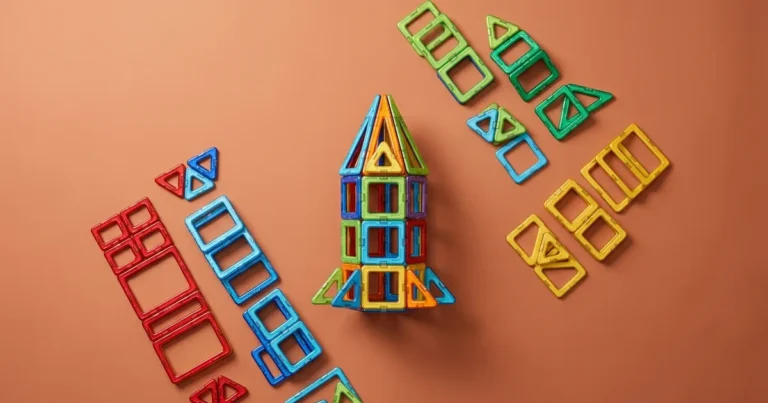
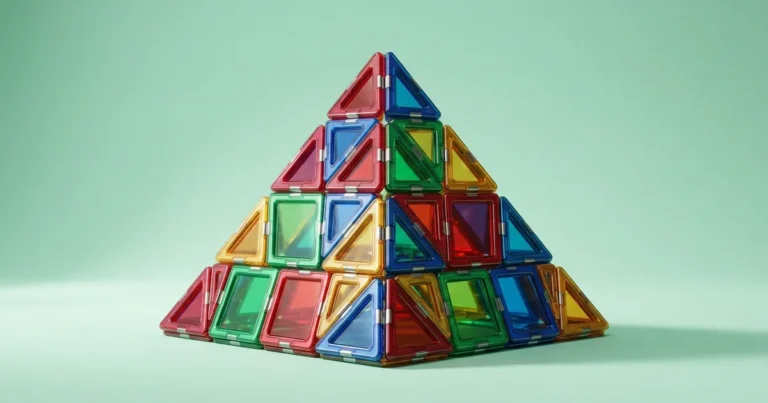
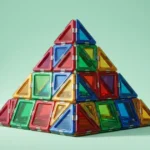
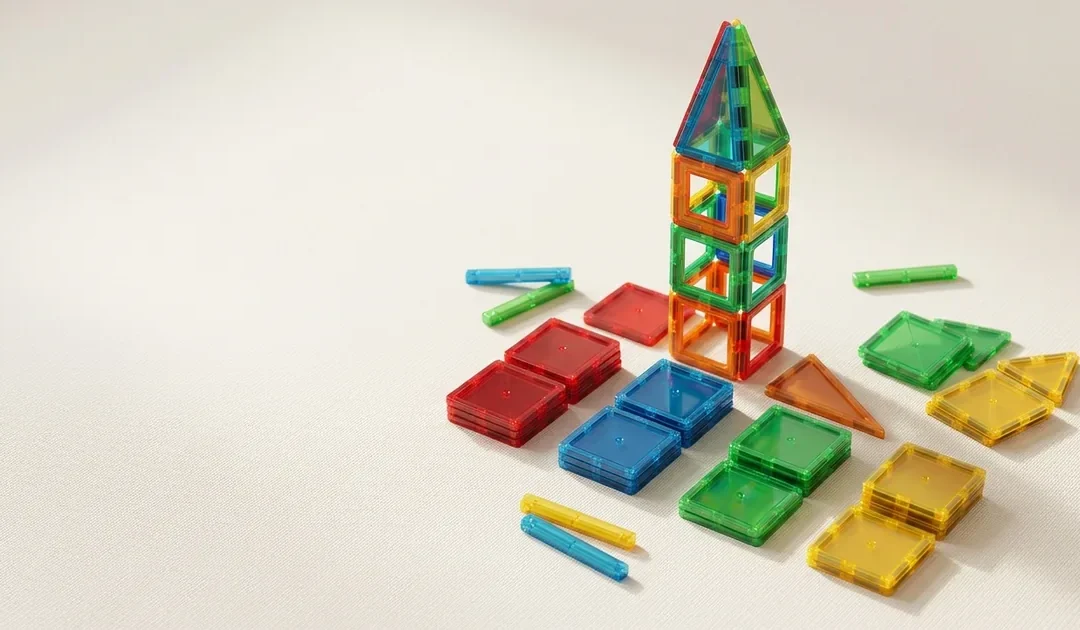
Magnetic construction toys are among the best learning toys for kids because they combine spatial reasoning, fine motor skill, and creative planning in a single, endlessly reusable toy. A child starts by simply connecting two pieces, then progresses to building tracks, bridges, and eventually elaborate layouts with junctions and multiple levels. Because the pieces snap together magnetically, younger children get instant positive feedback, which keeps them motivated to keep building and experimenting rather than giving up in frustration. Sets like the 65-piece and 178-piece Graflo magnetic train ranges are designed so a family can start small and expand the collection as a child’s skills and attention span grow.
Creative and Sensory Toys
Art supplies such as finger paints, crayons, and dough are quietly powerful learning tools. They build fine motor control in the fingers and wrist, which is a direct precursor to good handwriting later on, and they introduce colour theory, texture, and cause-and-effect (press harder, the colour gets darker) in a completely low-pressure way. Always choose washable, non-toxic formulas, especially for children under five who may still put fingers in their mouths during play.
STEM and Construction Toys
Building blocks, gear sets, and simple engineering kits introduce children to basic physics and engineering concepts long before they ever see the words in a textbook. A child who has spent hours experimenting with balance, weight, and structure through play will find these concepts far more intuitive when they meet them formally in school.
Language and Early Literacy Toys
Alphabet puzzles, picture books, and simple word-matching games build the foundation for reading. Look for toys that pair a picture with a word or sound, since this dual coding helps young brains form stronger memory connections than text alone.
Outdoor and Gross Motor Toys
Balance bikes, balls, and simple obstacle-course equipment build gross motor skills, coordination, and confidence in movement. While not always labelled as “educational,” strong gross motor development directly supports a child’s ability to sit still and focus during more academic tasks later on.
Matching Toys to Developmental Milestones
Rather than shopping by toy type alone, it helps to think about which specific skill you want to support. Here’s how the main categories map to core developmental areas.
Fine Motor Skills
Fine motor skills, the small, precise movements of fingers and hands, are built through activities like threading beads, snapping magnetic pieces together, holding a paintbrush or finger-painting, and turning puzzle pieces to fit. These skills are essential preparation for handwriting and self-care tasks like buttoning a shirt or using cutlery.
Cognitive and Problem-Solving Skills
Sorting toys, puzzles, and building sets that require planning ahead (such as figuring out which magnetic piece will complete a loop) all strengthen problem-solving. Children learn to test an idea, see that it doesn’t work, and try a different approach, which is the foundation of resilience and critical thinking.
Social-Emotional Skills
Pretend play sets, dolls, and cooperative building projects teach turn-taking, sharing, and understanding another person’s perspective. When two siblings build a magnetic train track together, they’re also practising negotiation and compromise, skills that matter just as much as academic ones.
Language Development
Narrating play out loud (“the train is going over the bridge now”) massively boosts vocabulary growth. Choose toys that naturally invite storytelling and description, since these generate far more back-and-forth conversation between parent and child than toys that operate silently on their own, such as some electronic toys with pre-recorded sounds.
Safety Checklist Before You Buy
No matter how educational a toy claims to be, safety comes first, always. Here is a practical checklist to run through before adding any toy to your cart.
Age Grading and Choking Hazards
- Check the manufacturer’s recommended age range on the packaging and take it seriously, especially the “not suitable for children under 3” warnings.
- Use a simple rule of thumb: if a piece can fit inside a toilet paper roll, it’s a choking risk for children under three.
- Inspect toys regularly for cracks, loose parts, or fraying, which can create new hazards over time even in a toy that was originally safe.
Material and Certification Checks
- Look for toys made from non-toxic, BPA-free plastics and, for art supplies, water-based and washable formulas.
- Favour brands that list safety certifications clearly on their packaging or product pages rather than vague claims of being “safe.”
- Check paint and dye quality on any painted wooden or plastic toy, since chipped paint can be both a choking and a chemical exposure risk.
Battery and Magnet Safety
Two categories deserve special attention. Button batteries, found in some light-up or sound toys, must be housed in a screw-locked compartment, never a simple snap-open one, since swallowed batteries are a medical emergency. Small magnets, common in magnetic building toys, should be large enough that they cannot be swallowed, and multi-piece sets should always be supervised with children under three. Reputable magnetic construction toys designed for the 3-5 and 6-8 age brackets, like the sets in our age-specific collections, are built with appropriately sized pieces for those stages, but supervision is still recommended for the youngest end of any range.
Smart Shopping Tips for UAE Parents
Buying learning toys doesn’t have to mean overspending. A little planning goes a long way toward getting genuine play value for every AED you spend.
Budgeting in AED
Many high-quality learning toys sit in an accessible price range, and you don’t need to spend heavily to get strong developmental value. A smaller starter set, such as a 65-piece magnetic train set, is a smart entry point in the AED 100-200 range for a preschooler, while a larger 178-piece set makes sense as an upgrade once a child is a bit older and ready for more complex builds. Art supplies like a 12-colour finger paint set are typically an affordable, low-cost way to add a creative outlet to your toy rotation without a big spend.
Shopping by Age Category Online
One of the easiest ways to avoid buying a mismatched toy is to shop directly from an age-specific category rather than browsing everything at once. Our ages 3-5 years and ages 6-8 years collections are curated so that every product listed has already been matched to the right developmental stage, saving you the guesswork.
Rotating Toys to Keep Learning Fresh
Rather than buying constantly, rotate toys your child already owns in and out of storage every few weeks. A magnetic train set that’s been put away for a month often feels brand new again when it reappears, and this simple habit stretches the play value of every toy you own considerably further.
Common Mistakes Parents Make When Choosing Learning Toys
Even well-intentioned parents fall into a few predictable traps when shopping for learning toys.
- Buying for the age you wish your child was, not the age they are. A toy pitched two years ahead of your child’s actual stage usually ends up ignored or, worse, used unsafely.
- Choosing toys that do all the work. Battery-powered toys that light up and play sound on their own can be entertaining, but they leave little room for a child’s own imagination and problem-solving compared with open-ended toys like building sets and art supplies.
- Overlooking the packaging warnings. Age labels and small-parts warnings exist for real safety reasons, not as generic disclaimers, and they should always be respected, especially for households with children of mixed ages.
- Buying too many toys at once. A child with fewer, well-chosen toys typically plays more deeply and creatively than one overwhelmed by a large pile of options.
- Ignoring your child’s actual interests. The “best” learning toy on paper is only effective if your child is genuinely drawn to it, so let your child’s curiosity guide part of the decision alongside the safety and age checks.
Conclusion
The best learning toys for kids in 2026 are the ones that fit your child’s exact age and stage, meet strict safety standards, and leave room for genuine creativity and problem-solving rather than doing all the thinking for them. Start by identifying your child’s current stage, check every toy against the safety checklist above, and choose one or two well-matched pieces rather than a large pile of mismatched ones. Whether you’re building fine motor skills with finger paints, encouraging spatial reasoning with a magnetic train set, or simply rotating familiar favourites to keep play fresh, the goal is the same: safe, joyful play that quietly builds the skills your child will carry with them for years to come.
Frequently Asked Questions
How do you choose a toy by age?
Start with the manufacturer’s recommended age range printed on the packaging, then think about your child’s actual current abilities rather than their age in years alone. For babies under one, choose soft, sound-and-touch toys with no small parts. For toddlers aged one to two, choose stacking, sorting, and push-pull toys that build coordination. For preschoolers aged three to five, introduce open-ended building sets and art supplies that build fine motor skills and imagination. For children aged six to eight, move to larger, more complex construction sets and logic-based games. Always check for small parts, secure battery compartments, and appropriately sized magnets before handing any toy to a younger sibling in a mixed-age household.
What makes a toy educational rather than just entertaining?
An educational toy invites a child to think, plan, and problem-solve rather than simply react to lights and sounds. Open-ended toys like magnetic building sets, art supplies, and puzzles ask a child to make decisions and test ideas, which builds cognitive and fine motor skills over time. A purely entertaining toy can still be fun and even soothing, but it typically doesn’t require the same active thinking, so a good toy box usually mixes both types.
Are magnetic building toys safe for young children?
Magnetic building toys are safe for young children when the pieces are appropriately sized for the child’s age and the set is chosen from a reputable, age-labelled range, such as those designed specifically for three to five or six to eight year olds. Always supervise magnetic play with children under three, check regularly for cracked or loose pieces that could release smaller magnets, and store sets away from younger siblings who may still put objects in their mouths.
How many learning toys does a child actually need?
Quality matters far more than quantity. A small, well-chosen rotation of four to six toys covering different skills, such as one building set, one art activity, one puzzle, and one pretend-play item, is usually enough to keep a child engaged and learning. Rotating toys in and out of storage every few weeks often does more for sustained interest than continuously buying new ones.
Should I buy the same toy set in a bigger size as my child grows?
Yes, this is often a smart approach. Starting with a smaller set, such as a 65-piece magnetic train set for a preschooler, and later upgrading to a larger 178-piece set as the child grows into the six to eight year age range, lets the complexity of play grow alongside your child’s developing skills without needing to switch to an entirely different toy category.