Last updated: October 11, 2026
Choosing the best toys for young girls creativity imagination 2026 starts with one simple question every parent in the UAE asks first: is it safe? Before we talk about colours, themes, or play value, we always put safety and genuine developmental benefit at the centre of every recommendation. A toy that sparks a child’s imagination while meeting strict safety standards, using non-toxic materials, and matching her developmental stage is not just a nice-to-have, it is the foundation of healthy early childhood play. This guide walks you through exactly what to look for, which toy categories genuinely build creativity and imagination, and how to choose age-appropriate options for girls aged 3 to 8, all while keeping your budget in mind with AED pricing in focus.
Why Creative Play Matters So Much in Early Childhood
Creative and imaginative play is not simply a way to keep little hands busy. It is one of the most important building blocks of early brain development. When a young girl stacks magnetic blocks into a castle, paints with her fingers, or invents a story for her dolls, she is practising skills that will support her for the rest of her life.
Building Cognitive and Problem-Solving Skills
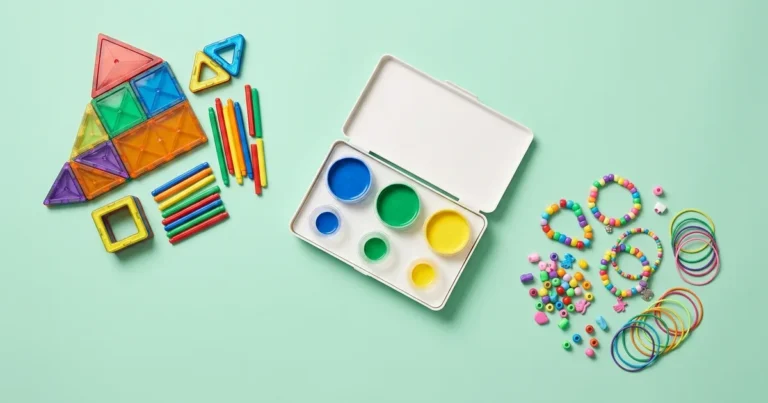
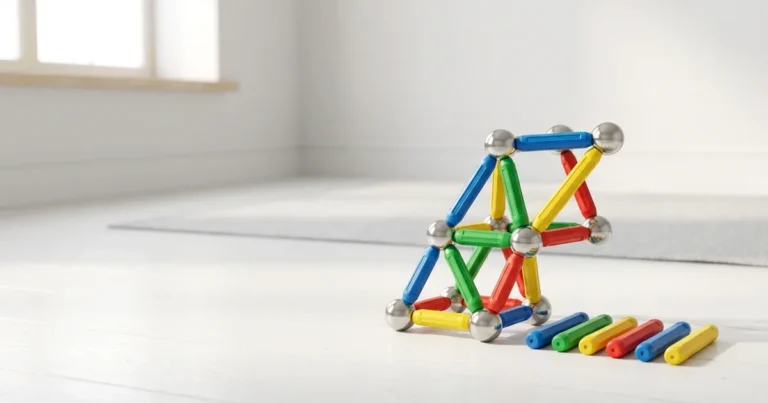
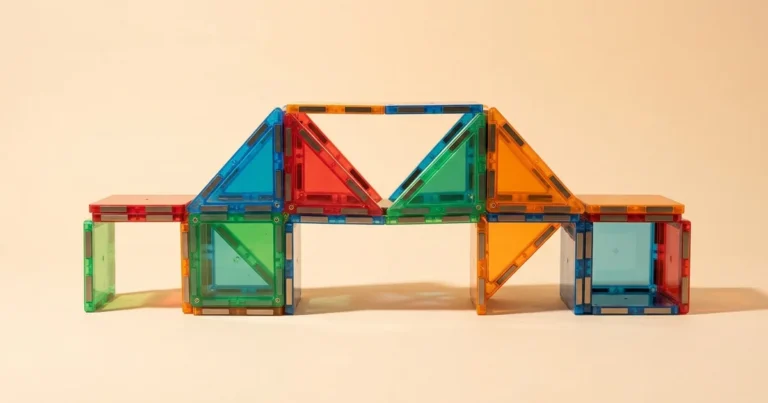
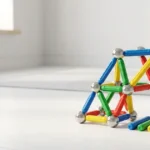
Open-ended play, where a toy can be used in many different ways, encourages children to experiment, test ideas, and solve problems on their own terms. A set of magnetic building pieces, for example, has no single “right” way to be used. Children decide what to build, how to balance pieces, and what happens when something falls down. This kind of trial-and-error thinking strengthens logical reasoning and early engineering concepts long before a child ever sits in a classroom.
Supporting Language and Storytelling Development
Imaginative play is deeply tied to language development. When a girl narrates a scene for her dolls, invents dialogue for her toy animals, or describes the painting she just created, she is practising vocabulary, sentence structure, and sequencing of ideas. Parents often notice that children who engage in regular pretend play develop richer vocabularies and more confident storytelling abilities by the time they start school.
Encouraging Emotional Growth and Confidence
Creative play also gives children a safe space to process emotions. Acting out a tea party, pretending to be a doctor, or building a “home” out of blocks allows a child to rehearse social situations, practise empathy, and build self-confidence. There is no wrong answer in creative play, which means every attempt is a success. This freedom from judgement is incredibly reassuring for young children who are still learning to trust their own ideas.
Developing Fine Motor Skills and Hand-Eye Coordination
Many of the best creative toys also quietly build fine motor skills. Holding a paintbrush or finger painting with intention, snapping magnetic pieces together, or arranging small pretend-play props all require precise hand movements. These small physical achievements build the hand strength and coordination that will later support handwriting and other fine motor tasks at school.
What to Look For When Choosing Creative Toys for Young Girls
With so many options available in 2026, it helps to have a clear checklist before adding anything to your cart. Here is what we always recommend UAE parents prioritise.
Safety Standards and Non-Toxic Materials
This is non-negotiable. Always check that toys meet recognised international safety standards, have no small detachable parts that pose choking hazards for younger children, and use non-toxic, child-safe materials. This is especially important for art supplies like paints and crayons, which young children often bring close to their mouths or skin. Look for labels that confirm water-based, non-toxic formulas, and avoid toys with sharp edges, strong chemical smells, or easily breakable small components, particularly for children under 3.
Age-Appropriate Design
A toy that is perfect for a 7-year-old may be entirely wrong for a 3-year-old, and not just because of difficulty level. Younger children need larger pieces, simpler mechanisms, and shorter play sequences, while older children benefit from more intricate building challenges and multi-step creative projects. Always check the recommended age range on packaging, and when in doubt, choose toys designed specifically for your child’s current stage, such as our dedicated collection for ages 3-5 years or the slightly more advanced options built for ages 6-8 years.
Open-Ended vs Single-Purpose Toys
Toys that only do one thing, like a doll that performs the exact same action every time, can lose their appeal quickly and offer limited creative value. Open-ended toys, like building sets, art supplies, and flexible pretend-play props, grow with your child because they can be used in endless new ways. A single set of magnetic tiles or a train track can become a city, a spaceship, or a zoo depending on the day’s imagination.
Durability and Long-Term Play Value
Quality matters, especially with younger children who tend to be enthusiastic (and sometimes rough) with their toys. Sturdy construction materials and well-made pieces mean the toy survives daily play sessions and can even be handed down to younger siblings or cousins. This also makes higher upfront costs in AED more worthwhile over time, since a durable toy delivers months or years of play rather than breaking within weeks.
Gender-Neutral and Inclusive Themes
While this guide focuses on toys for young girls, we always encourage parents to look beyond narrow “girl” marketing labels. The most enriching creative toys, building sets, art supplies, and imaginative play kits, are inherently gender-neutral and simply reflect whatever story or creation a child wants to bring to life. Giving girls access to construction toys, trains, and STEM-style building sets alongside traditional pretend-play items builds a much broader creative and cognitive toolkit.
Best Toy Categories for Creativity and Imagination in 2026
Based on current trends and decades of early childhood research, these categories consistently rank among the best toys for young girls creativity imagination 2026, offering genuine developmental value alongside hours of engaging play.
1. Magnetic Building and Construction Sets
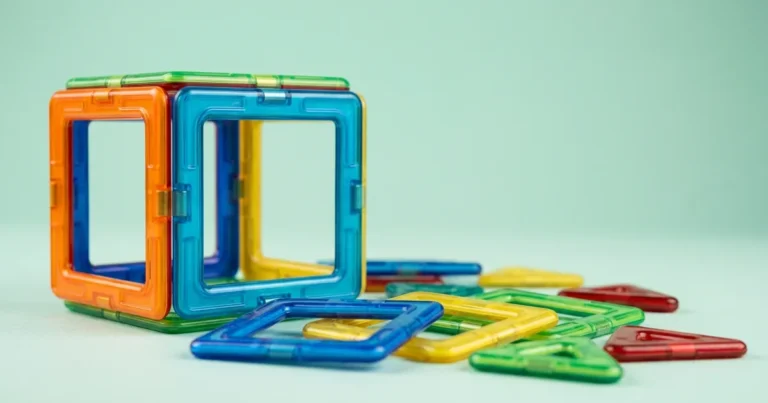
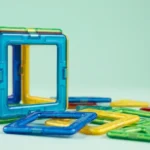
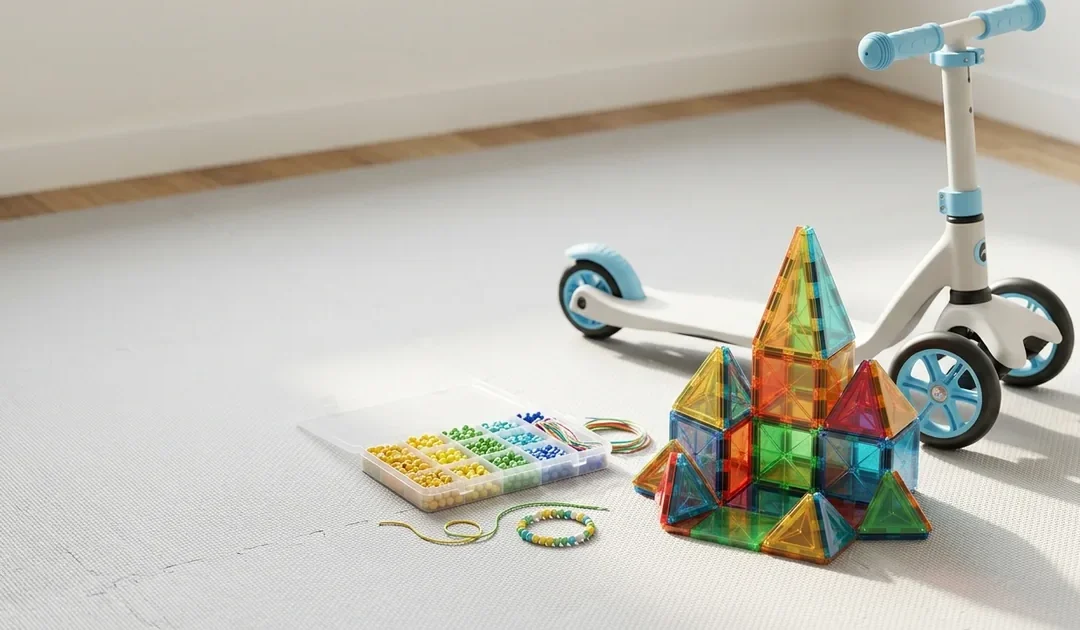
Magnetic building toys have become one of the most popular categories among UAE parents, and for good reason. They combine spatial reasoning, early engineering concepts, and pure open-ended creativity in one safe, reusable package. A young girl can build a train station one day and a fantasy castle the next, using the exact same pieces.
Our Graflo Magnetic Train for Kids (65pcs) is a wonderful starting point for younger children, offering enough pieces for imaginative track layouts without overwhelming a first-time builder. For children who are ready for more advanced creations, the Magnetic Train Set for Kids (178pcs) provides significantly more pieces, allowing for bigger, more elaborate towns, bridges, and winding tracks that keep older children engaged for longer stretches of imaginative play.
Both sets encourage girls to think like young engineers and storytellers at the same time, deciding not just how pieces connect, but what story the finished creation tells, whether it is a train delivering presents to a birthday party or a rescue mission across a magnetic bridge.
2. Art and Sensory Play Supplies
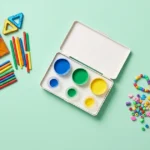
Art is one of the purest forms of creative expression available to young children. Finger painting in particular is wonderful for sensory development, because it lets children feel the texture of the paint directly, encouraging a deeper sensory connection to their creative work compared to using a brush alone.
Our Finger Paint for Kids (12 Colors) is formulated with child safety at the forefront, using non-toxic ingredients that are gentle on little hands and easy to wash off skin and most fabrics. With 12 vibrant colours, young girls can experiment with colour mixing, patterns, and free-form art, all while strengthening fine motor control and self-expression. This kind of unstructured art time is especially valuable because there is no right or wrong outcome, only exploration.
3. Pretend Play and Role-Play Sets
Kitchen sets, doctor kits, grocery store play sets, and dress-up costumes allow children to step into different roles and rehearse real-world scenarios in a playful, low-pressure environment. Pretend play of this kind strengthens social skills, empathy, and language development, while also giving children a sense of independence as they “take charge” of their imaginary scenario.
When choosing pretend-play sets, look for sturdy, washable materials and pieces large enough to avoid choking hazards for younger children. Rotating these sets every few weeks, rather than leaving everything out all the time, also helps maintain novelty and keeps imaginative play fresh.
4. Storytelling Props and Puzzle-Based Toys
Storytelling toys, such as felt boards, puppet sets, and themed figurine collections, invite children to create and narrate their own stories. Meanwhile, open-ended puzzles encourage patience, sequencing, and spatial awareness. Combining storytelling props with building toys often leads to the richest imaginative sessions, as a girl might use blocks to build a village and then populate it with characters from her storytelling set.
5. STEM-Inspired Building and Logic Toys
Introducing girls early to construction, engineering, and logic-based toys helps break down outdated stereotypes and builds genuine confidence in STEM-related thinking. Magnetic building sets, gear toys, and simple circuit kits for older children all fall into this category. These toys teach cause and effect, balance, and planning, skills that extend well beyond playtime and into early academic readiness.
6. Musical and Rhythm-Based Creative Toys
Though often overlooked, musical instruments and rhythm toys are powerful creativity boosters. Simple drums, xylophones, or shaker instruments let children experiment with sound, pattern, and rhythm, building an early appreciation for music while also strengthening listening skills and coordination.
Age-by-Age Guide to Choosing Creative Toys
Matching the toy to the developmental stage is one of the most important steps in building a genuinely enriching play collection. Here is how we recommend approaching it for girls aged 3 through 8.
Ages 3 to 5 Years: Building Foundations
At this stage, children are developing basic motor skills, beginning to engage in cooperative play, and starting to use their imagination in more structured ways. Toys should feature larger, easy-to-handle pieces, simple cause-and-effect mechanisms, and bright, engaging colours.
Good options include a starter magnetic building set like our 65-piece train set, basic finger painting supplies, simple pretend-play kitchen sets, and chunky puzzles with large pieces. You can browse a full curated range in our ages 3-5 years collection, which has been put together specifically with this developmental stage in mind, prioritising safety and simplicity without sacrificing creative value.
At this age, keep play sessions shorter and more guided, offering gentle prompts like “What do you think the train is carrying today?” to encourage imaginative thinking without overwhelming a young child who is still building attention span.
Ages 6 to 8 Years: Expanding Imagination and Complexity
By age 6, most children have developed stronger fine motor control, longer attention spans, and a growing interest in more complex, multi-step creative projects. This is the perfect time to introduce larger building sets, more detailed art projects, and storytelling toys with multiple characters or scenes.
Our 178-piece magnetic train set is an excellent fit here, offering enough complexity to keep older children challenged and engaged over longer play sessions. Children in this age group also enjoy more advanced art techniques, collaborative pretend-play scenarios with siblings or friends, and logic-based building challenges. Explore our dedicated ages 6-8 years collection for toys designed specifically to match this stage of development, encouraging independence while still keeping safety as the top priority.
How to Encourage Creative Play at Home
Even the best toys need the right environment and a little parental encouragement to truly flourish. Here are practical, easy-to-implement tips for UAE parents.
Create a Dedicated Creative Corner
You do not need a large playroom to encourage creativity. A small corner of a bedroom or living room, with a low table, some storage bins, and easy access to art supplies and building toys, signals to a child that this is her space to create. Keeping supplies at a child’s height encourages independent play and decision-making.
Rotate Toys Regularly
Instead of leaving every toy out all the time, try rotating a portion of the toy collection every two to three weeks. Toys that have been “away” for a while often feel brand new again when reintroduced, renewing a child’s interest and creative engagement without the need to buy something new every time.
Join In Without Taking Over
Parents play an important role in creative play, but the goal is to support, not direct. Asking open-ended questions like “What happens next in your story?” or “What else could this building become?” encourages a child to keep expanding her own ideas, rather than simply following adult instructions.
Protect Unstructured Play Time
In busy family schedules, it can be tempting to fill every hour with structured activities or screen time. However, unstructured free play, where a child decides what to do with her toys without any set agenda, is where the richest imaginative development happens. Try to protect at least 30 to 45 minutes of unstructured play time daily.
Celebrate Process Over Product
When a child finishes a painting or finishes building something with magnetic pieces, focus your praise on the process rather than the final result. Comments like “I love how you chose those colours” or “Tell me about how you built this bridge” encourage a growth mindset and reinforce that creativity itself is valuable, not just a polished end result.
Common Mistakes Parents Make When Choosing Creative Toys
Even with the best intentions, it is easy to fall into a few common traps when shopping for creative toys.
Choosing Toys That Are Too Advanced or Too Simple
A toy that is too complex can frustrate a younger child, while one that is too simple can bore an older one. Always check age recommendations carefully, and when a child is between two age ranges, consider her individual attention span and current skill level rather than her age alone.
Overloading on Single-Use Toys
It is tempting to buy themed toys that only do one thing, but these often lose appeal within days. Prioritising open-ended toys, like building sets and art supplies, over single-purpose gadgets ensures better long-term play value and a stronger return on your investment in AED.
Ignoring Safety Labels
In the excitement of finding a fun-looking toy, it is easy to overlook safety certifications or age warnings printed on the packaging. Always take a moment to check for choking hazard warnings, non-toxic material certifications, and recommended age ranges before purchasing, especially for toys involving small magnetic pieces or art supplies that might come into contact with skin or mouths.
Not Leaving Room for Imagination
Highly scripted toys that tell a child exactly what to do, step by step, leave very little room for personal creativity. Balancing structured toys with plenty of open-ended options ensures children still have space to invent their own stories and solutions.
Budget-Friendly Creative Play in the UAE
Building a rich, creative toy collection does not have to be expensive. Here are some practical budgeting tips for UAE families.
Prioritise Versatile, Long-Lasting Toys
Investing a slightly higher amount in AED for a durable, open-ended toy like a magnetic building set often works out more cost-effective over time than buying several cheaper, single-use toys that are quickly outgrown or broken.
Combine Toy Types for Richer Play
Rather than buying many toys within a single category, consider combining a few different types, such as a building set, an art supply kit, and a pretend-play prop. This combination often sparks more creative, cross-category play than a large collection of similar items.
Watch for Seasonal Bundles
Many retailers, including specialised toy shops, offer bundled sets or seasonal promotions throughout the year. Keeping an eye out for these bundles can help you build a well-rounded creative toy collection while managing your overall budget in AED more efficiently.
Bringing It All Together: Building a Creative Toy Collection That Grows With Your Daughter
The best toys for young girls creativity imagination 2026 are not necessarily the flashiest or most expensive options on the shelf. They are the toys that meet strict safety standards, use non-toxic materials, match your child’s current developmental stage, and leave plenty of room for open-ended, self-directed play. A thoughtfully chosen magnetic building set, a set of safe finger paints, and a few flexible pretend-play props can offer more genuine creative value than an entire shelf of single-use gadgets.
As your daughter grows from the simple, sensory-focused play of ages 3 to 5 into the more complex, multi-step creative projects of ages 6 to 8, her toy collection should evolve with her. Starting with foundational sets and gradually introducing more advanced building challenges, detailed art projects, and collaborative storytelling opportunities ensures her imagination continues to be nurtured at every stage.
Conclusion
Choosing the right creative toys for your daughter does not need to be overwhelming. By prioritising safety, selecting age-appropriate and open-ended options, and protecting plenty of time for unstructured, imaginative play, you give her the tools she needs to build confidence, problem-solving skills, and a lifelong love of creative thinking. Whether you start with a simple magnetic train set, a box of non-toxic finger paints, or a cosy pretend-play corner at home, every small step supports her growing imagination. Explore our safety-first, age-appropriate collections designed specifically for young children, and build a toy box that truly grows alongside your daughter through 2026 and beyond.
Frequently Asked Questions
What are the safest materials to look for in creative toys for young girls?
Always look for toys labelled non-toxic, free from small detachable parts for younger children, and compliant with recognised international safety standards. For art supplies like paints, choose water-based, non-toxic formulas that are easy to wash off skin and clothing, which is especially important for children who tend to touch their faces while playing.
What age should girls start playing with magnetic building sets?
Most magnetic building sets are appropriate from around age 3, provided the pieces are large enough to avoid choking hazards. Starter sets with fewer, larger pieces work well for younger children, while sets with more pieces and smaller components are better suited to children aged 6 and above who have developed stronger fine motor control.
How can I tell if a toy genuinely supports creativity and imagination?
Open-ended toys that can be used in many different ways, such as building sets, art supplies, and flexible pretend-play props, generally support creativity far better than single-purpose toys that only perform one scripted action. If a toy allows your child to decide what happens next, it is likely a strong choice for imaginative development.
How many creative toys does a young girl actually need?
Quality matters far more than quantity. A small, well-chosen collection that includes one building set, one art supply kit, and one or two pretend-play items often provides richer, more sustained creative play than a large pile of toys that are rarely used. Rotating toys every few weeks can also keep a smaller collection feeling fresh.
Are magnetic building toys suitable for girls, even though they are sometimes marketed as gender-neutral or for boys?
Absolutely. Magnetic building toys are inherently gender-neutral and offer exceptional benefits for spatial reasoning, early engineering thinking, and creative storytelling for all children. Introducing girls to construction-style toys early on helps build well-rounded cognitive skills and confidence in creative problem-solving.