Last updated: October 7, 2026
Six years old is a big leap, your child is reading their first chapter books, doing simple math in their head, negotiating rules with friends, and asking ‘why’ about almost everything. The right learning toys for six year olds do more than fill an afternoon, they build fine motor control, problem-solving stamina, and the confidence that comes from mastering something new. As a UAE parent, you also want toys that pass safety checks, survive daily play, and do not add to screen fatigue. This guide walks through exactly what to look for, which categories matter most at this age, and how to build a toy collection that grows with your child, all priced in AED and chosen with safety as the first filter.
Why Age Six Is a Pivotal Learning Stage
Six year olds sit at the crossroads of early childhood and middle childhood. Their brains are rapidly strengthening the connections responsible for logical sequencing, memory, and self-control. At the same time, their hands are finally steady enough for precise tasks like tying shoelaces, cutting along a line, or snapping together small building pieces. This is also the year many children in the UAE start Grade 1 or Year 1, where academic expectations rise sharply, phonics blending, number bonds, sentence writing, and independent problem solving all arrive at once.
Learning toys for six year olds matter because this is a window where play-based practice cements skills far more effectively than worksheets alone. A child who builds a magnetic train track is quietly practicing spatial reasoning and sequencing. A child mixing finger paint colors is absorbing early science concepts about color and texture. The toy shelf, when chosen thoughtfully, becomes an extension of the classroom, just far more joyful.
What Changes Developmentally Between Five and Seven
Parents often ask why a toy that was perfect at age five suddenly feels too simple at six. Between these ages, children typically gain:
- Longer attention spans, often 20 to 40 minutes of focused play on a single activity
- Improved fine motor precision for writing, cutting, threading, and building smaller pieces
- Early logical reasoning, including sorting by two criteria at once and basic cause-and-effect prediction
- Growing independence, wanting to read instructions or figure out a puzzle without adult help
- Emerging social strategy, understanding turn-taking, fairness, and simple competition in games
Toys that stretch slightly beyond current ability, without causing frustration, create what educators call the ‘just right’ challenge. This is the sweet spot every learning toy on this list is chosen to hit.
What to Look For in Learning Toys for Six Year Olds
Not every toy labeled ‘educational’ actually earns the title. Before anything else, UAE parents should run every potential purchase through a short safety and value checklist.
Safety First: Certifications and Materials
Because children at this age still mouth small objects occasionally, and definitely still rub their eyes and faces after play, material safety cannot be an afterthought. Look for:
- Non-toxic, BPA-free plastics and lead-free paints, especially for art supplies like finger paints and crayons
- Rounded edges and no small detachable parts that could pose a choking hazard for any younger siblings in the home
- Washable, skin-safe formulas for anything that touches hands or faces, such as the Graflo Finger Paint for Kids, 12 Colors, which is formulated to be easy to wash off skin and clothing after creative sessions
- Strong magnetic strength and securely sealed magnets in building sets, so pieces do not come loose during active play
- Compliance with recognized international toy safety standards, which reputable brands will display clearly on packaging
Safety is not a box to tick once, it is a habit. Periodically check older toys for cracks, fading, or loosening parts, especially with daily use in a busy household.
Matching Toys to Developmental Milestones
A genuinely educational toy should map to at least one of these developmental goals:
- Fine motor skills: building, threading, drawing, cutting, snapping pieces together
- Logical and mathematical thinking: sorting, sequencing, pattern building, simple counting games
- Language and literacy: letter recognition, phonics games, storytelling props
- Creativity and self-expression: open-ended art, imaginative building, role play
- Social-emotional growth: cooperative games, turn-taking, managing winning and losing gracefully
The best toy boxes contain a mix across all five categories rather than ten versions of the same skill.
Open-Ended Versus Single-Purpose Toys
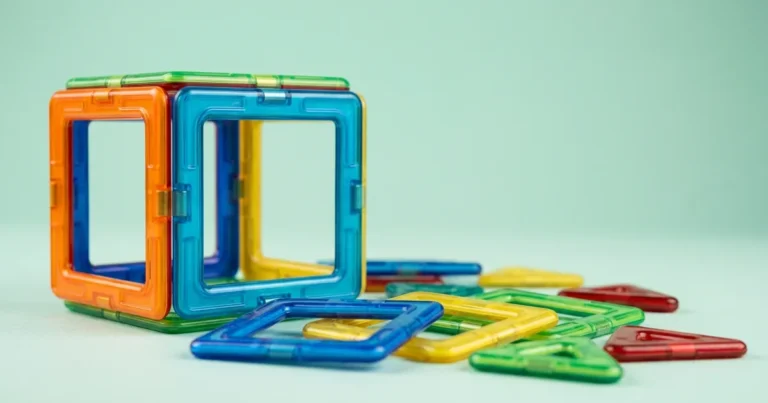
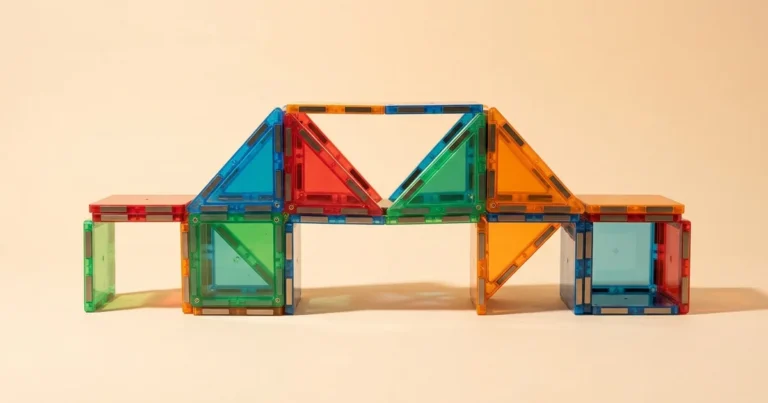
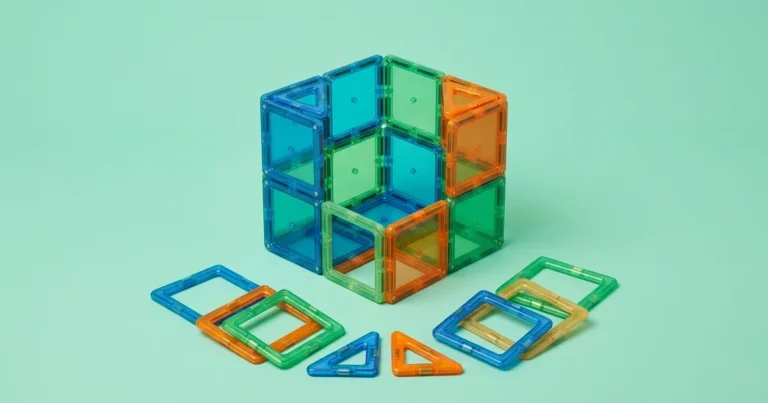
Open-ended toys, like building sets, art supplies, and construction pieces, can be used in endless new ways as a child’s imagination grows. A single-purpose toy, like a battery-operated gadget with one function, tends to lose appeal within weeks. For six year olds specifically, open-ended toys offer far better long-term value because the child, not the toy, decides what happens next. This is exactly why magnetic building sets remain a favorite among parents and teachers, a 65-piece set can build a simple loop one day and an elaborate multi-level city the next.
Top Categories of Learning Toys for Six Year Olds
Below is a breakdown of the categories that consistently deliver the most developmental value for this age group, along with practical examples and how to introduce each one at home.
1. STEM and Building Toys
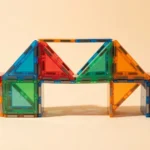
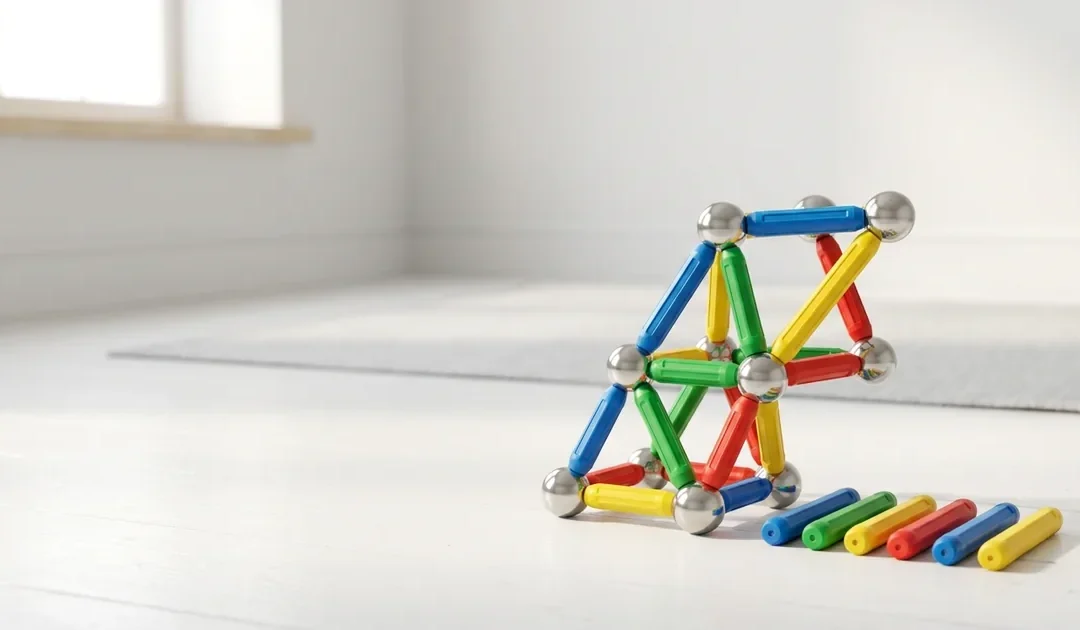
Science, technology, engineering, and math concepts are best absorbed through hands-on construction at this age, not textbooks. Magnetic building sets are particularly effective because they combine spatial reasoning, basic engineering (balance, structure, and stability), and creative design in one activity.
The Graflo Magnetic Train for Kids, 65 Pieces is a strong starting point for a six year old who is building independent play skills, it has enough pieces for varied track layouts without being overwhelming to tidy up afterward. For a child who is already confident with basic building and ready for a bigger challenge, the Magnetic Train Set for Kids, 178 Pieces opens up multi-track cities, bridges, and more complex engineering problems, perfect for a child who wants to plan before building rather than build by trial and error.
Beyond trains, look for magnetic tiles, simple gear sets, and basic circuit kits designed for this age range. All of these share a common thread, the child sees an immediate, tangible result from their own planning and effort, which builds genuine confidence rather than praise-dependent confidence.
2. Creative and Art Toys
Art is often treated as ‘just for fun,’ but at six years old, creative play is doing serious developmental work. Mixing colors teaches early science concepts. Controlling a brush or finger strengthens the same hand muscles used for handwriting. Deciding what to paint and how to paint it builds planning and decision-making skills.
The Graflo Finger Paint for Kids, 12 Colors is a great choice for this age because the wider color range lets children experiment with mixing and shading, a step up from the basic primary-color sets suited to toddlers. Pair it with large sheets of paper, an old shirt as a smock, and a washable mat, and you have a mess-contained creative station that can run for 30 minutes or more.
Other strong creative options for six year olds include:
- Beginner sewing or lacing cards for fine motor precision
- Simple clay or dough sets with tools for shaping and cutting
- Sticker mosaic or pattern kits that combine art with early math symmetry
- Blank journals or sketchbooks that encourage daily, low-pressure creative habits
3. Logic Puzzles and Board Games
Six is the age where children genuinely start to enjoy strategy, not just chance. Board games introduce turn-taking, probability, and the emotional skill of losing gracefully, something many six year olds are still practicing.
Good choices include:
- Jigsaw puzzles in the 48 to 100 piece range, scaling up gradually as confidence grows
- Simple strategy games involving matching, memory, or basic counting moves
- Pattern block or tangram sets that build geometry intuition long before formal geometry lessons begin
- Logic grid puzzles designed specifically for early elementary ages
Playing these together as a family, even for 15 minutes before bedtime, reinforces that learning is social and enjoyable rather than a solitary, graded activity.
4. Reading and Language Toys
Many six year olds are transitioning from sounding out words to reading short sentences independently. Toys that support this stage without feeling like extra homework include:
- Magnetic letters for building words on the fridge or a metal tray
- Phonics-based card games that turn sound blending into a quick, playful challenge
- Storytelling dice or prompt cards that encourage a child to build and narrate their own stories
- Simple rhyming or word-matching games
Keep language toys low-pressure. At six, confidence with reading matters more than speed, so choose toys that celebrate attempts rather than only rewarding correct answers.
5. Outdoor and Physical Learning Toys
Learning is not confined indoors. Outdoor toys that challenge balance, coordination, and gross motor planning also feed directly into classroom readiness, since focus and self-regulation improve when children get enough active movement. In the UAE climate, early morning or evening outdoor sessions work best. Consider:
- Skipping ropes with counting games built in
- Balance boards or simple obstacle course kits for the garden or a covered terrace
- Ball games that combine counting, teamwork, and coordination
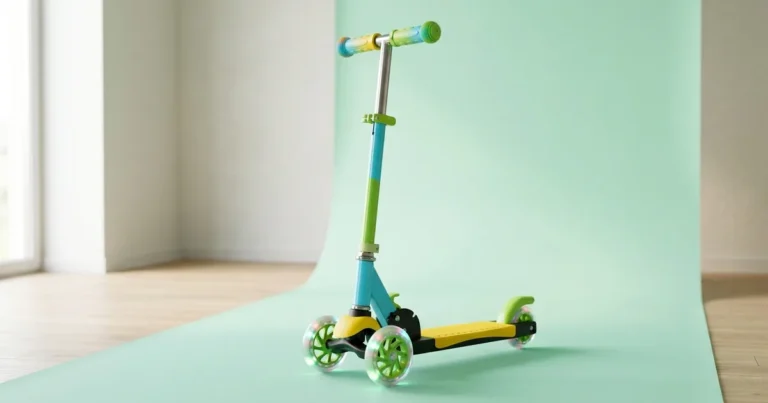
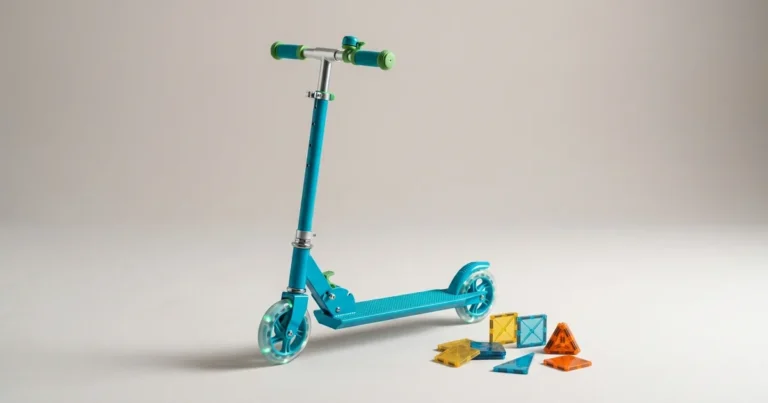
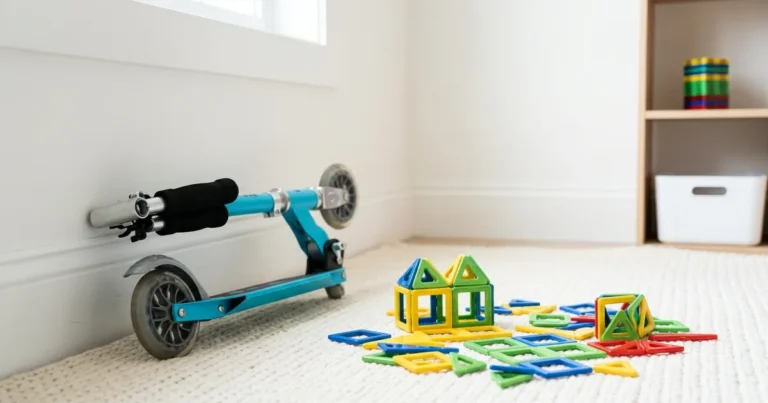
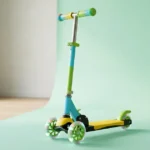
- Bicycles or scooters with safety gear, which build confidence and independence
How Learning Toys Support School Readiness in Grade 1
Parents frequently ask whether toys actually make a measurable difference once formal schooling begins. The honest answer is yes, but indirectly. Learning toys for six year olds rarely teach a specific exam answer, instead they build the underlying capacities that make classroom learning easier:
- Sustained attention: A child who can focus on a 100-piece puzzle for 20 minutes will find it easier to sit through a classroom activity of similar length
- Fine motor stamina: Building with small magnetic pieces or painting with a brush strengthens the same hand muscles needed for sustained handwriting
- Frustration tolerance: Toys that present a ‘just right’ challenge teach children to push through difficulty instead of giving up, a skill directly transferable to tricky homework
- Following multi-step instructions: Building sets and board games with rules train the sequencing skills needed to follow classroom instructions independently
- Collaborative skills: Games played with siblings or classmates build the negotiation and sharing skills needed for group work at school
Teachers often notice which children have had rich, varied hands-on play at home, not because those children know more facts, but because they approach new challenges with more patience and curiosity.
Balancing Screen Time with Hands-On Learning
In a region where tablets and smart devices are a daily part of family life, many UAE parents worry about screen time crowding out hands-on play. Learning toys offer a natural, low-conflict alternative because they are inherently engaging without needing a screen at all.
A practical approach many families use is the ‘screen-free first hour’ rule after school, where children decompress with a physical activity, building, painting, or a board game, before any tablet or television time is introduced. This is not about banning screens entirely, it is about protecting a daily window where hands, eyes, and imagination work together without digital mediation.
Rotating learning toys also helps here. A toy that has been put away for a few weeks and reintroduced often feels brand new to a six year old, reducing the pull toward screens out of boredom.
Building a Toy Rotation System at Home
One of the most underrated strategies for maximizing the educational value of a toy collection is rotation rather than constant access. Having every toy available at all times often leads to overwhelm, shallow play, and quick boredom. A simple rotation system works like this:
- Divide toys into three or four bins by category, building, art, puzzles, and games
- Keep only one or two bins accessible at a time, storing the rest out of sight
- Swap bins every two to three weeks, or whenever interest clearly drops
- Occasionally combine two bins together, for example building pieces with small figures, to spark new combinations
This approach also extends the useful life of larger sets. A 178-piece magnetic train set, for instance, feels fresh again after a few weeks away, since a six year old’s building ambitions and skills will have quietly grown in the meantime.
Budget-Friendly Tips for UAE Parents
Quality learning toys are an investment, but they do not need to strain the family budget. A few practical approaches for UAE households:
- Prioritize open-ended toys: A single well-made magnetic building set delivers more hours of varied play than several cheap, single-use gadgets combined, making the AED cost per hour of play much lower
- Buy expandable sets: Starting with a smaller set, such as a 65-piece magnetic train, and later adding a larger expansion as skills grow spreads the cost over time while keeping the toy relevant for longer
- Share and rotate with family or friends: Swapping puzzle sets or board games with cousins or neighborhood friends multiplies variety without multiplying spend
- Watch for seasonal and back-to-school offers: Many UAE retailers run promotions around the start of the school year, a good time to stock up on building sets and art supplies for the months ahead
- Choose durable materials: Sturdy, well-made toys may cost slightly more upfront in AED but avoid the repeated cost of replacing flimsy toys that break within weeks
Age-Appropriate Progression: From Ages 3-5 to Ages 6-8
Parents with multiple children, or simply planning ahead, often wonder how to transition a toy collection as a child grows. The shift from the Ages 3-5 Years collection to the Ages 6-8 Years collection is not about throwing out old toys, it is about layering in more complexity.
Some practical markers that a child is ready to move up a tier:
- They consistently finish building projects they start, rather than abandoning them halfway
- They ask for more pieces or a bigger challenge with an existing toy
- They can follow two or three-step instructions without needing them repeated
- They show interest in games with simple rules and turn-taking, not just free play
- Fine motor tasks like cutting, threading, or snapping small pieces together feel easy rather than frustrating
When these signs appear, it is a good moment to introduce the next tier of complexity, whether that is a larger magnetic building set, a wider color range of art supplies, or games with more intricate rules.
Common Mistakes Parents Make When Choosing Learning Toys
Even well-intentioned toy shopping can miss the mark. Here are the most common pitfalls to avoid.
Choosing Toys That Are Too Advanced Too Soon
A toy marketed for ‘ages 8 and up’ may look impressive, but if it consistently frustrates a six year old, it gets abandoned in a cupboard. Matching the toy to current skill level, with just a little stretch, keeps motivation high.
Overloading the Toy Shelf
More toys do not mean more learning. In fact, too many options at once often leads to shallow, scattered play rather than deep, focused engagement. A smaller, well-curated, rotated collection consistently outperforms an overflowing toy room.
Ignoring the Child’s Current Interests
A toy chosen purely because it looks educational, without matching what the child actually enjoys, often sits unused. A six year old obsessed with trains will learn more math and engineering from a magnetic train set than from a generic workbook, because genuine interest drives far deeper engagement than obligation.
Overlooking Safety Checks on Hand-Me-Down Toys
Older toys passed down from siblings or cousins should still be checked for cracked plastic, weakened magnets, or faded, potentially flaking paint before being handed to a six year old. Safety standards and materials also improve over time, so very old toys may not meet current guidelines.
Treating Screens as the Default Reward
When a tablet is always the first choice offered after a long day, hands-on toys naturally lose their appeal over time. Making a physical toy the first option, with screens as a later or occasional choice, helps maintain a healthy balance.
Creating a Simple Weekly Learning-Through-Play Routine
Many UAE families find structure helpful without making playtime feel like a lesson. A loose weekly rhythm might look like this:
- Monday and Wednesday: Building and construction time with magnetic sets, encouraging planning and spatial reasoning
- Tuesday and Thursday: Creative art sessions with finger paint or drawing, encouraging self-expression and fine motor practice
- Friday: Family board game or puzzle night, reinforcing social skills and strategic thinking
- Weekend: Outdoor physical play and free, unstructured time to consolidate the week’s learning through imaginative play
This kind of loose rhythm, rather than a strict schedule, gives children the emotional comfort of routine while still leaving plenty of room for spontaneous, child-led exploration.
Conclusion
Choosing learning toys for six year olds does not need to be complicated. Start with safety, since this is the non-negotiable foundation for every single purchase. From there, look for open-ended toys that grow with your child’s imagination, cover a healthy mix of building, creativity, logic, language, and physical play, and rotate them regularly to keep engagement fresh. Whether it is a magnetic train set sparking an afternoon of engineering, or a set of finger paints turning into a colorful science lesson about mixing, the right toys quietly prepare your six year old for the classroom while keeping childhood exactly what it should be, joyful and curious. With a thoughtful, safety-first approach and a collection that evolves alongside your child, you are giving them one of the most valuable gifts possible, the confidence that comes from learning through play.
Frequently Asked Questions
What are the best learning toys for six year olds just starting Grade 1?
Look for toys that build fine motor control, focus, and sequencing, such as magnetic building sets, art supplies like finger paint, and simple board games. These skills directly support handwriting, following classroom instructions, and sustained attention, all of which matter more in the early weeks of Grade 1 than academic content itself.
How many learning toys does a six year old actually need?
Quality and rotation matter far more than quantity. A smaller collection of five to eight well-made, open-ended toys, rotated every two to three weeks, typically leads to deeper, more focused play than a large collection left out all at once.
Are magnetic building sets safe for six year olds?
Yes, when the set is designed for this age group with securely sealed magnets and rounded, durable pieces. Always check that magnets are firmly embedded and inspect pieces periodically for wear, especially in households with younger siblings who may still mouth small objects.
How do I know if my child is ready for a bigger or more complex toy set?
Signs include finishing building projects rather than abandoning them, asking for more pieces or a bigger challenge, following multi-step instructions easily, and showing interest in games with rules rather than only free play. These signals suggest it is time to move from a smaller set to a more advanced one.
How can I balance screen time with learning toys for my six year old?
Try a screen-free first hour after school where hands-on toys, building sets, art, or puzzles come out before any tablet time. Keeping toys rotated and fresh also reduces boredom-driven requests for screens, since the physical toys continue to feel new and engaging.