Last updated: August 16, 2026
Choosing the best interactive toys for preschoolers is about more than keeping little hands busy for an afternoon. Between ages 3 and 5, your child’s brain is building the neural pathways that will shape how they think, solve problems, and relate to others for the rest of their life. The right toy, chosen with safety and development in mind, can turn everyday play into a foundation for confidence, curiosity, and coordination. This guide walks you through exactly what to look for, which categories of toys deliver the most value, and how to match toys to your child’s age and stage, so every dirham you spend on playtime actually counts.
Why Interactive Play Matters for Preschoolers
Preschoolers learn almost everything through play. Unlike passive entertainment such as screen time, interactive toys ask your child to do something: build, sort, press, pretend, paint, or problem-solve. That active participation is what makes the difference between a toy that entertains for ten minutes and one that genuinely supports growth.
The Developmental Benefits Parents Should Know
When a 3 to 5 year old plays with a well-designed interactive toy, several things are happening at once:
- Fine motor skills develop as small hands practice pinching, stacking, twisting, and connecting pieces.
- Language and vocabulary grow through pretend play scenarios, naming colours, shapes, and objects.
- Problem-solving and early logic are strengthened by puzzles, cause-and-effect toys, and building sets that require sequencing.
- Emotional regulation improves as children learn patience through toys that require a few tries before success, like fitting magnetic pieces together correctly.
- Social skills are practiced when toys are shared with siblings or friends, encouraging turn-taking and cooperative play.
These benefits compound over time. A child who spends a year regularly engaged in hands-on, interactive play typically enters the early school years with stronger focus, better hand-eye coordination, and more confidence tackling new challenges.
Safety Comes First, Always
Before we talk about the fun part, let’s be clear about the non-negotiable part: safety. Preschoolers are naturally curious and will mouth, throw, drop, and stress-test every toy you hand them. The most exciting, educational toy in the world is the wrong choice if it isn’t built to withstand real toddler behaviour or if it poses a choking or injury risk. Every recommendation in this guide is filtered through a safety-first lens, and we’ll give you a full checklist further down so you can vet any toy, whether it’s from Graflo Toys or elsewhere.
What Makes a Toy Truly “Interactive”?
Not every toy labeled “interactive” actually earns the title. A genuinely interactive toy requires the child to actively engage, make decisions, and see a direct result from their actions. Here’s how to spot the difference:
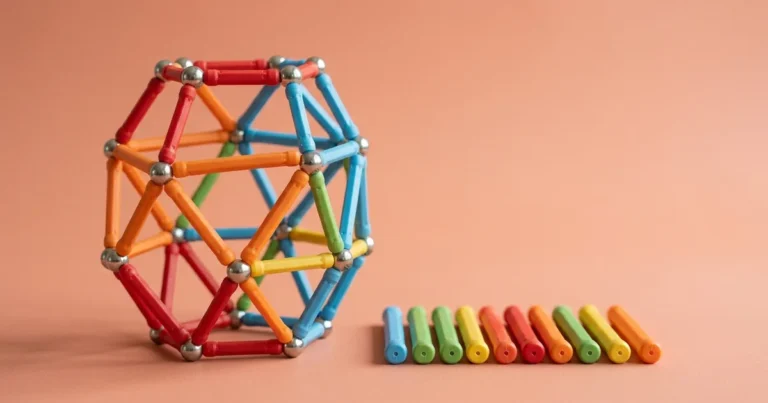
- Open-ended toys like magnetic building sets let a child create endlessly different structures rather than following one fixed outcome. This keeps engagement high for months, not days.
- Multi-sensory toys engage touch, sight, and sometimes sound, like finger paints that let a child feel texture while creating colour combinations.
- Toys with built-in feedback respond to the child’s actions, such as a magnetic train that clicks satisfyingly into place when connected correctly, giving instant positive reinforcement.
- Toys that scale with skill can be played with simply at age 3 and in more complex ways at age 5, extending their useful life and your investment.
Passive toys, on the other hand, do the entertaining for the child. Push-button toys that just play music on repeat, or screens that require no real decision-making, don’t build the same skills. That doesn’t mean they have no place in a toy box, but they shouldn’t make up the bulk of it.
Safety Checklist Before You Buy Any Interactive Toy
Use this checklist every time you’re evaluating a toy for a preschooler, whether you’re shopping online, in a UAE mall, or receiving a toy as a gift.
1. Check the Age Label and Small Parts Warning
Age labels aren’t arbitrary. They reflect testing for choking hazards, small detachable parts, and appropriate complexity. If a toy is labeled 3+, don’t hand it to a younger sibling without close supervision, and always check for small parts warnings if you have a baby or toddler in the house too.
2. Inspect Material Safety
Look for toys made from non-toxic, BPA-free plastics or food-grade materials, particularly for anything that might end up in a child’s mouth. This matters even more for art supplies like finger paints, which should always be labeled non-toxic and washable, such as the finger paint for kids in 12 colors, designed with little ones’ safety and easy cleanup in mind.
3. Look for Strong Construction
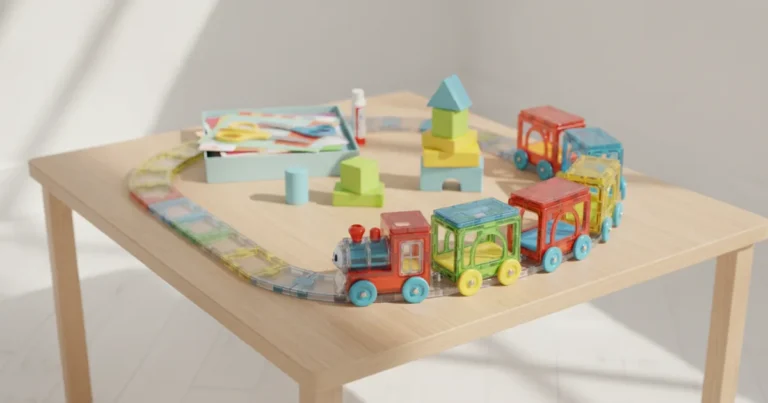
Preschoolers are rough on toys. Magnetic pieces should be securely sealed inside their casing so magnets cannot be pried loose or swallowed. Edges should be rounded, not sharp. Paint or coating should be non-flaking. Well-built magnetic construction toys, like a quality magnetic train set for kids, are engineered to survive repeated drops, stacking, and enthusiastic disassembly.
4. Confirm Certification and Standards
Reputable toys will carry recognised safety certifications on their packaging. Don’t be shy about checking for this information before purchasing, especially for electronic or magnetic toys, where standards around magnet strength and battery compartments are especially important.
5. Always Supervise Open-Ended Play
Even the safest toy benefits from a watchful eye, especially in the early days of introducing something new. Supervision isn’t about hovering, it’s about being nearby enough to guide first use and catch any unexpected misuse.
Best Interactive Toys for Preschoolers by Category
Rather than a single list, it helps to think in categories, because a well-rounded toy box covers several types of play. Here are the categories that consistently deliver the most developmental value for 3 to 5 year olds.
Magnetic Building and Construction Toys
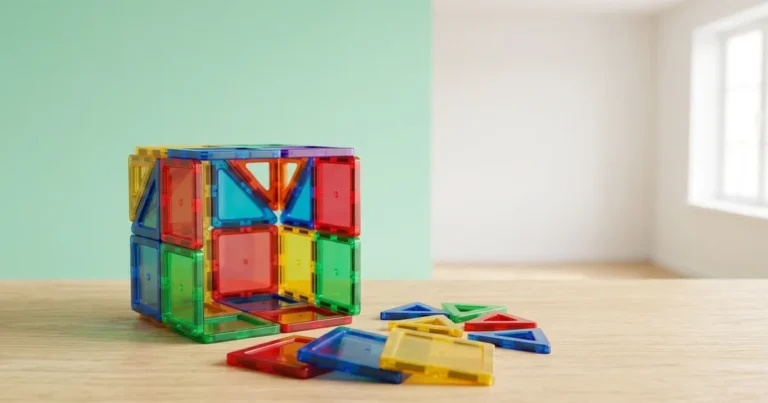
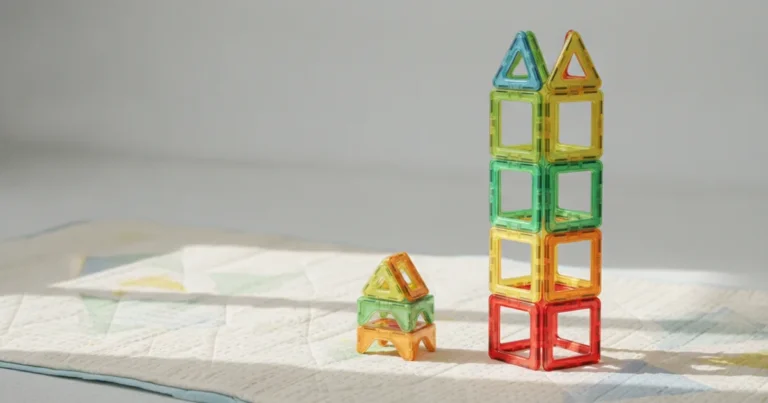
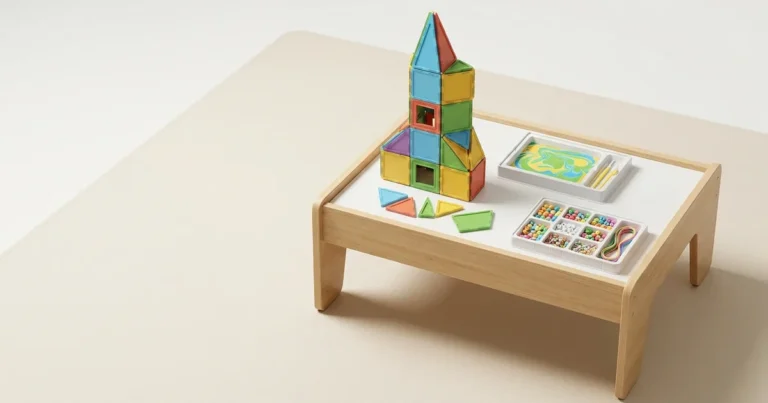
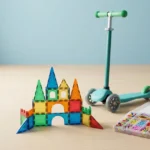
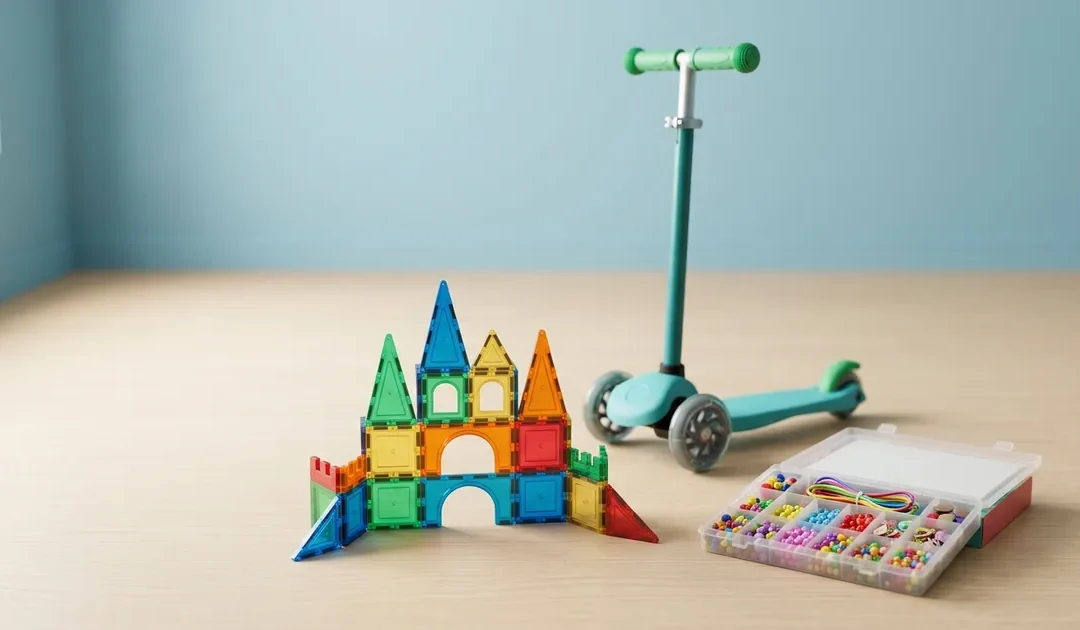
Magnetic toys are one of the best investments a parent can make for preschool development. They combine fine motor practice, spatial reasoning, and creative freedom in one toy. A child starts by simply connecting two pieces, and within weeks progresses to building tracks, loops, bridges, and imaginative scenes.
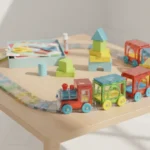
For UAE families, a magnetic train for kids with 65 pieces is an excellent entry point, offering enough variety to build multiple track layouts without overwhelming a first-time builder. Families who want more complexity as their child grows into the 5 to 6 year range often move up to a larger magnetic train set with 178 pieces, which supports more elaborate builds and can be shared between siblings or used in group play with friends.
What makes magnetic building sets stand out compared to traditional blocks is the instant, satisfying click of connection, which gives children immediate feedback that they’ve done something correctly, reinforcing persistence and confidence.
Creative and Sensory Play Toys
Art and sensory materials are just as “interactive” as building toys, because they require the child to make choices, mix colours, and experiment with cause and effect on paper. Finger painting in particular is one of the most valuable sensory activities for preschoolers, engaging touch and sight simultaneously while building the fine motor control needed later for writing.
A set like the finger paint for kids in 12 colors gives children a wide palette to explore colour mixing and creative expression, while parents appreciate washable, non-toxic formulas that make cleanup manageable. Set up sessions on a washable mat or old bedsheet, and let your child lead the exploration rather than dictating what they should paint.
Pretend Play and Role Toys
Kitchen sets, doctor kits, and dress-up costumes let preschoolers process the world around them by re-enacting what they see adults doing. This kind of play builds empathy, language skills, and social understanding. Look for pretend play sets with realistic but safe details, sturdy plastic components, and pieces sized appropriately for small hands.
Puzzle and Problem-Solving Toys
Chunky wooden puzzles, shape sorters, and simple jigsaw puzzles with 12 to 24 pieces are ideal for building patience and logical sequencing. Start with puzzles that have large, easy-to-grip pieces for 3 year olds, and gradually increase piece count and complexity as your child approaches age 5.
Early STEM and Cause-and-Effect Toys
Simple STEM toys, gear sets, ball-drop towers, and basic circuit toys introduce cause and effect in a hands-on way. These toys are excellent for building the kind of early logical thinking that supports later interest in science and maths, without ever feeling like a lesson.
Best Educational Toys by Age
One of the most common questions parents ask is simply: what should I actually buy for my child’s specific age? Development moves quickly between ages 3 and 8, so matching the toy to the stage matters enormously.
Ages 3 to 5: Building the Foundations
At this stage, children are refining fine motor control, developing early language, and beginning to enjoy short, structured activities. The best toys for this age group are:
- Large-piece magnetic building sets that are easy to connect and disconnect.
- Washable finger paints and chunky crayons for sensory art exploration.
- Simple pretend play sets, like a toy kitchen or doctor kit.
- Chunky puzzles with 6 to 20 pieces.
- Shape sorters and stacking toys.
You can browse a curated selection suited to this exact stage in our toys for ages 3 to 5 years collection, where every item has been chosen with this developmental window in mind.
Ages 6 to 8: Increasing Complexity and Independence
By age 6, children are ready for more advanced building challenges, longer attention spans, and toys that reward planning ahead. This is the stage to introduce:
- Larger magnetic construction sets with more pieces and more complex track or structure designs.
- Puzzles with 50 or more pieces.
- Early STEM kits involving simple circuits, gears, or basic coding logic.
- Craft kits that require multiple steps to complete a project.
Our toys for ages 6 to 8 years collection is built around this jump in capability, offering more advanced options once your child has outgrown the simpler sets.
Why Age-Matching Matters More Than You Think
Giving a toy that’s too advanced too early often leads to frustration and abandonment, while a toy that’s too simple gets boring within days. The sweet spot is a toy that’s slightly challenging, enough to require effort and a few attempts, but achievable enough that your child feels genuine pride upon success. This is sometimes called the “just right” challenge zone, and it’s the single biggest factor in whether a toy gets played with for months versus getting tossed in a drawer after a week.
How to Choose the Right Interactive Toy for Your Child
Beyond age labels, here’s how to fine-tune your choice for your specific child.
Match the Toy to Your Child’s Interests
A child who loves vehicles will engage far more deeply with a magnetic train set than with a doll set, and vice versa. Watch what naturally captures your child’s attention during the day, whether it’s animals, vehicles, colours, or building, and lean into that interest rather than fighting it.
Consider Current Attention Span
Some preschoolers can focus on one activity for 20 minutes; others need to switch every 5. Choose toys with enough variety built in (multiple pieces, multiple ways to play) so a short attention span doesn’t mean the toy gets abandoned after one use.
Think About Where and How It Will Be Played With
Will this toy be used at home on a rug, at a grandparent’s house, or in the car during a road trip? Toys with small, easily lost pieces work best in contained spaces at home, while simpler, single-piece toys travel better.
Rotate Toys Instead of Buying More
One of the best-kept secrets among experienced parents is toy rotation. Instead of leaving every toy accessible at once, keep a portion in storage and rotate them every few weeks. Toys that have been “away” for a while often feel new again when reintroduced, extending the life and value of everything you already own.
Tips for Encouraging Interactive Play at Home
Buying the right toy is half the equation. How you introduce and support play matters just as much.
Set Up a Dedicated Play Space
A small, consistent area, even just a corner with a mat, signals to your child that this is where focused play happens. It also makes cleanup more manageable and protects furniture and floors from paint, magnets, and small pieces.
Play Alongside, Don’t Just Supervise
Get down on the floor and build alongside your child for the first few sessions with a new toy. Model how pieces connect, ask open-ended questions like “what do you think happens if we add this piece here?”, and then step back once your child gets confident enough to lead.
Praise Effort, Not Just Outcomes
Instead of only praising a finished structure or painting, acknowledge the process: “I saw how you kept trying different ways to connect those magnets until it worked.” This builds resilience and a growth mindset far more effectively than praise focused purely on the end result.
Let Boredom Happen Sometimes
It’s tempting to jump in the moment a child says “I’m bored,” but a few minutes of unstructured boredom often leads to the most creative, independent play. Give your child space to figure out how to engage with a toy on their own terms before offering suggestions.
Common Mistakes Parents Make When Buying Toys
Even well-meaning parents fall into a few predictable traps. Avoiding these will save both money and frustration.
Buying Too Many Toys at Once
An overflowing toy box actually reduces engagement, because children struggle to choose and often flit between items without settling into deep play. Fewer, higher-quality toys almost always outperform a large pile of mediocre ones.
Ignoring Storage and Organisation
Toys with dozens of small pieces, like magnetic sets or puzzles, need proper storage from day one. Clear bins or the toy’s original box help pieces stay together and make cleanup part of the play routine rather than a battle.
Choosing Based on Packaging Alone
Flashy packaging doesn’t always reflect actual play value. Read product descriptions carefully, check piece counts, materials, and age recommendations, rather than judging by the box art alone.
Overlooking Battery and Electronic Toy Safety
If a toy uses batteries, make sure the compartment is secured with a screw, not just a snap-on cover, especially for younger preschoolers who may attempt to open it.
Building a Balanced Preschool Toy Collection
A well-rounded toy collection for a 3 to 5 year old doesn’t need to be large. Aim to cover these bases:
- One open-ended building toy (like a magnetic construction set)
- One creative or sensory toy (like washable finger paints)
- One pretend play set
- One or two puzzles at the appropriate difficulty level
- One simple STEM or cause-and-effect toy
This mix ensures your child is regularly exercising fine motor skills, creativity, logical thinking, language, and social-emotional development, without needing an overwhelming number of items.
Conclusion
The best interactive toys for preschoolers aren’t the ones with the most bells and whistles, they’re the ones that are safe, age-appropriate, and genuinely require your child to think, create, and problem-solve. Start with the safety checklist every time, choose a category that matches your child’s current interests, and don’t be afraid to rotate toys to keep engagement fresh. Whether you’re building a first magnetic track, exploring colour with washable finger paints, or upgrading to a bigger construction set as your child grows, every choice you make now is laying down the building blocks, quite literally, for how your child learns, plays, and grows in the years ahead.
Frequently Asked Questions
What are the best educational toys by age?
For ages 3 to 5, the best educational toys are large-piece magnetic building sets, washable finger paints, chunky puzzles with 6 to 20 pieces, shape sorters, and simple pretend play sets like a toy kitchen or doctor kit. For ages 6 to 8, children are ready for larger magnetic construction sets with more pieces, puzzles with 50 or more pieces, early STEM kits with simple circuits or gears, and multi-step craft kits. Matching complexity to your child’s current skill level, rather than just their birthday, is the key to a toy staying engaging for months rather than days.
Are magnetic toys safe for preschoolers?
Yes, provided you choose sets with securely sealed magnets that cannot be pried loose, rounded edges, and clear age labeling. Always check that magnets are enclosed within a sturdy casing rather than exposed, and supervise younger siblings closely if they share a play space with an older preschooler using magnetic building sets.
How many toys should a preschooler have accessible at once?
Most parents find that keeping 6 to 10 toys accessible at a time, while storing the rest away for rotation, leads to deeper, more focused play than leaving everything out at once. Rotating toys every few weeks makes familiar items feel new again and reduces the overwhelm of too many choices.
What age do interactive toys start being useful for development?
Interactive, hands-on play becomes especially valuable from around age 2, as fine motor skills and early language rapidly develop, and it remains important right through the preschool years and into early primary school. The specific toy should simply shift in complexity as your child’s coordination, attention span, and problem-solving ability grow.
How can I tell if a toy is good quality before buying it?
Check for non-toxic, BPA-free materials, secure construction with no sharp edges or loose small parts, screw-secured battery compartments if applicable, and recognised safety certifications on the packaging. Reading the full product description for piece count, materials, and age range is far more reliable than judging a toy by its packaging alone.