Last updated: September 16, 2026
Choosing the best STEM toys by age 3, 5, and 6 is not about filling a toy box with gadgets that promise to make your child ‘smarter’. It is about matching a toy’s design, size, and challenge level to what a growing brain and a pair of small hands can safely and joyfully handle. A toy that thrills a 6-year-old with its 178 magnetic pieces could be a choking hazard for a 3-year-old, while a toy that feels ‘too easy’ for a 6-year-old will be abandoned in a week. This guide walks UAE parents through exactly what to look for at each age, why it matters for development, and which categories of STEM toys deliver real value, safely.
Why STEM Toys Matter So Much in the Early Years
STEM stands for Science, Technology, Engineering, and Mathematics, but for a preschooler or early primary child, STEM play rarely looks like a lab coat and a formula. It looks like stacking magnetic blocks until they topple, mixing colors with a paintbrush and watching them change, or figuring out why a train car keeps falling off the track. These small, repeated experiments build the mental muscles children will use for the rest of their lives.
Research in early childhood development consistently shows that hands-on, open-ended play strengthens:
- Fine motor skills – the small muscle control needed for writing, buttoning clothes, and eventually typing.
- Spatial reasoning – understanding how shapes and objects relate to each other in space, a skill linked to later success in math and engineering.
- Cause-and-effect thinking – the foundation of scientific reasoning, built through simple actions like ‘if I push this, that happens’.
- Persistence and problem-solving – learning to try again when a tower falls or a track doesn’t connect, which builds resilience.
- Language and social skills – many STEM toys are best enjoyed with a sibling or parent, encouraging conversation, turn-taking, and shared discovery.
The key insight for parents is this: the value of a STEM toy is not fixed. It changes depending on your child’s age, so the same category of toy, like magnetic building sets, can serve a 3-year-old, a 5-year-old, and a 6-year-old in completely different ways, as long as you choose the right version and set the right expectations.
How to Choose the Best STEM Toys by Age: A Safety-First Framework
Before we get into specific picks, here is the framework we use at Graflo Toys when we recommend anything to a parent. Age labels on packaging are a helpful starting point, but they are not the whole story. Always consider these four factors together.
1. Piece Size and Choking Risk
For children under 4, any toy with parts smaller than a AA battery is a hazard if your child still mouths objects. Always check for a small parts warning and choose sets designed with toddler-safe, chunky pieces.
2. Magnet Strength and Containment
Magnetic toys are wonderful for STEM learning, but magnets must be securely embedded in casing that cannot be pried open by curious fingers or teeth. Never buy loose, small magnets for a child under 6, and always supervise magnetic play with younger children.
3. Complexity Matched to Attention Span
A 3-year-old’s attention span for a single activity is roughly 6 to 8 minutes. A 5-year-old can often sustain 10 to 15 minutes. A 6-year-old, especially one who enjoys a challenge, may focus for 20 minutes or more on a satisfying build. Toys with too many steps for a younger child lead to frustration; toys with too few steps for an older child lead to boredom.
4. Room to Grow
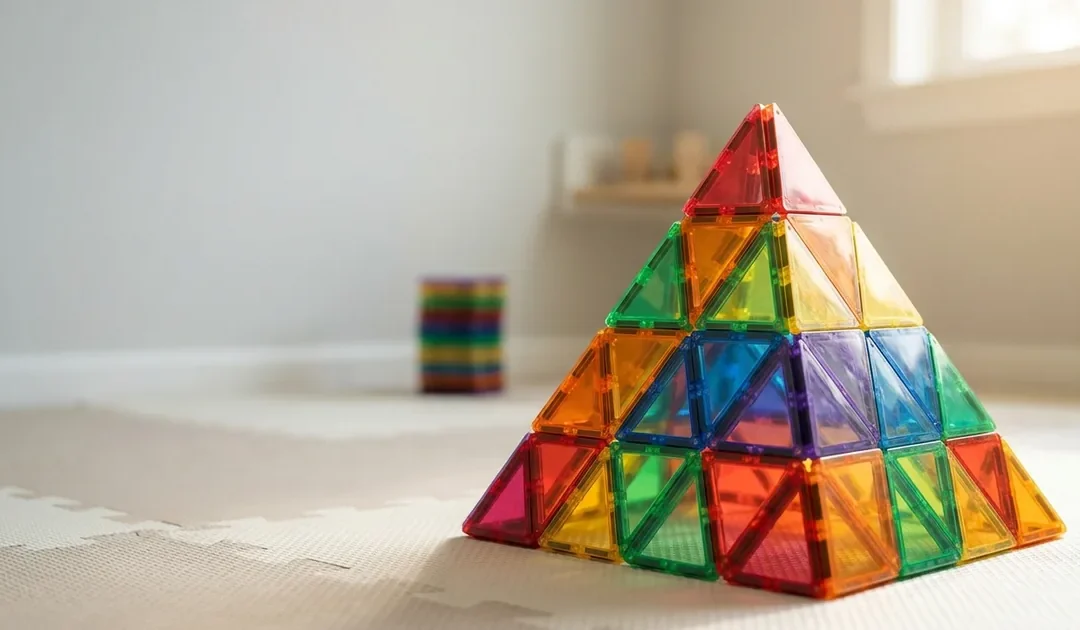
The best STEM toys by age 3, 5, and 6 are often the ones that can be played with differently as your child grows. A basic magnetic tile set can be simple stacking for a toddler and complex geometric building for a 6-year-old. This is not only better for development, it is better value for AED spent.
Best STEM Toys for 3-Year-Olds
At age 3, children are building the foundations: gripping, stacking, sorting, and beginning to understand basic cause and effect. The goal is sensory-rich, low-frustration play with pieces large enough to be completely safe and simple enough to allow independent success.
Sensory and Color Exploration
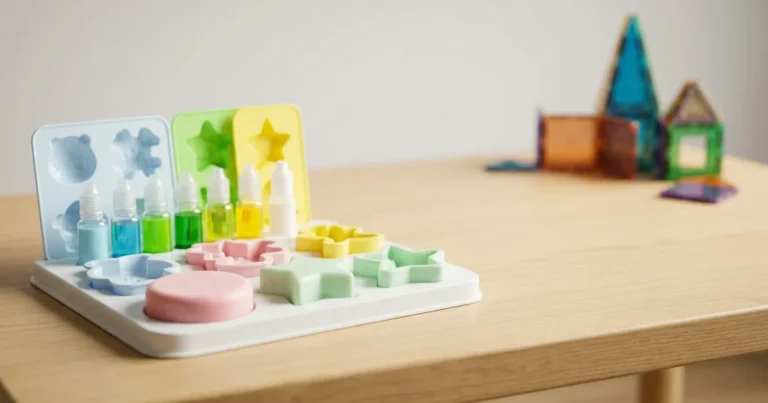
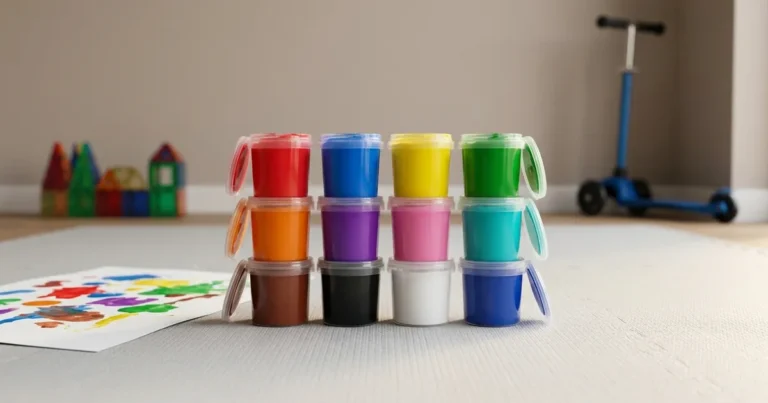
Three-year-olds are natural scientists when it comes to color and texture. A set of finger paint for kids in 12 colors is one of the simplest and most effective STEM tools at this age. Mixing colors with fingers teaches early chemistry concepts (why does blue and yellow make green?), builds fine motor control in the fingers and palm, and introduces the idea of experimentation without a ‘wrong’ answer. Look for washable, non-toxic formulas and always supervise painting sessions, especially near furniture and clothing.
Chunky Building and Stacking Toys
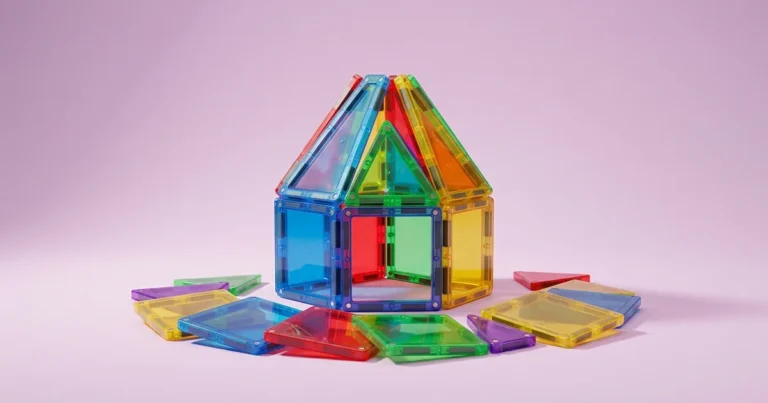
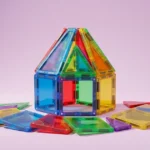
Large wooden blocks, soft foam shapes, and toddler-safe magnetic tiles with rounded edges are ideal. At this stage, children are learning balance, gravity, and basic geometry through trial and error. Avoid sets with more than 20 to 30 pieces at this age, as too many options can overwhelm rather than inspire.
Simple Cause-and-Effect Toys
Push-button toys, simple ball tracks, and shape sorters reinforce the idea that actions have predictable outcomes, an early and important STEM concept. These toys should have no small detachable parts and sturdy, rounded construction.
For a curated range of age-appropriate options, our collection for ages 3 to 5 years is a good starting point, since every item there has already been filtered for size, durability, and safety at this developmental stage.
Best STEM Toys for 5-Year-Olds
By age 5, most children have the fine motor control and patience to enjoy multi-step building, simple pattern recognition, and toys that reward a bit of planning. This is a wonderful age to introduce structured STEM building sets, since children can now follow a simple visual guide or invent their own designs with confidence.
Magnetic Building and Construction Sets
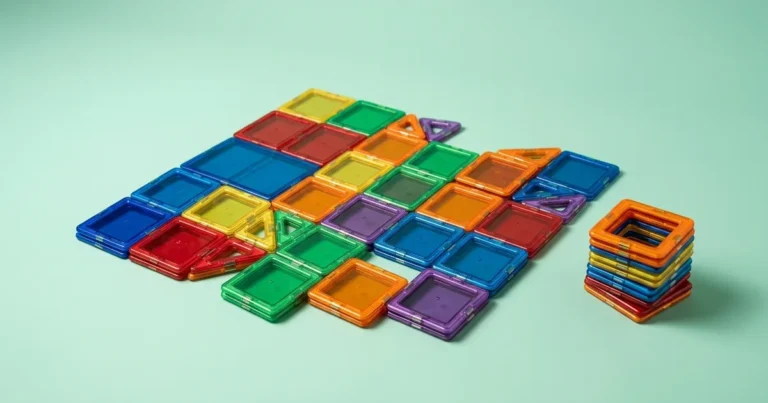
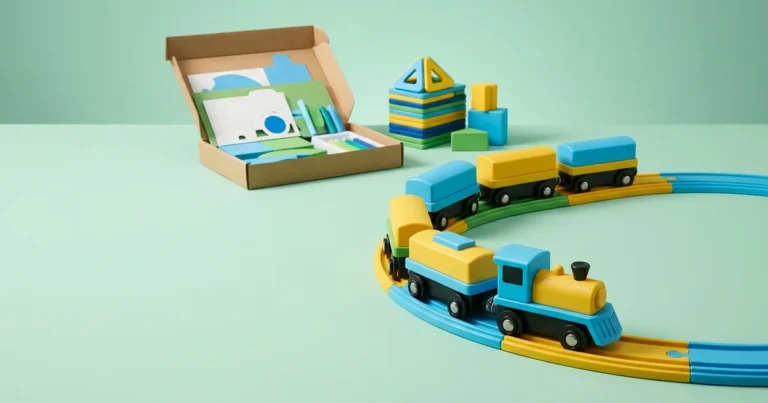
Magnetic construction toys are one of the strongest STEM categories for this age group, because they combine geometry, engineering, and creativity in one toy. A well-designed set like the Graflo magnetic train set with 65 pieces lets a 5-year-old build tracks, plan routes, and solve simple engineering puzzles, like how to connect a curve to a straight piece, or how to build a bridge the train can pass under. The magnetic connections are strong enough to reward persistence but forgiving enough that mistakes are easy to fix, which keeps frustration low and confidence high.
What makes this age ideal for magnetic trains specifically is the blend of open-ended building with a clear, satisfying goal: watching the train move. This gives STEM play a natural feedback loop that keeps 5-year-olds engaged far longer than open-ended blocks alone.
Early Pattern and Sequence Games
Simple board games involving counting, matching, or sequencing (like matching pairs or basic dice games) introduce early math thinking in a low-pressure, playful format. Look for games with large, easy-to-handle pieces and rules that can be explained in under two minutes.
Introductory Engineering Kits
Basic gear sets, simple pulley toys, and large-format building bricks designed for this age range help children start to understand mechanical concepts like rotation and connection. Keep an eye on piece count, sets with 50 to 80 pieces tend to hit the sweet spot for this age, enough variety to stay interesting without becoming overwhelming.
Best STEM Toys for 6-Year-Olds
Six-year-olds are ready for more complexity, longer play sessions, and toys that challenge them to plan ahead rather than build purely by trial and error. This is the age where STEM toys can start to introduce real engineering thinking, basic logic, and cooperative, multi-child play.
Advanced Magnetic Train and Track Systems
For a 6-year-old who has outgrown a smaller starter set, a larger and more complex option like the magnetic train set with 178 pieces offers significantly more room for creative engineering. With this many pieces, children can design multi-level tracks, build stations and bridges, and experiment with more advanced concepts like weight distribution and track stability. This kind of extended, self-directed building session is exactly the kind of deep, focused play that supports long-term STEM confidence, and it is a favorite for rainy-day play or weekend family building projects.
A larger set is also a great toy to grow into rather than out of. A 6-year-old will use the pieces very differently than they did at 5, building more ambitious layouts and inventing their own rules and stories around the trains.
Logic Puzzles and Early Coding Concepts
Six is a great age to introduce simple logic puzzles, maze-based challenge cards, or beginner unplugged coding games that teach sequencing without needing a screen. These toys build the same step-by-step thinking used in computer programming, but through physical, screen-free play.
Construction Sets With Instructions
At this age, children benefit from sets that include a visual instruction booklet for one build, but also allow free building afterward. This teaches them to follow multi-step directions (an important school-readiness skill) while still leaving room for open-ended creativity once the guided build is complete.
For families with a 6-year-old, browsing our collection for ages 6 to 8 years is a simple way to find sets that have already been matched to this stage, saving you the guesswork of checking piece counts and complexity levels yourself.
Safety First: What Every UAE Parent Should Check Before Buying
No matter how educational a toy claims to be, safety always comes first. Before adding any STEM toy to your cart, take a moment to check the following.
Certification and Labeling
Look for clear age labeling and recognized safety certification markings on the packaging. Reputable toys sold in the UAE should meet international safety standards for materials, small parts, and magnet safety.
Material Quality
Choose non-toxic, BPA-free plastics and lead-free paints, especially for younger children who may still put toys near their mouths. Finger paints and other art supplies should be clearly labeled as washable and non-toxic.
Magnet Safety Specifically
For magnetic toys, ensure magnets are fully sealed inside sturdy casings and cannot be removed by pulling, twisting, or biting. This is especially important for children under 6, and supervision is always recommended during play with any magnetic set, regardless of age.
Storage and Cleanup
Sets with many small pieces should come with, or be paired with, a storage box or bag. This is not just about tidiness, loose pieces left on the floor are a common household tripping and choking hazard for younger siblings.
Simple STEM Activities to Try at Home This Week
You do not need an expensive toy for every STEM moment. Here are a few low-cost, high-value activities to pair alongside your child’s toy collection.
- Color mixing station: Set out finger paint for kids in a few base colors and let your 3 to 4-year-old predict what will happen before mixing two colors together.
- Track challenge: Ask your 5 or 6-year-old to build the longest possible train track using all their magnetic pieces, then time how long the train takes to complete the loop.
- Bridge test: Challenge an older child to build a bridge or tunnel strong enough for the train to pass under without collapsing, a simple but effective engineering challenge.
- Sorting game: For younger children, sort building pieces by color, size, or shape before free play begins, reinforcing early math categorization skills.
Building a STEM Toy Collection That Grows With Your Child
Rather than buying a completely new toy every time your child has a birthday, consider building a small, high-quality STEM collection that expands over time. A magnetic building system is a great example: start with a smaller set like the 65-piece magnetic train around age 4 or 5, then expand to the larger 178-piece set as your child’s building ambitions grow around age 6 or 7. This approach is gentler on your budget in AED over time, reduces clutter, and lets your child experience real mastery as their skills and their toy collection grow together.
When shopping, it also helps to think seasonally. Around long school holidays or the cooler outdoor months in the UAE, families often look for indoor activities that keep children engaged for longer stretches, and this is a great time to introduce a bigger building set or a new art activity like finger painting.
Conclusion
The best STEM toys by age 3, 5, and 6 are not defined by flashy packaging or big promises. They are defined by safe materials, age-appropriate complexity, and the simple joy of a child figuring something out on their own. At 3, look for sensory play and chunky, safe building pieces. At 5, introduce magnetic construction and simple pattern games that reward a little planning. At 6, let your child stretch into bigger builds, logic challenges, and instruction-guided projects. With the right toy at the right stage, and a little supervision along the way, every building session becomes a small but meaningful step in your child’s development.
Frequently Asked Questions
What is the safest type of STEM toy for a 3-year-old?
For 3-year-olds, choose toys with large, chunky pieces that cannot be swallowed, such as toddler-safe building blocks, shape sorters, and washable finger paints. Avoid any toy with small, detachable parts or loose magnets, and always supervise play, especially with art supplies and building sets.
Are magnetic building toys safe for a 5 or 6-year-old?
Yes, magnetic building sets like magnetic train tracks are generally safe for 5 and 6-year-olds when the magnets are securely sealed inside sturdy plastic casing. Always supervise play, check the set periodically for damaged pieces, and keep any smaller loose magnetic accessories away from younger siblings under 6.
How many pieces should a STEM building set have for each age group?
As a general guide, aim for 20 to 30 large pieces for 3-year-olds, 50 to 80 pieces for 5-year-olds, and 100 pieces or more, such as a 178-piece magnetic train set, for confident 6-year-olds who are ready for more complex, multi-step builds.
Can the same STEM toy be used across ages 3, 5, and 6?
Some STEM toys can grow with your child if you choose a system with expandable sets, like starting with a smaller magnetic train set around age 4 or 5 and adding a larger set as your child’s skills and interests develop by age 6 or 7. This is often a better long-term value than buying entirely new toys at each age.
Where can I find STEM toys already sorted by age for my child in the UAE?
You can browse curated, age-matched STEM toy collections for children aged 3 to 5 years and 6 to 8 years directly on the Graflo Toys website, where every product has been checked for safety, piece size, and developmental appropriateness for that age range.