If you have ever watched a three-year-old stack a tower of colourful blocks only to squeal with delight when it topples over, you already know why building blocks are the beating heart of nearly every well-run building blocks children’s center across the UAE. It is not just play. It is your child quietly practising balance, patience, counting, and problem-solving, all while having the time of their life. For parents choosing a nursery, and for center owners designing a curriculum, blocks are one of the most important, most misunderstood tools in the room. This guide walks you through exactly what makes a building blocks setup safe, effective, and genuinely loved by children, from toddler group time to school-age STEM clubs.
Why Building Blocks Belong in Every Children’s Center
Long before tablets and screens, blocks were the original learning technology, and they remain unmatched for a simple reason: they respond to a child’s own hands. A block only moves, stacks, or falls because the child made a decision. That immediate cause-and-effect feedback is exactly what growing brains need. In a group setting like a children’s center, blocks also become a shared language between children who may not yet share the same vocabulary, culture, or even nationality, which is especially valuable in the UAE’s wonderfully diverse classrooms.
Good centers understand that a pile of blocks in the corner is not enough. The real value comes from thoughtful setup: the right blocks, in the right space, introduced with the right amount of adult guidance and the right amount of hands-off trust.
More Than a Toy: A Teaching Tool
Educators often describe blocks as an “open-ended material,” meaning there is no single correct way to use them. A pile of magnetic tiles can become a castle, a spaceship, a math lesson on shapes, or a quiet fidget activity for a child who needs to calm down after a busy morning. This flexibility is exactly why blocks scale so well across every age group a children’s center serves, from wobbly toddlers to confident eight-year-olds.
What Makes a Children’s Center Truly Block-Friendly
Not every center that owns blocks is using them well. A genuinely block-friendly environment ticks several boxes at once: safety, accessibility, variety, and intention.
Safety Standards Come First
Before anything else, every block in a children’s center should be checked against basic safety expectations:
- No small, detachable parts for children under three, to remove any choking risk.
- Non-toxic, water-based paints and finishes, especially important since younger children still mouth toys.
- Rounded edges and corners on wooden or hard plastic pieces.
- Sturdy construction that will not splinter, crack, or shed sharp fragments after months of daily use.
- Magnetic pieces with securely sealed magnets that cannot be pried loose by curious little fingers.
Reputable suppliers list these details clearly. As a parent, it is completely reasonable to ask your child’s center which brand of blocks they use and whether the pieces meet recognised safety testing. A center that welcomes this question is usually one worth trusting.
Age-Appropriate Zoning
A well-designed room does not mix a toddler’s chunky foam blocks with a six-year-old’s 150-piece magnetic set on the same low shelf. Instead, blocks are zoned by age and skill level, often with simple visual cues like coloured floor mats or labelled bins, so children naturally gravitate to materials suited to their stage.
Enough Blocks for Real Building
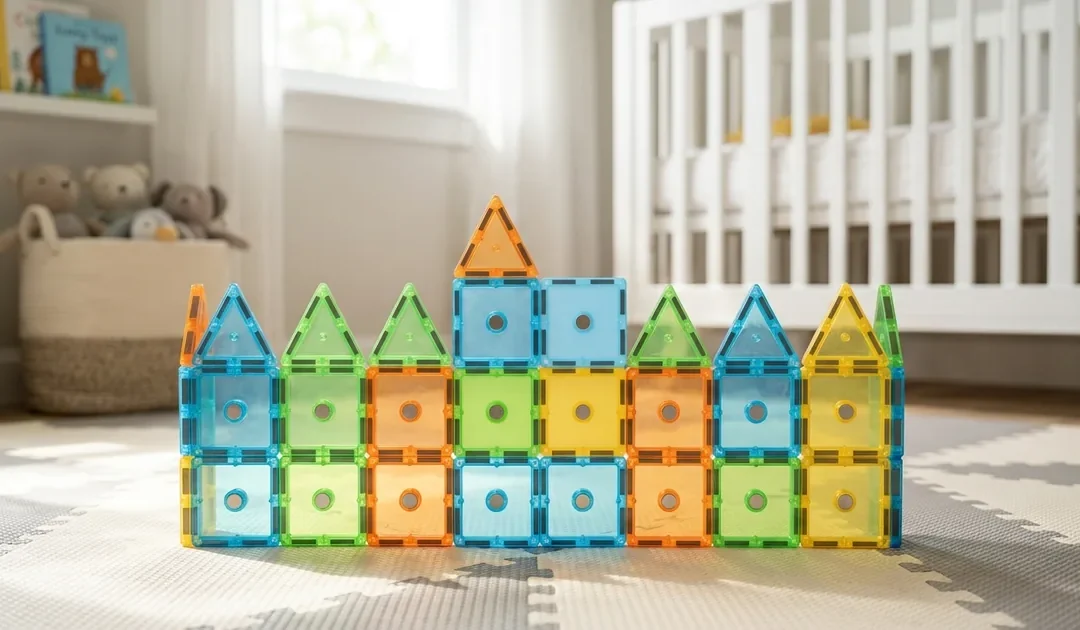
One common mistake in busy centers is simply not having enough pieces. A child cannot build a meaningful structure with twelve blocks shared between four friends. Centers that take building seriously invest in generous sets, such as magnetic building tiles for kids in a 140-piece set, which gives a small group enough material to actually collaborate, negotiate, and build something they are proud of.
The Developmental Benefits of Building Blocks in a Children’s Center Setting
It is worth slowing down here, because the benefits of blocks are backed by decades of early-years research, and they touch nearly every area of a child’s growth.
Fine Motor Skills
Picking up a small block, rotating it to fit, and pressing it into place all demand precise finger and hand control. This is the same coordination children will later use to hold a pencil, button a shirt, or use scissors. Repeated block play, even for just fifteen minutes a day, meaningfully strengthens these small muscle groups.
Cognitive Development and Early STEM Thinking
When a child works out that a wide base makes a tower more stable, or that two triangles form a square, they are doing real geometry and physics, just without the vocabulary yet. Building blocks are widely regarded by early-years educators as one of the simplest, most effective ways to introduce STEM (science, technology, engineering, and maths) thinking before a child can even read.
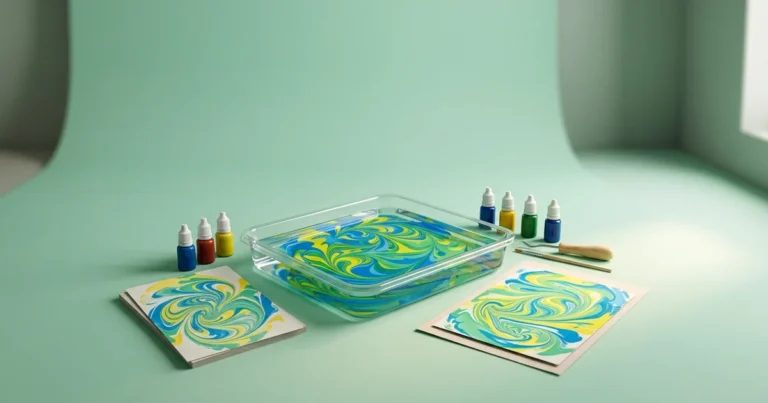
For centers wanting to formalise this connection, pairing block play with other hands-on STEM materials builds a strong foundation. Some centers even extend this into structured craft-science sessions for older children, such as a kids soap making kit, a DIY STEM craft set for ages 6 to 12, which carries the same hands-on, cause-and-effect learning into chemistry and measurement.
Language and Vocabulary Growth
Block play is a goldmine for new words: over, under, taller, wider, balance, symmetry, collapse. Skilled educators narrate what children are doing (“You made the tower taller than the shelf!”) which quietly expands vocabulary far more effectively than flashcards ever could.
Social and Emotional Skills
Sharing a limited number of blocks with classmates teaches turn-taking, negotiation, and compromise. When a tower falls, children practise resilience and learn that mistakes are simply part of building something great. Group block play also naturally encourages leadership, as children take turns directing the “design” of a shared structure.
Spatial Reasoning
Understanding how shapes relate to one another in space is a skill linked to later success in mathematics and even reading comprehension. Blocks give children thousands of low-stakes repetitions of this skill before they ever sit at a school desk.
Types of Building Blocks Every Children’s Center Should Stock
Not all blocks serve the same purpose. A thoughtfully stocked children’s center usually offers a mix of the following.
Classic Wooden Blocks
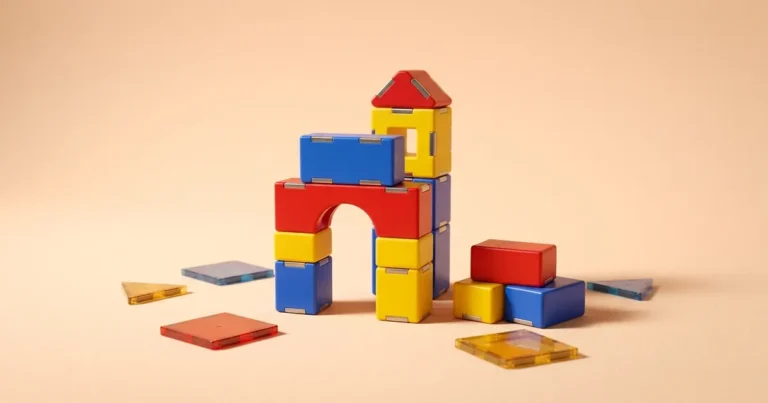
Simple, sturdy, and timeless. Wooden blocks are ideal for toddlers and younger preschoolers because they are heavy enough to feel satisfying to stack but light enough to lift easily. They also introduce basic shapes: cubes, cylinders, arches, and triangles.
Magnetic Building Tiles
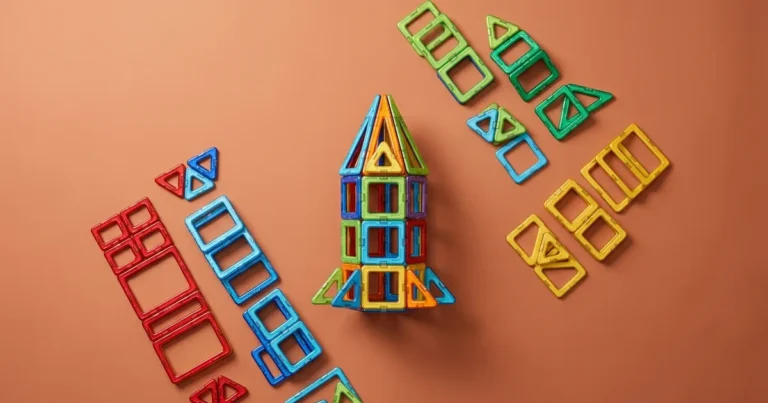
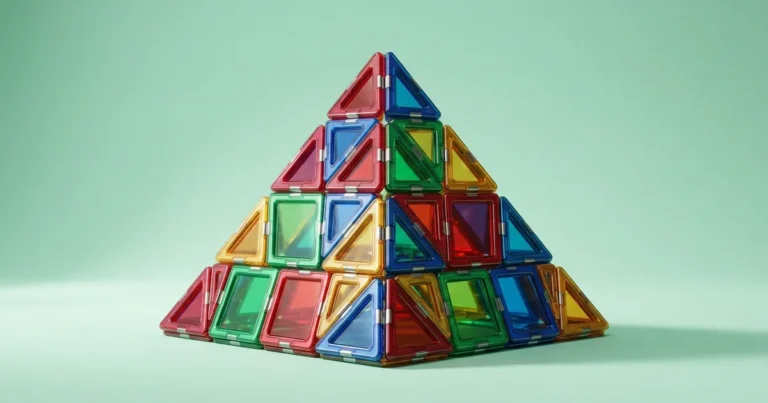
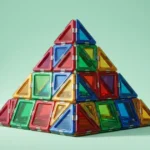
Magnetic tiles have become one of the most popular additions to modern children’s centers, and for good reason. The satisfying “click” of a magnet connecting gives instant, reliable feedback, which is especially motivating for children who are still building patience. Tiles also allow for large-scale, three-dimensional structures such as houses, tunnels, and towers that free-standing blocks simply cannot achieve at the same speed. A set like the 140-piece magnetic building tiles for kids gives a small group room to build big without running out of pieces halfway through.
Magnetic Building Blocks
Slightly different from flat tiles, magnetic building blocks are often cube or brick shaped and connect on multiple sides, encouraging more architectural, three-dimensional thinking. They are particularly popular with children aged five and up who are ready for more complex, multi-step builds. A generous set such as the 150pcs magnetic building blocks gives older preschoolers and early primary children enough variety to build detailed, imaginative structures, from garages for toy cars to entire pretend cities.
Themed and STEM-Integrated Sets
Some centers introduce themed building challenges, such as building a bridge that holds a toy car, or a tower that survives a gentle “earthquake” shake test. These activities blend block play with early engineering concepts and are excellent for keeping older children in the center engaged and challenged.
Setting Up a Building Blocks Corner in a Children’s Center
A block corner is more than a shelf of toys. The physical setup itself teaches children how to use materials respectfully and safely.
Space Planning
Give block play enough floor space away from high-traffic walkways, so towers are not accidentally knocked over by children walking past. A soft rug or foam mat underneath also cushions any pieces that fall and reduces noise, which matters a great deal in a busy room shared by multiple activities.
Storage and Rotation
Open bins or low shelves let children choose and return blocks independently, which builds a sense of ownership and responsibility. Many centers rotate which block sets are available week to week, keeping the corner fresh and exciting rather than overwhelming children with every toy at once.
Clear, Simple Rules
Children thrive with a small number of clear expectations, such as:
- Build on the mat, not near the door.
- Towers stay below shoulder height for safety.
- We build together and clean up together.
- Blocks are for building, not throwing.
These simple, repeated rules keep block time both safe and genuinely calm, even in a room full of energetic children.
Age-by-Age Guide to Building Blocks in a Children’s Center
Toddlers, Roughly 1 to 3 Years
At this age, blocks should be large, soft-edged, and free of small removable parts. Simple stacking and knocking down is the main activity, and that is completely developmentally appropriate. Adults should stay close by, both to model gentle stacking and to ensure blocks are not mouthed or thrown.
Preschoolers, Roughly 3 to 5 Years
This is where block play truly blossoms. Children begin building recognisable structures, houses, garages, simple bridges, and start incorporating imaginative play, like pretending a tower is a castle. Magnetic tiles work beautifully here, since the connections are forgiving and quick, keeping frustration low and confidence high. Centers serving this age group often browse curated collections designed specifically for this stage, such as the ages 3 to 5 years toy collection, to ensure every material on the shelf is genuinely suited to little hands and growing minds.
School-Age Children, Roughly 6 to 8 Years
Older children are ready for more complex challenges: multi-step builds, blueprints or drawings before building, and simple engineering problems like “build a bridge that holds a small toy car.” Magnetic building blocks and larger tile sets really shine here, since they allow for detailed, ambitious projects that hold attention far longer than simpler toddler sets. A dedicated ages 6 to 8 years toy collection is a great starting point for centers wanting to stock age-matched, safety-checked options for this group.
Sample Building Block Activities for a Children’s Center
Here are practical, ready-to-use activity ideas that educators and parents alike can bring into a building blocks children’s center.
The Tallest Tower Challenge
Give small groups a set number of blocks and a time limit, then measure whose tower stands tallest without falling. This introduces measurement, teamwork, and healthy, low-pressure competition.
Shape Matching and Sorting
Before free building, have children sort blocks by shape, colour, or size into labelled bins. This is a gentle pre-math activity that also reinforces tidy-up habits.
Story Building
Read a short story, then ask children to build a scene from it using blocks, such as the three little pigs’ houses. This connects literacy with spatial and engineering thinking in one activity.
Bridge and Tunnel Engineering
Challenge children to build a bridge or tunnel that a small toy car can pass through. This is particularly effective with magnetic tiles, since children can quickly test and rebuild without frustration.
Freeform Imagination Time
Not every session needs a goal. Simply setting out a generous pile of blocks with no instructions at all encourages independent creativity, something every good children’s center should protect time for.
Safety Checklist for Building Blocks in Children’s Centers
Whether you are a parent evaluating a nursery or a center owner reviewing your own materials, run through this checklist regularly:
- Are blocks inspected weekly for cracks, splinters, or loose magnets?
- Are toddler and preschool block sets stored separately from sets with smaller pieces?
- Is there a soft surface under the main building area?
- Are children supervised at all times during block play, especially with magnetic sets?
- Are damaged or broken blocks removed from circulation immediately rather than “just this once”?
- Is there a clear maximum tower height rule to prevent falling blocks from causing injury?
A center that takes these steps seriously is showing you, without needing to say it directly, that your child’s safety comes before convenience.
Choosing the Right Supplier for a Building Blocks Children’s Center in the UAE
For center owners sourcing materials locally, a few practical considerations matter beyond price:
Local Availability and Fast Restocking
Blocks get lost, chewed, or worn out. Working with a UAE-based supplier who can restock quickly, and who prices clearly in AED, avoids long shipping delays that leave a block corner half-empty for weeks.
Safety Documentation on Request
Ask suppliers directly for safety compliance details on materials, paints, and magnet sealing. A trustworthy supplier will have this information ready without hesitation.
Range Across Age Groups
A center serving toddlers through to school-age children needs a supplier who offers a genuine range, not just one style of block for every age. Browsing curated categories like the ages 3 to 5 years collection and the ages 6 to 8 years collection side by side makes it much easier to build a well-rounded, age-appropriate inventory.
Blending Building Blocks with Other Hands-On STEM Learning
A strong children’s center rarely stops at blocks alone. The same principles that make block play so valuable, hands-on exploration, immediate feedback, and safe experimentation, apply beautifully to other guided activities as children get older. For six to twelve year olds who have outgrown basic stacking but still crave hands-on discovery, structured kits that combine creativity with real science concepts keep that same spark alive. A project like a kids soap making kit, a DIY STEM craft set for ages 6 to 12, is a natural next step, teaching measuring, mixing, and simple chemistry while still feeling like play rather than a lesson.
The common thread across all of these materials, from a simple wooden cube to a soap-making experiment, is that children learn best when they are doing, not just watching. A well-run building blocks children’s center simply gives that principle room to grow, one stage at a time.
Encouraging Building Block Play at Home Too
Parents often ask whether they need to recreate the entire center setup at home. The honest answer is no, but a small, dedicated block corner at home reinforces everything your child practises during center hours. Even a single generous set, kept in an easy-to-reach bin with a soft mat nearby, gives children a consistent, familiar space to keep building their skills between center visits.
Keeping Home Play Safe
The same safety rules apply at home as in any center: age-check every set before handing it to a younger sibling, inspect pieces regularly, and keep small-part sets well out of reach of toddlers in the house.
Letting Siblings Build Together
Mixed-age building sessions at home, with an older sibling gently guiding a younger one, mirror the same social benefits seen in a group children’s center setting, turn-taking, patience, and shared pride in a finished structure.
Conclusion
A great building blocks children’s center is never an accident. It is the result of careful choices, safe, age-appropriate materials, thoughtful space planning, generous piece counts, and educators who understand that a falling tower is not a failure, it is a lesson. Whether you are a parent choosing where to enrol your child, or a center owner refining your own block corner, the goal stays the same: give children enough of the right materials, in a safe and welcoming space, and step back just enough to let them build, discover, and grow at their own pace.
Frequently Asked Questions
What age should children start using building blocks in a children’s center?
Most centers introduce large, soft-edged blocks from around one year old, focusing on simple stacking and knocking down. Smaller magnetic tiles and multi-piece sets are usually reserved for children aged three and above, once fine motor skills and supervision routines are stronger.
Are magnetic building blocks safe for a children’s center environment?
Yes, as long as the magnets are securely sealed inside the pieces and cannot be pried loose, and as long as staff supervise play and inspect sets regularly for damage. Reputable sets like magnetic building tiles and magnetic building blocks are designed with this safety in mind, but routine checks by staff remain essential.
How many building blocks should a children’s center have per group of children?
As a general guide, small groups of three to five children need at least 100 to 150 pieces to build meaningfully without constantly running out of material or fighting over pieces. Larger sets also allow for more ambitious, collaborative structures.
Do building blocks really support STEM learning, or is that overstated?
Building blocks genuinely introduce early STEM concepts such as balance, symmetry, measurement, and cause and effect, long before children can name these ideas formally. Many centers extend this foundation later with structured STEM activities suited to older children.
How can parents recreate a children’s center block corner at home?
A simple setup works well: a generous block set stored in an easy-to-reach bin, a soft mat or rug for building, and a few clear house rules such as building away from walkways and cleaning up together. Consistency matters more than variety.