Last updated: August 2, 2026
Six is a magical age. Your child is reading their first full sentences, counting past a hundred, negotiating friendships on the playground, and asking questions that make you pause before answering. Choosing the right educational toys for 6 year olds during this window can genuinely shape how confidently they approach school, problem-solving, and creative expression for years to come. But with so many bright boxes on shelves promising to make your child “smarter,” how do you know what actually supports real development, and what’s just clever packaging? This guide breaks it down step by step, with safety always coming first, so you can shop with confidence whether you’re in Dubai, Abu Dhabi, Sharjah, or anywhere else in the UAE.
Why Age 6 Is a Pivotal Year for Learning Through Play
By the time children turn six, they’ve usually moved from parallel play (playing beside other kids) to genuinely cooperative play, where turn-taking, rule-following, and shared goals matter. Cognitively, they’re entering what psychologists call the “concrete operational” stage, meaning they can start to think logically about real, tangible things, even if abstract reasoning is still a few years away. This is exactly why hands-on, tactile learning tools work so well at this age. A six-year-old doesn’t just want to be told how gears work or how a sentence is built, they want to build it, break it, and rebuild it themselves.
Physically, fine motor skills are becoming much more refined. Most 6 year olds can hold a pencil with a proper tripod grip, cut along a line with scissors, and manipulate small building pieces with real precision. This opens the door to toys that were too fiddly at age 3 or 4, like detailed construction sets, board games with small pieces, and craft kits requiring careful hand control.
Socially and emotionally, six-year-olds are developing empathy, understanding fairness, and learning to manage frustration when they lose a game or a tower falls down. The best educational toys for this age don’t just teach math or letters, they quietly teach patience, resilience, and cooperation too.
What Makes a Toy Genuinely “Educational” at Age 6?
Almost every toy on the market claims to be educational, so it helps to have a clearer filter. As a general rule, a toy earns the label “educational” if it does at least one of the following:
- Encourages problem-solving or logical thinking (puzzles, building sets, strategy games)
- Builds fine or gross motor skills (construction toys, art supplies, sports equipment)
- Develops language, literacy, or numeracy (letter and number games, reading kits)
- Supports creativity and self-expression (art sets, open-ended building toys, imaginative play kits)
- Teaches social skills like sharing, turn-taking, and cooperation (board games, group building sets)
- Introduces STEM concepts like cause and effect, engineering, or basic science (magnetic building sets, simple circuits, nature kits)
A toy that ticks two or three of these boxes at once, like a magnetic building set that combines STEM thinking with fine motor practice and creative design, tends to hold a child’s attention far longer than a single-purpose toy.
Safety First: A Checklist Before You Buy
No matter how educational a toy looks on paper, safety always comes before learning value. Here is a practical checklist to run through before adding anything to your cart, especially when shopping online:
1. Age Grading and Small Parts
Even though 6 year olds are past the stage of putting everything in their mouths, households with younger siblings or visiting toddlers still need to be careful with small, detachable pieces. Always check the manufacturer’s age recommendation on the packaging and product listing.
2. Material Safety
Look for toys made from non-toxic, BPA-free plastics, water-based and washable paints, and materials tested against recognized safety standards. This matters even more for art supplies your child will handle directly, like paint sets used for hand and finger painting.
3. Sturdiness and Build Quality
At six, kids play with real enthusiasm, snapping pieces together, pulling them apart, dropping them, and sometimes standing on them. Toys should be able to withstand energetic, repeated use without cracking or shedding sharp edges.
4. Magnetic Safety
Magnetic building toys are hugely popular and genuinely excellent for STEM learning, but parents should choose sets designed with securely enclosed, high-quality magnets, and always supervise younger siblings who may still be in the mouthing stage. For 6 year olds themselves, well-made magnetic tile and train sets are considered very safe and are a favorite for open-ended building.
5. Certifications
Whenever possible, choose toys with recognized international safety certifications. Reputable toy sellers in the UAE will clearly display this information on the product page.
Top Categories of Educational Toys for 6 Year Olds
Rather than chasing trends, it helps to think in categories, then pick one or two strong options from each that match your child’s personality. Here’s a detailed breakdown.
1. STEM and Construction Toys
Building toys are, hands down, one of the best investments for this age group. They teach spatial reasoning, basic engineering concepts, patience, and planning, all while feeling like pure fun rather than a lesson.
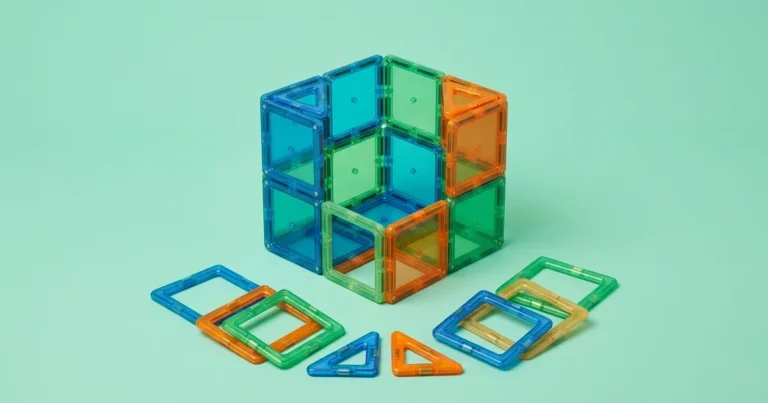
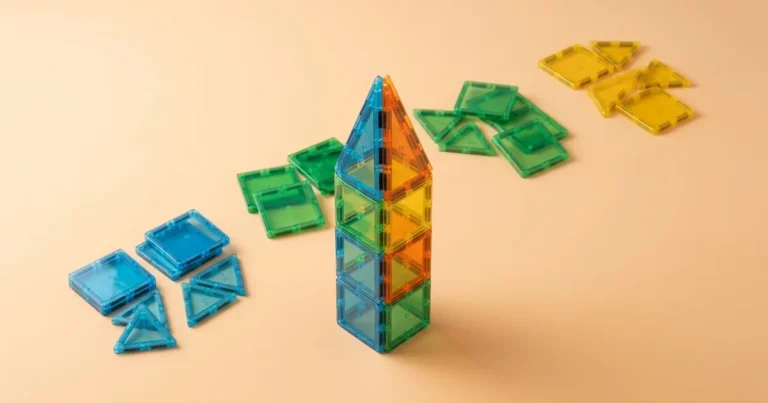
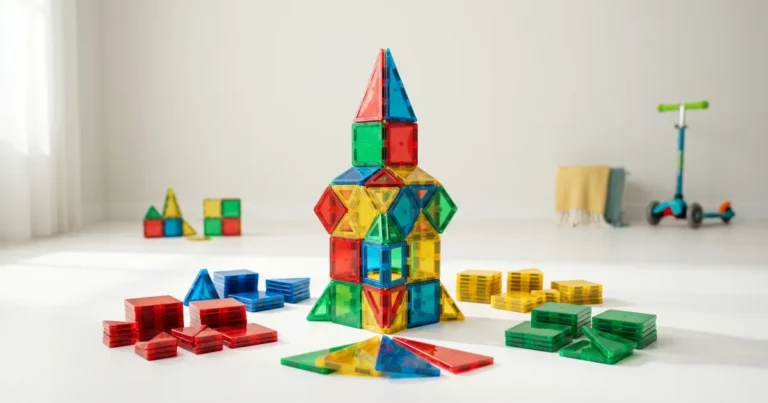
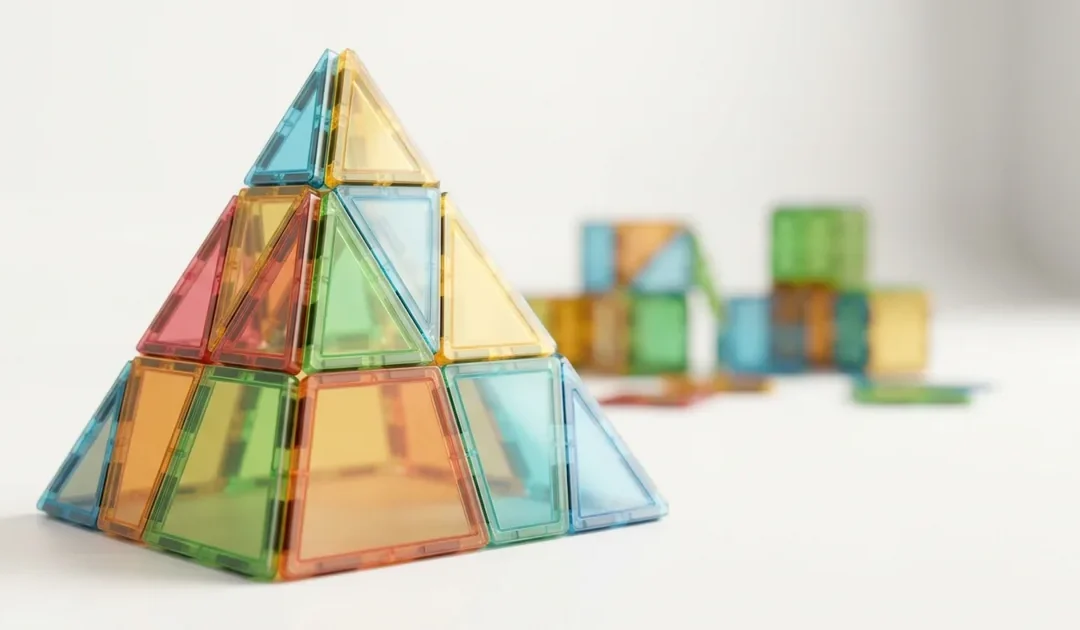
Magnetic tile sets are especially effective because they combine geometry (children naturally learn shapes fit together in specific ways), gross and fine motor coordination, and open-ended creativity, since there’s no single “right” way to build. A set like the Graflo Magnetic Train 65-Piece STEM Tiles Set lets kids design tracks, bridges, and structures, encouraging them to test ideas, watch them fail, and try again, which is exactly the kind of resilience-building play six-year-olds need.
For children who love bigger, more elaborate builds or who play well with siblings or friends, a larger set such as the 178-Piece Magnetic Train Set offers more pieces for ambitious, multi-track designs, which is great for group play and longer attention spans.
Why Building Toys Work So Well
- They are self-correcting: if a structure doesn’t balance, the child sees it immediately and adjusts
- They scale with skill: a beginner can build something simple, an advanced builder can attempt complex, multi-level designs
- They’re naturally social: two or more kids can combine sets and build something bigger together
- They quietly teach basic physics concepts like balance, gravity, and structural stability
2. Art and Creative Expression Toys
Creativity is not a “soft” skill, it’s directly tied to problem-solving, emotional expression, and even early literacy, since children who draw and paint often develop stronger pre-writing hand control. At six, kids are ready for slightly more sophisticated art tools than toddler-safe crayons.
A washable, non-toxic option like a 12-Color Finger Paint Set is ideal because it lets children experiment with color mixing, texture, and free-form design without the pressure of “getting it right.” This kind of unstructured creative play builds confidence and gives children a healthy outlet for feelings they may not yet have the words to express.
Other Great Creative Options
- Washable markers and sketch pads for early illustration and storytelling
- Simple sewing or lacing kits to build fine motor precision
- DIY craft kits (paper folding, beading, simple sculpture) that follow a sequence of steps, teaching planning and patience
3. Puzzles and Logic Games
Six-year-olds are ready for puzzles with more pieces (100 to 300, depending on experience) and for early strategy games. Puzzles build patience and spatial reasoning, while simple strategy games like matching games, memory card games, or basic chess variants introduce planning, sequencing, and the idea that decisions have consequences.
Look for:
- Jigsaw puzzles with a clear picture theme (animals, maps, vehicles) to sustain interest
- Logic puzzle games with increasing difficulty levels, so the toy “grows” with the child
- Simple board games that involve counting, reading, or basic strategy, which also build social turn-taking skills
4. Reading, Language, and Early Literacy Toys
Many 6 year olds are transitioning from “learning to read” to “reading to learn,” so toys that reinforce phonics, spelling, and vocabulary in a playful way are extremely valuable. Letter tile games, word-building sets, and interactive storybooks with activities all support this stage without feeling like schoolwork.
Some ideas:
- Magnetic or foam letter sets for spelling practice on a fridge or whiteboard
- Simple crossword or word-search books designed for early readers
- Story dice or picture prompt cards that encourage kids to invent their own tales, building narrative and sequencing skills
5. Science and Nature Exploration Kits
Curiosity about the natural world peaks around this age. Simple science kits, like growing a plant from seed, a basic magnifying glass and bug-viewing kit, or a weather-tracking chart, introduce the idea of observation and experimentation in a very concrete, hands-on way. These toys teach that questions can be answered by looking closely and testing ideas, a foundational scientific habit of mind.
6. Pretend Play and Role-Play Toys
Even as children grow more logical, imaginative play remains important. Role-play sets, like a pretend doctor kit, a small kitchen set, or dress-up costumes, help children rehearse real-world social scenarios, practice empathy by “becoming” someone else, and develop language skills through storytelling and dialogue during play.
7. Active and Outdoor Educational Toys
Learning isn’t only about sitting at a table. Balance bikes, skipping ropes, simple sports equipment, and obstacle-course kits build gross motor skills, coordination, and even math concepts like counting, timing, and measuring distance. In the UAE’s warmer months, look for shaded outdoor play times and hydration breaks to keep active play safe and enjoyable.
Matching Toys to Your Child’s Personality and Learning Style
Not every six-year-old learns the same way, and understanding your own child’s tendencies can help you choose toys that truly click rather than gather dust in a cupboard.
The Builder
If your child loves stacking, constructing, and taking things apart to see how they work, lean into building and STEM toys. Magnetic tile and train sets are perfect here because they can be rebuilt endlessly, so the toy never feels “finished” or boring.
The Artist
If your child is always drawing, coloring, or asking for craft supplies, prioritize open-ended creative toys like paint sets, sketch pads, and simple craft kits. Resist the urge to over-structure their art time, since the learning value comes largely from free exploration.
The Storyteller
Children who love making up stories, talking to their toys, or performing little plays benefit most from pretend play sets, puppet kits, and language-based games that let them build narratives.
The Puzzle-Solver
If your child gets absorbed in figuring out how things fit together or loves a challenge, puzzles, logic games, and strategy board games will hold their attention far longer than toys with a single, obvious use.
The Mover
Kids with high energy levels often learn best through movement. For these children, balance activities, active outdoor games, and toys that combine building with physical movement (like large-scale magnetic tracks they can walk around and rearrange) work particularly well.
Most children are actually a blend of two or three of these types, so a good toy shelf usually includes a mix, one building or STEM toy, one creative outlet, one puzzle or game, and one active or pretend play option.
Balancing Screens and Traditional Toys
With tablets and educational apps everywhere, many UAE parents wonder whether traditional toys still matter. The honest answer is yes, and in some ways, more than ever. Physical toys require children to use their hands, their whole bodies, and often another person to play with, all of which build skills that a screen simply cannot replicate. A magnetic building set demands spatial reasoning and physical trial and error. A finger painting session builds tactile sensory processing. A board game teaches face-to-face patience and sportsmanship.
This doesn’t mean screens are the enemy, but many pediatric and educational guidelines suggest that unstructured, hands-on play should make up the bulk of a 6 year old’s free time, with screen-based learning as a smaller supplement rather than the main event. A simple rule many UAE families follow is to offer a physical, creative, or building toy first, and treat screen time as an occasional addition rather than the default activity after school.
Budgeting for Educational Toys in the UAE
Educational toys are an investment, but they don’t need to break the bank. Here’s how to think about budgeting in AED without compromising on safety or quality.
Prioritize Versatility Over Quantity
One well-made magnetic building set that can be reconfigured a thousand different ways offers more long-term value in AED terms than five single-use plastic toys that get boring within a week. When comparing prices, think in terms of “cost per hour of engaged play” rather than just the sticker price.
Mix High-Value and Lower-Cost Items
A sensible approach is to spend a bit more on one or two flagship toys, like a larger magnetic construction set, and balance the budget with smaller, lower-cost additions like an art set or a simple puzzle. This way your child gets variety without every purchase needing to be a big-ticket item.
Think About Growth Potential
Toys that can “grow” with your child, meaning they remain interesting and challenging as skills improve, tend to offer better long-term value in AED. A modular building set, for instance, can be used in simple ways at age 6 and in far more complex designs by age 8, effectively serving as two or three toys in one.
Watch for Seasonal and Occasion-Based Shopping
Many UAE families plan toy purchases around birthdays, National Day, back-to-school season, or Eid celebrations. Planning ahead for these occasions, rather than buying on impulse, often allows for better budgeting and more thoughtful choices that match your child’s actual interests.
From Toddler to Big Kid: How Toy Needs Change with Age
It’s worth understanding how the toy landscape shifts as children grow, both so you can pass down or repurpose older toys sensibly, and so you know what to look for as your child moves into the next stage.
Ages 3 to 5: The Foundation Years
At this stage, toys are more about sensory exploration, basic shape and color recognition, and simple cause-and-effect play. Building sets tend to have larger, simpler pieces, and art supplies are often more forgiving of less-controlled hand movements. If you have a younger child at home alongside your 6 year old, browsing the 3 to 5 years toy collection can help you find age-appropriate options that keep everyone safely and happily occupied.
Ages 6 to 8: The Skill-Building Years
This is where toys start demanding more precision, more planning, and more sustained attention. Building sets get more intricate, puzzles get more pieces, and games introduce real strategy and rule complexity. If your child is ready to level up from their current toy box, the 6 to 8 years toy collection is specifically curated for this stage of development, making it a great place to start when shopping for a birthday or a special milestone.
What This Means for Your Shopping Strategy
If your 6 year old has an older sibling, some hand-me-down toys from the 6-8 category may already suit them well. Conversely, if your child is a slightly later bloomer in fine motor skills, it’s perfectly fine to keep a few 3-5 range toys in rotation while introducing new challenges gradually rather than all at once.
Practical Tips for Making Playtime More Educational
Buying the right toy is only half the equation, how you engage with it matters just as much. Here are some practical, easy-to-apply tips.
1. Play Alongside Your Child, At Least Sometimes
You don’t need to hover over every play session, and independent play is genuinely valuable too, but sitting down occasionally to build a track together, do a puzzle side by side, or paint together sends a powerful message that learning and play are things you value.
2. Ask Open-Ended Questions
Instead of praising with a simple “good job,” try questions like “What happens if we make the bridge taller?” or “Why do you think this piece keeps falling?” This turns ordinary play into a mini problem-solving exercise and builds your child’s confidence in their own reasoning.
3. Rotate Toys Regularly
Keeping every toy accessible all the time can actually reduce engagement, since novelty drives curiosity. Try rotating a portion of the toy collection every few weeks, putting some away and bringing others back out, to keep play fresh and focused.
4. Set Up a Dedicated, Safe Play Space
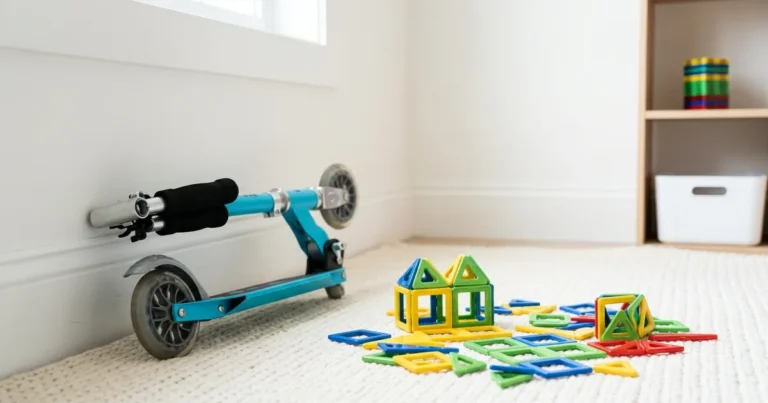
A clear, clutter-free area, even a small corner with a rug and a low shelf, helps children focus and reduces tripping hazards from scattered pieces. This is especially useful for building toys with many small parts, since a defined space also makes cleanup far easier.
5. Celebrate the Process, Not Just the Result
When a tower falls or a puzzle piece doesn’t fit, resist jumping in to fix it immediately. Give your child a moment to problem-solve on their own first. This builds the kind of resilience and independent thinking that serves children well far beyond playtime.
6. Combine Toy Categories for Richer Play
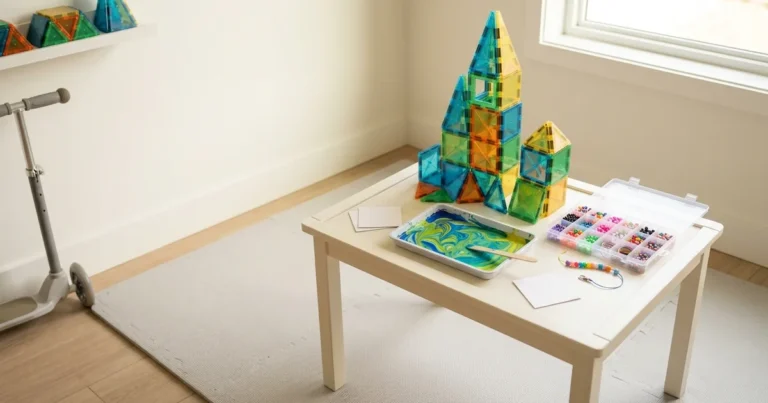
Encourage your child to mix categories, for example, building a structure with magnetic tiles and then painting a picture of it, or building a pretend “train station” with a magnetic train set and acting out a story around it. This kind of cross-category play deepens engagement and stretches multiple skills at once.
Common Mistakes Parents Make When Choosing Educational Toys
Overestimating or Underestimating Skill Level
Choosing a toy that’s too advanced can lead to frustration and toy abandonment, while a toy that’s too simple gets ignored just as quickly. Always check the recommended age range, but also observe your own child’s current skill level, since kids develop at different paces.
Buying Based on Packaging Alone
Flashy boxes don’t always reflect genuine play value. Look past the packaging to consider what skills the toy actually builds, how durable it is, and whether it offers open-ended or single-use play.
Ignoring Your Child’s Actual Interests
A toy chosen purely because it’s trending or because “all the other kids have it” often ends up unused if it doesn’t match your child’s genuine interests. Spend a little time observing what naturally captures their attention before buying.
Overloading the Toy Shelf
Too many toys at once can overwhelm children and actually reduce focused, meaningful play. A smaller, well-curated collection, rotated regularly, tends to produce deeper engagement than an overflowing toy box.
Bringing It All Together
Choosing the right educational toys for 6 year olds doesn’t require an advanced degree in child psychology, just a thoughtful eye for safety, a clear sense of what skills you’re hoping to support, and genuine attention to what makes your own child curious. Building sets like magnetic tiles and trains build STEM thinking and resilience, art supplies nurture creativity and fine motor skills, puzzles and games sharpen logic and patience, and pretend play keeps imagination and empathy alive. The best toy box for a six-year-old usually blends a few of these categories rather than relying on just one.
Whatever you choose, remember that safety always comes first, quality and durability matter more than flashy marketing, and the real magic happens not just in the toy itself, but in the time and attention you bring to playing alongside your child. With a bit of planning and the right choices, playtime at six can become one of the most powerful, joyful learning tools your child will ever have.
Frequently Asked Questions
What are the best educational toys for 6 year olds just starting school?
For children entering their first year of primary school, a mix of a building or STEM toy, a creative art set, and a simple logic puzzle works well. Magnetic building sets are especially popular because they build spatial reasoning and patience, while a washable art set supports fine motor control needed for handwriting.
How many educational toys does a 6 year old actually need at home?
Quality matters far more than quantity. A well-curated collection of four to six versatile toys, rotated every few weeks, tends to hold a child’s attention and support deeper learning better than a large pile of single-use toys.
Are magnetic building toys safe for 6 year olds?
Yes, when the set is well-made with securely enclosed, high-quality magnets designed for children’s toys. Always supervise play if younger siblings are present, since magnetic pieces can pose a risk if a younger child puts them in their mouth.
How can I tell if a toy is genuinely educational or just marketed that way?
Look at whether the toy encourages problem-solving, builds fine or gross motor skills, supports creativity, or teaches social and language skills, rather than relying only on the word ‘educational’ printed on the box. Open-ended toys that can be used in many different ways usually offer the richest learning value.
What should I do if my 6 year old loses interest in their toys quickly?
Try rotating toys instead of keeping everything out at once, and look for toys that grow with skill level, such as building sets that can be rearranged into increasingly complex designs. Playing alongside your child occasionally and asking open-ended questions can also renew interest in existing toys.