Last updated: July 26, 2026
At one year old, your child is not yet ready for microscopes or building kits, but their brain is forming more than a million new neural connections every second. This is exactly why the right STEM toys for 1 year old babies matter so much right now, not later. The best choices at this age are not flashy or complicated. They are safe, simple, and built to survive being mouthed, thrown, banged, and dropped a hundred times a day, while quietly teaching cause and effect, shapes, textures, and early problem-solving. This guide walks UAE parents through exactly what to look for, what to avoid, and how to turn everyday moments into meaningful STEM learning, without ever putting safety second.
Why STEM Toys Matter Even Before Age One
Science, technology, engineering, and math sound like subjects for school-age children, but the foundations are laid in infancy. A one-year-old stacking two blocks is practicing engineering. A toddler dropping a ball into a container and watching it disappear is exploring physics. A baby squishing dough between their fingers is doing early chemistry and sensory science. None of this looks academic, and that is the point. At this stage, STEM is not a curriculum, it is a way of playing that happens to build the mental muscles your child will use for the rest of their life.
Research in early childhood development consistently shows that open-ended, hands-on play during the first two years strengthens the neural pathways responsible for problem-solving, spatial reasoning, and language. Toys that respond predictably to a child’s actions, a lid that pops off, a ball that rolls, a button that lights up, help babies understand that their actions have consequences. This understanding of cause and effect is one of the earliest and most important cognitive milestones, and it is the seed from which all future STEM thinking grows.
For parents, the reassuring part is that you do not need expensive or complicated toys to support this development. You need toys that are safe, age-appropriate, and interesting enough to hold your child’s attention for more than thirty seconds.
What “STEM” Really Means for a One-Year-Old
It helps to reframe expectations. STEM for a toddler is not letters and worksheets. It looks like this:
- Science: Exploring textures, water, sand, and light. Noticing that ice melts or that a ball rolls faster down a ramp.
- Technology: Understanding that pressing a button, pulling a string, or turning a knob makes something happen.
- Engineering: Stacking, nesting, and fitting shapes together, then knocking them down and trying again.
- Math: Sorting by size or color, noticing patterns, and beginning to understand concepts like “more” and “empty.”
When you look for STEM toys for 1 year old babies through this lens, you will realize that many everyday toys, and even household objects, already qualify. The goal is simply to be intentional about choosing and rotating toys that stretch these skills a little further each month.
Safety First: The Non-Negotiables for Toddler Toys
Before we talk about types of toys, we need to talk about safety, because at one year old, nothing matters more. Toddlers explore with their mouths, their hands, and their whole bodies, and they have no concept of danger. A toy that is educational but unsafe is not a good toy.
Choking Hazards
Any toy or toy part smaller than a standard toilet paper roll’s diameter is a potential choking hazard for a child under three. This includes small magnets, batteries, beads, and small building pieces. Always check the manufacturer’s recommended age range, and when in doubt, size the piece against a small paper tube before handing it to your toddler.
Material Safety
Look for toys made from non-toxic, BPA-free, phthalate-free materials. In the UAE’s climate, plastics left in a hot car or near a sunny window can degrade faster, so check regularly for cracking, splitting, or peeling paint, especially on older toys that get passed down between siblings.
No Loose Small Parts or Button Batteries
Button batteries are one of the most dangerous household hazards for toddlers if swallowed. If a toy uses batteries, make sure the battery compartment has a secure screw closure that a curious one-year-old cannot pry open with their fingers or teeth.
Sturdy Construction
At this age, toys get thrown, sat on, chewed, and dragged across tile floors. Choose toys with rounded edges, no sharp seams, and construction sturdy enough to handle real toddler enthusiasm without breaking into small pieces.
Certifications to Look For
Whenever possible, buy toys that meet recognized safety standards such as EN71 (European) or ASTM (American), which test for choking hazards, toxic materials, and structural safety. Reputable toy brands will display these certifications clearly on packaging or product pages.
Developmental Milestones at One Year: What to Support
Understanding where your child is developmentally helps you choose toys that meet them where they are, rather than toys that are too advanced or too simple to hold their interest.
Fine Motor Skills
Around 12 months, most toddlers can pick up small objects using a pincer grasp (thumb and forefinger), bang two objects together, and begin to release objects intentionally, like dropping a block into a box rather than just letting go randomly.
Gross Motor Skills
Many one-year-olds are pulling up to stand, cruising along furniture, and some are taking their first independent steps. Toys that encourage movement, like push toys or soft balls, support this stage well.
Cognitive Development
Object permanence is solidifying around this age, meaning your toddler understands that objects still exist even when hidden. This is why peekaboo, shape sorters, and simple hide-and-reveal toys are so captivating right now.
Language Development
First words often emerge between 10 and 14 months. Toys that name objects, animals, or colors, or that encourage back-and-forth interaction with a caregiver, support this critical language window.
Social-Emotional Development
One-year-olds are beginning to enjoy simple turn-taking games and seek approval from caregivers. Toys that invite shared play, like rolling a ball back and forth, build early social skills alongside STEM concepts.
The Best Types of STEM Toys for 1 Year Old Babies
With safety and development in mind, here are the categories of toys that consistently work well for this age group, along with why each one matters.
1. Stacking and Nesting Toys
Stacking rings, nesting cups, and simple stacking blocks are classic for good reason. They teach size comparison, balance, and hand-eye coordination. Choose sets with large, chunky pieces that are easy for small hands to grip, and avoid sets with too many pieces at once, five to seven is plenty for a beginner.
2. Shape Sorters
A good shape sorter introduces basic geometry, problem-solving, and persistence. At first, your toddler may just enjoy taking pieces out. Over the following months, they will start matching shapes to holes. Choose sorters with only two or three shapes to start, adding complexity as skills grow.
3. Cause-and-Effect Toys
Push-button toys that light up or play music, pop-up toys, and simple activity cubes reinforce the connection between action and result. These toys are especially good for toddlers who are still building attention span, since the immediate feedback keeps them engaged.
4. Sensory Bins and Textured Toys
Filling a shallow, supervised bin with dry pasta, rice, or soft fabric scraps (never small enough to swallow) lets toddlers explore textures with their hands. This is early sensory science. For families who want a mess-free option, textured balls, soft blocks with varied fabrics, and squeeze toys with different textures work just as well.
5. Simple Building Blocks
Soft foam blocks or large, lightweight wooden blocks let toddlers practice stacking and knocking down, an early introduction to engineering and gravity. Look for blocks large enough that they cannot be a choking hazard, with no sharp corners.
6. Water and Bath Toys
Bath time is one of the easiest places to introduce STEM concepts. Cups for pouring, toys that float versus sink, and simple squirt toys teach volume, buoyancy, and cause and effect, all while your toddler is having fun in a supervised, contained space.
7. Push and Pull Toys
Toys on wheels that toddlers can push while walking, or pull-along toys with a string, combine gross motor development with an early understanding of movement and momentum.
8. Music and Sound Toys
Simple instruments like shakers, soft drums, or bells introduce cause and effect through sound, along with early pattern recognition as toddlers notice rhythm and repetition.
9. Early Sensory Art
Non-toxic, washable finger paint designed for supervised toddler use is a wonderful introduction to color mixing, texture, and cause and effect (press finger, see color appear). If you are considering art materials at this age, always confirm the product’s recommended age range and supervise closely, since young toddlers explore with their mouths. Our washable finger paint set is a good example of the kind of non-toxic, parent-supervised sensory activity that many families introduce as toddlers approach the older end of this stage or shortly after turning two, always checking the label for the appropriate starting age for your individual child.
How to Introduce STEM Play Into Daily Life
You do not need a dedicated “STEM hour” with a one-year-old. In fact, trying to force structured learning time at this age usually backfires. Instead, weave these concepts into the moments you already have together.
Bath Time
Add two or three cups and a small floating toy. Let your toddler pour water back and forth, and narrate what is happening: “The water is going in the cup. Now it’s full. Now it’s empty.” This simple narration builds vocabulary alongside the physical exploration.
Meal Time
Offer a variety of textures in safe, age-appropriate finger foods. Let your toddler explore squishing a piece of banana or feeling the ridges on a cracker. This is sensory science happening naturally.
Outdoor Time
Even a short walk in a stroller or on a shaded playground offers opportunities to point out shapes, colors, and textures: the roundness of a ball, the roughness of tree bark, the way leaves move in the wind. In the UAE’s warmer months, early morning or evening outdoor sessions, or a cool indoor play area, work well to keep this exploration comfortable and safe.
Tidy-Up Time
Sorting toys into bins by color or size, even loosely, introduces categorization, an early math skill, while also building a helpful daily routine.
Reading Time
Board books with textures, flaps, or simple counting themes combine language development with early STEM concepts like numbers and sequencing.
Setting Up a Safe STEM Play Space at Home
A dedicated, safe play space makes it easier for toddlers to explore independently while staying within a caregiver’s sight.
Choose a Low, Soft Surface
A play mat or rug in a corner of the living room works well. Avoid hard tile directly under play areas if possible, since toddlers at this age fall frequently while practicing standing and walking.
Keep Toy Selection Small
Rotate four to six toys at a time rather than leaving an entire toy box accessible. Too many options overwhelm a one-year-old and can reduce focused, meaningful play. Rotating toys every one to two weeks also keeps interest fresh without needing to buy new items constantly.
Store Small Parts Out of Reach
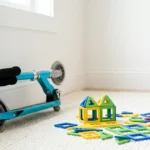
If you have older siblings with toys containing small pieces, such as building sets, keep those stored separately and out of reach when your toddler is not directly supervised.
Childproof the Surroundings
Secure furniture, cover electrical outlets, and remove any small objects (coins, jewelry, small decor items) from floor level before setting your toddler loose to explore.
Common Mistakes Parents Make When Choosing STEM Toys for Toddlers
Buying Toys That Are Too Advanced
A toy labeled for ages three and up often contains small parts unsafe for a one-year-old, or requires fine motor and cognitive skills your toddler simply has not developed yet. This leads to frustration for your child and disappointment for you. Always check the recommended age range before purchasing, and remember that these ranges exist primarily for safety reasons, not just difficulty level.
Overloading the Play Area
More toys does not mean more learning. A cluttered play space often leads to shorter attention spans and more frantic, less focused play. Fewer, well-chosen toys generally lead to deeper engagement.
Ignoring Battery and Small Part Safety
Electronic toys are appealing because they are flashy, but always double-check battery compartment security and confirm there are no small removable parts before giving a toy to a toddler unsupervised.
Choosing Toys That Do Everything
Toys that light up, sing, count, and spin all at once can actually overstimulate toddlers and leave little room for their own imagination and problem-solving. Simpler, open-ended toys often support deeper STEM thinking than highly automated ones.
Forgetting to Supervise
Even the safest toy requires supervision at this age. Sensory bins, water play, and small stacking pieces should always be used with an adult nearby, not left as unsupervised independent play.
Budget-Friendly DIY STEM Activities for Toddlers
You do not need to buy every toy on this list. Many wonderful STEM experiences for one-year-olds can be created at home using safe household items.
Homemade Sensory Bottles
Fill a clear, well-sealed plastic bottle with water, glitter, and a drop of dish soap. Secure the lid tightly with strong tape. Your toddler can shake, roll, and watch the glitter swirl, a simple introduction to motion and light without any small parts risk.
Cardboard Box Exploration
An empty box becomes a tunnel to crawl through, a container to fill and empty, or a simple shape to push around the room. This costs nothing and offers endless open-ended play.
Kitchen Cup Stacking
Plastic measuring cups or unbreakable kitchen cups of varying sizes make an instant, free stacking and nesting toy.
Texture Basket
Gather a few large, safe household items with different textures, a soft sponge, a smooth wooden spoon, a bumpy silicone trivet, and let your toddler explore each one under close supervision.
Muffin Tin Sorting
A clean muffin tin with a few large pom-poms or soft balls (larger than a choking hazard size) lets toddlers practice placing objects into individual sections, an early sorting and fine motor activity.
Growing With Your Child: STEM Toys Beyond the First Year
One of the best parts of investing thoughtfully in STEM play now is that it sets the stage for richer, more complex learning as your child grows. The stacking and cause-and-effect skills your one-year-old is building today become the foundation for the engineering and construction play they will enjoy at three, four, and beyond.
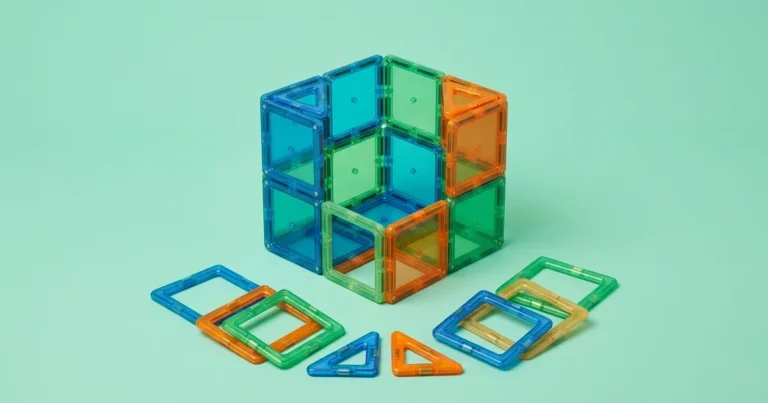
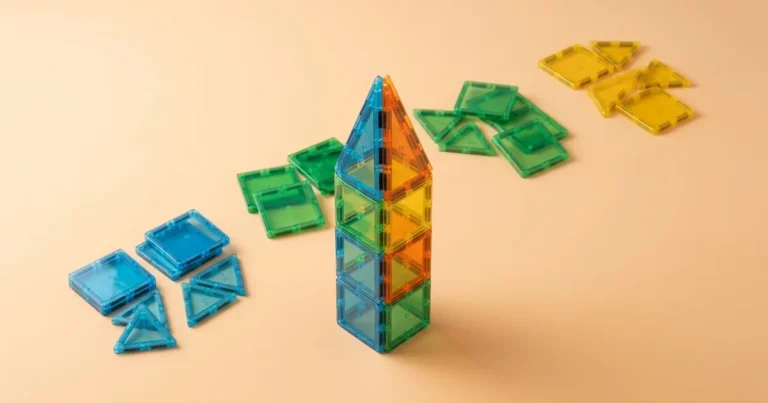
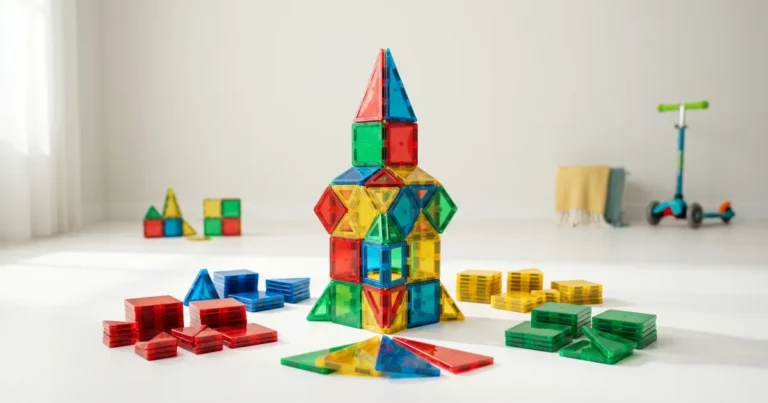
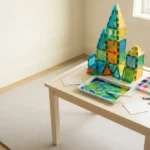
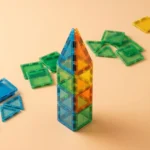
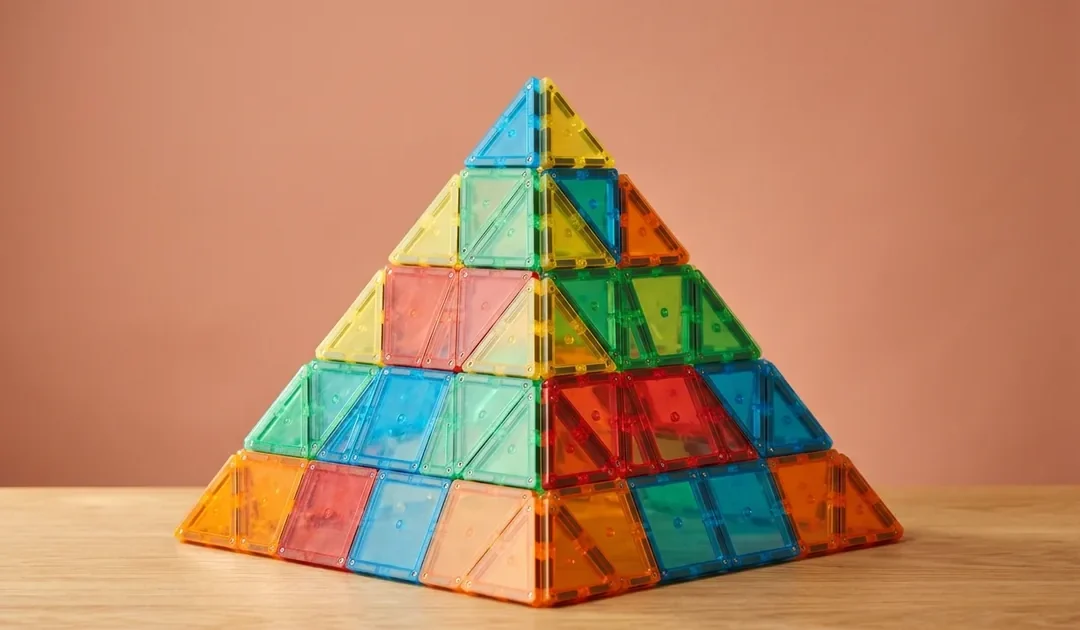
As your toddler approaches the preschool years, typically from age three onward, you can introduce more advanced building and construction toys that build directly on these early foundations. Magnetic building tiles, for example, take the simple stacking instinct your toddler has now and expand it into genuine spatial reasoning, geometry, and creative engineering. Our 65-piece magnetic STEM tile set is designed for ages three to eight and offers a natural next step once your child has outgrown simpler stacking toys, while the larger 178-piece magnetic STEM tile set gives even more room for ambitious builders as they grow into school age.
For parents who like to plan ahead, browsing our ages 3 to 5 years collection now can help you understand what skills to nurture during the toddler years, so the transition feels natural rather than sudden. And for families with older siblings at home, our ages 6 to 8 years collection shows just how far these early STEM foundations can eventually lead, from simple block stacking at one year old to genuine engineering challenges by early elementary school.
The key takeaway is that STEM learning is not a single toy or a single age. It is a continuum. What you choose today for your one-year-old is the first step on a much longer, exciting path.
A Practical Shopping Checklist
Before purchasing any STEM toy for your one-year-old, run through this quick checklist:
- Is the toy free of small parts that could pose a choking hazard?
- Is it made from non-toxic, BPA-free, phthalate-free materials?
- Does it meet a recognized safety standard such as EN71 or ASTM?
- Is the battery compartment (if any) secured with a screw closure?
- Are the edges rounded and the construction sturdy enough for rough toddler play?
- Does the toy match your child’s current developmental stage, not one you hope they will reach soon?
- Is the toy simple enough to allow open-ended exploration rather than a single scripted action?
- Can it be easily cleaned, especially important for toys that will be mouthed frequently?
If a toy checks every box above, it is very likely a safe, worthwhile addition to your toddler’s play collection.
Conclusion
Choosing STEM toys for 1 year old babies does not require complicated products or a big budget. It requires an understanding that at this age, every stack of blocks, every splash in the bath, and every squeeze of a textured ball is genuine, valuable learning. Prioritize safety above every other factor, choose toys that match your toddler’s current abilities, and rotate a small, thoughtfully chosen selection rather than overwhelming your child with too many options. As your little one grows from a curious one-year-old into an eager preschooler, the simple stacking and sorting skills they build today will carry them naturally into more advanced building and engineering play in the years ahead. Trust the process, stay close during play, and enjoy watching your toddler’s mind grow one safe, joyful discovery at a time.
Frequently Asked Questions
What makes a toy a STEM toy for a 1 year old, if they cannot understand science yet?
At this age, STEM simply means hands-on exploration that builds early problem-solving skills. Stacking cups, shape sorters, and cause-and-effect toys count as STEM because they teach cause and effect, spatial awareness, and early sorting, all foundational science, math, and engineering concepts, without any formal instruction needed.
How many small parts is too many for a toy meant for a 1 year old?
Ideally, a toy for a one-year-old should have no parts smaller than a standard toilet paper roll’s opening, since anything smaller poses a choking risk. Always check the manufacturer’s recommended age range and avoid toys labeled for ages three and up until your child is older and better able to handle small pieces safely.
How long should a 1 year old play with a STEM toy in one sitting?
Attention spans at this age are naturally short, often just five to fifteen minutes per toy. This is completely normal. Rather than worrying about session length, focus on offering a small rotation of engaging, age-appropriate toys and following your toddler’s lead on how long they want to explore each one.
Are magnetic building tiles safe for a 1 year old?
Magnetic tile sets, including our STEM tile collections, are designed for children ages three to eight because they contain small magnetic pieces that are not safe for a one-year-old’s mouthing stage. For toddlers under three, stick to large, soft stacking blocks and simple shape sorters, and save magnetic building sets for when your child is developmentally ready.
Do I need to buy expensive toys to support STEM learning at 1 year old?
Not at all. Many of the best STEM experiences for a one-year-old come from simple, low-cost items like stacking cups, textured household objects, and water play during bath time. What matters most is safety, age-appropriateness, and giving your toddler space to explore at their own pace.