

Last updated: August 5, 2026
At six years old, a boy’s brain is wiring itself for storytelling, problem-solving, and social cooperation, and the toys he plays with today are quietly shaping how he thinks tomorrow. If you have ever watched a six year old turn a cardboard box into a spaceship or a handful of magnetic tiles into a working train station, you already know that imaginative play is not just “fun and games.” It is how young boys practice negotiation, test cause and effect, manage big feelings, and build the confidence to try new things without fear of getting it wrong. Choosing the right imaginative toys for 6 year olds boy at this stage means looking beyond flashing lights and battery-powered gimmicks, and instead reaching for open-ended, safety-tested toys that grow with your child’s imagination rather than limiting it.
This guide walks UAE parents through exactly what to look for, why it matters developmentally, and which specific toys genuinely earn their place on a six year old’s shelf, all while keeping safety and value for money (in AED) front and center.
Why Imaginative Play Matters So Much at Age 6
Six is a pivotal year. Boys at this age are entering Grade 1 or Year 1, learning to read, forming their first real friendships, and starting to understand rules, fairness, and consequences. Imaginative play is the bridge between the toddler years of parallel play and the more structured, rule-based games of middle childhood.
Cognitive Development
When a six year old builds a magnetic train track and decides the train is delivering “rescue supplies” to a flooded village, he is doing something remarkable: he is combining spatial reasoning (how the tracks connect), narrative thinking (why the train is moving), and problem-solving (what happens if a bridge collapses). This kind of layered thinking is exactly what strengthens the prefrontal cortex, the part of the brain responsible for planning and decision-making.
Emotional Regulation
Pretend play gives boys a safe space to act out fears, frustrations, and big emotions that they cannot yet articulate in words. A boy who is nervous about starting a new school might act out a story where a toy character is scared to enter a new building, and through play, he processes that fear at his own pace. Open-ended imaginative toys, rather than toys with a single fixed outcome, give him the freedom to write and rewrite that story until it feels resolved.
Social Skills
By age six, many boys are playing collaboratively rather than side-by-side. Imaginative toys like construction sets and role-play props naturally invite siblings, cousins, or friends to join in, negotiate roles (“I’m the engineer, you’re the passenger”), and practice turn-taking. These are the exact soft skills that carry into classroom teamwork years later.
Fine and Gross Motor Skills
Building, sculpting, painting, and assembling all demand hand strength, pincer grip, and hand-eye coordination. A six year old snapping together magnetic tiles or squeezing finger paint onto paper is quietly refining the same small muscles he needs for handwriting and buttoning his own school shirt.
What Makes a Toy Truly “Imaginative” (Not Just Entertaining)
Not every toy that claims to spark imagination actually does. Here is how to separate the two.
Open-Ended vs Closed-Ended Play
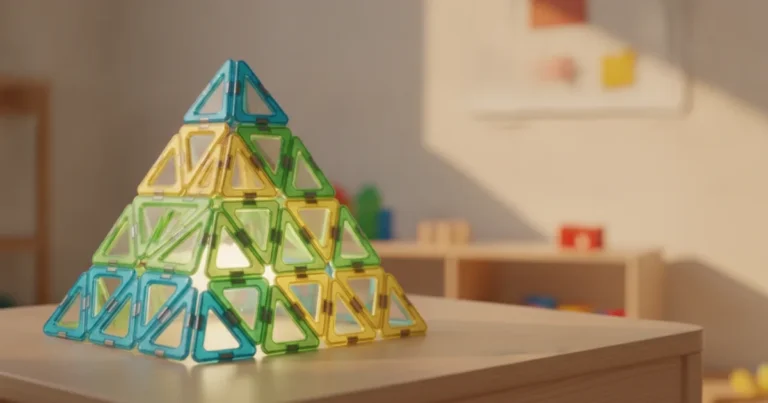
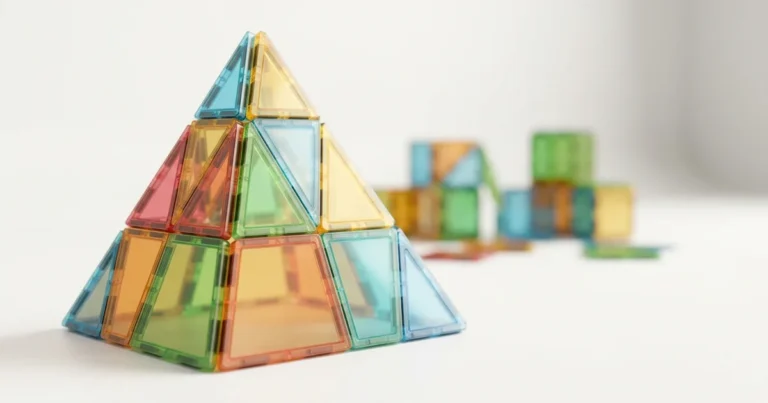
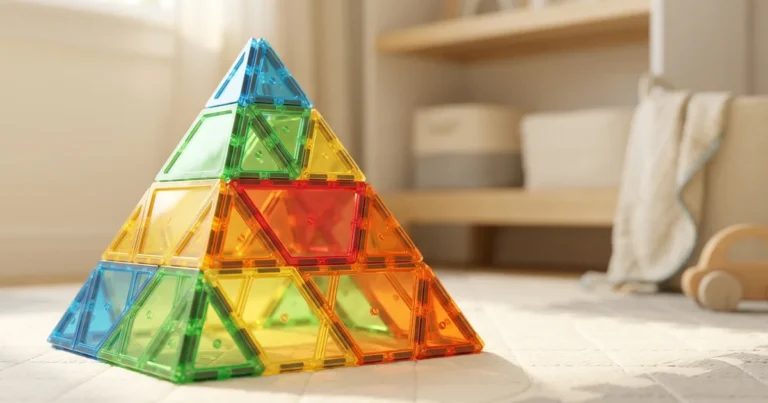
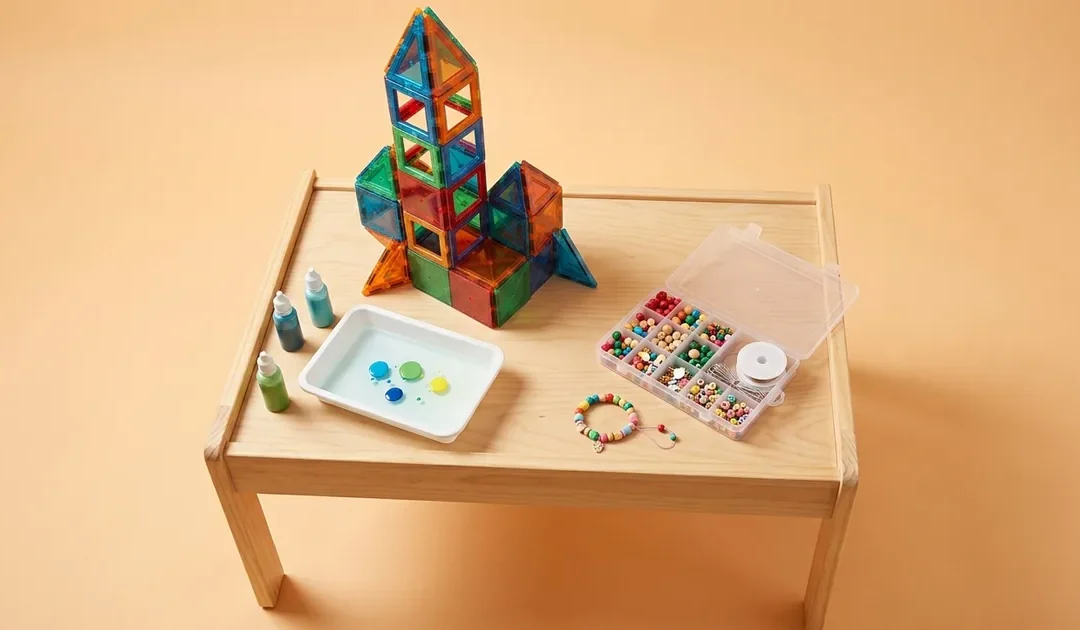
A closed-ended toy has one correct way to play with it, think of a puzzle with only one solution, or a toy car that only drives in a straight line. An open-ended toy, on the other hand, can become a hundred different things depending on the story a child invents. Magnetic building tiles are a perfect example: one afternoon they are a rocket, the next they are a zoo enclosure, and the day after that they are a robot factory. This flexibility is precisely why open-ended toys hold a boy’s attention far longer than single-purpose gadgets.
Multi-Sensory Engagement
The best imaginative toys engage more than one sense, texture, color, sound, and movement working together. A finger paint set, for instance, lets a boy feel the paint squish between his fingers while he decides what color a dragon’s scales should be. That sensory feedback loop keeps him mentally present and invested in the activity, rather than passively consuming it.
Encourages Storytelling, Not Just Assembly
Building is wonderful, but the toys that go a step further invite a narrative. Does the finished train have a destination? Does the tower have a dragon guarding it? Toys that naturally lead to “and then what happens?” are the ones building the strongest imaginative muscles.
Safety-Tested Materials and Age-Appropriate Design
For a six year old, this means no small detachable parts that pose a choking risk for younger siblings in the home, non-toxic, water-based paints and dyes, rounded edges on building pieces, and magnets that are securely encased so they cannot be swallowed. Always check that a toy is rated for the correct age group and carries recognized safety certifications before it enters your home.
Top Categories of Imaginative Toys for 6 Year Old Boys
Rather than chasing whatever is trending, it helps to think in categories. A well-rounded imaginative play collection for a six year old boy usually includes something from each of the areas below.
1. Magnetic Building and STEM Construction Sets
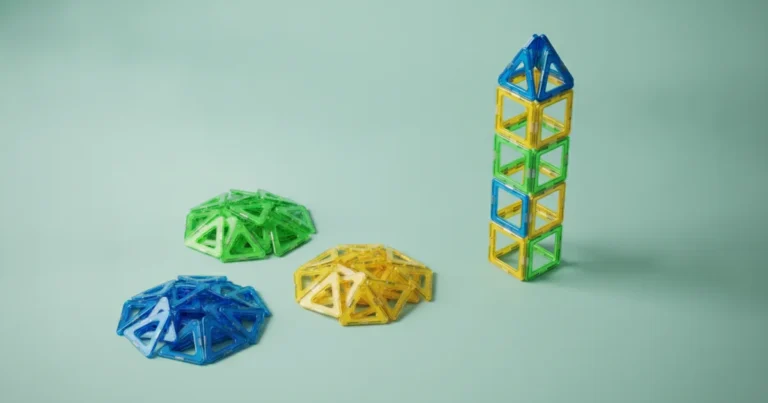
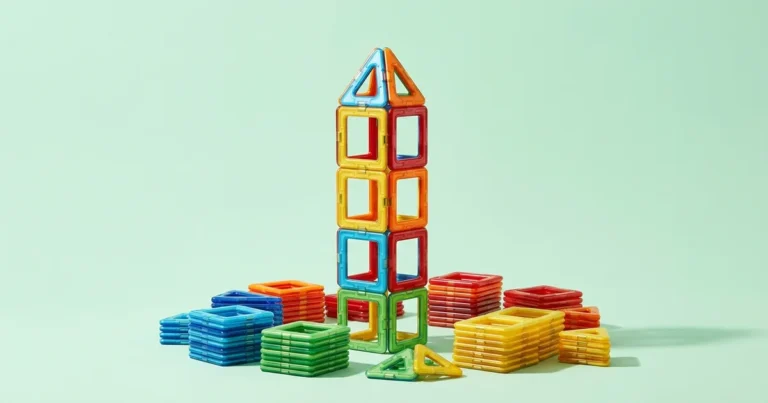
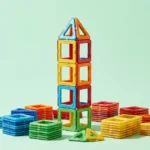
Magnetic tiles and train sets are consistently among the most requested imaginative toys for 6 year olds boy, and for good reason. They combine engineering logic with total creative freedom. A boy can build a simple track loop one day and an elaborate multi-level city with tunnels, bridges, and stations the next.
For families just starting out or looking for something that fits neatly into a smaller play space, the Graflo Magnetic Train for Kids, 65pcs STEM Tiles Set offers a compact but versatile starting point. It introduces basic engineering concepts, track planning, and gentle STEM learning, while still leaving plenty of room for a boy to invent his own storylines about where the train is headed and why.
For boys who already love building bigger, more ambitious worlds, or for households with siblings who want to build together, the Magnetic Train Set for Kids, 178pcs gives significantly more pieces to work with. More pieces mean longer, more complex tracks, multiple train routes running simultaneously, and richer collaborative play when friends come over. Many parents find that a larger set actually extends independent play time, because a six year old is far less likely to run out of building ideas.
Why Magnetic Tiles Work So Well at This Age
- They snap together with a satisfying click, giving instant positive feedback that keeps a six year old engaged.
- The pieces are lightweight and easy to manipulate, which supports independent play without constant adult help.
- They naturally teach basic physics concepts, balance, gravity, and structural stability, through trial and error rather than instruction.
- They are reusable in endless configurations, which means the toy never truly gets “finished” or boring.
2. Creative Art and Sensory Play
Imaginative play is not only about building structures, it is also about expressing ideas visually. Art supplies designed specifically for young hands let a six year old translate the stories in his head onto paper.
The Finger Paint Set for Kids, 12 Colors is a strong choice because it removes the barrier of holding a brush correctly and instead lets a child paint directly with his fingers and hands. This is particularly valuable for six year olds who are still refining fine motor control, since finger painting builds hand strength and confidence without the frustration of a paintbrush slipping. Because the set includes twelve colors, boys can mix and experiment to invent their own shades, whether that means the perfect “lava orange” for a volcano scene or a “swamp green” for a dinosaur habitat.
Tips for Getting the Most Out of Art-Based Imaginative Play
- Give the activity a loose theme rather than a strict outcome, for example “paint your favorite superhero’s world” instead of “paint a house.”
- Lay down a washable mat or old newspaper so the mess feels contained and stress-free for both you and your son.
- Ask open questions while he paints, such as “what is happening in this part of the picture?” This gently strengthens verbal storytelling alongside the visual creativity.
- Display the finished artwork somewhere visible in the home. Seeing his work valued encourages a six year old to keep creating.
3. Role-Play and Pretend Sets
Dress-up costumes, pretend tool kits, doctor kits, and kitchen play sets remain classic imaginative toys because they let a boy literally step into another identity. At six, boys often gravitate toward roles that feel powerful or heroic, firefighters, astronauts, knights, or scientists. Rotating these props every few weeks keeps the play fresh, and pairing them with building sets often produces the richest stories, for example a knight’s castle built from magnetic tiles, complete with a boy in a cape defending it.
4. Puzzle-Based Construction and Logic Toys
While pure logic puzzles are more closed-ended, many construction-based logic toys strike a nice balance between structured problem-solving and open imaginative building. These are excellent for boys who enjoy a bit of challenge alongside free play, and they help build patience, a skill many six year olds are still developing.
5. Small-World Play
Miniature figures, animal sets, and vehicle collections invite a six year old to create entire miniature worlds on the living room floor. Combined with magnetic tiles as a “backdrop” or “city,” small-world figures give a story a cast of characters to move through the scenes a boy has built.
How to Choose the Right Imaginative Toy for Your Son
With so many options available, it helps to run through a short mental checklist before buying.
Consider His Current Interests
Does he gravitate toward vehicles, animals, superheroes, or building? Choosing a toy that connects to an existing passion means he is far more likely to dive into imaginative play immediately, rather than needing to be coaxed.
Think About Play Duration and Replay Value
A toy that can only be “solved” once will lose its appeal within days. Prioritize toys that can be rebuilt, repainted, or reimagined dozens of times, such as the sets found in Graflo’s Ages 6-8 Years collection, which is curated specifically for this stage of development.
Check the Safety Certifications
Always look for age-appropriate labelling, non-toxic material certifications, and secure construction, especially for magnetic pieces and small parts. If you have a younger sibling at home who may put pieces in their mouth, keep smaller-piece sets stored safely out of reach between play sessions.
Match Complexity to His Skill Level
If your son is new to a category of toy, starting smaller, such as the 65-piece magnetic tile set, allows him to build confidence and skill before progressing to a larger, more complex 178-piece set. Jumping straight to an overwhelming number of pieces can sometimes discourage a beginner rather than excite him.
Budget Sensibly in AED
Imaginative toys do not need to be expensive to be effective. Set a reasonable budget in AED based on how often the toy will be used and whether it can be added to over time, such as purchasing a smaller magnetic tile set now and expanding it with the larger set later as a birthday gift.
Building a Balanced Imaginative Play Collection at Home
Rather than buying one large toy, many UAE parents find success building a rotating collection that covers multiple categories. Here is a sample approach for a six year old boy’s play corner:
- A building and construction toy, such as a magnetic tile or train set, for engineering-style imaginative play.
- An art or sensory toy, such as a finger paint set, for creative expression.
- A role-play prop or costume for identity-based pretend play.
- A small-world set of figures or vehicles to populate the stories he builds.
Rotating which toys are accessible on the shelf every couple of weeks, rather than leaving everything out all the time, keeps interest high and prevents overwhelm. Many parents find it helpful to browse a curated selection, such as Graflo’s Ages 3-5 Years collection for younger siblings alongside the 6-8 years range, to build an age-appropriate toy rotation for the whole family.
Safety First: A Parent’s Checklist for Imaginative Toys
Because safety is always the first consideration for Graflo, here is a practical checklist to run through before and during play.
Before You Buy
- Confirm the toy is labelled for age 6 and above, or check that any smaller parts are appropriate given other children in the home.
- Look for non-toxic, water-based materials in paints, dyes, and finishes.
- Check that magnetic pieces are fully sealed and cannot be pried open by curious hands.
- Avoid toys with sharp edges, brittle plastic, or loose small components that could detach.
During Play
- Supervise younger siblings around magnetic tile sets, since strong magnets can be dangerous if swallowed.
- Set up art activities on a washable surface and keep painting sessions supervised until your son is confident managing the materials independently.
- Encourage your son to help tidy up pieces after play, which builds responsibility and prevents small parts from being left underfoot.
Long-Term Toy Care
- Store magnetic tiles in a dedicated bin or box to keep the full set together and easy to find.
- Wipe down building pieces occasionally with a damp cloth to keep them hygienic, especially important in the UAE’s warm climate where toys may be used outdoors on a balcony or patio.
- Check periodically for cracked pieces or worn magnets and retire any damaged components promptly.
Encouraging Imaginative Play Beyond the Toy Box
The toy itself is only half the equation, how you engage with your son around it matters just as much.
Ask Story-Building Questions
Instead of asking “what did you build?”, try “what is this place called, and who lives here?” Questions like this nudge a six year old from simple construction into full narrative play.
Join In Without Taking Over
Sit down and let him direct the story. Resist the urge to “fix” his building or suggest the correct way to do it. The goal is his imagination, not a perfectly engineered structure.
Create Themed Play Days
Occasionally set a loose theme for the afternoon, ocean explorers, space missions, or a knight’s kingdom, and let him choose which toys from his collection fit the story. This teaches flexible thinking and helps him see how the same toys can serve completely different imaginative purposes.
Limit Passive Screen Time Around Play Sessions
Imaginative play requires a child to generate his own content, while most screen-based entertainment provides content for him to passively receive. Try scheduling hands-on imaginative play before screen time, when his mind is freshest and most willing to invent rather than consume.
Celebrate Effort, Not Just Outcome
Praise the process, “I love how you figured out that bridge design” rather than only the finished product. This builds a growth mindset and encourages him to keep experimenting even when a first attempt does not work.
Common Mistakes Parents Make When Choosing Imaginative Toys
Buying Toys That Are Too Advanced Too Soon
A 500-piece construction set might look impressive, but if it overwhelms a six year old with too much complexity, it can quickly get abandoned in favor of something simpler. Starting with a manageable set size and building up over time keeps confidence high.
Choosing Character-Branded Toys Over Open-Ended Ones
Licensed character toys are fun, but they often come with a fixed story already attached, which can limit a child’s own imaginative input. Open-ended toys like magnetic tiles or plain art supplies leave far more room for original storytelling.
Overcrowding the Play Space
Too many toys available at once can actually reduce imaginative depth, since a six year old may flit between options rather than settling into deep, sustained play. Rotating a smaller selection often produces richer imaginative sessions than an overflowing toy chest.
Forgetting to Rotate or Refresh
Even the best imaginative toy can lose its shine if it never changes. Adding new pieces to an existing magnetic tile set, or introducing a new color palette to an art set, refreshes interest without needing an entirely new toy.
Sample Weekly Imaginative Play Plan for a 6 Year Old Boy
For parents who like structure, here is a simple weekly rotation that balances building, art, and pretend play without feeling rigid or overly scheduled:
- Monday: Free build session with magnetic tiles, no theme, just open exploration.
- Tuesday: Art afternoon with finger paints, themed around whatever story he built on Monday.
- Wednesday: Role-play day with costumes or pretend props, acting out the story from earlier in the week.
- Thursday: Small-world play, populating a magnetic tile city with figures and vehicles.
- Friday: Family build night, everyone contributes to one large shared structure or scene.
- Weekend: Outdoor or larger-scale imaginative play, weather permitting, using portable pieces from his collection.
This kind of loose rhythm gives a six year old something to look forward to each day while still leaving plenty of room for spontaneous, self-directed imagination.
Why Graflo Toys Focuses on Imaginative, Safety-Tested Play
Every toy in the Graflo range is designed with two things in mind, first, that it is genuinely safe for young hands and curious younger siblings, and second, that it leaves enough room open for a child to bring his own ideas to the table. Whether it is the manageable starting point of the 65-piece magnetic tile set, the expanded creative possibilities of the 178-piece train set, or the sensory joy of hands-on finger painting, the goal is always the same: give boys the tools to build their own stories, safely and confidently.
Conclusion
Choosing imaginative toys for 6 year olds boy does not need to be complicated. Focus on open-ended play, prioritize safety-tested materials, match complexity to your son’s current skill level, and rotate a small, thoughtful collection rather than overwhelming him with options. Whether he is building a magnetic train city, painting his own imaginary world, or acting out a knight’s daring rescue, the goal is the same, to give him the freedom to invent, experiment, and grow through play. With the right foundation of safe, versatile toys, you are not just filling an afternoon, you are helping shape a curious, confident, and creative young mind.
Frequently Asked Questions
What are the best imaginative toys for 6 year old boys who love building things?
Magnetic building sets are one of the strongest options because they are open-ended and let boys design endless structures, from trains to castles to entire cities. Starting with a smaller set, like a 65-piece STEM tile set, helps a boy build confidence before moving on to a larger 178-piece set for more ambitious creations.
How much time should a 6 year old spend on imaginative play each day?
There is no strict rule, but many parents aim for at least 30 to 60 minutes of unstructured, imaginative play daily, ideally before screen time, since a fresh mind is more likely to invent original stories rather than passively receive content.
Are magnetic tile sets safe for a 6 year old with a younger sibling in the house?
Magnetic tile sets designed for this age group typically have securely sealed magnets, but supervision is still recommended around toddlers, since smaller pieces can pose a choking risk. Store the set in a dedicated container out of reach of younger children between play sessions.
What should I look for when buying imaginative toys in the UAE?
Check that the toy is labelled for the correct age range, made from non-toxic materials, and free from sharp edges or loose small parts. It also helps to consider your child’s climate and space at home, lightweight, easy-to-store toys like magnetic tiles work well in most UAE homes.
How do I keep my son interested in the same imaginative toy over time?
Rotate the toy’s context rather than replacing it entirely. For example, introduce a new theme each week, such as building a rescue station one week and a space base the next, or pair the toy with small-world figures or art supplies to keep the storytelling fresh.